




























Episode three gives Carrie White a happy night while Chris Hargensen’s life begins coming apart. Mike Flanagan’s eight-part Carrie finds its strongest reason to exist in that pairing. The girl accustomed to exclusion starts discovering possibilities; the girl accustomed to social power finds hers shrinking. Following both changes the suspense between them. We understand what Carrie stands to lose, and we can see Chris acquiring reasons to hurt her long before those reasons become actions.
Alison Thornton makes that second trajectory uncomfortable to watch. Her Chris can hesitate over her cruelty and enjoy it within the same performance, preserving the gap between knowing better and doing better. Scenes with her contemptuous father explain where some of that anger originates, though his characterization is blunt enough to make the explanation suspiciously tidy. The stronger material lies in Chris’s conduct toward her peers. Thornton keeps a decision visible where a simpler performance could have supplied a permanent sneer.
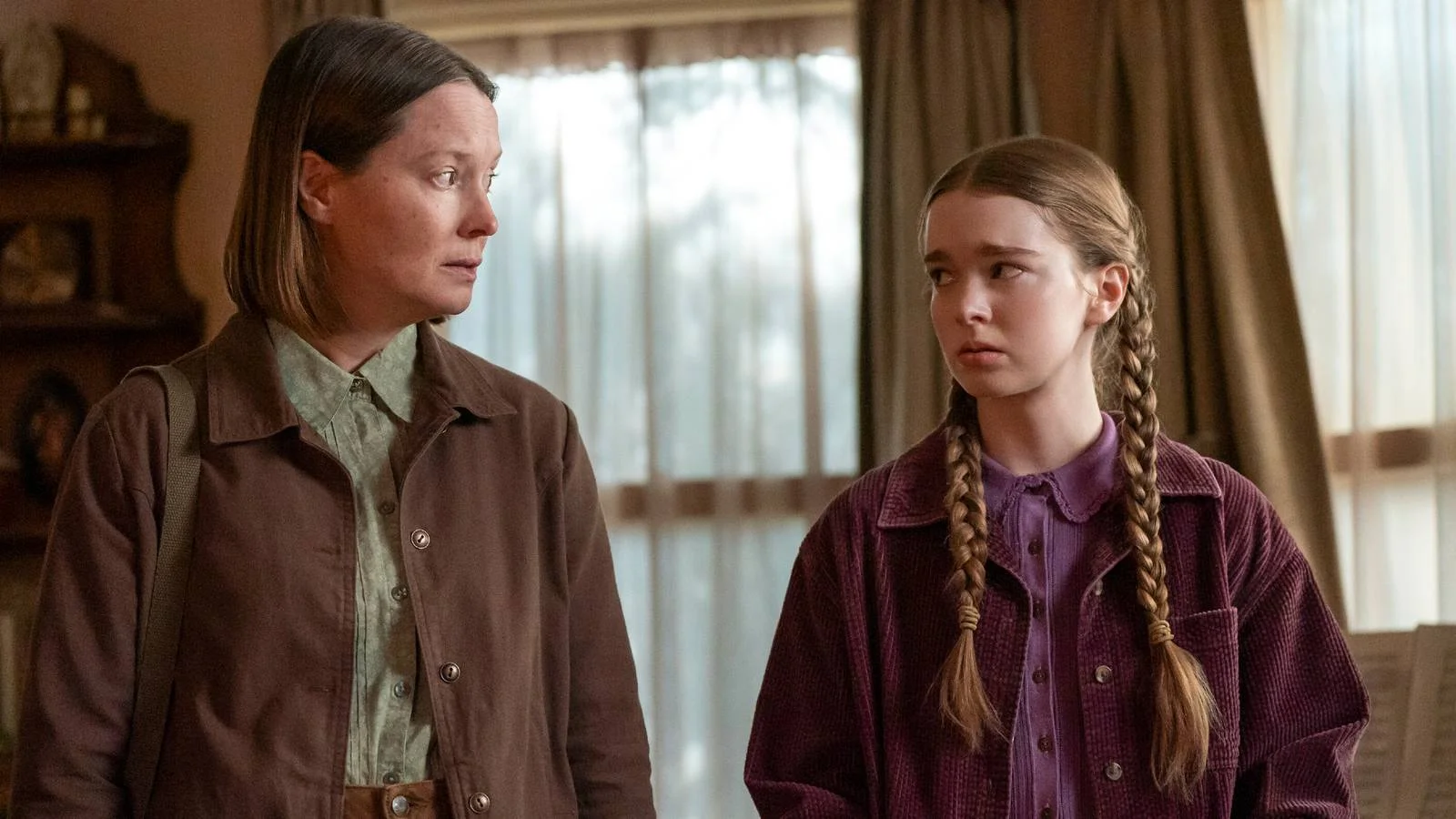
Carrie, played by Summer H. Howell, has entered school after a lifetime of isolation with her religious mother. Her father’s death forces the household into contact with the world: Carrie enrolls at Ewen High, and Margaret takes a supermarket job. Howell makes Carrie’s enthusiasm for computers, friendship, and a party feel like discoveries worth protecting. She avoids treating ignorance as a personality.
There is an appetite for experience beneath it, which gives the episodes somewhere to go beyond arranging the next humiliation. Kindness from Sue Snell and Tommy Ross also keeps an alternative available within the school. Chris has opportunities to behave differently, and the extra time spent understanding her makes those refusals harder to dismiss. Margaret loses the monopoly
Samantha Sloyan’s Margaret experiences the same upheaval as a succession of threats. The prayer closet offers an early, concrete measure of the household’s retreat from ordinary life; the supermarket and school require mother and daughter to function beyond its protection.
Their responses pull the relationship in opposite directions. Carrie wants to encounter people. Margaret wants to assess the danger they present. Each new attachment, including Carrie’s connection with teacher Rita Desjardin, challenges the authority that isolation previously made almost automatic.
Sloyan gives Margaret’s fear enough emotional credibility to complicate her controlling behavior. Affection and manipulation can occupy the same exchange without cancelling each other out. That helps sustain a relationship whose basic direction is easy to predict, though the writing sometimes leans too heavily on Margaret’s objections to keep generating conflict. Her resistance to lessons about sex, menstruation, and school shootings makes her position clear. Repeated demonstrations of that resistance do less to change the dramatic situation once Carrie has begun recognizing its limits.
The confrontations with Matthew Lillard’s Principal Grayle provide welcome changes of tempo. His wisecracking manner punctures Margaret’s certainty, letting the show briefly release pressure without requiring Carrie to absorb another indignity. The humor comes from an adult accustomed to issuing instructions meeting one professionally obliged to answer back.

Margaret’s eventual use of social media gives this conflict a sharper development than another argument about curriculum could. Having tried to keep outside voices away from her daughter, she discovers the usefulness of broadcasting her own. The internet apparently becomes acceptable once she has the microphone. The locker room keeps circulating
The modernization works hardest when it changes what happens after a familiar incident. Carrie’s first period still produces panic in the locker room because nobody has prepared her for it. Phones then give that panic a second life. Her classmates can record, distribute, and revisit an experience she barely understands. The scene connects Margaret’s withholding of knowledge to the school’s exploitation of its consequences. Carrie arrives unprepared, and other people turn that lack of preparation into entertainment.
Metal detectors and school-shooting drills extend her bewilderment, placing her eagerness to learn inside an environment already organized around danger. Yet the online harassment supplies the season’s most effective continuing pressure. The gossip account operating under Carrie’s name makes reputation something that can be manufactured without her participation.
These developments give the teenage drama real momentum, even when the middle episodes repeat their explanations of cruelty. Once the recording and impersonation establish how quickly control can disappear, further statements about a lack of compassion have diminishing returns. The account has already created a harsher problem: Carrie can now be held responsible for things she never said. Power with conditions attached
Carrie’s telekinetic practice offers a different kind of progress. In vacant lots, she levitates objects and destroys abandoned cars, testing an ability she can develop through her own effort. Those scenes supply an effective counterweight to the social material. Her classmates can define her online, and her mother can restrict what she learns, but here she can discover something about herself through action. The training also moves the tone toward a story about mastering extraordinary abilities, creating a tension with the tragedy waiting at prom.
The additional supernatural mythology pushes that tension further. Other gifted women, the mysterious storyline surrounding Katee Sackhoff’s character, and outside guidance for Carrie’s powers widen the season’s possibilities. They also interrupt the relationships that have made its expansion worthwhile.
Episode three connects two teenagers so that time spent with one changes our understanding of the other. The mythology often asks for attention on the promise that its connections will matter later. When that material influences decisive late developments, the problem reaches beyond pacing: Carrie’s growing capacity to act becomes entangled with machinery introduced around her.
Prom carries considerable emotional preparation. Howell has made Carrie’s pleasures believable, and Thornton has given the approaching cruelty a human source. The extended catastrophe has scale, but its duration cannot settle the season’s uncertainty about letting its sympathetic protagonist become frightening.
Flanagan’s protective approach preserves our attachment to Carrie while softening the disturbing transition that attachment should make possible. Future-facing developments then complicate the aftermath, leaving part of the payoff dependent on continuation. Eight episodes have taught us to care about the people in this room. What happens to their tragedy if its decisive meaning is waiting in another season?
Carrie premieres on Amazon Prime Video on October 7, 2026. The psychological horror miniseries adapts Stephen King’s iconic novel, following a reclusive teenage girl with telekinetic powers who faces severe bullying before reaching a horrifying breaking point.
Where to Watch Carrie Online
Full Credits
Title: Carrie
Distributor: Amazon Prime Video
Release date: October 7, 2026
Rating: TV-MA
Running time: 60 minutes per episode
Director: Mike Flanagan
Writers: Mike Flanagan
Producers and Executive Producers: Mike Flanagan, Stephen King
Cast: Summer H. Howell, Samantha Sloyan, Siena Agudong, Alison Thornton, Joel Oulette, Josie Totah, Arthur Conti, Amber Midthunder, Matthew Lillard
Director of Photography (Cinematographer): Michael Fimognari
Editors: Mike Flanagan
Composer: The Newton Brothers
The Review
Carrie
Flanagan’s Carrie earns its extra hours through Howell’s openhearted performance, Thornton’s unsettling Chris, and teenage conflicts that gain fresh consequences online. The parallel character arcs make serialization worthwhile; repetitive explanations and expanding supernatural mythology make it less disciplined. Prom arrives with emotional weight, but the writing protects Carrie from the frightening transformation it has prepared. A season this invested in its characters should trust them to carry the ending without assistance from the next one.
PROS
- Howell makes Carrie’s curiosity and happiness worth protecting.
- Thornton preserves Chris’s responsibility alongside her vulnerability.
- Parallel character arcs give the episodes momentum.
- Digital harassment meaningfully changes the familiar story.
CONS
- Repeated explanations slow the middle episodes.
- Supernatural expansion weakens Carrie’s agency and the season’s payoff.
- Protective characterization softens the prom transformation.