





















![Kingdom Hearts Collection [I-III] Review](https://gazettely.com/wp-content/uploads/2026/10/Kingdom-Hearts-Collection-I-III-1-360x180.webp "Kingdom Hearts Collection [I-III] Review: KHII Holds Steady as Newer Entries Fluctuate 36")




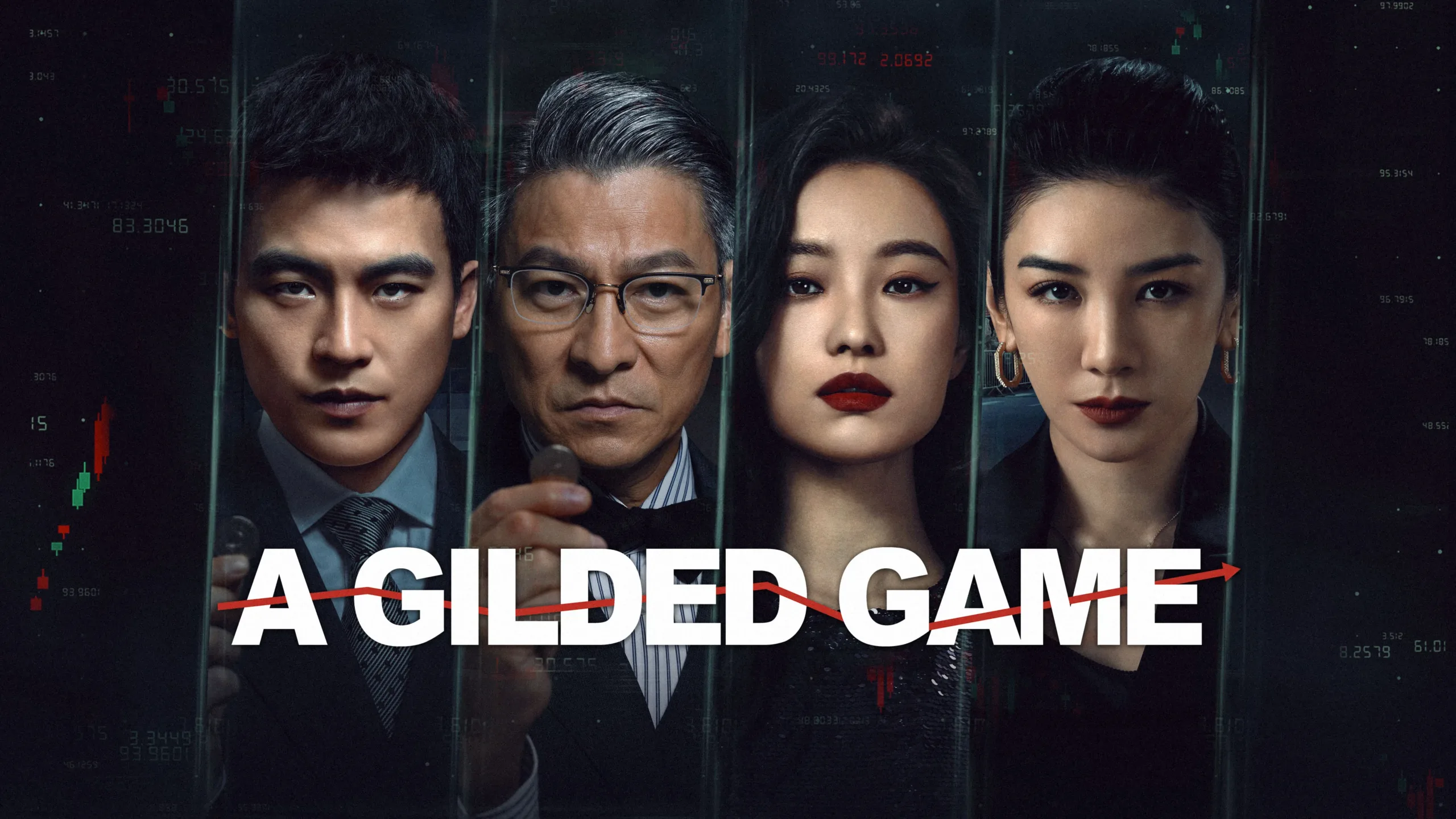

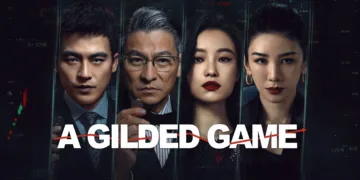
Gao Han has to look employable while working for nothing. His six-month internship at Bluestone investment bank comes without a salary, yet a superior still finds time to ridicule his cheap tie. At home, his partner sells an expensive handbag to help them get by. These details give Herman Yau’s A Gilded Game a useful starting point: the institution assessing Gao’s potential also makes him feel the inadequacy of his present circumstances. Played by Ou Hao with earnest intensity, he arrives equipped with academic ability and discovers that ability carries its own maintenance costs.
When executive Li Hailun offers him a promotion and a house, the temptation answers pressures already established. Security has a recognizable shape here. The difficulty comes in the development between needing that security and accepting betrayal as its price. Gao learns the business, impresses his initially reluctant mentor, and acquires the skills to negotiate with wealthy clients. His professional progress is easy to follow. His changing relationship with his own principles receives less patient attention. The film provides a credible reason to want the reward, then moves too efficiently through the decisions required to obtain it.
That distinction matters because the familiar corruption plot is perfectly serviceable. An ambitious graduate entering investment banking does not need an unprecedented destination; he needs enough particular choices to make the route feel his own. Gao’s friendship with Chu Feng, the son of a wealthy business owner, offers one such possibility.
It places him between modest personal circumstances and access to powerful people, a combination that could make his loyalties unusually difficult. There is no inherent contradiction in having wealthy friends while lacking money. The problem is that the friendship becomes essential to the business conflict before the film has made it equally substantial as a relationship.
Todd, the veteran analyst played by Andy Lau, gets firmer definition through his work. His insistence on due diligence includes having a helicopter taken apart to verify its owner’s claims. The extravagance of the inspection makes his standards visible: a client’s confidence does not substitute for evidence.
When powerful people discard his honest evaluations, the film also establishes the practical cost of those standards. Bluestone values expertise until expertise threatens a transaction. Todd’s confrontations with his colleagues give the office politics some bite because his objections obstruct something specific.
Lau’s restraint suits a man accustomed to defending his findings without losing professional control. His subdued disappointment in Gao also supplies a welcome degree of feeling without turning their relationship into a succession of speeches. Yet the betrayal should alter that relationship more decisively than it does.
The aftermath receives too little development, leaving Todd’s composure to cover a gap in the drama. We understand that Gao has violated his trust; we spend less time discovering what that violation does to their dealings with each other. Lau can suggest hurt, but the script gives him limited room to live with it.

Huang Yi’s Li supplies a clear opposing force. Assigning Gao to Todd as an impediment, then offering the younger man rewards for disloyalty, makes her management style a means of moving the plot. She knows how to turn another person’s needs into leverage. Huang’s directness helps these maneuvers register, even when the characterization remains narrow. Between Li’s inducements and Todd’s principles, Gao’s alternatives are clearly marked. Greater uncertainty would have needed to emerge from his responses, particularly the bargains he makes with himself as he shifts allegiance.
The film does attempt to complicate Todd’s ethical authority through his attachment to a nightclub singer played by Ni Ni. Her father died by suicide after investment losses linked to Todd’s stock recommendation. This history gives his concern for ordinary shareholders a personal foundation and introduces a difficult question about responsibility: conscientious advice can still participate in someone else’s ruin.
The subplot therefore has a legitimate place in the story. Its repeated nightclub visits, however, develop that premise too slowly and contribute too little to the present conflict. Once the source of the estrangement becomes clear, the scenes struggle to change our understanding of Todd.
The imbalance is especially noticeable beside Gao’s domestic life. His partner’s sale of the handbag establishes a sacrifice the film could later test against his increasing selfishness. Instead, her limited presence leaves much of that cost undeveloped. The wealthy family receives similarly insufficient preparation for the importance it acquires. A film running roughly two hours can afford these relationships; A Gilded Game simply allocates its time elsewhere. Todd’s past receives repeated visits while Gao’s current obligations remain lightly sketched. The script appears to have approved the subplot’s expenses without examining its returns.
The financial scheme has a stronger causal foundation. Bluestone’s work preparing companies for public listing creates opportunities to manipulate valuation and ownership. Li’s plan targets a hydrogen-storage business through a contractual clause and coordinated pressure on its share price, enabling a takeover. Gao’s connection to the owning family brings his private loyalties into that transaction. Yau deserves credit for making contracts and trading decisions carry the action. A disputed evaluation or dangerous clause can provide suspense when the audience understands who gains power through it.
The final trading battle strains that understanding. Urgent buying and selling at computer terminals communicate activity, but the changing balance of control is harder to grasp. This is partly a problem of procedural clarity and partly a consequence of the earlier character work.
Strong attachment to the endangered family could sustain tension through an unfamiliar financial maneuver. A fully developed breach between Gao and Todd could make their decisions carry emotional force. With both relationships underprepared, the climax asks the mechanics to supply excitement that the human drama has not accumulated.
Closing title cards report punishments and give the wrongdoing a definite legal endpoint. They also move the film away from the relationships it has damaged just when those relationships require attention. Todd’s example leaves room for an ethical financier within the institution, directing the moral answer toward individual choices. Gao’s story has raised a less easily settled matter: his desire for stability was supported by other people’s trust and sacrifice. The reported penalties tell us what happens to offenders, while his partner’s early sacrifice still waits for an adequate dramatic response.
A Gilded Game was released in theaters on May 1, 2025, and is available on digital streaming platforms like Prime Video. The high-stakes financial thriller follows a bright new hire who becomes the protégé of a market expert while navigating a dangerous corporate takeover and insider trading scheme.
Where to Watch A Gilded Game (2025) Online





Full Credits
Title: A Gilded Game
Distributor: Universe Films Distribution, China Lion Film Distribution
Release date: May 1, 2025 (China)
Running time: 1 hour 50 minutes (110 minutes)
Director: Herman Yau
Writers: Zhao Wenliang, Gao Yuhui
Producers and Executive Producers: Andy Lau
Cast: Andy Lau, Ou Hao, Ni Ni, Huang Yi, Jiang Mengjie, Kent Cheng, Jasper Liu, Chang Chen-kuang
The Review
A Gilded Game
A Gilded Game gives Gao’s ambition credible financial pressures, then rushes the choices that turn ambition into betrayal. Andy Lau’s restraint and Todd’s exacting professional standards provide substance, but the uneven allocation of time leaves essential relationships underdeveloped. The trading climax inherits that weakness: ownership changes carry less suspense when personal loyalties remain thin. Its contracts receive closer attention than the damage done between people.
PROS
- Concrete financial pressures make Gao’s temptation credible.
- Todd’s diligence gives his integrity practical substance.
- Andy Lau’s restraint suits Todd’s professional authority.
- Contracts and ownership supply an alternative to physical action.
CONS
- Gao’s moral transformation develops too quickly.
- His betrayal receives insufficient emotional aftermath.
- Repeated nightclub scenes displace essential relationship development.
- The trading climax struggles with clarity and emotional stakes.