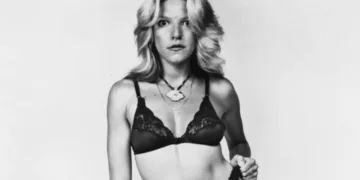


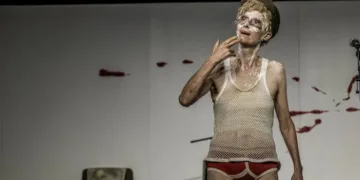












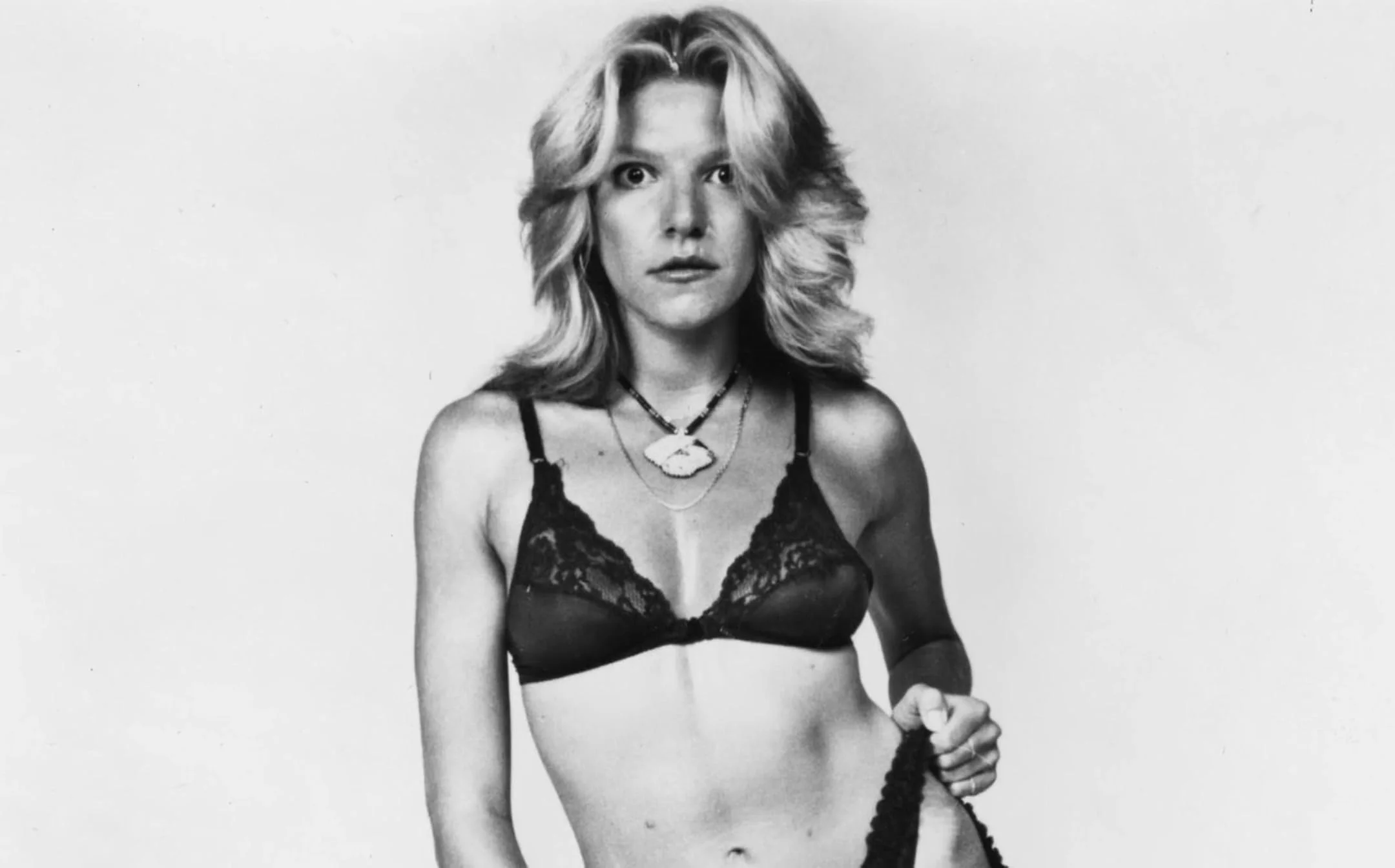

For viewers who encountered Robin Byrd through Cheri Oteri’s Saturday Night Live impersonation, the black crochet bikini may be easier to place than the woman wearing it. National recognition can travel that way: a costume and manner survive the trip, while the community that understood them falls out of the picture.
Bang My Box: The Robin Byrd Story restores a very particular address to that familiar image. Its recollections of television sets casting the show’s red-neon glow through West Village windows locate Byrd inside a neighborhood’s evening habits, broadcasting to people who could recognize something of their own lives on screen.
Those windows suggest a different relationship between entertainer and audience from the one preserved by a comedy sketch. Between 1977 and 1998, The Robin Byrd Show offered interviews, nude dancing, and telephone calls from viewers, with adult performers appearing as guests and acquaintances. Its host sometimes applied her makeup on air because the work of getting the program running had left little time to prepare herself.
The boundary between backstage labor and public performance was porous. Watching these recordings, one can see how their improvised quality might encourage participation: Byrd was visibly making the show happen, and the callers could join her.
Directors Jyllian Gunther and Stephanie Schwam make productive use of that roughness. The archive’s imperfect sound and low-resolution pictures carry information that a cleaner retrospective account could lose. Byrd’s responsibilities as host and producer remain legible alongside her flirtations, giving the bikini-clad persona a working life.
Commentary from former guests and admirers supplies context, but the recordings let us inspect the exuberance being remembered. The documentary’s affection feels earned when a clip supplies the behavior behind a tribute. It also preserves the silliness of an enterprise whose closing ritual involved Byrd dancing and fondling guests to her song, “Baby, Let Me Bang Your Box.”
That silliness matters to the film’s account of sexual politics. Byrd’s welcome extended across genders and sexualities, and the gay viewers recalling their attachment to the program describe a relief rooted in the hostility of the AIDS years. The archive gives their testimony practical support.
Condoms and dental dams enter the same broadcast space as stripteases and flirtation. Her familiar, upbeat manner makes safer-sex instruction part of an existing conversation with viewers. The film allows pleasure and responsibility to occupy the screen together, without suggesting that the pleasure requires an educational justification.
Calling Byrd an activist risks making this history sound tidier than it was. Her usefulness grew through the ordinary practices of hosting: inviting people, answering calls, discussing bodies without embarrassment. Sandra Bernhard’s description of an “accidental activist” catches that connection, though Byrd’s public arguments reveal someone capable of defending her position directly.
In an archival television exchange about indecency, she names homelessness and children without families as more deserving of the term than a dancing human body. The answer exposes the priorities concealed inside a supposedly self-evident judgment of taste. Her ease before a camera becomes an argumentative resource.
The censorship dispute with the cable company gives those small acts of welcome an institutional setting. The question was who could be seen through a communications system that reached into local homes, and under whose conditions.
Gunther and Schwam keep this political history attached to the program people actually watched. That is essential to the documentary’s regional perspective. New York’s sexual openness appears here as something maintained through work and contested access, rather than an atmosphere that simply existed. The cheerful host demonstrating protection and the woman resisting restrictions on her broadcast belong to the same undertaking.
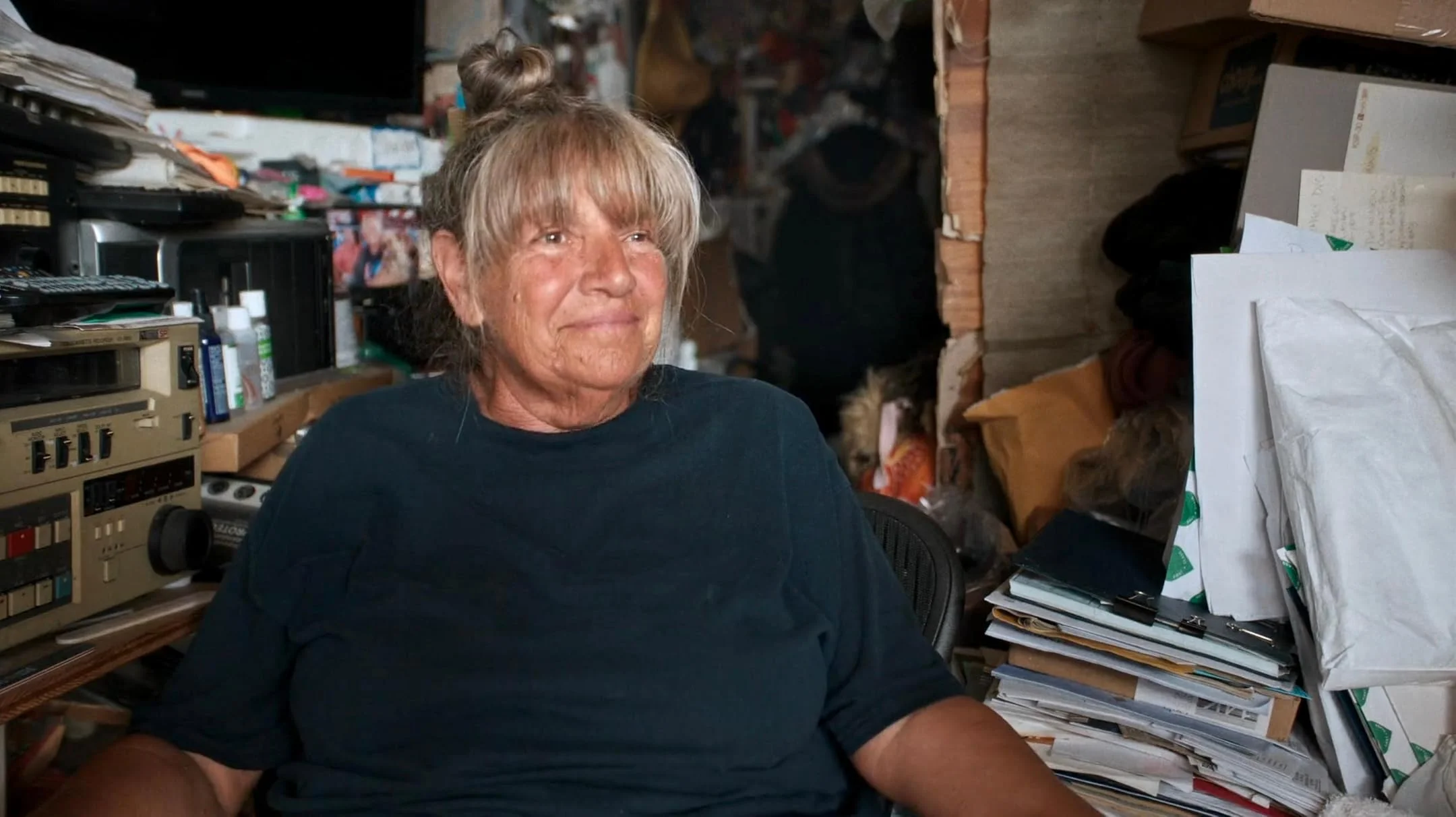
The film becomes most affecting when it returns to the physical remains of that undertaking. In the Manhattan apartment Byrd shares with her husband, Shelly, roughly 600 videotapes sit among equipment, papers, and clothing. A recording that once carried an evening’s entertainment now occupies space someone must manage.
Byrd’s discussions with Daylon Orr about preservation expose the awkward transfer from private possession to public history. Her reluctance to release the collection makes sense alongside the production footage: these are things she made, handled, and lived with. Calling them the couple’s children conveys an attachment that the sensible language of archiving cannot easily settle.
Moving between these rooms and the old broadcasts changes the documentary’s historical register. The archive contains a social world, but keeping it has become a domestic responsibility. Shelly, a longtime collaborator, now has dementia, and Byrd cares for him.
Their return to Fire Island, where they met, brings the limits of revisiting a place painfully into view when he cannot remember that meeting. Yet the film also gives their relationship everyday duration through walks and celebrations. His illness does not exhaust his presence. Byrd’s recollection of his acceptance of her life carries weight because we also watch the continuing work of their attachment.
Fire Island provides a particularly useful counterpoint to the television archive. It is both a queer social setting and somewhere the couple has a personal history, keeping the film’s account of community from floating free of individual lives. Byrd’s familiarity with people there gives her former broadcasting role a present-tense counterpart. She still greets and gathers people. The documentary’s movement between Manhattan and the island allows retirement to contain activity, care, and sociability, even as the question of what will happen to the tapes remains unsettled.
The final beach sequence brings a less comfortable question of preservation into view. Byrd hesitates to appear naked because she dislikes how age and weight have changed her body. The woman remembered for making exposure seem easy must decide how she wants to be seen now.
Her eventual naked walk could have supplied an uncomplicated image of enduring confidence. Instead, the accompanying voiceover retains her embarrassment and her recognition that it conflicts with values she has publicly defended. Against the backlit figure on the beach, we hear the older woman admit how difficult showing herself has become.
Bang My Box: The Robin Byrd Story premiered on HBO on June 30, 2026, and is available to stream on Max. Directed by Jyllian Gunther and Stephanie Schwam, the biographical documentary chronicles the colorful life and cultural legacy of pioneering sex-positive cable-access host Robin Byrd.
Where to Watch Bang My Box: The Robin Byrd Story (2026) Online


Full Credits
Title: Bang My Box: The Robin Byrd Story
Distributor: HBO, Max
Release date: June 30, 2026
Rating: TV-MA
Running time: 1 hour 19 minutes (79 minutes)
Director: Jyllian Gunther, Stephanie Schwam
Producers and Executive Producers: Sarah Jessica Parker, Alison Benson, Caroline Waterlow, Stephanie Schwam, Jyllian Gunther
Cast: Robin Byrd, Cheri Oteri, Annie Sprinkle, Sandra Bernhard, Porsche Lynn, Heather Hunter, Lou Cass
The Review
Bang My Box: The Robin Byrd Story
Bang My Box: The Robin Byrd Story restores the neighborhood relationships behind a nationally recognizable caricature. Gunther and Schwam let improvised broadcasts demonstrate Byrd’s generosity, labor, and political usefulness, then follow the difficult passage from personal possessions to public history. The domestic scenes with Shelly give preservation emotional weight, while Byrd’s hesitation on the beach keeps the portrait from settling into effortless celebration.
PROS
- Archival footage makes Byrd’s cultural importance tangible.
- Grounds sexual politics in specific broadcasting choices.
- Connects preservation with domestic care.
- Allows vulnerability to complicate its affectionate portrait.
CONS
- No specific weaknesses established in the approved review.