



















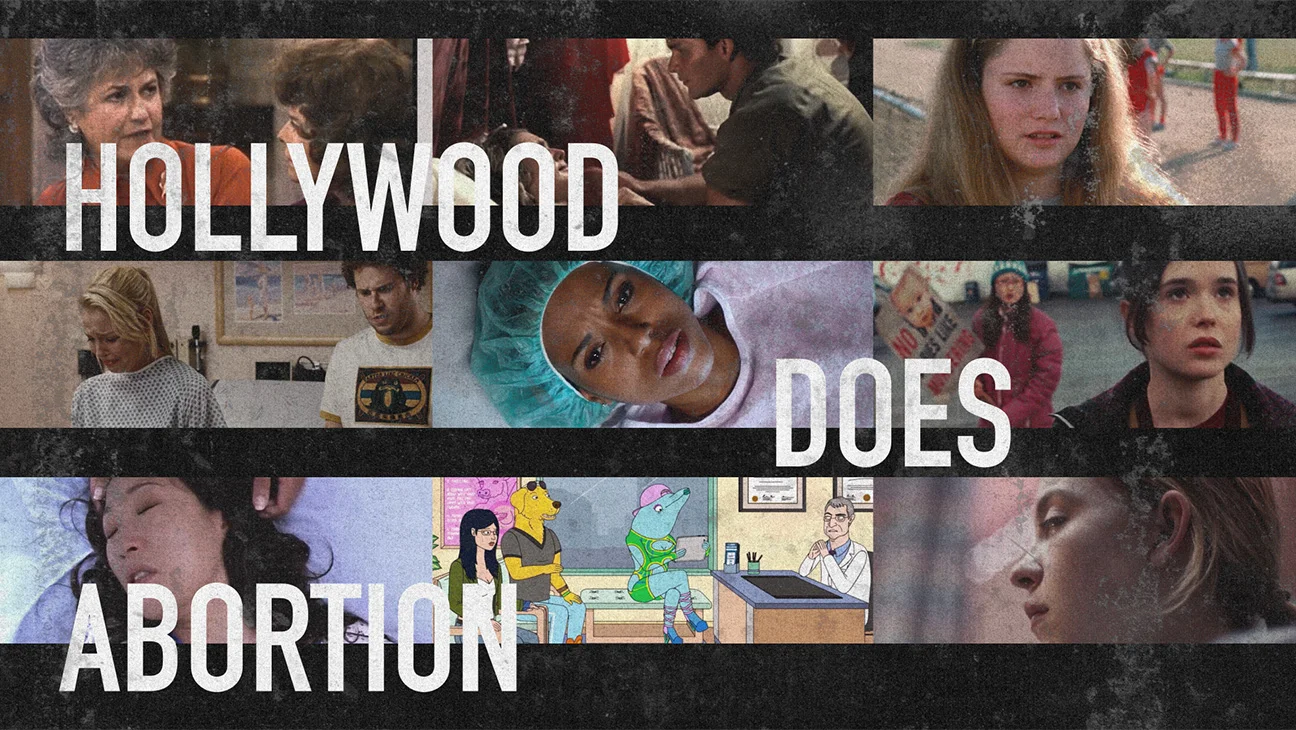

ABC would not let Cristina have the abortion originally proposed for her in Grey’s Anatomy. The pregnancy became ectopic instead. Hollywood Does Abortion traces this development back to the broadcaster’s refusal, exposing a production decision beneath what viewers encountered as a medical complication. The distinction matters. A character faced with a choice has to reveal something about herself; a plot that removes the choice can proceed without that reckoning. The network’s discomfort received a diagnosis.
Screenwriter Eleanor Bergstein describes a different calculation behind Dirty Dancing. She made its abortion storyline integral to the surrounding narrative, leaving little room to extract it when a potential sponsor objected. Here, construction protects the material that commercial pressure threatens to remove.
These accounts give the documentary an explanatory strength that a collection of familiar clips could never supply alone. They identify the point at which an institutional objection becomes a storytelling problem, then show how writers either lose or preserve the ability to address it. The finished scene carries decisions made far outside the fictional world.
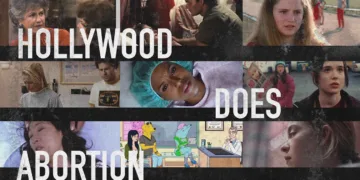
Directors Janet Goldwater, Barbara Attie, and Mike Attie build their survey from such encounters between entertainment and its conditions of production. Film and television excerpts sit alongside news footage and interviews with researchers, critics, activists, and creators.
The historical starting point is “Maude’s Dilemma,” the two-part 1972 sitcom storyline in which Bea Arthur’s character chooses an abortion before the Roe decision. That placement immediately complicates a reassuring chronology. If a major television comedy could address the choice then, later decades cannot be treated as successive stages of growing courage.

Writer-editor Jamie Boyle gives the film a brisk, readable shape, moving between political developments and recurring narrative habits. Its return to Dirty Dancing is especially useful. In one setting, the film’s unsafe abortion storyline warns audiences about the consequences of restricted access.
Elsewhere, the traumatic imagery joins a discussion of how persistently screen abortions are associated with suffering. These readings can coexist. Reusing the material allows the documentary to examine how a historically purposeful story can still contribute to a narrow set of associations. The archive becomes something to reconsider, rather than a procession of approved and disapproved titles.
The political material also disrupts an easy equation between sympathetic fiction and expanding rights. Supportive portrayals in shows including Parenthood, Private Practice, and Better Things appear against the tightening restrictions of the 2010s. The discrepancy gives the film a stronger argument than a simple claim that television teaches society to change.
A character may encounter understanding relatives and reassuring professionals while viewers face diminishing access to comparable care. Connections between popular storytelling and public attitudes remain worth examining, but this juxtaposition acknowledges that acceptance on screen supplies no dependable timetable for political protection.
Boyle’s editing becomes less secure when accumulation has to perform the work of interpretation. A montage of men berating women over abortions makes the repetition difficult to dismiss. Different programs keep finding drama in male outrage, repeatedly requiring women to answer for decisions about their own bodies. Put together, the scenes reveal a representational habit that an audience watching each program separately might overlook. The sequence has force because the anger persists across changes of setting and character.
Yet the montage includes Michael Corleone from The Godfather Part II and Michael Mancini from Melrose Place. Their presence complicates what the assembly can establish. A cruel character’s possessiveness can be the object of a story’s criticism; his speech does not automatically express the story’s judgment.
The documentary can reasonably ask why female decisions so often become occasions for male fury. It needs additional context to establish how those scenes ask us to understand that fury. Cutting the men together preserves their hostility while reducing the distinctions between the narratives that contain it.
The treatment of Sex and the City reveals a related problem. Miranda’s decision to continue her pregnancy becomes evidence of a program retreating from abortion, but the same episode includes Carrie discussing an earlier termination without presenting it as a permanent source of regret.
Those experiences belong to the same dramatic conversation. Concentrating on Miranda’s outcome makes the episode easier to classify and harder to understand. Choosing childbirth also requires a different test from the imposed medical escape in Grey’s Anatomy: the relevant questions concern motivation, characterization, and the perspectives the episode permits. The documentary’s broad pattern is useful, but this example needs room for disagreement within the fiction itself.
Its demographic comparisons offer a firmer basis for questioning the archive. The film identifies a recurring concentration on young, white, financially secure women, setting that emphasis against experiences involving existing parents, women of color, and financial insecurity. The value of the comparison is practical for storytelling. A narrow range of protagonists produces a narrow range of pressures: which relationships matter, what obligations already exist, and what a pregnancy would change. The statistical material gives the filmmakers a way to challenge repeated assumptions without having to infer the moral position of an entire series from a hostile character’s dialogue.
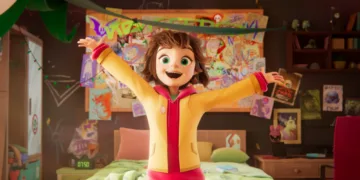
Paula’s abortion in Crazy Ex-Girlfriend supplies a concrete alternative. She is beginning law school and already raising two sons, so the decision emerges from an established life rather than a temporary interruption before adulthood begins.
Creator Rachel Bloom’s participation gives the documentary access to someone who could examine how that life shaped the writing, though the discussion moves on too quickly to pursue the construction in much detail. Paula merits the additional time because her circumstances alter the familiar dramatic question. Her education has a claim on her attention alongside the children she already cares for; another pregnancy enters that existing arrangement of work, ambition, and responsibility.
Hollywood Does Abortion premiered at the Tribeca Festival on June 7, 2026. Directed by Barbara Attie, Janet Goldwater, and Mike Attie, the insightful documentary explores five decades of abortion depiction in film and television, examining how on-screen storytelling has shaped cultural attitudes and public policy through a post-Roe lens.
Full Credits
Title: Hollywood Does Abortion
Distributor: The Film Sales Company, Women Make Movies
Release date: June 7, 2026 (Tribeca Festival)
Rating: Unrated
Running time: 1 hour 35 minutes (95 minutes)
Director: Barbara Attie, Janet Goldwater, Mike Attie
Writers: Jamie Boyle
Producers and Executive Producers: Barbara Attie, Janet Goldwater, Mike Attie, Eliza Licht, Angela Tucker, Rachel Bloom, Ruth Ann Harnisch
Cast: Rachel Bloom, Gillian Robespierre, Zoanne Clack, Adrienne Barbeau, Tanya Saracho, Dana Stevens, Lizz Winstead
Director of Photography (Cinematographer): Melissa Langer
Editors: Jamie Boyle
The Review
Hollywood Does Abortion
Hollywood Does Abortion is strongest when it traces a fictional outcome to an actual production decision. Its brisk historical arrangement exposes recurring evasions without pretending representation improves steadily. The argument becomes less reliable when clipped dialogue substitutes for examining a story’s perspective, while Paula’s example deserves fuller treatment. An accessible, persuasive survey whose editing sometimes removes the context its judgments require.
PROS
- Creator testimony explains specific production decisions.
- Clear editing connects political and storytelling shifts.
- Historical comparisons resist an easy progress narrative.
- Demographic evidence identifies neglected dramatic possibilities.
CONS
- Hostile dialogue sometimes stands in for narrative endorsement.
- Miranda’s example loses the episode’s competing perspectives.
- - Paula’s storyline and Bloom’s insights receive limited development.