
















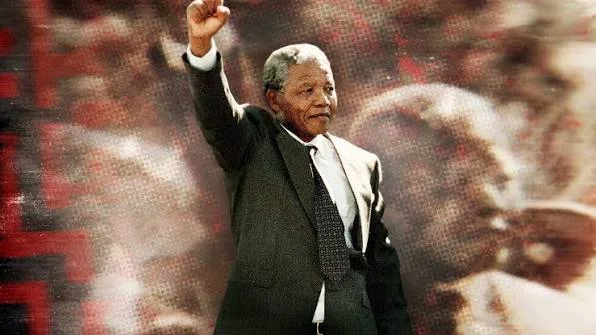

Conservative MPs threatened legal action over the BBC’s broadcast of the 1988 Wembley concert for Nelson Mandela’s seventieth birthday. That dispute, recalled in James Rogan’s three-part Channel 4 documentary Free Nelson Mandela, gives the concert footage a significance that nostalgia might otherwise conceal. Broadcasting the event meant carrying a campaign into homes while its central demand remained politically contentious. The BBC had to decide if those viewers should encounter it at all. Apparently, a prisoner’s birthday could constitute a broadcasting emergency.
The series also recovers British “Hang Nelson Mandela” posters and Margaret Thatcher’s hostility to the campaign. These reminders puncture the convenient assumption that Mandela’s eventual international standing reflected an agreement everyone had reached long before his release. Rogan makes the opposition visible enough to prevent the audience from borrowing the comfort of hindsight. Television’s ability to commemorate an admired figure is familiar; the material here records the resistance to televising support for him while that support could still change something.
Music gives this sprawling history an accessible organizing principle. Jerry Dammers discusses writing “Free Nelson Mandela,” recorded by the Special AKA in 1984, while Steven Van Zandt recalls the following year’s “Sun City.” The songs perform different political tasks.
One makes a prisoner’s name repeatable far beyond the circles already campaigning for him; the other directs attention toward a boycott and the entertainers whose participation could undermine it. Peter Gabriel’s account of “Biko” introduces another function, preserving public attention on a death in police custody. Rogan’s musical framework works because it connects listening with specific forms of political participation.
The presence of Bono and Simple Minds’ Jim Kerr supplies familiar faces, but the accounts of exiled musicians Miriam Makeba and Hugh Masekela are essential to understanding how this international audience developed. Their work carried political knowledge outward from South Africa.
The distinction matters to the documentary’s account of cultural influence: Western performers joined a struggle whose participants were already finding ways to communicate across borders. Makeba and Masekela prevent musical activism from becoming a story in which recognition by British and American stars supplies the starting date.
Even so, the attention given to Western musicians sometimes makes celebrity participation feel like the series’s preferred measure of the campaign’s reach. This is an editorial imbalance rather than an absence of other perspectives. Peter Hain’s account brings disrupted sporting events and street protests into view; James Mange describes resistance inside South Africa and his eventual imprisonment. These contributions establish political work with different risks and methods. The musician interviews are useful, but their prominence can make the familiar public face of solidarity easier to retain than the organizing and exposure to violence that sustained the struggle.
Mandela himself presents a different representational problem. A series built around a campaign for an imprisoned man must explain how his public identity grew while his ability to participate in public life was forcibly restricted. Rogan distributes the telling among family members, activists, advisers, and a former prison guard, allowing recollection to describe what the campaign’s increasingly recognizable name could not communicate. The approach makes his absence historically intelligible. It also leaves his individual political thinking less fully present than the activity undertaken around him.
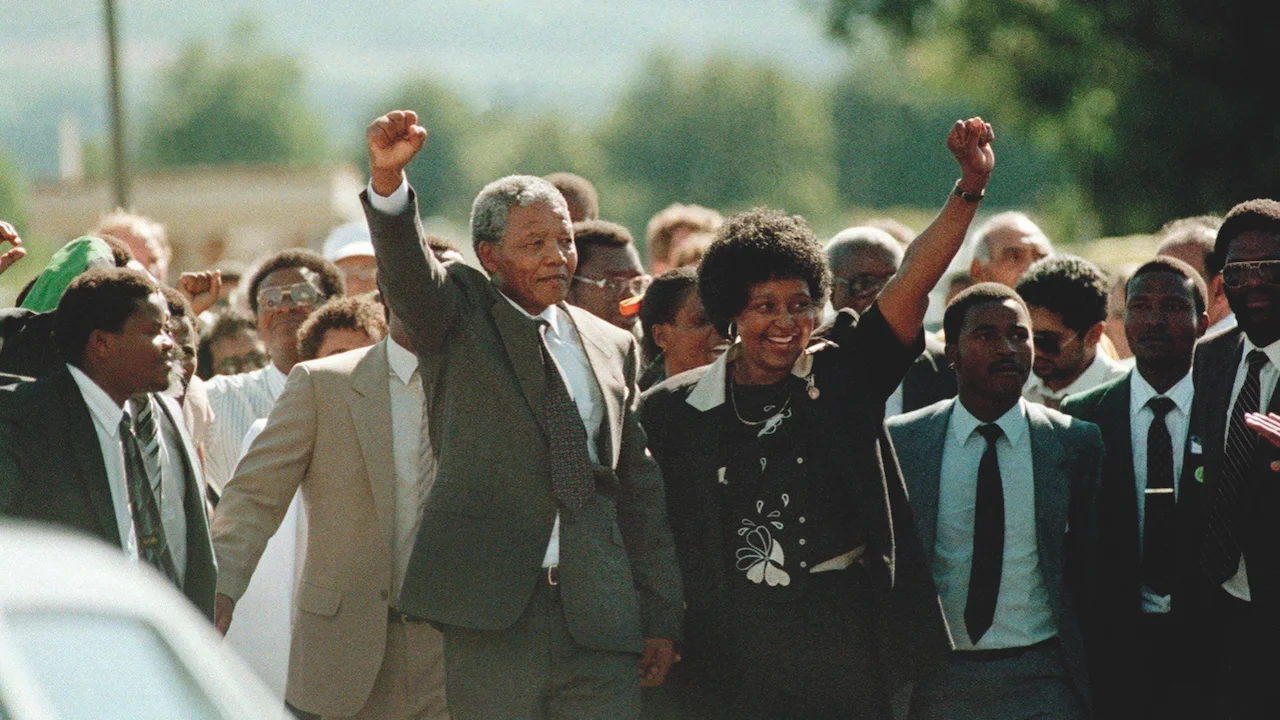
The testimony becomes particularly effective when it describes the administration of punishment. Christo Brand recalls Robben Island prisoners barefoot and inadequately clothed in winter. Mandela’s recorded voice explains how the required measure of quarried stone increased whenever prisoners managed to fill it. That detail exposes a system designed to make successful compliance impossible. Brand’s account of instructions to break the prisoners supports the same reading, but Mandela’s description supplies the mechanism. The authorities could take an apparent achievement and turn it into the next day’s greater burden.
Family testimony restores another kind of deprivation. Mandela lost his mother and son during his imprisonment and had to mourn away from those with whom he shared those losses. Such material complicates the campaign’s necessary simplification of him into an internationally legible symbol. It also gives the documentary’s interview structure a purpose beyond assembling authoritative witnesses: people who knew him can speak to relationships that imprisonment interrupted. Across 27 years in South African prisons, the losses included occasions that release could never restore.
Winnie Mandela’s experience puts particular pressure on the distinction between the public symbol and the family living through the struggle. The series follows her harassment, forced relocation, and the burning of her home. Granddaughter Ndileka Mandela’s observation that Nelson’s imprisonment insulated him from aspects of the violence surrounding Winnie is unsettling precisely because the prison testimony has already established such severe conditions. The experiences resist a simple ranking of suffering. They do, however, challenge any easy expectation that two people subjected to different forms of repression would emerge with identical political responses.
Rogan gives Winnie’s militancy that necessary history while addressing her endorsement of necklacing, the killing of suspected collaborators with a burning tyre. The context makes her anger understandable without settling the moral question of the violence she supported. This is where the documentary’s treatment of representation becomes especially valuable. Winnie is allowed to disturb the reassuring account of reconciliation attached to her husband, and her persecution remains visible when her actions become harder to defend. Her experience cannot be adequately contained by the role of the wife who waited.
The explanation of Ubuntu, with its understanding of humanity as relational, places Mandela’s negotiations under a demanding ethical pressure. Release required dealings with state authorities, ANC colleagues, and fellow prisoners whose experiences and expectations did not simply coincide. Rogan carries the account through the 1994 presidency, giving the campaign a clear endpoint while leaving the later reconciliation process largely outside its scope. The negotiations make that stopping point feel appropriately provisional: Mandela had to secure agreement among people who had endured the struggle differently, including comrades for whom compromise meant accepting terms from the authorities responsible for their imprisonment.
Free Nelson Mandela premiered on Channel 4 on June 14, 2026. Directed by James Rogan, the three-part documentary series explores the decades-long global movement and musical activism that fueled the fight against apartheid and led to Mandela’s eventual freedom.
Where to Watch Free Nelson Mandela Online
Full Credits
Title: Free Nelson Mandela
Distributor: Channel 4, BBC Studios
Release date: June 14, 2026
Rating: TV-14
Running time: 60 minutes per episode (3 episodes)
Director: James Rogan
Writers: Not publicly specified
Producers and Executive Producers: Soleta Rogan, James Rogan, Samora Tikly, Xinlan Rose, Deep Sehgal
Cast: Nelson Mandela, Winnie Mandela, Ndileka Mandela, Barbara Masekela, Peter Gabriel, Steven Van Zandt
The Review
Free Nelson Mandela
Free Nelson Mandela makes broadcasting part of political history, recovering the opposition that public admiration has since made convenient to forget. Its songs explain how a campaign reached new audiences, while prison testimony and Winnie Mandela’s experiences resist a reassuring liberation story. Western celebrity involvement receives excessive attention, and Mandela’s political thinking remains less developed than the activity around him. The series is strongest when it examines who could speak, who could be heard, and what that visibility cost.
PROS
- Sharp account of broadcasting’s political stakes.
- Distinct treatment of songs as campaigning tools.
- Concrete, revealing prison testimony.
- Nuanced examination of Winnie Mandela.
CONS
- Western musicians receive disproportionate attention.
- Mandela’s individual political thinking receives less exploration.