





















Romesh Ranganathan has to keep £500 from an NHS midwife so that his argument for giving the royal family extra money can survive another exchange. The joke depends on recognising the obscenity of that choice. Her job supplies the moral contrast; a royal relative supplies the competing claim to need. Within the premiere of TLC’s Unacceptable, a public-service worker becomes the practical demonstration of a comedian’s ridiculous position. The celebrity gets to perform indifference, while her possible payment becomes its proof.
The routine then reaches for immigration. Ranganathan suggests that people arriving in small boats are coming to visit Buckingham Palace, before distancing himself from encouraging the crossings. A defence of royal expenditure has acquired another political reference without finding much new to say about either subject. The qualification is revealing: he must maintain the outrageous position while making his distance from it legible. There is comic potential in that double task, but here the argument keeps generating maintenance work. Its initial reversal needs supporting long after we have understood it.
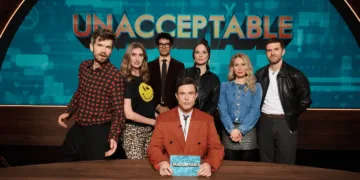
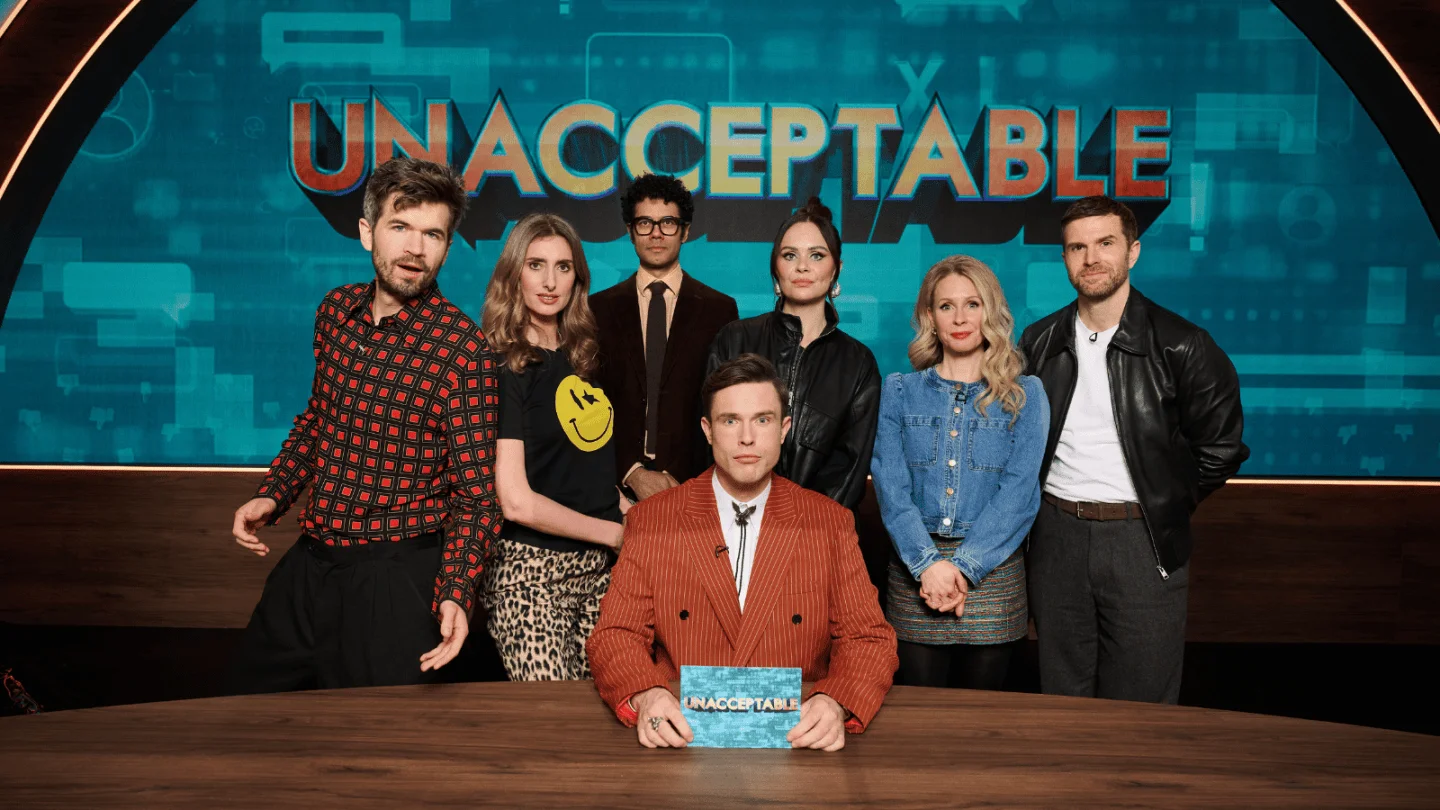
Produced by Ranganathan’s company Ranga Bee, Unacceptable asks comedians to defend supposedly objectionable opinions before a studio audience. Ed Gamble hosts, with Richard Ayoade and Joanne McNally as captains. The machinery puts familiar performers in unfamiliar positions, a perfectly workable basis for comic invention. Nobody needs to believe that Ranganathan has secretly become an ardent royalist. Yet the programme’s early material offers little progression from recognising the incongruity to discovering what a performer can build with it. TLC has a cast capable of lively disagreement and a format that often keeps them occupied with sustaining the setup.
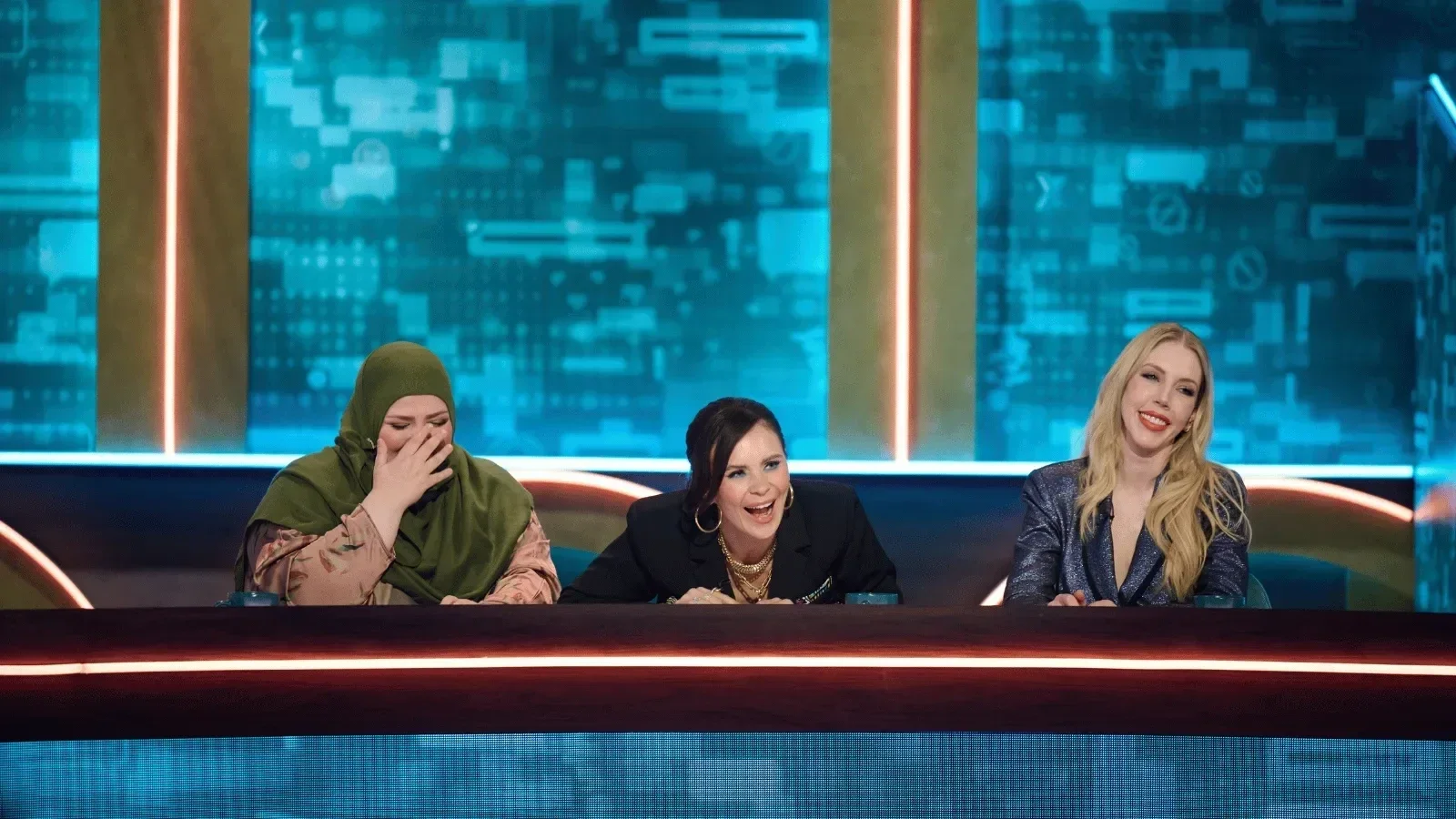
Sophie Willan finds a productive angle in the comparison between royal scandals and soap-opera plots. Her reference to Hollyoaks makes the Windsors available for judgment by the standards of another television institution, one routinely associated with extravagant misconduct.
That changes the terms of the discussion. Royal status loses some of its protective exceptionalism when the family can be assessed as an implausibly scandalous ensemble. Willan gets a useful joke from the material because her comparison supplies a perspective, giving the exchange somewhere to go beyond the original claim about money.
McNally’s defence of the proposition that women are not funny has less room to develop. Her presence as a quick-witted captain already makes the claim absurd, and her performance proceeds inside that obvious contradiction. The programme is entitled to play with it.
The difficulty is how readily a familiar sexist premise supplies the round’s entire comic transaction: a funny woman demonstrates the stupidity of denying that funny women exist. Casting women prominently creates opportunities for different perspectives, but this particular task sends McNally back to an argument her employment has already answered. Her joke about liking the colours of a MAGA hat similarly makes a provocative affiliation available as a playful accessory.
This is a limitation of the material given space, rather than evidence that the performers have no agency. McNally’s speed and willingness to disclose personal details remain assets, while Ayoade’s deadpan offers a different delivery within the same arrangement. Gamble contributes sarcastic ad-libs.
Katherine Ryan’s proposal for vasectomies at birth, reversible once men can establish their readiness to parent, offers a stronger social premise. Its impossible policy makes male reproductive responsibility the condition to be proved, with bodily autonomy treated as something an authority might grant after inspection.
The exaggeration opens questions about who is expected to demonstrate competence before becoming a parent and whose reproductive choices invite public supervision. Ryan has a subject with enough tension to sustain an exchange. The subsequent material makes the programme’s difficulty with that opportunity especially apparent.
Across roughly 40 minutes, the crowded sequence of propositions and diversions leaves exchanges feeling hurried even when individual jokes linger. Asked to compare Logan Paul and KSI as unacceptable celebrities, Roisin Conaty dismisses both in blunt terms. The response provides an escape from making a distinction the round has barely developed. We get neither an interesting case nor enough conversational freedom for refusing the case to become a sustained alternative. The programme keeps requesting positions from its comedians, then struggles to make those positions useful.
The involvement of Ryan’s husband, Bobby Kootstra, introduces another route to entertainment: celebrity domestic familiarity. An extended joke about his drinking urine gives that familiarity a bodily hook, but contributes little to the supposed contest of opinions.
Unacceptable can accommodate coarse material; the trouble is how loosely these modes relate. The royal argument demands continued allegiance to a premise, the celebrity comparison offers little argument, and the family segment relies on recognising a personal connection. Their accumulation supplies activity without allowing the panel much scope to determine its own direction.
Ryan’s parenting proposition eventually leads to an audience member confirming that ejaculation remains possible after a vasectomy. A routine that raised the prospect of men being examined for parental competence recruits an ordinary man to explain his anatomy in public. His experience could have brought the proposition into contact with an actual decision about responsibility. The contribution the segment solicits concerns what his body still does.
Unacceptable premiered on TLC in the UK on July 5, 2026, and is available for streaming on Discovery+. Hosted by Ed Gamble with team captains Richard Ayoade and Joanne McNally, the comedy panel show pits guest comedians against each other as they attempt to convince a live studio audience to support their most absurd and outrageous hot takes.
Full Credits
Title: Unacceptable
Distributor: TLC (UK), Discovery+
Release date: July 5, 2026
Rating: TV-MA
Running time: 44 minutes per episode
Director: Barbara Wiltshire
Writers: Matthew Crosby, Gearoid Farrelly, Matt Hulme, Rose Johnson, Tom Neenan, Geoff Norcott, Aiden Spackman
Producers and Executive Producers: Toby Brack, Megan O’Doherty, Caroline Fisher, Connor Hayles, Sunil Mistry, Romesh Ranganathan, Benjamin Green, Shereen Docherty, Fergus Elphinstone
Cast: Ed Gamble, Richard Ayoade, Joanne McNally, Roisin Conaty, Katherine Ryan, Guz Khan, Maisie Adam, Chris McCausland
Director of Photography (Cinematographer): Gemma O’Sullivan (Lighting Designer)
Editors: Gavin Ames
Composer: Toby Knowles
The Review
Unacceptable
Unacceptable gives accomplished comedians provocative positions, then leaves them little room to develop a perspective. Willan’s royal-soap comparison finds sharp satire inside the machinery, while Ryan’s parenting premise suggests possibilities the subsequent bodily jokes squander. TLC’s panel is lively enough; the crowded format keeps redirecting that energy toward sustaining thin arguments and extracting personal disclosures. Its early episodes package disagreement without making much productive use of it.
PROS
- Willan’s sharp royal-family satire.
- McNally’s quick wit.
- Ryan’s provocative parenting premise.
CONS
- Thin propositions outstay their comic usefulness.
- Crowded pacing restricts conversational freedom.
- Bodily diversions displace promising social commentary.