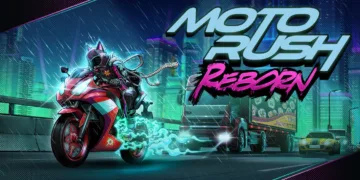
























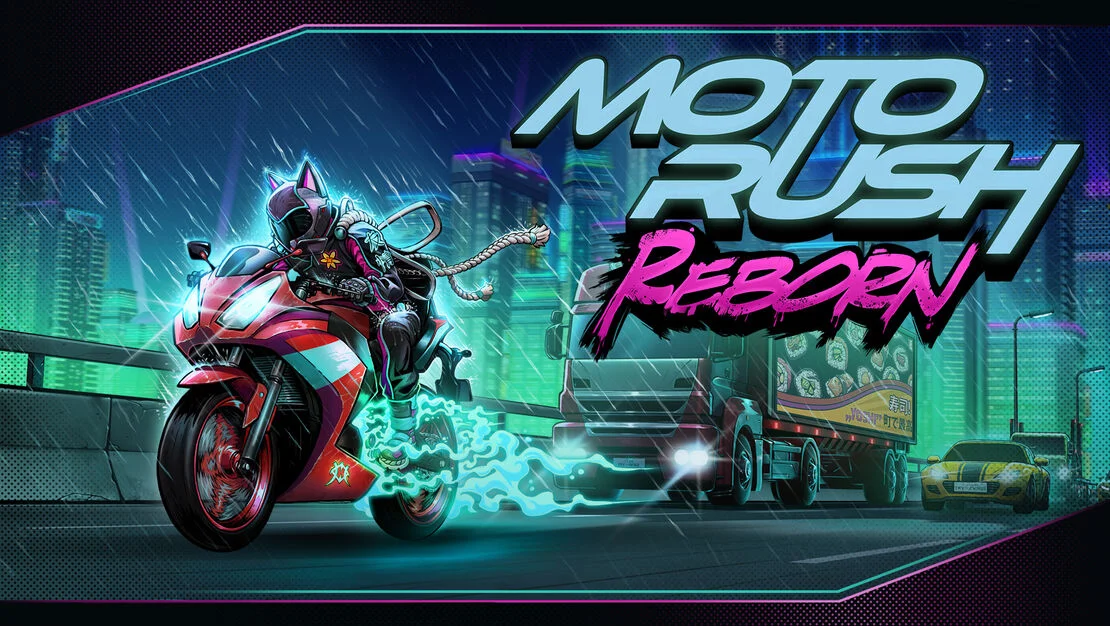

Braking in Moto Rush Reborn brings a peculiar kind of relief. The motorcycle accelerates automatically, traffic fills the road ahead, and the first-person view makes every approaching vehicle feel uncomfortably large. Slowing down gives you a little space to think, then an opening in the traffic tempts you to surrender it again. There is an appealing nervousness to riding through this futuristic Tokyo: the road keeps pulling you forward, while your confidence takes longer to catch up. Getting through a busy stretch cleanly makes you want to carry that feeling into the next one.
The ducking and sliding maneuvers complicate that confidence in useful ways. A low passage demands a different response from a car occupying your path, and the restrictions on steering during these maneuvers make preparation matter. Moving from a highway into a tight service road changes the mood before it changes the basic activity. Suddenly, speed feels like something you have allowed to get away from you. Traffic offers some reassurance through its indicators, giving lane changes a readable warning. Those small signals help make the road feel like a situation you can learn to understand.
That willingness to learn becomes harder to sustain when a slight collision sends you back to a checkpoint. Side contact can carry the same consequence as hitting something head-on, so the sensation of scraping through a dangerous passage is often replaced by an abrupt reset. The frustration comes from the severity of that interruption. A narrow escape and a minor mistake ought to feel close together in a game built around squeezing between vehicles; here, they can feel separated by an enormous drop. You lose the movement you were enjoying, then have to recover your appetite for attempting the passage again.
Baltoro Games spreads this traffic-dodging loop across 45 campaign stages, revisiting the idea behind Moto Rush GT. New obstacles give you additional things to watch, but the routes retain a familiar rhythm: broader stretches of traffic, followed by tighter spaces that demand more exact responses.
Tunnels, bridges, and city streets change the surroundings without substantially changing that relationship. The repetition makes your growing familiarity valuable. You begin to understand the sort of pressure a route will apply, which makes being stopped by a small touch especially deflating. Knowledge helps, but it cannot soften the collision rule.
The scoring adds a productive, sometimes aggravating temptation. Completion time, crashes, and near misses all contribute to stage rewards, encouraging you to think about how you ride rather than simply reaching the end. Passing close to traffic gives danger a purpose beyond survival. A car becomes an opportunity you might choose to approach, which changes the emotional texture of an otherwise straightforward obstacle. Yet the strict punishment makes that invitation difficult to trust. The game asks you to become comfortable near the very objects capable of abruptly ending your current stretch of riding.
Separate attempts can give these competing demands room to breathe. A run devoted to protecting a clean record has a different mood from one spent pursuing near misses, and chasing a time target can make familiar traffic feel newly urgent. Trying to satisfy everything at once risks turning excitement into anxious accounting. Accepting a smaller goal makes the stages easier to enjoy on their own scale. There is pleasure in returning to a short challenge with one specific improvement in mind, especially when the controls give you so little to remember before you are moving again.
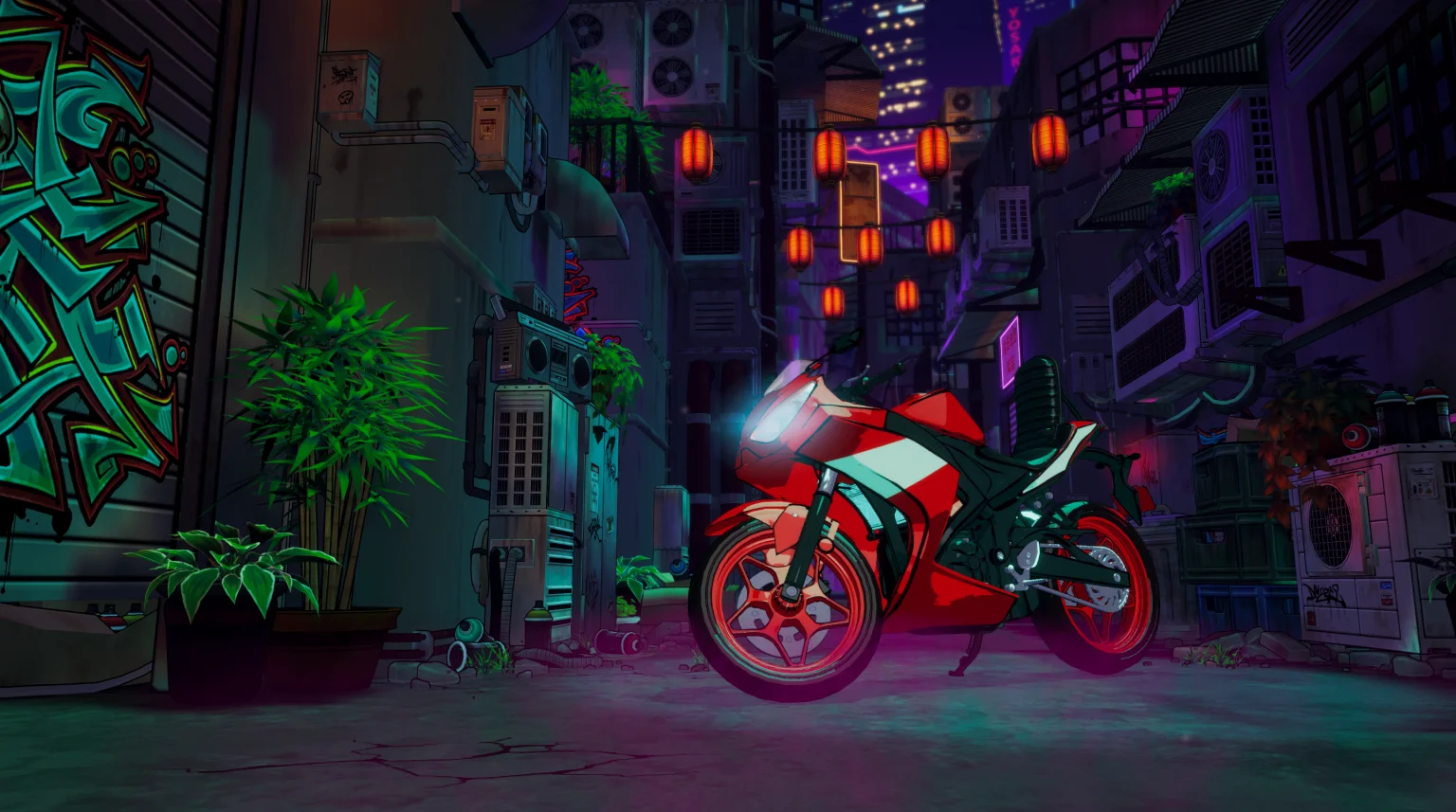
That structure suits brief sessions better than prolonged concentration. Increasing difficulty keeps the road demanding, but it does not keep the experience surprising. The recurring highway-to-alley pattern becomes conspicuous when played for a long stretch, and the limited variety in the electronic music reinforces the sense of covering familiar ground.
Coming back later gives those repeated elements a different function. You can settle quickly into an activity you already understand, then leave after a handful of attempts. The game needs little preparation from its player, which is a real virtue for a small arcade release.
Its retro-futuristic Tokyo gives that immediate activity an identity, even if the scenery has limited power to sustain curiosity by itself. With attention fixed on vehicles and openings, the setting is often experienced in passing. The supernatural premise offers another possible source of interest: after wrecking a motorcycle, the rider finds a demon-possessed engine in a junkyard and accepts power that arrives with a curse. There is a fitting connection between that bargain and a machine whose mounting speed requires constant restraint. The attraction of power is easy to understand when an empty stretch opens ahead.
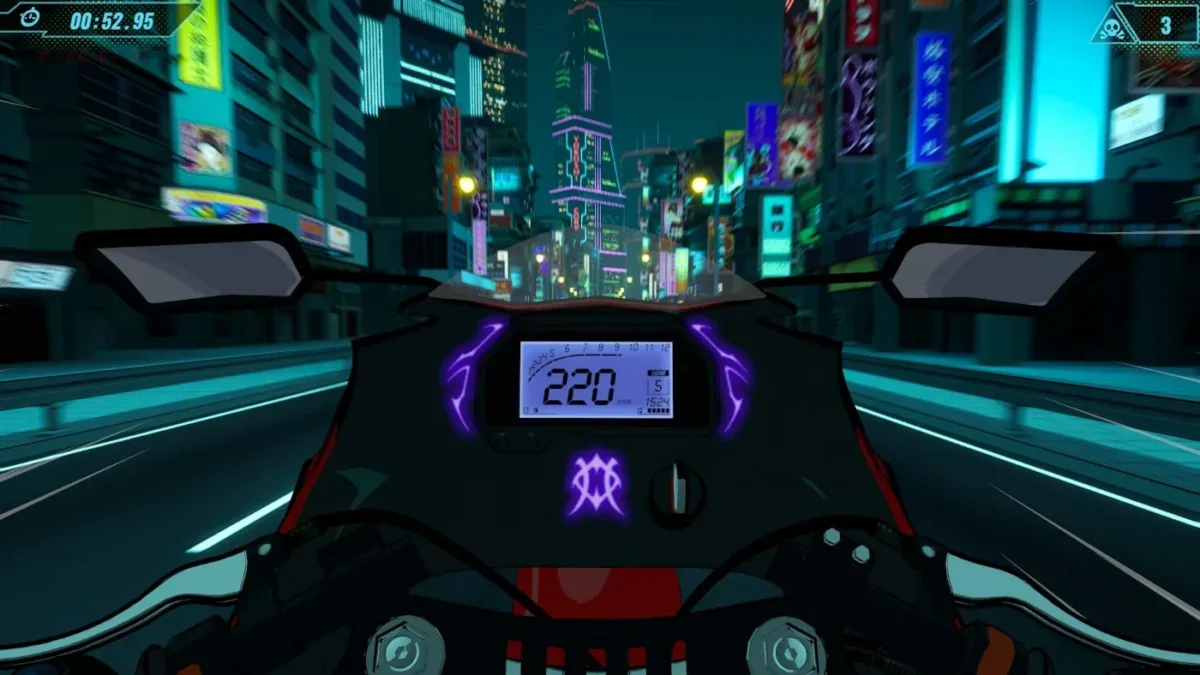
The story itself sits at a distance from that sensation. Demonic Symbols unlock manga chapters outside the riding action, making narrative something you earn access to between attempts. That arrangement gives collecting an extra purpose, but it leaves the immediate excitement dependent on traffic, speed, and the player’s decisions. The curse supplies an imaginative frame without making every difficult passage dramatically meaningful. For this kind of arcade game, that separation is manageable; the road already has enough to demand your attention.
The symbols placed in awkward gaps are where that optional curiosity becomes a practical commitment. Reaching the end of a stage may leave you with unfinished business somewhere along its route, in a space you had good reason to avoid.
Returning for it changes what you are willing to sacrifice. A fast or clean run can become expendable while you work out how to reach one troublesome collectible. The familiar road now contains a destination of your own choosing, and the brake becomes useful for another reason: giving yourself time to look toward a gap you previously hurried past.
The Review
Moto Rush Reborn
Moto Rush Reborn makes a clean stretch of riding feel worth chasing, then tests your patience with checkpoint resets for slight contact. Its best moments come from choosing a small goal and letting familiar traffic become a fresh challenge. Short sessions preserve that pleasure; longer ones expose the repeated routes and limited soundtrack. There is enough nervous excitement here to invite another attempt, provided an unforgiving scrape has not already spoiled your appetite.
PROS
- First-person riding creates immediate tension.
- Traffic indicators reward anticipation.
- Short stages accommodate focused replay goals.
- Collectibles give familiar routes another purpose.
CONS
- Minor contact triggers harsh checkpoint resets.
- Repeated route patterns wear thin.
- Limited musical variety becomes tiring. 1.