





Mark Urban could simply go and visit Sergei Skripal. Researching Russian intelligence, the journalist discovered that the former military officer turned British double agent was living in Salisbury, accessible enough to become a source. His recollections include a partly assembled model of HMS Victory at Skripal’s home. After four years in a Russian labour camp, this was a man with somewhere to live and a project to finish. Urban’s account establishes the settled existence into which the 2018 poisoning of Skripal and his daughter Yulia intruded.
The Salisbury Poisonings: A Spy Next Door builds a useful portrait from such recollections. Shopkeeper Ebru Ozturk remembers Skripal buying Russian sausage and scratchcards, details that give him habits rather than merely a résumé. With Skripal unavailable for interview, these witnesses carry an important storytelling burden: they establish someone whose absence would register locally.
Former KGB agent Viktor Makarov supplies another perspective on exile in England, though his experience can only sit alongside Skripal’s. The documentary is more revealing when it preserves the specificity of these lives than when it gathers them under the familiar heading of espionage.
That local foundation also gives the film somewhere to go when the attack expands beyond its intended target. Artist Meg Edgar communicates residents’ bewilderment, while Rev Kelvin Inglis describes supporting a community suddenly confronted with a chemical weapon.
Their contributions establish different kinds of proximity: knowing Skripal, living nearby, helping frightened neighbours. Salisbury acquires a social life through these distinctions. The contrast between cathedral-city routines and international assassination is immediately striking, but the witnesses prevent it from remaining a picturesque premise.
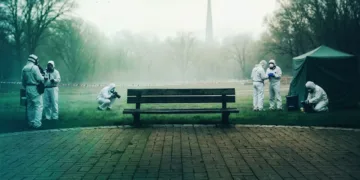
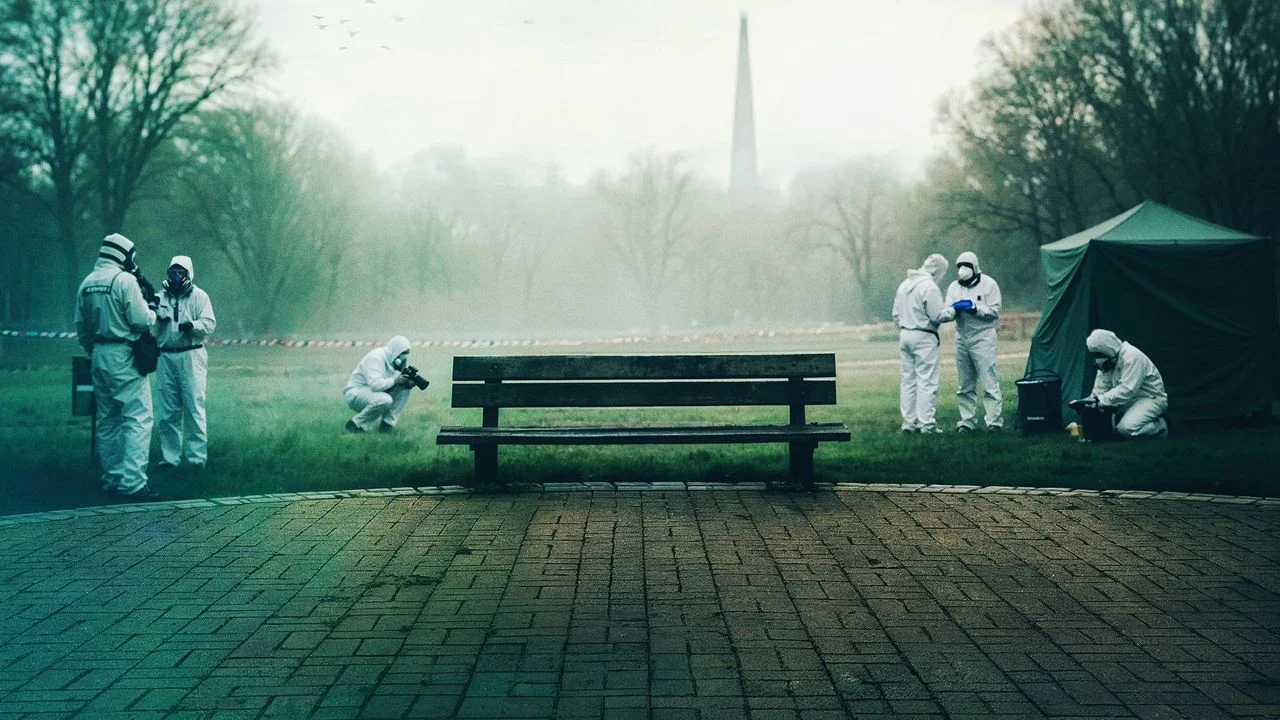
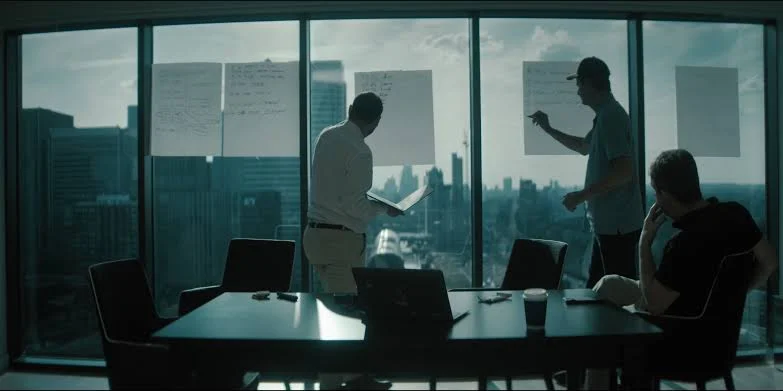
The investigative material brings a clearer kind of momentum. Scientists at Porton Down identify Novichok, replacing uncertainty about the substance with knowledge on which officials can act. The documentary also covers Christo Grozev and his team’s contribution to identifying the perpetrators.
These discoveries give the reconstruction direction because each changes what can be understood about the attack. The movement from an inexplicable local emergency toward an attributable operation supplies a workable narrative spine, even when the surrounding material branches into biography, community response and political recollection.
The difficulty comes when the film moves from establishing what happened to examining what the government did about it. Former home secretary Amber Rudd and former prime minister Theresa May are substantial interview subjects, positioned to explain decisions made under pressure.
Their recollections yield considerably more condemnation of Russia than insight into those decisions. May emphasises her determination to secure accountability, with diplomatic expulsions providing the concrete response. The film has obtained access to the people in charge, then largely lets them confirm that they were in charge.
This is a weakness of development rather than relevance. The government’s response belongs in the story, and the uncertainty preceding the identification of Novichok offers a potentially revealing account of how officials operate with incomplete information. Yet recollections of resolve do little to explain how the available options were weighed or how success was measured.
Stronger action against illicit Russian money in London receives limited attention. That omission leaves the claim of accountability insufficiently tested. The documentary can identify the response without making its adequacy particularly legible, allowing an important strand to settle into positions its participants already know how to defend.
Its civilian material is more productive because it keeps exposing consequences that the investigative framework cannot contain. Archival footage of Inglis conducting a symbolic cleansing ceremony, throwing water from two glass jugs onto paving outside a crystals shop, records an awkward effort to make the town feel habitable again.
The ceremony has no bearing on the chemistry. It does reveal a need that identifying the chemical cannot satisfy. Moments of camera wobble and refocusing give the archive an unsettled texture, although the substance of the scene is stronger than any atmospheric suggestion of menace: people are trying to recover confidence in an ordinary place.
Charlie Rowley’s account gives that distinction its most painful expression. Trying to build a life with his partner Dawn Sturgess, he searched discarded items for things he could give her. What appeared to be a perfume tester offered the possibility of a present.
It contained Novichok discarded after the attack. Sturgess applied it and subsequently died. The chain is horribly easy to follow, and the documentary gains force from allowing Rowley’s intention to remain comprehensible at every stage. A small act of affection becomes part of an assassination operation whose participants had no relationship with either of them.
The late attention to Rowley changes the weight of the reconstruction. By this point, explanations of the weapon and the investigation have supplied a degree of order. His testimony establishes how little that order could mean to someone encountering the attack through what had been thrown away. Sturgess’s death matters beyond its capacity to shock. Rowley’s account gives the discarded bottle a place within a relationship, making the loss specific enough to resist becoming another extraordinary fact in a crowded case.
The Russia Today interview with the men identified as the attackers then presents a different problem of tone. Their denials carry an appearance of suppressed amusement, a grotesque addition to a story already full of unlikely details. Beside Rowley’s testimony, that manner becomes difficult to treat as merely another bizarre episode. The film’s range of witnesses allows the distance to register: the men can participate in a performance of innocence, while Rowley must explain how a gift killed the person he loved.
The Salisbury Poisonings: A Spy Next Door premiered on CNN Films on July 12, 2026. Directed by Dan Vernon, the gripping documentary examines the 2018 Novichok nerve agent attack in Salisbury, utilizing firsthand testimony from senior intelligence leaders, journalists, and victims to explore how a quiet English city became the epicenter of an international geopolitical crisis.
Where to Watch The Salisbury Poisonings: A Spy Next Door (2026) Online

Full Credits
Title: The Salisbury Poisonings: A Spy Next Door
Distributor: CNN Films, Passion Pictures
Release date: July 12, 2026
Rating: TV-14 / Unrated
Running time: 1 hour 19 minutes (79 minutes)
Director: Dan Vernon
Producers and Executive Producers: Alex Brisland, Hamish Fergusson, Kari Lia, Roxanna Sherwood, Amy Entelis, Ben Silverman, Howard T. Owens
Cast: Christo Grozev, Theresa May, Amber Rudd, John Sawers
Director of Photography (Cinematographer): Toby Lloyd
Editors: Shane McCormack
The Review
The Salisbury Poisonings: A Spy Next Door
The Salisbury Poisonings: A Spy Next Door builds a persuasive account through local recollections, investigative discoveries and Charlie Rowley’s devastating testimony. Its strongest structural choice is allowing civilian consequences to outlast the investigation’s answers. The government interviews are less productive, offering declarations of resolve where scrutiny of decisions should be. An engaging, uneven reconstruction whose human detail carries more weight than its political access.
PROS
- Everyday details give Skripal a recognisable life.
- Investigative discoveries provide clear narrative momentum.
- Rowley’s testimony deepens the account of civilian harm.
- Community footage captures the difficulty of restoring reassurance.
CONS
- Government decisions and claims of accountability receive insufficient scrutiny.
- Broader espionage framing is less revealing than individual portraits.