




























Women and girls listen from a kitchen or through a window while the future of their home is discussed elsewhere. Ashgan El-Hamus keeps the negotiations over the family’s land offscreen in Al Baraneya, giving us access through the people who must live with the decision rather than the men conducting the business. The distinction matters. Sayed, the father, can accept or reject an offer; those listening can interpret its implications. Without making the household look like a prison, the film establishes a separation between belonging to a place and possessing authority over it.
That separation becomes less tidy when Sayed discusses the offer with his wife, Sara. An apartment near the sea in Alexandria might replace agricultural uncertainty with domestic comfort. “Are we people of balconies?” she asks. Her objection has its own authority, rooted in an understanding of what fills their days.
Land produces income, work, and a reason for the family to remain together; an apartment supplies somewhere to live after those arrangements have been dismantled. The sales pitch has rather neglected the hours between admiring the view. Sara’s question also exposes the difficulty of imagining change when a familiar way of living has become a definition of oneself.
Their pregnant daughter Amal, played by Reem Amer, faces a smaller version of the same problem. Still living with her extended family while her husband Omar works toward completing their home, she can already see the shape of her expected future. El-Hamus gives that future a persuasive physical presence. Brick and concrete organize domestic space, with the unfinished building promising a household still to come; beyond them, wheat and greenery establish the productive landscape supporting the existing one.
The beauty of Douwe Hennink’s cinematography remains attached to these uses. Golden fields can look abundant while returning too little money. The image gives Sayed something worth protecting without settling the wisdom of protecting it indefinitely.
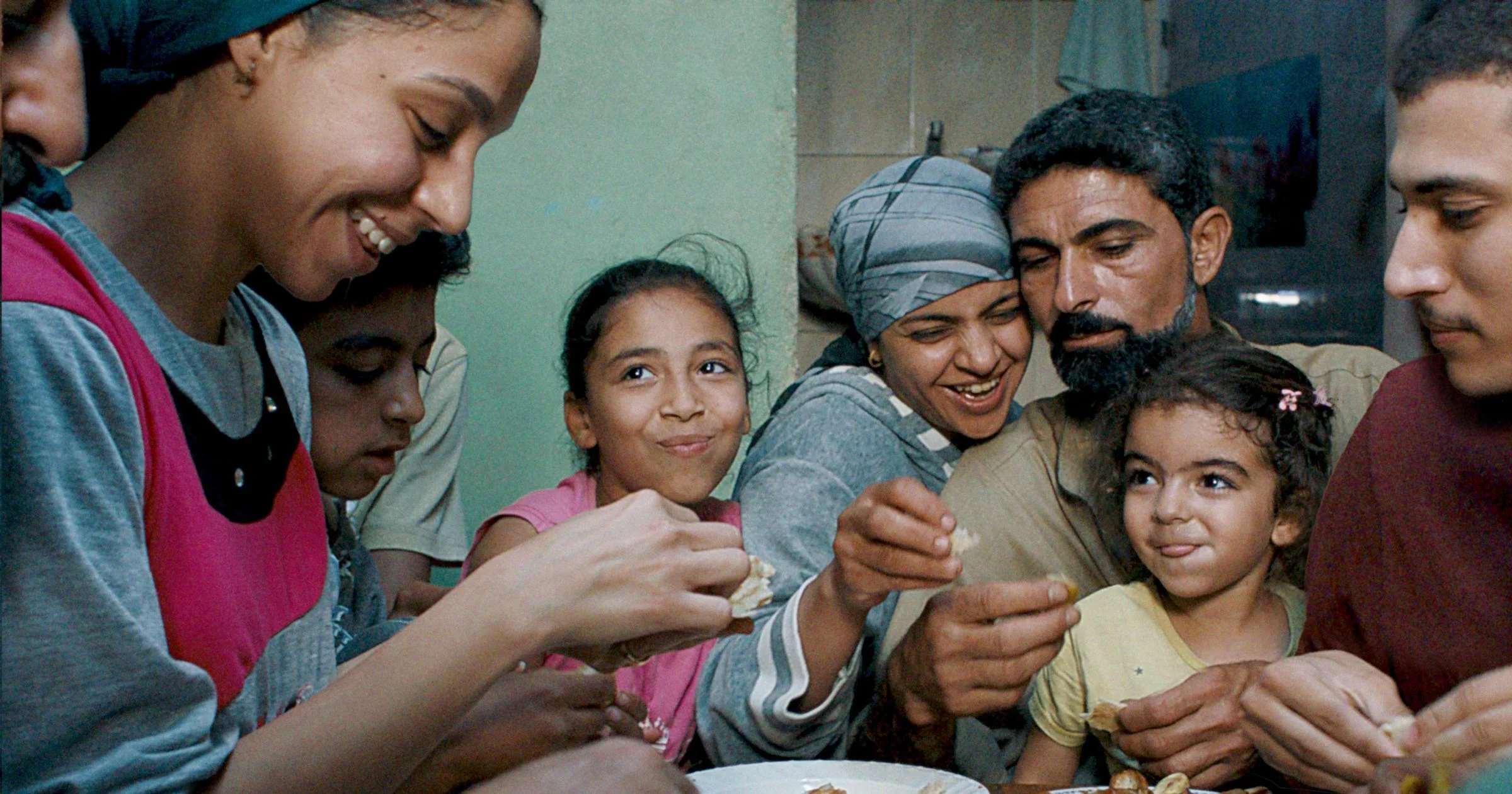
Hennink’s mobile framing finds another kind of abundance among the children. It responds to their activity rather than insisting that crowded family life arrange itself into a solemn portrait. Picking jasmine before daybreak, making garlands, and trying to sell them put Amal and the younger girls to work, but their teasing keeps labor from becoming their only visible identity. Slow business remains slow business. Their enjoyment does not pay the bills. At meals and during an impromptu fashion show, however, the camera allows shared pleasure to occupy the attention that a harsher treatment might reserve entirely for deprivation.
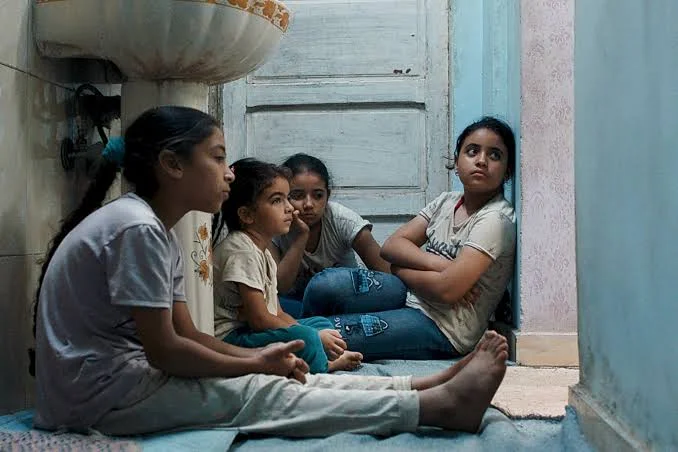
Most of the ensemble consists of El-Hamus’s relatives playing fictionalized versions of themselves, and the ease of their interactions gives these scenes considerable elasticity. The film is fiction, whatever its observational appearance suggests. Its achievement lies in making Amer’s presence feel continuous with the household around her.
As Amal, she participates in the girls’ amusement while carrying responsibilities they can temporarily forget. Her closeness to her grandmother, with whom she rests and watches television, supplies an intimacy less boisterous than the children’s play. Affection takes the form of spending unremarkable time together. El-Hamus makes that time desirable enough that dissatisfaction cannot arrive without disturbing something valuable.
Television introduces a disagreement inside this refuge. Amal sees glamorous lives; her grandmother doubts the happiness behind them. The film leaves room for the older woman’s skepticism without allowing it to dispose of Amal’s curiosity.
A smartphone supplied by Omar expands the available images, while cousin Rania brings clothes, creams, and cosmetics from Cairo. Yet Rania, played by Salma Khattab, also works in a salon. She represents employment and contact with women outside the family’s immediate arrangements. Amal’s interest has practical possibilities beneath its attractive packaging, even if neither she nor the film can guarantee what those possibilities will deliver.
When Amal visits Cairo against expectations at home, her participation in a TikTok video with Rania changes her relationship to the images attracting her. In the shopping-mall studio, she can help produce a version of herself instead of watching other women perform desirable lives. El-Hamus permits the pleasure of that experiment without treating a recording as a certificate of independence. The trains passing the village have already made distance an inadequate explanation for Amal’s confinement. Their recurring sound places another life within reach. Permission, money, marriage, and the unfinished home complicate the apparently simple act of going there.
The salon sequence gives this tentative freedom its strongest cinematic expression. As the women talk uninhibitedly about their sex lives, the camera stays with Amal listening. Their conversation opens a social space, but Amer’s response determines our experience of it. El-Hamus concentrates the scene’s visual attention on someone absorbing possibilities she has had little occasion to consider aloud.
Amer makes listening an activity with stakes: admiration and curiosity register without turning Amal into an instantly transformed woman. Keeping her face in view shifts the emphasis from decisions taken elsewhere to possibilities she can begin considering for herself. Here, what she makes of the conversation is the business of the scene.
The film’s patience is less consistently productive in its middle stretch. Returning to household routines sustains the attraction of communal life, though some of that attention continues after the attraction has been firmly established. The developing pressure on Amal can feel suspended while the film replenishes an atmosphere already rich enough to support her dilemma. This is a limitation of emphasis rather than an argument for louder confrontations or a resolved land sale. The uncertain future suits people whose choices depend on resources and relationships they cannot simply command.
A sharper pressure appears when Sara accuses Amal of influencing the younger girls badly, and Amal herself becomes concerned as their resistance grows. The woman testing the limits placed upon her discovers that she can feel protective of limits too. Her position among the children changes the meaning of her example: they can imitate an act without sharing the circumstances that made it necessary. El-Hamus allows affection, responsibility, and a wish for freedom to become difficult to separate. Amal must consider the girls as people who may follow her, even while she is still trying to establish where she wants to go.
Al Baraneya had its world premiere at the 83rd Venice International Film Festival on September 3, 2026. Directed by Ashgan El-Hamus, the drama follows a pregnant young woman living with her family in a rural Egyptian village surrounded by jasmine fields, whose peaceful routine is upended when a landowner offers to buy their property, sparking dreams of a new life in Cairo.
Full Credits
Title: Al Baraneya
Distributor: MAD Solutions, BALDR Film
Release date: September 3, 2026 (Venice International Film Festival)
Running time: 1 hour 24 minutes (84 minutes)
Director: Ashgan El-Hamus
Writers: Ashgan El-Hamus, Roelof-Jan Minneboo
Producers and Executive Producers: Frank Hoeve, Kesmat Elsayed, Eurydice Gysel
Cast: Reem Amer, Fatma Ibrahim El-Hamus, Nadia Ahmed El-Hadary, Asmaa Ahmed El-Hadary, Farida Alsayed El-Hamus, Fatma Farahat El-Hadary, Sara Ali El-Hadary
Director of Photography (Cinematographer): Douwe Hennink
Editors: Dieter Diependaele
Composer: Taco Drijfhout (Sound Design / Music Supervision by Laura Bell)
The Review
Al Baraneya
Al Baraneya finds the politics of family life in who gets to listen and who gets to decide. Hennink’s responsive camera makes communal pleasure tangible, while Reem Amer gives Amal’s curiosity particular force in the salon scene. Repeated domestic passages slacken the middle stretch, but El-Hamus earns the difficulty of leaving by making the pleasures of staying so persuasive. Affection remains real even when it restricts the future.
PROS
- Amer’s expressive listening anchors Amal’s developing desires.
- Responsive camerawork captures family intimacy without erasing hardship.
- Framing connects access to conversations with decision-making power.
- Rural belonging and urban opportunity receive thoughtful, nuanced treatment.
CONS
- Repeated household routines sometimes stall Amal’s developing dilemma.