





















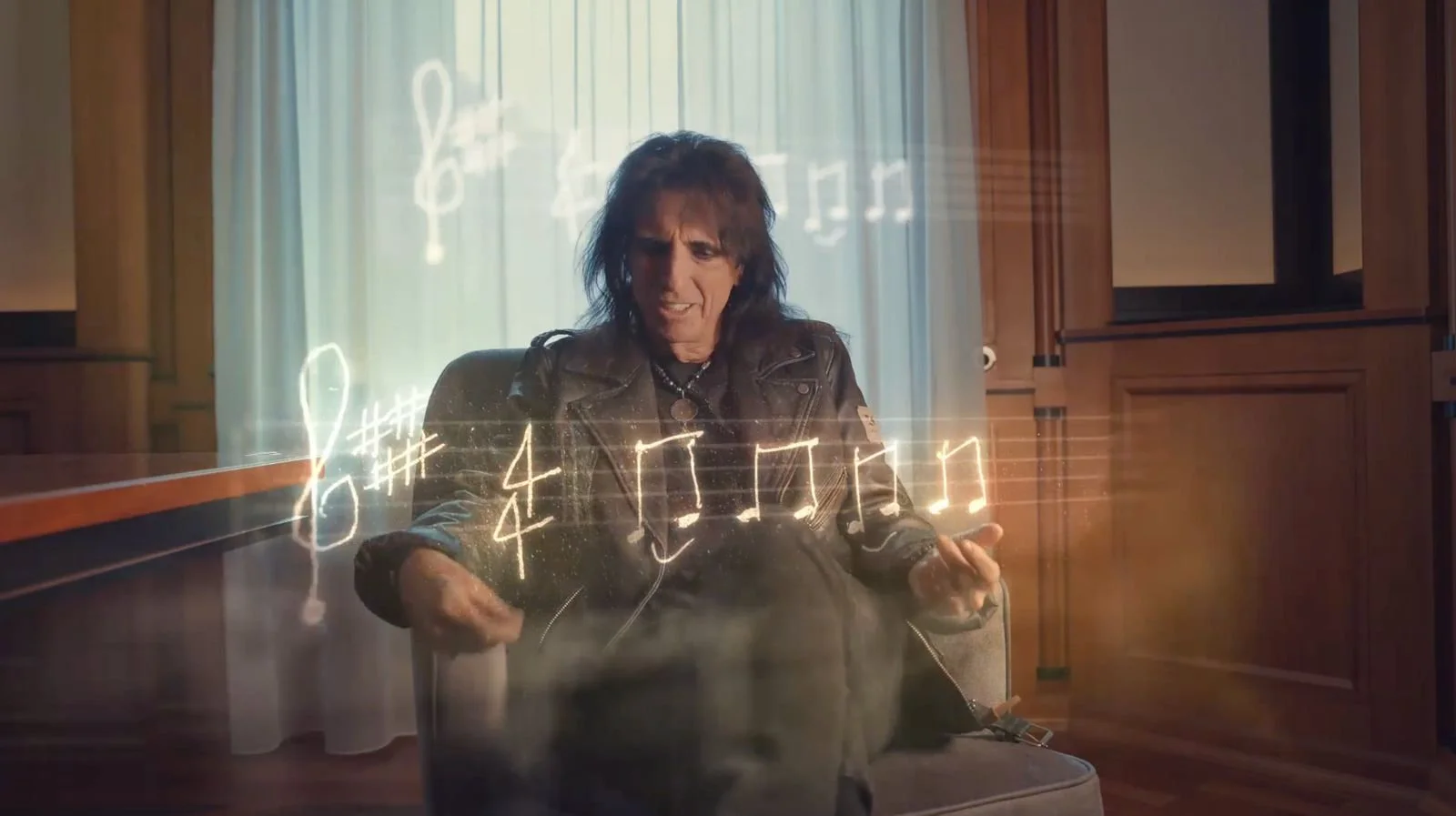

Kirsty Bell gives Eddie Cochran’s guitar enough attention for its specifications to become part of the story. Her documentary Don’t Forget Me examines his 1955 Gretsch 6120, the use of a Gibson pickup, and an adjustment to the G string, then places that experimentation alongside his overdubbing and ability to play several instruments on his recordings.
These details establish a musician actively constructing his sound. The distinction matters in a film crowded with admirers: enthusiasm can tell us that Cochran mattered, while an account of his working methods gives that enthusiasm a subject. Bell is at her most persuasive when she allows practical knowledge to carry the biography.
That knowledge also gives the interviews a useful test. Kiefer Sutherland’s account of Cochran sharing guitar advice with Buddy Holly contributes an exchange between working musicians, making influence a matter of something learned and passed along.
Archival testimony from Paul McCartney supplies a further consequence: his performance of “Twenty Flight Rock” helped secure his place in John Lennon’s group. Here, a familiar song acquires a specific narrative function. It connects Cochran’s achievement to someone else’s opportunity. The distinction between explaining a musical inheritance and announcing one will become increasingly important as the film proceeds.
Bell has a harder task when she moves from the resourceful musician to the young man living through his brief career. Photographs, home movies, newspaper material and surviving fan letters offer pieces of that life; reconstructed telephone conversations between Cochran and his mother provide a continuing relationship through which to organize them.
Actors perform both sides of these exchanges, with Cochran’s recreated voice also helping connect the biographical material. The device supplies continuity that a collection of documents cannot easily produce. Touring exhaustion becomes something a son brings home in conversation, giving the career a private rhythm alongside its public milestones.
The mother’s disapproval of photographs sent by female fans is especially useful because it gives these calls an ordinary domestic concern. Fame has entered the household, and she has opinions about the mail. That small friction allows their relationship to exist outside the demands of a tragic biography.
Preserved fan letters, some read aloud, provide another perspective on the attention surrounding him. The film can place a fan’s excitement beside a parent’s reaction, allowing the same celebrity to mean different things to different people. The recreated exchanges work best at this scale, where they supply the texture of family contact without having to bear the weight of explaining his destiny.
His fear of dying young places a heavier burden on them. Following Holly’s death, Cochran’s anxiety gives the calls an unmistakable direction, while his tribute recording “Three Stars” connects personal bereavement to the music. There is a clear emotional logic here: a young performer loses friends and begins to fear for himself.
Yet knowledge of Cochran’s own death encourages every expression of unease to sound prophetic. Because these are performed conversations, their dramatic coherence needs to remain distinct from the authority of preserved speech. They make his fear accessible, though they also risk arranging his life into a steady approach toward the accident.
Cochran died at 21 following a road accident in England in 1960. Bell reaches that endpoint roughly an hour into the film, leaving approximately another half-hour for his legacy. The change of subject is reasonable. A chronological biography ends with a death; an account of musical influence still has work to do.
Family testimony also gives the loss consequences beyond the interruption of a career. His sister, niece and nephew help establish the enduring damage to the people around him, particularly his mother. These contributions give the accident an aftermath within the family, preserving a scale of grief that the famous admirers cannot supply.
The later stretch becomes less secure when remembrance substitutes for development. Covers of “C’mon Everybody” and “Summertime Blues” offer a legitimate route into Cochran’s continuing presence, but their usefulness depends on what the film explains through them. McCartney’s recollection has already demonstrated how economical such evidence can be: one song, one encounter, one consequential outcome.
Repeated assurances of Cochran’s importance offer less movement. The documentary occasionally seems to believe that a tribute requires a second witness, then a third. Its pace slackens because the audience has accepted the proposition while the testimony continues to accumulate.
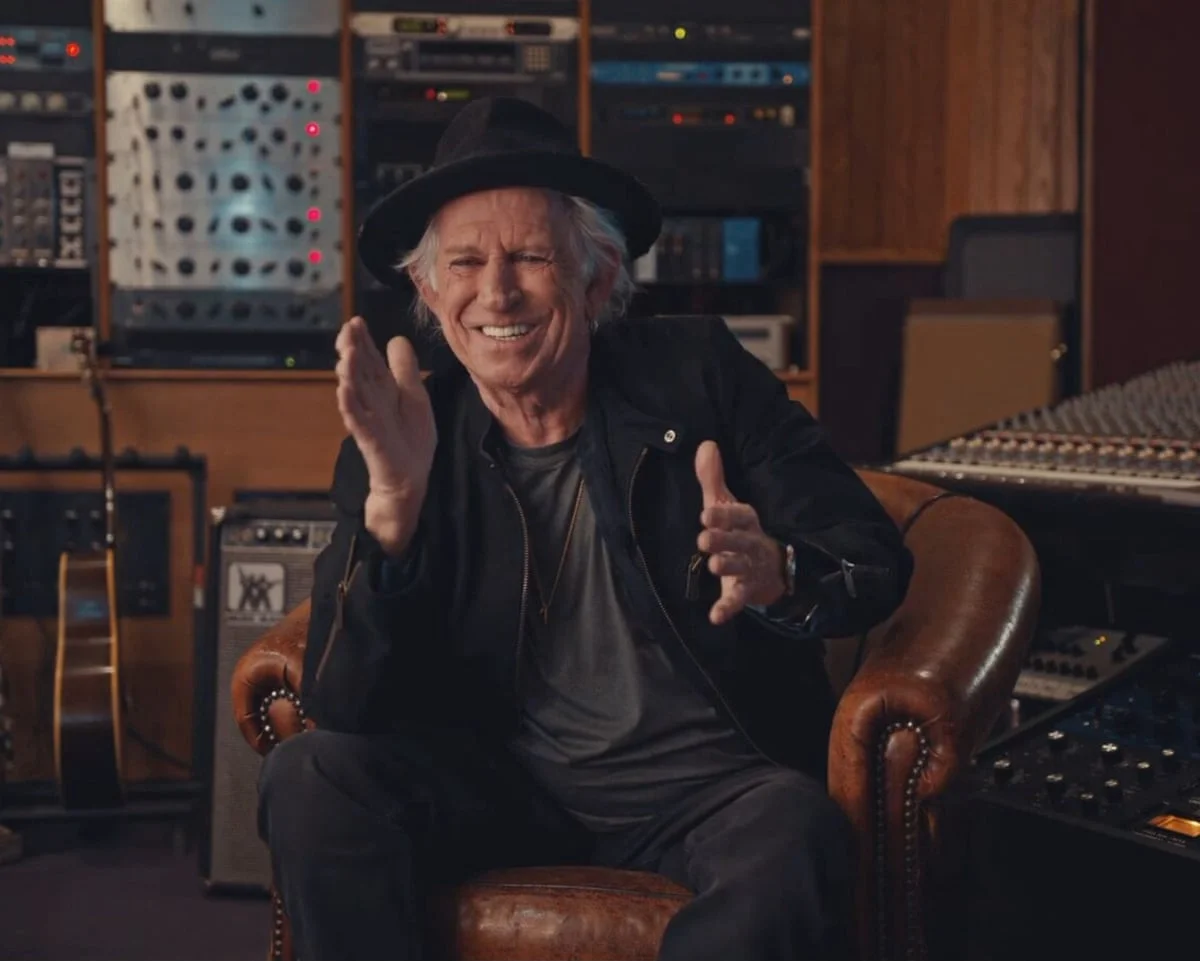
Keith Richards and Roger Daltrey bring something distinct to that testimony through their visible emotion. Their responses make the passage of time part of the film’s subject. A performer’s influence can be discussed through recordings and technique; the continuing pain of his absence requires people who still feel it.
Bell earns time for that distinction. The difficulty is structural: musical inheritance, personal loss and admiration occupy related territory, yet they do different jobs. When the film gives each contribution a clear purpose, the continuation feels necessary. When those purposes blur, affection holds the account in place.
Yungblud’s fear of being forgotten introduces a different pressure. A younger musician’s anxiety about his own disappearance shifts attention from what Cochran left behind to what performers hope will remain of them. The title, drawn from Cochran’s reported practice of signing autographs with “Don’t Forget Me,” makes that connection available without proving any premonition.
There is also an awkwardness in the exchange: Cochran’s remembrance becomes the occasion for another artist to imagine his own erasure. Bell leaves that anxiety beside the evidence of songs still played and a musician still discussed. The testimony can establish that Cochran has been remembered. It cannot give the living performer the same assurance about himself.
Eddie Cochran: Don’t Forget Me was released in theaters in September 2026 via Miracle Communications. Directed by Kirsty Bell, the biographical documentary explores the life and legacy of rock and roll pioneer Eddie Cochran, combining contemporary interviews with dramatic reenactments.
Full Credits
Title: Eddie Cochran: Don’t Forget Me
Distributor: Miracle Communications
Release date: June 26, 2026 (United States), September 11, 2026 (United Kingdom)
Running time: 1 hour 35 minutes (95 minutes)
Director: Kirsty Bell
Writers: Kirsty Bell
Producers and Executive Producers: Ben Charles Edwards
Cast: Jack Harris, Frances Barber, Keith Richards, Yungblud, Tim Rice, Roger Daltrey, Sting, Ronnie Wood
Editors: Brad Watson
The Review
Eddie Cochran: Don't Forget Me
Kirsty Bell makes a persuasive case for Eddie Cochran by explaining how he worked and tracing what his songs made possible for others. The reconstructed family calls supply intimacy, though their emphasis on mortality can make his life feel arranged around its ending. The legacy section has valuable testimony but struggles to distinguish fresh insight from another expression of admiration. An informative, affecting documentary whose musical curiosity is sharper than its control of the final act.
PROS
- Detailed attention to Cochran’s guitar and recording methods.
- Specific accounts make his musical influence understandable.
- Domestic exchanges give the family relationship texture.
- Family testimony establishes the lasting consequences of his death.
CONS
- Repeated admiration slows the legacy section.
- Reconstructed calls lean toward fatalism.
- Yungblud’s self-reflection briefly pulls attention from Cochran.