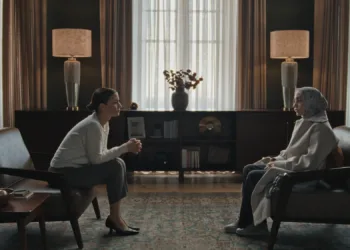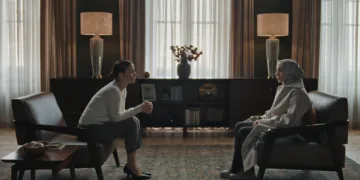




























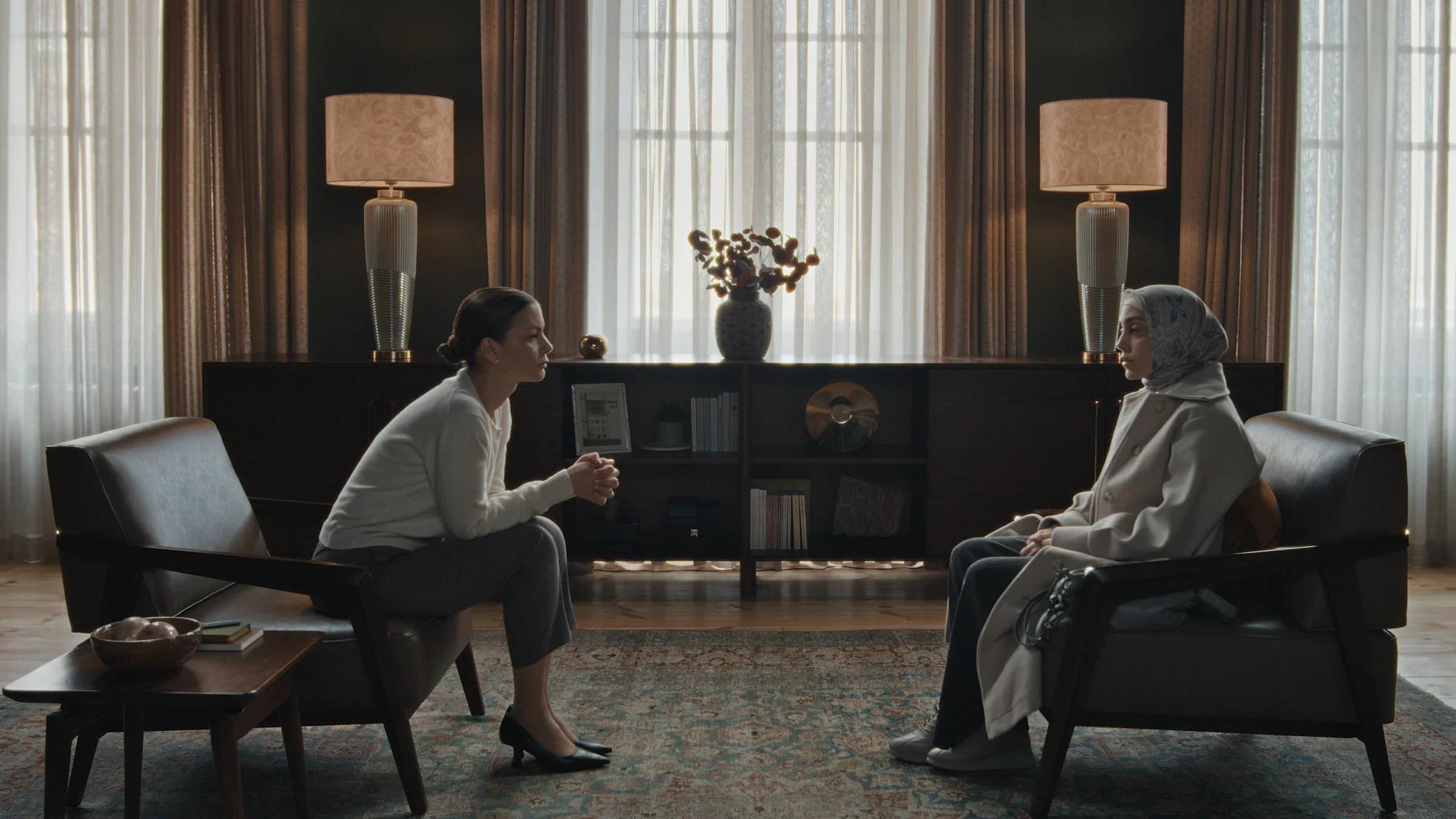

What can a returning streaming drama gain by making its world smaller? The four-episode second season of Ethos, on Netflix, gives that question an unusually demanding test. Creator Berkun Oya concentrates much of the action in psychiatrist Peri’s office, where the camera frequently holds on whoever has the floor. An appointment can occupy a substantial part of an episode. Those stretches make the allocation of screen time a political choice: who gets to explain themselves, who has to listen, and what happens after the explanation.
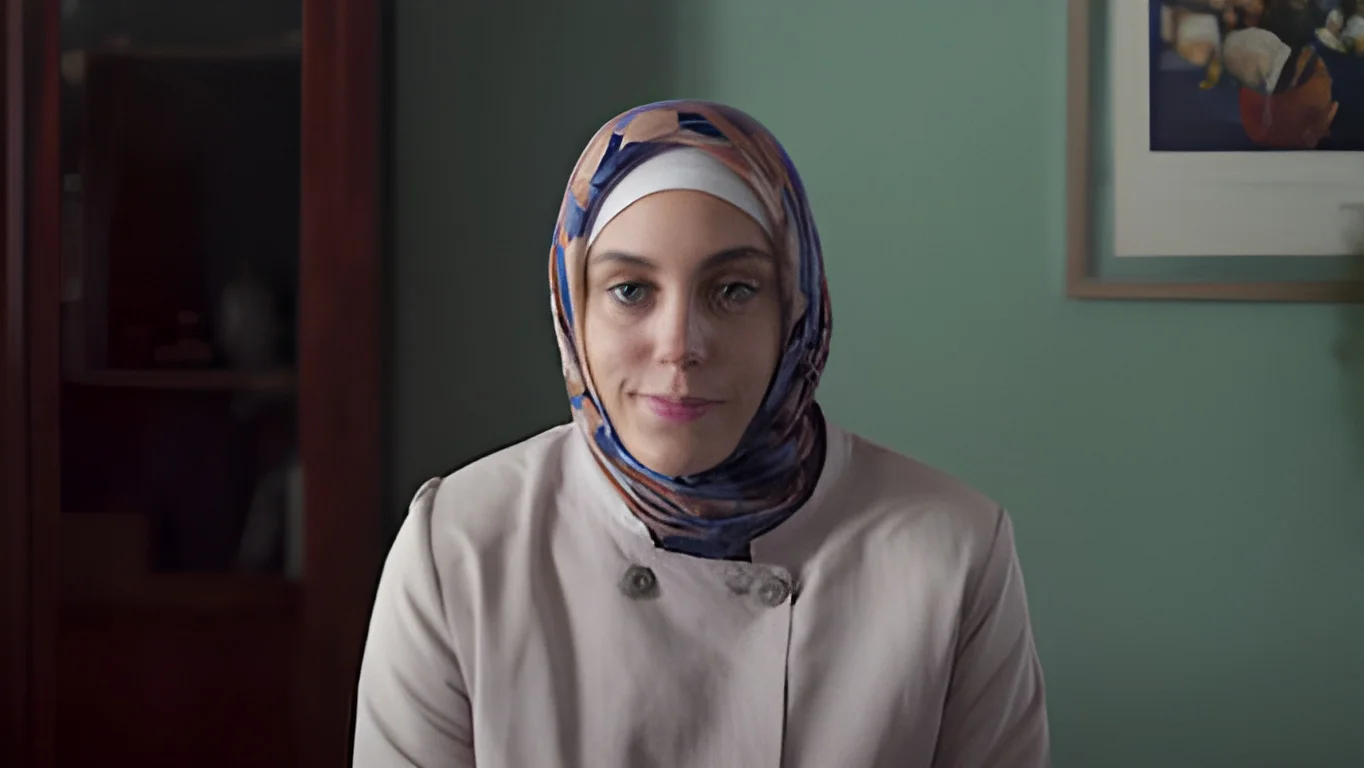
Meryem makes the case for this concentration when she talks about money. Now married to Hilmi and pregnant, the former domestic worker measures political rhetoric against the practical business of getting through a month. She questions what shouting by people in power can possibly do to improve the currency or ease the pressure on a household. Oya gives this analysis to a woman whose experience supplies her argument. Peri’s professional status does not entitle her to explain the country to Meryem. She has to hear what Meryem already understands about the decisions being made above her.
This is a sharp, troubling return, and one I recommend for the attention it pays to such exchanges. It also stops too soon on several of their consequences. Its compression offers a productive direction for returning streaming dramas: reduce the geographical spread and let sustained encounters carry the social argument.
Oya’s decision to play police officer Muzaffer makes that distribution of attention especially charged. The creator takes the role of a man who expects considerable patience from women and routinely excuses his own conduct. Muzaffer recounts assaulting his pregnant wife and brings up his frustration over a promotion. He initially denies hitting his daughters, then makes an exception for the eldest. Oya lets the account revise itself in front of Peri. Each correction exposes the work Muzaffer is doing to preserve a tolerable version of himself, even during an appointment ostensibly devoted to telling someone the truth.
His cigarette is a smaller, immediate demonstration. Peri says he cannot smoke; he smokes, demands an ashtray, and invokes the money he is paying. Netflix’s subscription buys the viewer a seat at somebody else’s customer-service dispute. Muzaffer regards a professional restriction as an obstacle his payment should remove, leaving Peri to continue the session after her instruction has been disregarded.
Then the performance takes him into the parking lot, where he cries and struggles against his own visible distress. His bereavement also finds an extraordinary domestic expression in the robot vacuum he buys after his wife’s death, having left her request for one unfulfilled while she was alive. He follows it and talks to it. The delayed purchase turns an ordinary appliance into an inadequate attempt to address an absence. These scenes deserve their time because they make his grief tangible; they also make the later return of his threatening behavior harder to dismiss as simple caricature.
In Episode 3, he suspects Peri of disclosing information. The blinds close, and the appointment acquires the pressure of an interrogation, complete with a warning. The entitlement behind the ashtray demand has become overt intimidation. His grief has done nothing to protect Peri from the authority he brings into her workplace.
Öykü Karayel makes Meryem’s time in the same chair feel different. She watches Peri, pauses for a response, and resumes when the answer she needs fails to arrive. Her intelligence is active in those intervals. She is assessing what the woman opposite her can offer, sometimes pressing with a remark that leaves little room for professional reassurance. This is a valuable representational decision for television: political understanding resides in a working-class woman’s interpretation of events, expressed through an actor’s responsiveness. The journalist and the psychiatrist do not possess a monopoly on insight. Meryem’s difficulty is getting an answer she can use.
Hilmi’s online activity gives that difficulty a frightening scale. His discussions of religion and psychology have moved from the coffeehouse to livestreams, with an audience approaching 500 followers. Meryem fears arrest before it happens, mistaking a neighbor’s knock for the police.
The modest audience makes the anxiety especially disturbing. This is hardly an empire of influence, yet public visibility is enough to make her anticipate the destruction of ordinary routines. Muzaffer, who lives in the same building, represents the possibility of help from someone with institutional standing. What he tells Peri about supporting Hilmi’s detention makes that hope painful to watch.
Fear circulates beyond Meryem’s household. Peri’s husband Bahadır, a journalist, suspects a taxi driver of recording him; the driver points out that the vehicle already records. The encounter establishes how readily an everyday conversation becomes a possible source of exposure. It never needs to prove that Bahadır has correctly identified a deliberate operation against him.
At dinner in Yasin’s home, the consequences become harder to contain. Meryem’s nephew recounts fighting someone who called Hilmi a terrorist, and she vomits. An accusation has reached the children before the adults can secure any protection from it. Karayel’s body interrupts the family conversation, returning the political discussion to the immediate experience of a pregnant woman trying to absorb what her family is now living with.
Peri’s position becomes most difficult when Meryem asks her to approach Muzaffer. She holds information that Meryem needs, obtained within the professional relationship that prevents her from freely supplying it. In the final episode, we hear Peri’s voice while her lips remain still. Oya gives her an interior response and leaves Meryem facing the silence. The device exposes the limit of the office as a refuge: access to someone’s inner life can deepen the audience’s understanding, but Meryem still needs an action from the person across the room.
Four episodes are enough to bring that predicament into focus. They give less space to Hilmi’s circumstances after detention, Bahadır’s continuing exposure, or the practical implications of Peri’s knowledge. Uncertainty belongs in a story about people living under arbitrary authority, but these threads need further dramatic life. Muzaffer receives sustained examination; the people affected by the system he serves are too often left waiting. That imbalance weakens the season’s chosen scale, particularly after Karayel has made Meryem’s search for a usable answer so absorbing.
Meryem’s hope for her daughter brings another demand into the room. She wants the child to study and avoid inheriting the domestic labor that has defined her own opportunities. Education remains something she can wish and plan for, even as the adults around her struggle to make the present safe. Her trust in Peri gives that wish a specific human attachment. The daughter will also need schools, work, and institutions capable of offering the security her mother has been seeking in a neighbor and a psychiatrist.
Ethos Season 2 premiered globally on Netflix on November 12, 2026, six years after its acclaimed debut season. Written and directed by Berkun Oya, the four-episode Turkish drama returns to Istanbul to follow Meryem, psychiatrist Peri, and a new circle of intersecting lives—including Chief Inspector Muzaffer—as unexpected encounters, shifting times, and deep socio-cultural divides spark fresh personal conflicts.
Where to Watch Ethos Season 2 Online


Full Credits
Title: Ethos (Bir Başkadır) — Season 2
Distributor: Netflix
Release date: November 12, 2026
Rating: TV-MA
Running time: ~29–48 minutes per episode (4 episodes)
Director: Berkun Oya
Writers: Berkun Oya
Producers and Executive Producers: Evrim Zeybek, Ali Farkhonde, Berkun Oya
Cast: Öykü Karayel, Defne Kayalar, Fatih Artman, Funda Eryiğit, Onur Saylak, Berkun Oya, Cihat Süvarioğlu, Gökhan Yıkılkan, Oğulcan Arman Uslu, Eda Akalın, İdil Çelik, Cemre Zişan Sağbır, Göktuğ Yıldırım
Director of Photography (Cinematographer): Yağız Yavru
Composer: Cem Yılmazer
The Review
Ethos Season 2
By giving Meryem the clearest understanding of how power enters a household, Ethos makes its narrowed format count. Öykü Karayel’s watchfulness and Berkun Oya’s self-excusing police officer turn extended appointments into a sharp examination of who receives care and who needs protection. The return deserves your attention. Its short run leaves Hilmi and Bahadır underdeveloped, and Muzaffer’s extensive hearing makes that imbalance harder to ignore.
PROS
- Karayel gives Meryem intelligence, hurt, and an insistent search for answers.
- Oya makes Muzaffer’s grief and intimidation equally tangible.
- Sustained appointments expose the connections between household life and public power.
- Peri’s audible inner voice gives her silence concrete dramatic weight.
CONS
- Hilmi and Bahadır’s situations receive insufficient follow-through.
- Muzaffer’s extensive examination leaves less space for people affected by his authority.