

















A conventional crime drama treats a conviction as the point where its machinery can stop. Here, the sentence sets a second mechanism running: the solution reached in 1988 produces the crisis awaiting the authorities in 2014. That connection gives The Law of Beasts a strong dramatic spine. Across four episodes, the series makes the case for returning to a solved crime, and earns a recommendation through the uncomfortable business of examining what the investigators called success.
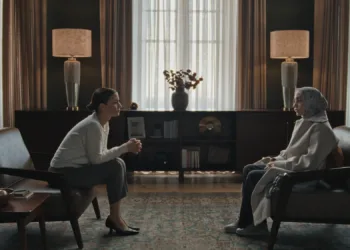
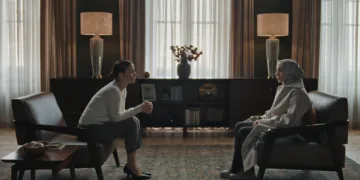
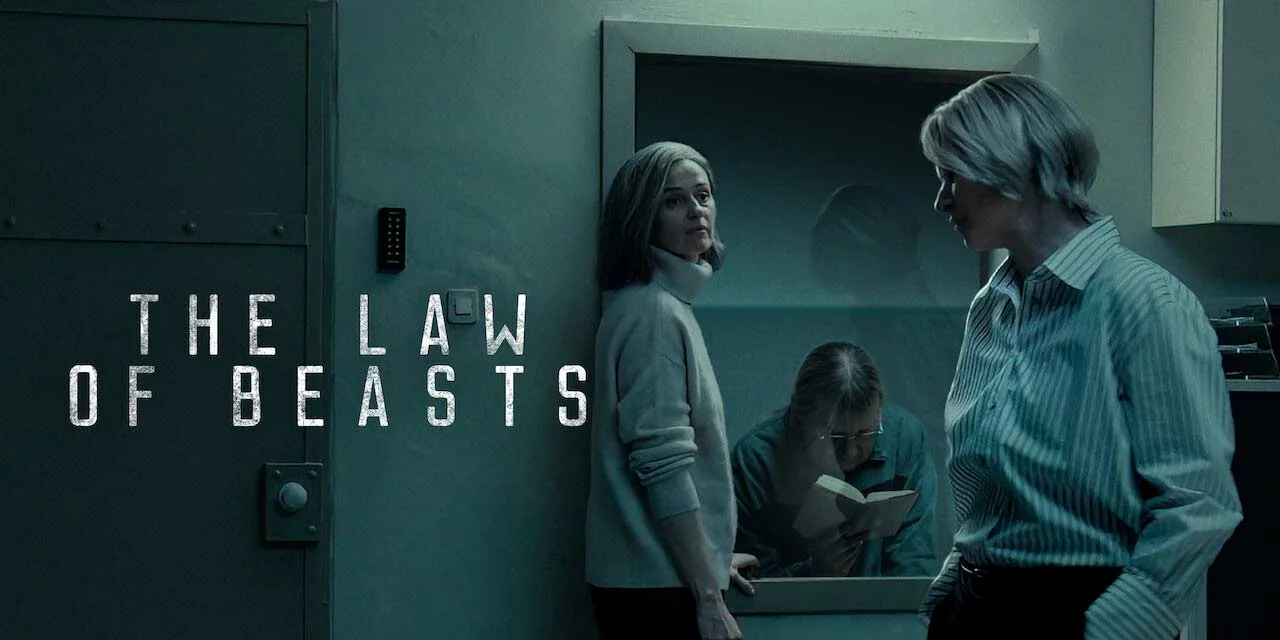
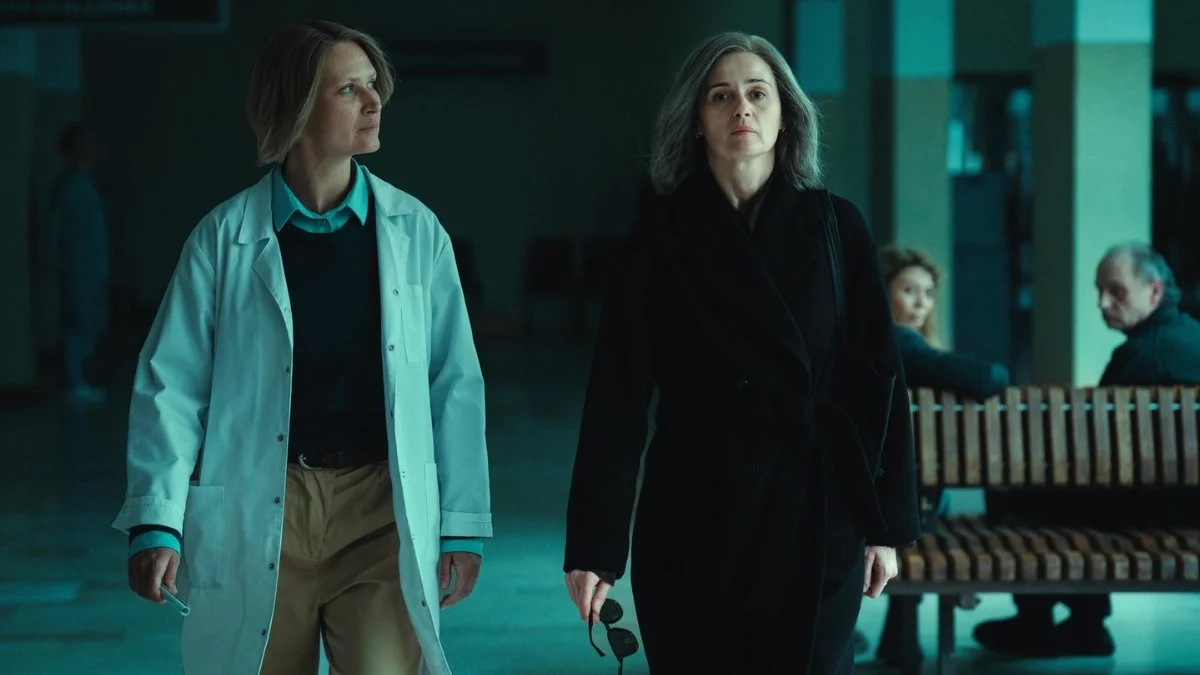
The decisive encounter comes when Anna Bersz, once the investigating officer and now a senior prison official, approaches psychiatrist Agnieszka Grabska about the approaching release of child murderer Mariusz Trynkiewicz. Anna needs an assessment that will keep him confined. Asking for the desired outcome before the examination has taken place establishes the problem with considerable economy.
The story can then return to the earlier investigation carrying a specific question: how much of this procedure has already happened between these women? Their friendship supplies the missing history. Agnieszka Grochowska’s Anna and Agnieszka Żulewska’s Agnieszka are fictional figures placed within a real Polish case, a choice that lets director and co-writer Kasper Bajon connect institutional decisions to personal obligations. The invention earns its place when professional pressure becomes a demand made between friends.
The two periods have distinct dramatic jobs. In 1988, identifying the murderer gives way to the question of criminal responsibility, with Agnieszka’s psychiatric assessment confronting the authorities’ demand for punishment. In 2014, the expiry of his sentence forces the state to confront the limits of that punishment. The earlier passages establish the decisions; the later ones test what those decisions can sustain. This is a productive use of a divided timeline because the past supplies causes for a present-tense problem. Each return to the original case changes the weight of Anna’s request.
Anna’s promise to the victims’ parents that Trynkiewicz will never go free makes the limits of punishment personal. Grochowska makes her insistence credible as the continuation of a commitment made under terrible circumstances. The script gives Anna a forceful institutional position; the performance supplies the fear and guilt that make her cling to it. In the later approach to Agnieszka, her demand carries the authority of her office and the desperation of someone who cannot deliver what she once promised. Agreement with her methods is unnecessary for the scene to work. The parents were given an assurance, and she remains answerable for it.
Żulewska has the harder task of making a refusal to guarantee safety feel like a serious professional obligation. Her vulnerability during the conflict over the assessments prevents Agnieszka’s clinical position from becoming self-satisfaction: she must continue examining the person whose release frightens everyone else.
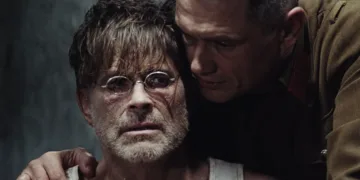
Michał Pawlik makes those examinations uncomfortable through the relative stillness of his Trynkiewicz. His restrained menace gives Agnieszka something difficult to assess rather than an actor busily advertising evil. If he were merely a catalogue of threatening gestures, the medical and legal arguments would seem like obstacles delaying an obvious answer. The reunion line, “Who would have thought we would see each other again?”, brings their previous encounter into the room before the evaluation can proceed.
The writing becomes less persuasive when the discussions of responsibility and detention settle into exchanges of fully articulated positions. Characters explain the principles their professions represent, and the immediate pressure of the encounter recedes. The meeting has acquired an agenda and forgotten to adjourn.
These passages slow the series because another statement of a defensible position does little to alter the relationship between the speakers. Anna’s demand for a particular finding creates an action for Agnieszka to resist; a balanced exchange about public safety can leave both women standing exactly where they started.
Four episodes give the main conflict useful concentration, but the shorter form exposes the uneven allocation of attention. Anna’s strained relationship with her adult son Kacper, whose addiction introduces another set of responsibilities, needs room to acquire its own force. Instead, the subplot must compete with the original investigation, the broken friendship and the legislative response. Kacper receives a substantial family problem and a limited appointment slot. The parliamentary passage of the detention legislation also moves quickly, reducing the time available to dramatize how the pressure surrounding one prisoner becomes an institutional answer.
The difference between late communist Poland and the later urban setting makes the switches between periods easy to follow. The conspicuous ageing makeup and wigs occasionally interfere: the dates are already legible, and the hair department need not submit further evidence. Attention shifts from the characters’ accumulated history to the practical business of making the same actors appear older.
The fourth episode’s closing information about the continuing use of the detention mechanism changes the scale of the final stretch. The four-part structure has allowed the series to return to the same people and measure the consequences of their earlier choices. That factual note points toward cases outside their story.
A measure developed around an exceptionally frightening prisoner becomes available to an institution after his individual case has ceased to be its only application. The viewer is left considering the people who will next be assessed under it, with no Anna or Agnieszka required to connect them to the original crime.
The Law of Beasts premiered on Netflix on November 18, 2026, and is available to stream on the platform. Directed by Kasper Bajon, the four-part Polish crime drama draws inspiration from the real-life events behind Poland’s “Beasts Act,” following a lead investigator and a psychiatrist as past compromises and moral conflicts resurface when a convicted child murderer nears release.
Where to Watch The Law of Beasts Online


Full Credits
Title: The Law of Beasts (Prawo bestii)
Distributor: Netflix
Release date: November 18, 2026
Rating: TV-MA
Running time: 4 episodes (limited series)
Director: Kasper Bajon
Writers: Kasper Bajon, Anna Kasińska
Producers and Executive Producers: Edyta Krajewska, Jacek Dąbrowski-Udziela
Cast: Agnieszka Grochowska, Agnieszka Żulewska, Michał Pawlik, Kamilla Baar, Andrzej Chyra, Michalina Łabacz, Adam Nawojczyk, Jan Jankowski, Małgorzata Gorol, Jacek Beler, Hanna Śleszyńska
Director of Photography (Cinematographer): Bartłomiej Kaczmarek
Composer: Piotr Waglewski
The Review
The Law of Beasts
The strongest decision in The Law of Beasts is to make a conviction create the next crisis. Its two timelines give that idea dramatic force, and the central trio keeps professional arguments tied to fear, guilt and responsibility. Some debates stop the action to take minutes, and the family subplot and legislative passage need space the four episodes cannot spare. The distracting ageing effects add another interruption. Still, this is a worthwhile crime drama with a clear reason to reopen its case.
PROS
- Two timelines connected through decisions and consequences.
- Strong central performances that give institutional positions personal stakes.
- A fractured friendship that makes professional pressure tangible.
- A closing factual note that extends the story’s implications.
CONS
- Expository debates sometimes stall the drama.
- Family and legislative strands receive insufficient development.
- Conspicuous ageing makeup and wigs distract.