























![Kingdom Hearts Collection [I-III] Review](https://gazettely.com/wp-content/uploads/2026/10/Kingdom-Hearts-Collection-I-III-1-360x180.webp "Kingdom Hearts Collection [I-III] Review: KHII Holds Steady as Newer Entries Fluctuate 37")



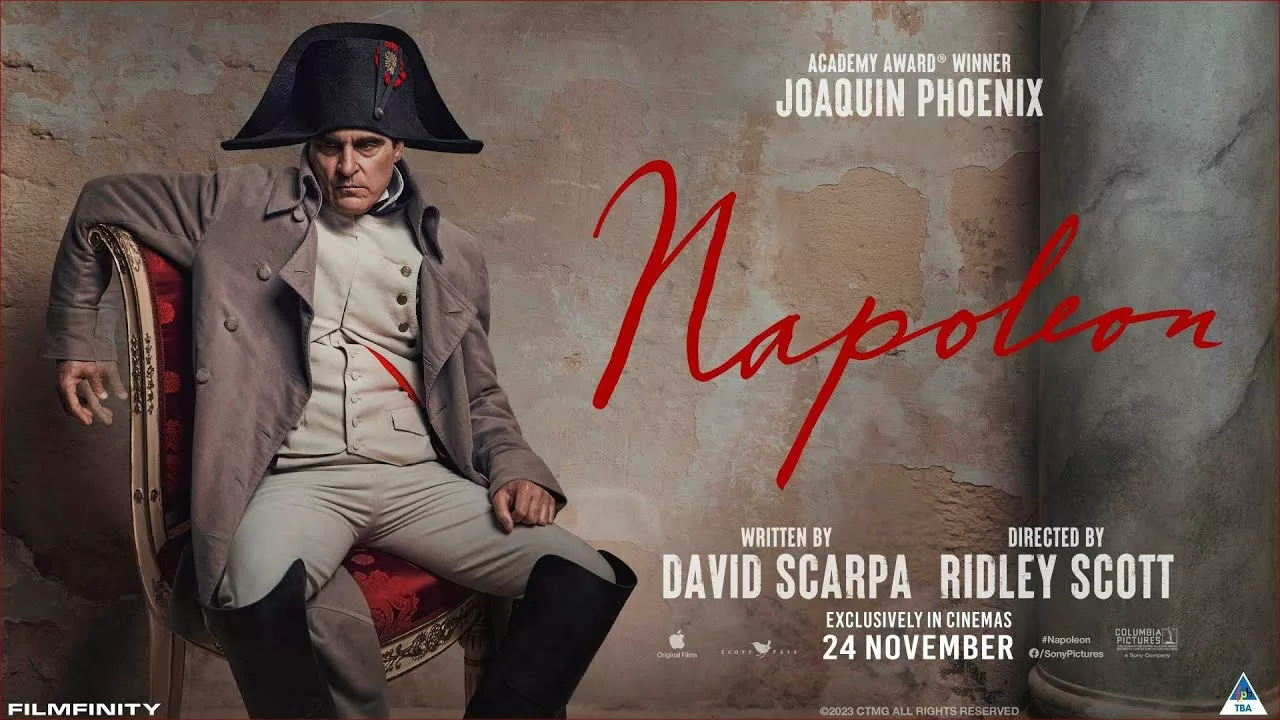

When it comes to cinematic portrayals of iconic historical figures, audiences often expect grand tales of valor that feed into the myths and legends surrounding these larger-than-life men. Ridley Scott’s latest film Napoleon chooses a different path. Instead of glorying Napoleon Bonaparte’s reputation as a brilliant military strategist who crowned himself emperor, Scott and star Joaquin Phoenix present a more complex and unflattering portrait that punctures the façade of greatness to peer at the petty human ego underlying it.
Is this cynical approach a recipe for a compelling character study or does it fail to do justice to the sweeping spectacle of Napoleon’s story? In assessing the merits of Scott’s mocking tone, this review will touch on key aspects like the film’s set pieces and action choreography, Phoenix’s lead performance, historical accuracy, cinematography, and thematic resonance. The goal is to evaluate whether the movie succeeds at humanizing this titan of history by cutting him back down to size
Can ridiculing male ambition be as dramatically effective as celebrating it? Does comedic dialogue undermine the stakes of conquest and loss? The following analysis of reviews and critic opinions on Napoleon will offer perspective to see if Scott’s irreverent depiction remains entertaining while also offering insight that feels true.
Following the Paths of Glory and Ruin
Napoleon traces its namesake figure’s trajectory from obscure artillery officer to French emperor and back again over the course of 23 volatile years. The film opens with a young, disheveled Napoleon Bonaparte (Joaquin Phoenix) indifferently watching the execution of Marie Antoinette, more concerned with angling for a promotion than the seismic political events unfolding around him. His talent for strategy secures Napoleon his first triumph at Toulon in 1793, earning praise and helping him swiftly move up the ranks.
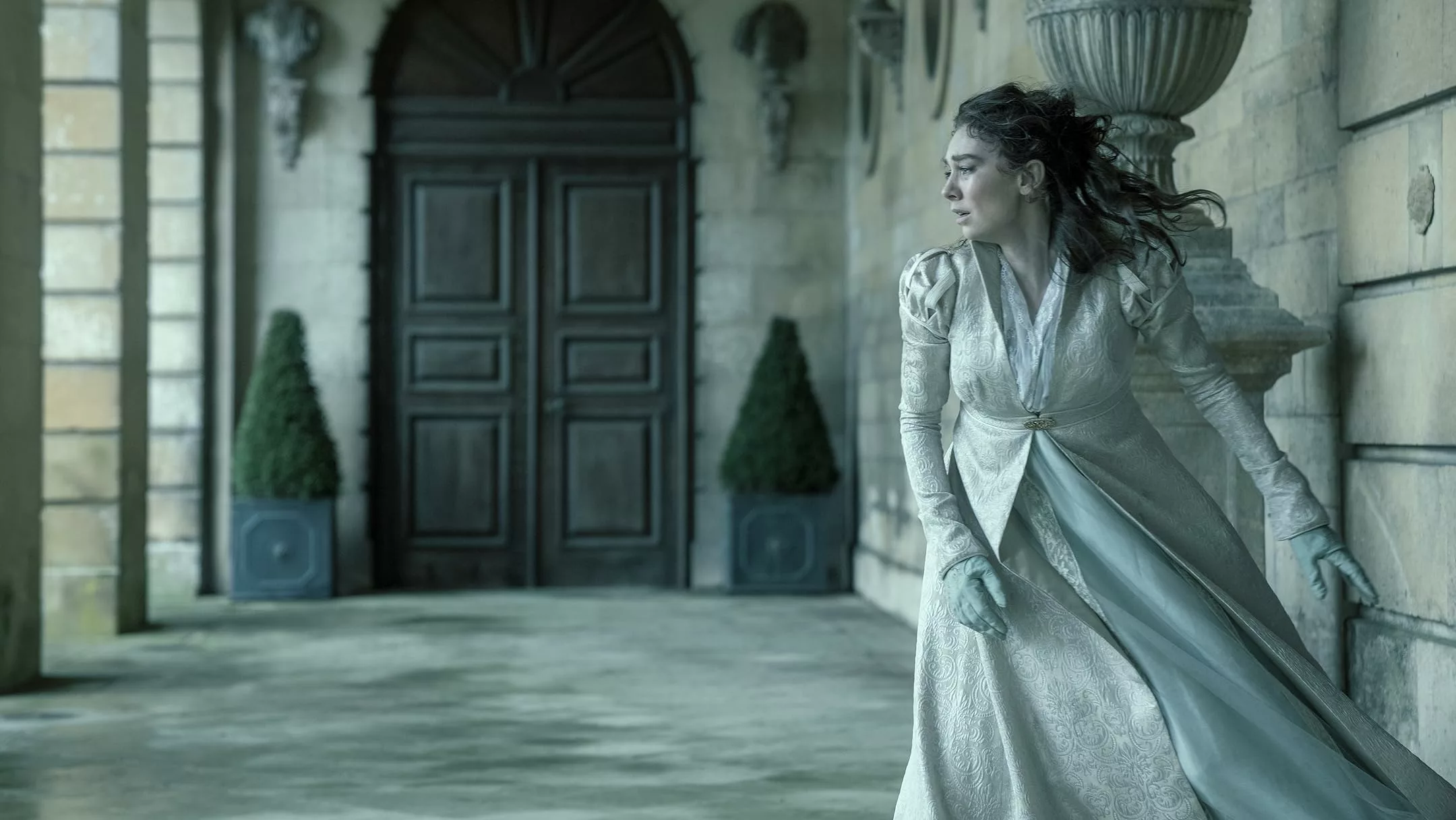
After proving instrumental in quelling the chaos of the French Revolution’s Reign of Terror, the cunning Napoleon continues his ascent by shrewdly positioning himself as the compromise between the violent factions of royalists and rebels. This political maneuvering allows him to be named First Consul of France as the dust settles. It is at this moment of personal glory that he first locks eyes with Joséphine de Beauharnais (Vanessa Kirby), the alluring widow of an aristocrat executed in the Terror. Though their initial courtship is more one of convenience and lust than love, Napoleon quickly makes the enchanting Joséphine his bride.
As Napoleon rapidly conquers neighboring European territories to build the French Empire, however, his failures at home begin compounding. Joséphine’s infidelities leave the Emperor constantly cuckolded, while her inability to produce an heir starts to undermine his dynastic ambitions. These domestic troubles come to a head during Napoleon’s disastrous Russian campaign, when news of Joséphine’s latest affair causes the defeated general to abandon his troops and return to Paris in a rage. His unraveling personal life ultimately forces him to cut Joséphine loose.
This mix of political ascents and marital declines culminates with Napoleon’s humiliating loss after his foolhardy attempt to reclaim past glory at Waterloo. Reduced again to obscurity, the fallen tyrant is fittingly last seen back where he began – listlessly observing history unfold without him, his fire extinguished. Over 23 years, the paths of glory and ruin have intersected to shape a life.
- Also Read: Ranking the 15 Best Nicolas Cage Movies Ever
Phoenix Finds the Man Behind the Myth
In the role of a larger-than-life figure like Napoleon Bonaparte, many actors would be tempted to embrace an imposing, legendary aura from start to finish. Joaquin Phoenix and director Ridley Scott take a more nuanced approach, using Napoleon’s weaknesses, awkwardness, and lack of self-awareness to temper and humanize his domineering ambition. Phoenix captures the future emperor’s pettiness and absurdity as much as his gravitas.
From Phoenix’s nervous facial tremors and tics to his blustering temper, Napoleon frequently seems more like an insecure child playing dress-up than the steely-eyed general posterity conjures. Scenes of the self-crowned leader enthusiastically emoting to his officers undermine his abilities as a master manipulator, while his foolish military mistakes make Napoleon look more lucky than brilliant. Phoenix leans into the character’s most unflattering qualities.
Yet he still conveys the magnetism that allowed this strangely off-putting man to galvanize followers to reshape Europe. Phoenix’s vigorous rants radiate conviction enough to stir legions. And by keeping Napoleon’s clownish hubris tightly coiled with unpredictability and menace, Phoenix taps into what made contemporaries refer to his “whiff of grapeshot” – a volcano always threatening to erupt.
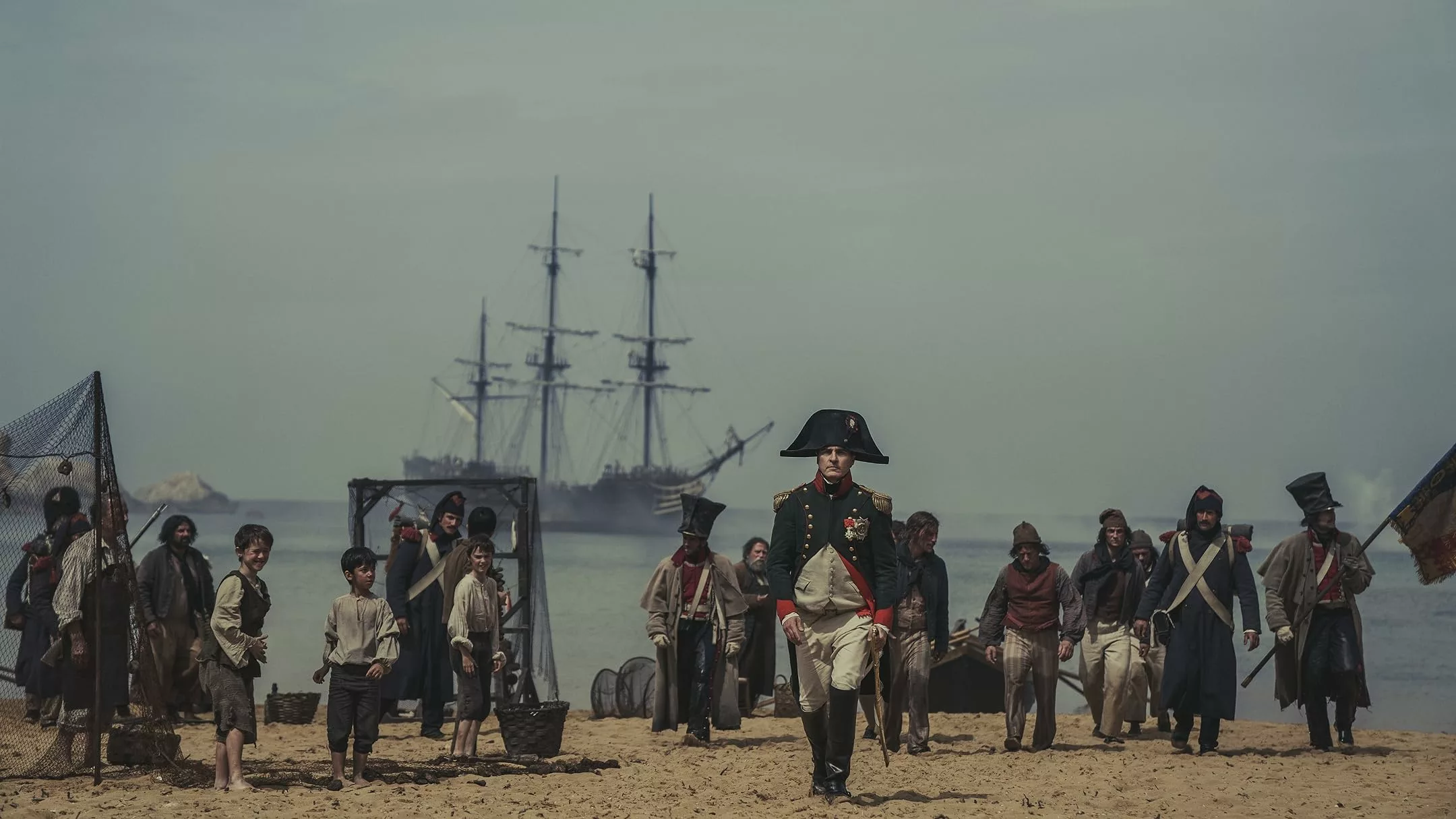
That volatility also defines Napoleon’s relationship with Joséphine, where Phoenix’s simpering complaints about feeling cuckolded war with his entitled demands for affection. Whether awkwardly pounding away during sex or delivered of any passion, Phoenix and Kirby’s chemistry fittingly falls short. Yet that very lack only amplifies Napoleon’s exasperation that this woman wields so much power over him despite his empire. Phoenix makes Napoleon’s turmoil with Joséphine feel all too human.
So while Napoleon showcases grand scenes of warfare, Phoenix’s performance delves past that bombast to expose the Emperor’s eternal adolescence and insecurity. He embodies Napoleon as a walking contradiction, evoking both earned awe and foolishness – a dynamic figure of history wrapped in all too relatable frustrations.
Scott Scales the Myth Down to Size
When tackling a historical epic, especially one centered on a larger-than-life conqueror like Napoleon, many directors would instinctively glorify their subject with sweeping grandeur. But Ridley Scott takes the opposite approach in humanizing Napoleon Bonaparte – using evocative aesthetics before stripping them down with irreverent humor highlighting the emperor’s all too human foibles.
Scott certainly delivers the massive-scale battle spectacles he’s known for, conjuring the awe-inspiring carnage of Napoleon’s early Italian victories, his crushing loss in Russia, and his last stand at Waterloo. The fluid choreography captures both strategic military maneuvers as well as countless instances of individual bravery and senselessness on the ground. Candle-lit palaces echo Stanley Kubrick’s unmade Napoleon film, the contrast between regal interiors and muddy, chaotic combat visually underscoring the contradiction within the man himself.
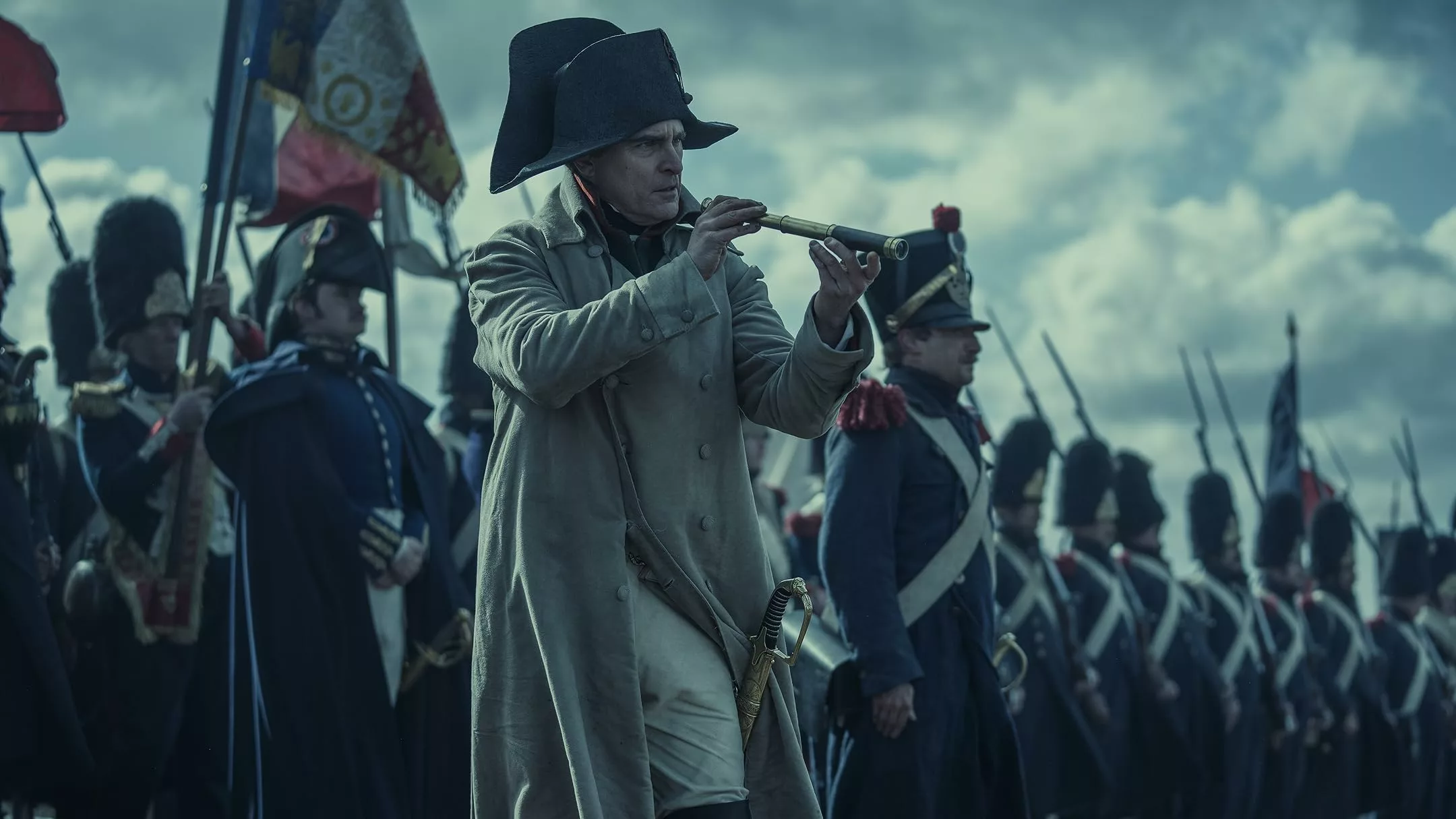
Yet Scott constantly punctures the self-aggrandizing propaganda surrounding his protagonist. He inserts laugh lines ridiculing Napoleon’s arrogance, while Joaquin Phoenix underscores the insecure pettiness behind the veneer of greatness. This mocking tone reaches its apex when Phoenix fumes at an English diplomat, “You think you’re so great because you have boats!” – hilariously encapsulating this overreacher’s frustration.
The director registers the seductive appeal in conquest narratives; the alluring fantasy of ambitious underdogs grasping power and glory. But the unflattering style ultimately cuts through this, finding the smallness of ego that fed such myths. If there’s a flaw, it’s that the narrative itself feels choppily abbreviated at times, with intriguing relationships like Napoleon and Joséphine’s underserved. Still, Scott’s irreverent and suitably imperfect approach succeeds in exposing the humanity behind the legends.
Those Who Forget History Can Still Learn from It
Portraying defining swaths of a historical figure’s life with true comprehensiveness and accuracy has always proven challenging within the condensed runtime of feature films. Unsurprisingly then, critics have called out Napoleon’s selectivity in dramatizing key chapters of Napoleon Bonaparte’s career while omitting other pivotal moments. One can run down the tally of absent battles and foes like master admiral Lord Nelson. Events like Napoleon’s reintroduction of slavery into French colonies are conspicuously missing, arguably softening the extremity of his moral compromises for power.
Factual precision takes a further hit with a screenplay rampant with cheeky anachronistic dialogue inserted to mock Napoleon’s hubris – hardly how the real players conversed. And the 45-year old Joaquin Phoenix strains plausibility as the young upstart out of Toulon and through his Egyptian expedition. For history buffs or devoted Napoleonic scholars, these creative liberties dent comprehensive understanding.

Yet in flouting accuracy, director Ridley Scott and screenwriter David Scarpa also steer closer to deeper truths about legacy, power, and our craving for myths. Napoleon became far more powerful as an idea and iconic conqueror figure after his death than the flawed man himself ever achieved while alive. The selective portrayal better targets the outsized legends that endure and questions why. And those closing title cards coldly laying out the rising body count of Napoleon’s campaigns make the sharpest point – the horror of violence should never be forgotten, no matter the glory bestowed on its orchestrators.
Scott’s Napoleon does not overlook the destruction his protagonist wreaks, even as it revels in his ambition. The superficial historical gaps may actually better reveal the underlying narcissism that fueled this power-hungry creature and others like him to such zeniths, along with the human costs that ripple across time. Rather than reciting names and dates, the film unearths deeper lessons from Napoleon’s life about the wages of unchecked power that resonate still. Those who forget history may be condemned to repeat it, but with mythic figures, remembering their reality proves equally essential.
Painting the Past with Color and Sound
In staging Napoleon’s volatile era, director Ridley Scott employs painterly visuals shifting from epic scope to minute detail, sometimes within a single tableau. Sweeping aerial views of clashing armies give way to extreme close-ups of soldiers mowed down by cannon-fire, marrying the grand choreography of battle strategy with painful intimacy. Scott’s kinetic camera roams freely, the fluid shifts in perspective keeping pace with the mercurial twists of his protagonist’s fortunes.
Cinematographer Dariusz Wolski bathes Napoleon’s early ascendency in luminous natural light, the golden hues and pastoral landscapes basking his conquests in a romantic aura. But as imperial hubris takes root, candle-lit palace chambers cast foreboding shadows, the claustrophobic interiors and muted colors underscoring the increasingly isolated emperor. Even the uniforms of French and British troops form red and blue coded identifiers amidst the fog of war.
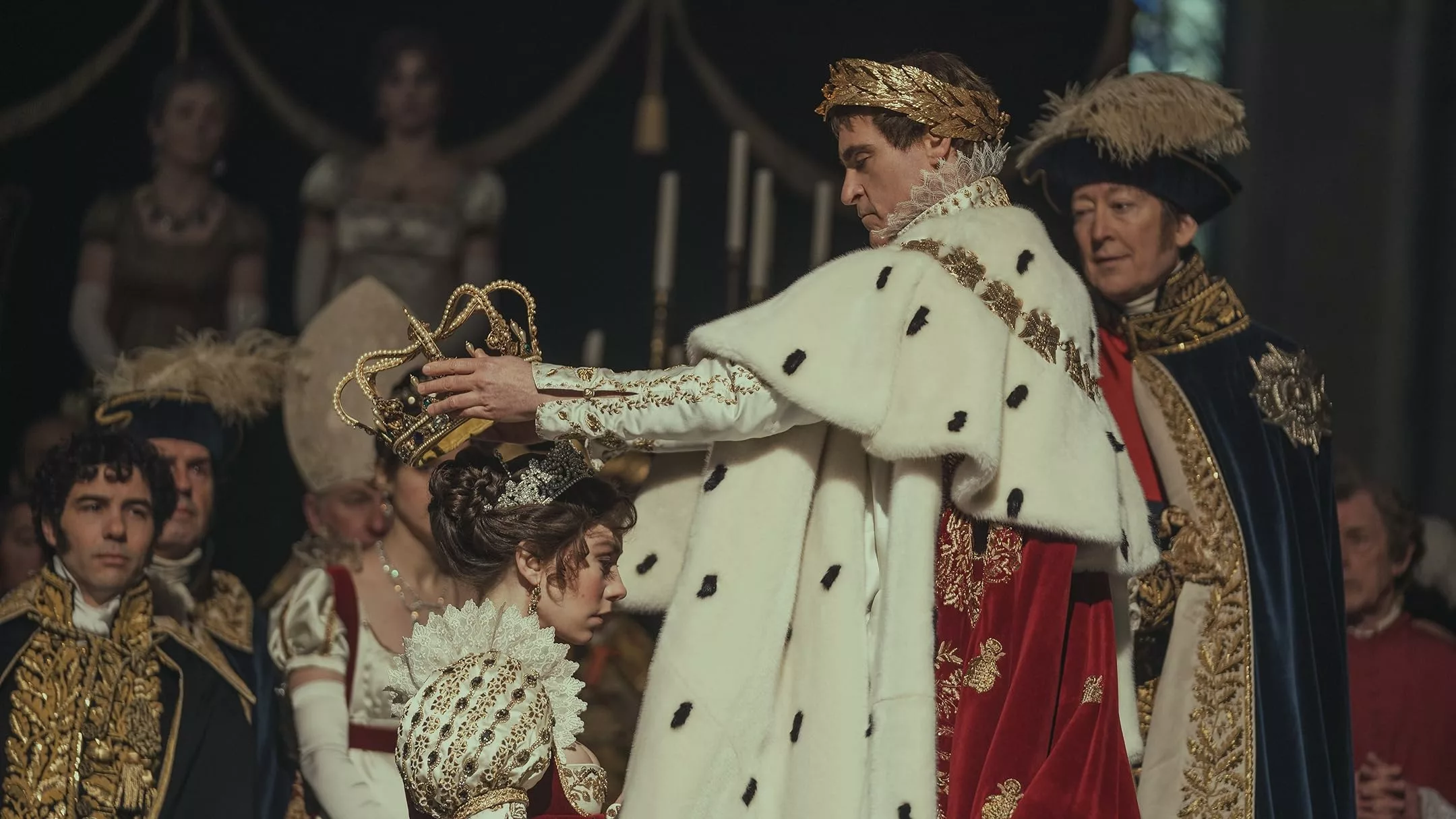
The visual contrasts are echoed in the movie’s somewhat disjointed mix of score. Classical period compositions by Dario Marianelli lacquer scenes with postcard prettiness. But modernist pieces by Martin Phipps accentuate the messier human drama, sometimes clashing oddly with the elegant imagery. Still, the score’s turbulence mirrors Napoleon’s own fractured psyche.
Like its mercurial antihero, the cinematography of Napoleon shifts between overt beauty and distortion. At its best, lighting and composition capture two worlds at once – the sheen of legend and ugly realities perpetually at war behind the myth. The images reveal the way we wish to perceive figures like Napoleon but also the darker parts of ourselves reflected back across history in his story.
The Personal and Political Intertwined
Behind Napoleon’s lavish spectacle lies a more intimate character study questioning the nature of ambition itself. The film’s structure purposefully echoes its protagonist’s fortunes, opening atop meteoric victories before spiraling into blistering defeats. This trajectory coupled with Joaquin Phoenix’s petulant performance suggests ego unchecked by self-awareness inevitably leads to ruin. Napoleon views power only through the warped lens of personal slights and absolutely refuses to see his own blunders, tragically hastening his downfall.
His tangled relationship with Joséphine as portrayed becomes a political metaphor. Their dysfunctional dynamic of codependence, mistrust, cuckolding, and longing mirrors the volcanic instability Napoleon leaves in his wake as liberator turned despot. When his interior world with Joséphine frays, so too does the empire externally. Yet even his most disastrous military mistakes originate from impulses in that relationship, like abandoning his stranded Egyptian troops after suspecting Joséphine’s infidelity back in France. Entire nations are held ransom by one man’s fragile psyche and wounded masculinity.
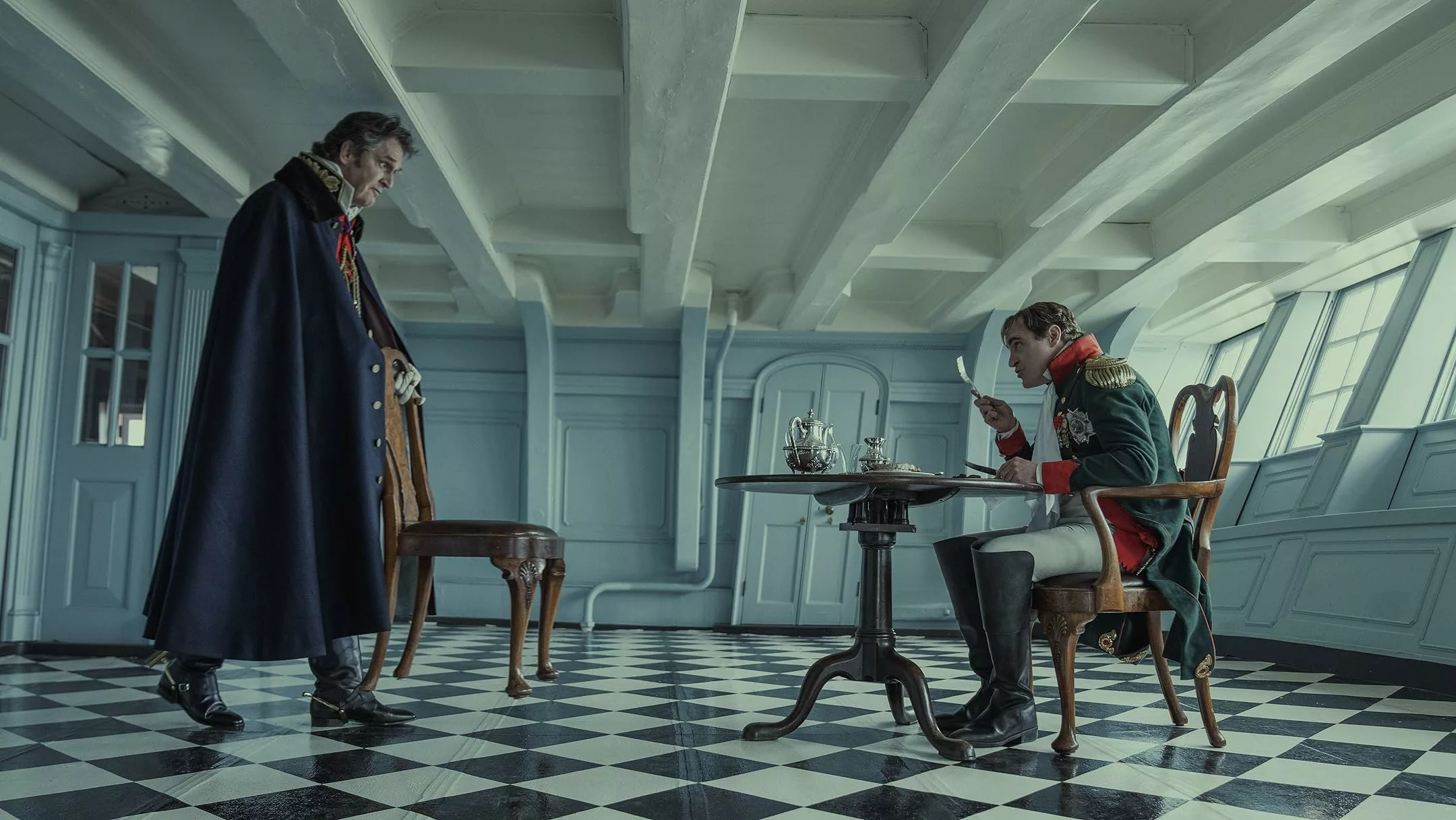
Through this intimate scale, Napoleon insists that historical forces blamed for shaping society frequently boil down to the unremarkable machinations of individuals protecting their power and pride. These are hardly the philosophical idealist motives we associate with icons like Napoleon. Instead the grand facade of purpose and legacy masks uglier personal shortcomings all too recognizable in ourselves – in ego, smallness of vision, fears of inadequacy. The film punctures myths leaders perpetuate to aggrandize their violence, revealing the petty humanity underlying both tales of glory and ruin.
In the end, Napoleon’s perceived greatness was but a sheen, propaganda that could not halt time’s steady march. As Scott closes in again on Phoenix’s lined face, the former titan diminished and exiled as when we first glimpsed him, there is only amirror reflecting back, demanding we ponder what such ambition leaves behind.
The Man Behind the Myth a Cautionary Tale
In assessing Napoleon, it becomes clear why this ever-controversial figure has magnetized storytellers across generations to wrestle with his legacy. Scott’s film provides plenty of fodder to understand that allure, even as it tempers glorification with unfiltered contempt. Dynamically shot battle scenes still stir, while the dysfunctional central romance pulls one in. Yet the uneven pace and abrupt shortcuts undermine the narrative’s cohesiveness.
Where the film unquestionably triumphs is as a character study that pierces façades. By spotlighting Napoleon’s self-entitled pettiness and bursts of immaturity, Scott and Phoenix refuse to romanticize him as the lone ingenious architect of revolution and empire. Instead he comes across as a canny survivor and opportunist, his ambitions fueled more by ego than any enlightened political vision.
This caustic approach may frustrate some, but contains wisdom. Deftly puncturing the myths surrounding Napoleon reminds how revolutions arising from individuab valves for liberation rarely sustain such ideals. Structural change emerges gradually through collective action, not individual great men.
And the film suggests Napoleon’s significance today lies more as cautionary tale than hero, a case study in toxic masculinity and hubris. Flaws left unchecked in leaders unleash danger. In gazing at Napoleon, we glimpse how even democracies risk slipping toward autocracy when single voices shout down others. By caging Napoleon back down to relatable human size, Scott leaves audiences to judge how similar drivers may fuel both historic and contemporary figures impatient to impose their will.
The Review
Napoleon
In the end, Ridley Scott's Napoleon succeeds more as an incisive character study than a sweeping historical epic. Though unevenly paced and episodic, its mockery of Napoleon Bonaparte cuts through the legend's oversized aura to expose something more insightful about power's corrosive effects. Joaquin Phoenix's dynamism pairs well with Scott's puncturing irreverence, making Napoleon intriguing for what it reveals about ego across time rather than comprehensive factual accuracy. Scott refuses spectacle for easy veneration, and the film is better for it. Flaws and all, when Napoleon trains its lens on the petty humanity underlying dictator emergence and populist consent, it strikes a resonant chord. This relevance outweighs any clunky storytelling shortcomings. In gazing at mythic figures, it reminds us to be wary of perceived greatness built by violence, no matter how seductively packaged. Beyond mere biography, the film holds up a mirror questioning how little has changed when it comes to the relationship between towering ambition and hubris.
PROS
- Joaquin Phoenix gives a dynamic, complex performance that humanizes Napoleon
- Ridley Scott directs vivid large-scale battle scenes with flair
- Film takes an irreverent tone mocking Napoleon's ego and ambition
- Strong thematic resonance about corruption of power and toxic masculinity
- Visually arresting cinematography shifting from sweeping vistas to intimacy
- Vanessa Kirby compelling as the manipulative, alluring Joséphine
- Doesn't overly glorify Napoleon's reputation and military conquests
CONS
- Uneven pacing and scattershot editing leaves some gaps
- Oversimplifies or omits some key historical events and figures
- Phoenix too old during early Napoleon scenes
- Choppy storytelling underserves Napoleon/Joséphine relationship
- Anachronistic dialogue played for humor can undermine immersion