













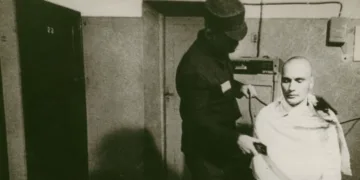









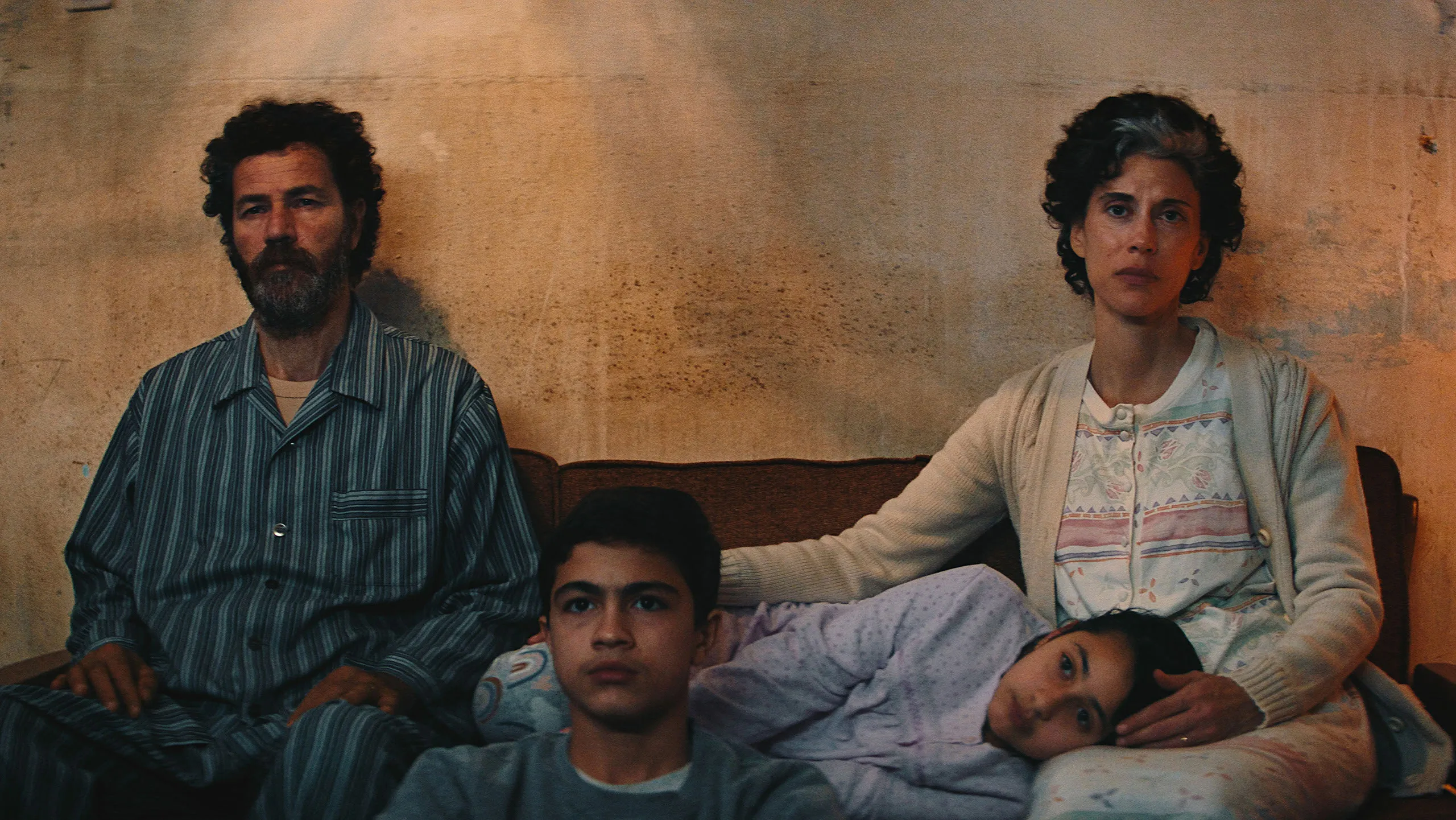

The film presents a sprawling account of a Palestinian family’s story, spanning decades from 1948 to a time close to our own. The narrative unfolds across multiple eras—starting with the upheavals surrounding the founding of a new state and the ensuing exodus, followed by the subsequent hardships of occupation and displacement, and finally arriving at present-day memories where personal and collective sorrows intermingle.
At its heart lies the intimate portrayal of familial bonds, painted against the backdrop of seismic historical events that reshaped lives and communities. One witnesses a chronicle of loss and resilience as the family grapples with disruptions that seem simultaneous and inescapable (there is almost a whimsical absurdity in how life persists amid chaos).
The film’s visual language and storytelling choices offer an intricate portrait of emotional terrain: moments of subtle tenderness coexist with the harsh weight of historical calamity. A careful treatment of generational experiences reminds viewers that even the smallest personal moments possess cultural significance.
There is an almost philosophical discourse here about memory and identity, pairing personal hardship with eras marked by displacement and societal transformation. The work invites the audience to question how histories are recorded in the spaces between intimate conversations at home and the broader, turbulent arcs of national life.
Fragmented Chronology: Family History and Cinematic Rhythm
The film unfolds in a non-sequential fashion, interspersing flashbacks that transport the viewer to 1948, the mid-century years, and a timeline strikingly close to the present. These temporal shifts are not mere narrative embellishments; they function as a means to refresh the familiar and connect personal misfortunes with monumental historical reckonings.
The use of flashbacks (a narrative trick that might appear disjointed at first glance) is cleverly employed to set the stage for a deeply personal family story—a story that serves as a microcosm of widespread despair and resilient hope.
Beginning with an intimate moment—a mother addressing an unseen listener—the film initiates its journey in modern times. This starting point quickly morphs into a sweep over decades of hardship, displacement, and quiet rebellion.
One finds in the unfolding history of this family a record of shattered homes, abrupt encounters with authority figures, and a cascade of events that ripple across generations. The non-linear display of events prompts the audience to piece together the narrative (a bit like assembling a jigsaw puzzle with missing pieces, yet somehow the picture becomes clearer as one persists).
The pacing itself fluctuates deliberately; quieter scenes punctuate emotionally charged confrontations and public demonstrations. This rhythm offers the viewer a chance to catch their breath amid the storm of sentiment and conflict. Rather brief instances—such as sudden and almost laughable pauses in the middle of otherwise relentless tension—serve as a reminder that life, in its ridiculous unpredictability, finds humor even in sorrow-like moments.
Key milestones—a lost family abode, a poignant exchange with a figure of authority, the tragic diminishment of a family member—are carefully structured to stir significant reactions. Each turning point is mapped out in a way that links personal experiences to larger social upheavals, inviting reflection on how history and personal fate often dance an unpredictable waltz.
Echoes of History: Memory and Legacy
From the onset, the film situates itself firmly in the Palestinian experience, recounting the chain-reaction triggered by the Nakba in 1948. The portrayal is not a mendacious recounting but rather a resonant mosaic of dislocation and survival that stretches over decades.
The family’s orange grove stands as a symbol of lost paradise, an emblem of enduring ties to land and tradition (a relic with more than mere scenic appeal). The destruction of their ancestral home becomes a poignant metaphor for the erasure of heritage and identity.
The film pays meticulous attention to everyday rituals—wedding celebrations featuring communal dancing, modest yet dignified family gatherings, and hushed recitations of ancient verse. Even the simple act of sharing a meal speaks volumes about the resilience of cultural identity and the silent resistance against the scourge of forced migration.
There are moments, tinged with dry humor, where life’s absurdities puncture the solemnity of sorrow (imagine a bleak moment marred by an offhand wry remark). Political events, though integral to the narrative, murmur quietly in the background, never overwhelming the tender human efforts to preserve continuity.
Families pass down scars and memories through whispered exchanges and ritualistic observances, transforming their collective grief into an intergenerational chronicle of both pain and hope (a sort of legacy journaling). The film innovates what one might call memory-cinema, where personal loss and cultural rites merge with historical events in an intimate yet far-reaching manner. Its subtle treatment of political undercurrents invites the viewer to ponder the high price of displacement and the relentless persistence of the human spirit.
Faces of Resilience: A Family Unfolded
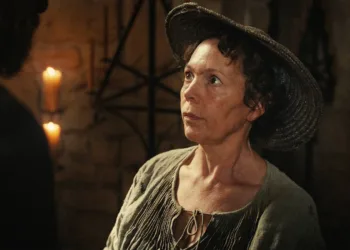
At the film’s core, we meet Hanan—the unflappable matriarch whose measured recounting of personal loss mirrors the collective agony of a people uprooted. Her performance (wryly understated, with glimmers of sardonic humor in moments that might otherwise seem unbearably somber) anchors the narrative in a truth that is both intimate and expansive.
Meanwhile, patriarch Sharif emerges as a relic of lost grandeur: his weathered dignity and quiet defiance evoke an era where honor was writ large, even as fate dealt him a cruel hand. Not far behind is Salim, whose restrained vulnerability and inner turmoil mark him as a man caught between reverence for the past and a hesitant, evolving hope for what might come.
The young Noor, bursting with restless energy and conflicting impulses, typifies the unpredictable spirit of a future still in flux. His journey—from tentative wonder to hardened cynicism—acts almost like a cinematic rite of passage (with moments that border on the absurd, as if life itself were chuckling at its own tragic design).
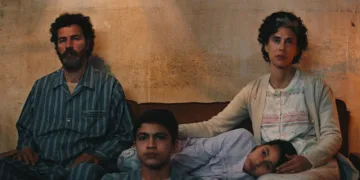
Family dynamics here are as complex as any historical tapestry: internal conflicts simmer beneath a veneer of quiet tradition, each generation wrestling with inherited scars and idiosyncratic defiance against systemic forces. Key scenes—silent standoffs with imposing figures, tender exchanges against oppressive backdrops, and decisions wrought with painful significance—underscore a transformation that is at once personal and emblematic of a larger cultural ethos. In this family saga, every look, every gesture, seems calibrated to echo the broader struggles of identity and survival.
Technicolor Testaments: Crafting Historical Realities
The film’s photography is a masterclass in visual storytelling, using a deliberate interplay of lighting and shadow to evoke the bittersweet hues of memory. The color palettes alternate between the sun-dappled nostalgia of a lost past and the muted austerity of occupation—each frame feels crafted to usher the viewer into a realm where even the dust speaks. (I might call this “chromatic historiography,” for lack of a more conventional term.)
Filming locations turn out to be more than mere backdrops. The recreated neighborhoods—Jaffa’s once-proud streets, the claustrophobic atmosphere of refugee camps, the rugged sobriety of the West Bank—infuse the narrative with tangible authenticity. These settings echo the emotional weight of the history being told, making one feel that the very walls remember (they might even grumble if they could speak).
The production design meticulously reconstructs historical periods: elegant, sunlit corridors belonging to forgotten eras contrast starkly with the oppressive, bare landscapes imposed by conflict. Here, the details—the worn texture of an ancient door, the sterile precision of modern interiors—act as silent narrators in the unfolding drama.
Editing plays a crucial albeit understated role, stitching together disparate epochs into a cohesive, albeit layered, tapestry. Dialogue and action ebb and flow in rhythms that mimic the oscillation between hope and despair. The sound design complements this by intermingling ambient whispers of history with a score that both haunts and comforts. Christopher Aoun’s visual direction, in tandem with these technical elements, casts a light on beauty and harsh reality in equal measure, capturing moments that resonate long after the screen fades.
Sundered Histories: Identity, Trauma, and Flickers of Light
The film lays bare a series of interlocking motifs—displacement, accumulated trauma, stubborn resilience, the fight to keep dignity in a hostile world—that channel not just personal grief but echoes of collective suffering. A ruined orange grove appears repeatedly on screen (a visual refrain that might make one think of faded photographs and lost chapters) and anchors the narrative in tangible loss. Each frame vibrates with the weight of a people exiled from the soil that once nurtured their history.
Scenes shift swiftly between moments of raw familial intimacy and broader incidents of political upheaval. There is a symmetry here: sorrowful farewells interpose with rare, fleeting flashes of celebration. Family feasts and ritual gatherings provide brief relief, even as the specter of displacement looms large. The film examines how memories—carved by war and isolation—pass silently from one generation to the next. In a way, the characters’ inner lives become a microcosm of a historical struggle; personal litany blends with societal narratives in a display of stubborn, almost biting, endurance.
The interplay between the personal and the political is palpable (often with a droll wink at the absurdity of it all). As characters search for fragments of identity amid the rubble of forced migration and fading traditions, the movie injects moments of dry levity into even the heaviest scenes. Though its tone can swing unpredictably, the film challenges viewers to reconsider what it means to retain humanity under constant siege, leaving periods of quiet introspection in place of neat resolutions.
Directorial Tapestry: Memory and Method
Cherien Dabis assumes a dual role that recalls the days of classic auteurs while sporting a contemporary sensibility. Her presence on screen and behind the camera reminds us that personal history can serve as both lens and narrative fuel. There is an unmistakable warmth in her portrayal—small, knowing expressions punctuate heavy moments (a wink at fate, perhaps).
The screenplay unfolds in layers. Long passages of expository dialogue intertwine seamlessly with images that demand attention on their own. Moments of quiet introspection are intercut with bursts of tension, and the script displays a knack for making the previously mundane appear charged with meaning. The film’s rhythm itself feels like an experiment in timing: crowded sequences speak in a heartbeat, while lingering shots allow emotions to percolate. The result is a narrative that respects memory and historical fact without spelling everything out in a straightforward manner.
Personal recollections sit side by side with records of a tumultuous past, merging anecdotes with historical signposts. Here, Dabis displays what might be termed “memory cinematics,” a practice in which the personal recasts the collective. Each epoch—a shattered home, a defiant voice against the cogs of power—is captured in brisk cuts and prolonged pauses. This mosaic of time periods is managed with surprising clarity, even when the structure might seem precarious.
Her directorial decisions stand as a testament to her vision—a record that is both chronicle and intimate portrait, inviting us to consider how individual stories leave a lasting imprint on cultural identity.
The Review
All That's Left of You
For its passionate evocation of memory and cultural endurance, the film stands as a striking mosaic of struggle and hope. Cherien Dabis marries personal recollection with historical drama in a way that touches both intellect and emotion, even if its sprawling framework occasionally loses its rhythm. The work provokes fresh thought on the nature of generational loss and resilience, leaving a tangible imprint on cultural discourse.
PROS
- Captivating portrayal of generational trauma and resilience
- Rich historical setting that informs the personal narrative
- Strong direction by Cherien Dabis, who balances multiple timelines
- Visually arresting imagery and meticulous production design
- Powerful and nuanced performances from the ensemble cast
CONS
- Non-linear narrative may be confusing for some viewers
- Occasional pacing issues in segments of the film
- Some flashbacks and historical segments can feel heavy-handed