
















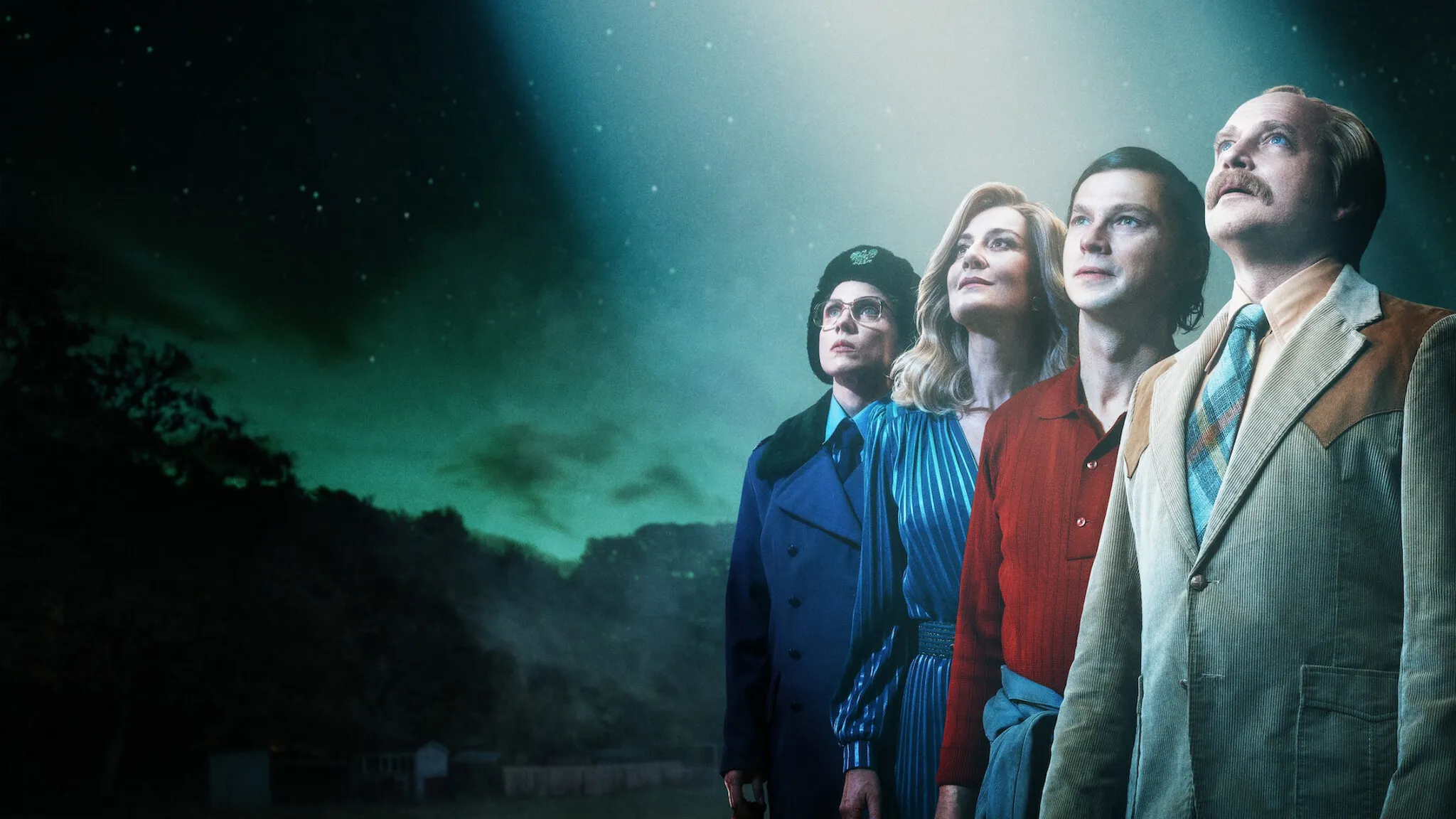

Project UFO unfolds across four chapters, each around fifty minutes, on Netflix. Kasper Bajon, both writer and director, frames the story in Communist Poland’s anxiety-ridden early 1980s; crisp lensing and period-accurate design ground the series in its era. It’s a methodical build: a rural electronics repairman, Zbigniew Sokolik (Mateusz Kościukiewicz), claims underwater beings emerge from a lake via hidden tunnels. His appearance on Jan Polgar’s televised debunking program, Close Encounters, exposes him to national shame.
Polgar (Piotr Adamczyk) anchors the primary viewpoint, his transformation from assured skeptic to uneasy state instrument driving the plot’s center. Julia Borewicz (Julia Kijowska), a provincial police corporal, brings grounded urgency as her personal obligations collide with political demands. Wera Wierusz (Maja Ostaszewska), Polgar’s rival, injects ambitious tension both on and off camera. Their interactions steer the narrative’s pulse, shifting from investigative suspense into sharp satire of propaganda and power.
A slow-burn mystery unfolds under a retro-futuristic sci-fi veneer: neon-lit lakeside scenes against drab housing blocks. Dry humor surfaces in staged studio banter. By framing UFO lore as a metaphor for state control, the series constructs a layered narrative that tests viewer expectations. The hook lies in watching underground-tunnel legends become a mirror for political manipulation.
Narrative Structure, Themes, and Political Context
Project UFO relies on a tight four-episode arc that ramps tension in place of an alien reveal. It opens with electronics shop owner Zbigniew Sokolik’s quaking presence on Jan Polgar’s Close Encounters, where his lake-based UFO theory draws studio laughter. That public shaming seeds every character’s journey.
When farmer Jozef Kunik claims he boarded a submerged craft, media vultures arrive and rival broadcasts inflame the town. Polgar and Wera Wierusz trade power plays on set. Local police and secret service agents circle Sokolik. In the finale, the party weaponizes fear to justify martial law, proving spectacle can have real consequences.
Fear emerges as the show’s primary currency. Each broadcast amplifies panic, proving sensationalism outweighs sober fact in shaping public opinion. Polgar’s camera-ready grin masks a moral bargain struck in service of the state. Journalistic ethics clash with censorship: every cut to stock footage or doctor’s testimony hints at blurred lines between truth and performance. Sokolik’s obsession offers a human counterpoint. His hunt for proof of alien life feels personal and raw, even as institutional forces seek to crush it. The notion of an “alien” threat functions as a stand-in for authoritarian control, casting state propaganda as the real invader.
Structurally, Bajon employs intercutting to thread newsroom chatter, remote countryside investigations, and clandestine party meetings into a cohesive whole. Recurring motifs—emerald lake glows, whirring SLR cameras, flickering studio monitors—anchor the viewer amid shifting loyalties. The limited-spaces format enforces narrative economy: no detours into cosmic wonder, only ever-building pressure on each protagonist.
All of this unfolds against early-1980s Poland’s stark reality. Citizens endure rolling blackouts, bread lines, and simmering union unrest. State television stands as the party’s megaphone, and Polgar’s modern studio feels less like entertainment than an echo chamber. Production design and period costuming reinforce authenticity, making the political stakes feel immediate rather than distant. In that age of economic malaise and looming martial law, a rumor of underwater visitors can spark genuine upheaval. Project UFO harnesses those gritty details to drive every plot beats, linking its sci-fi premise to a world that still feels unsettlingly familiar.
Character Development and Performances
Zbigniew Sokolik (Mateusz Kościukiewicz) carries the series’ emotional weight. His conviction—that underwater tunnels hide extraterrestrials—springs from his brother’s mysterious disappearance. Kościukiewicz underplays Sokolik’s disbelief, allowing subtle tremors in his voice to reveal raw hope and lingering grief. In moments of private confession, a single quiver in his line reading speaks louder than any special effect. This restraint makes his rare outbursts of passion land with genuine impact.
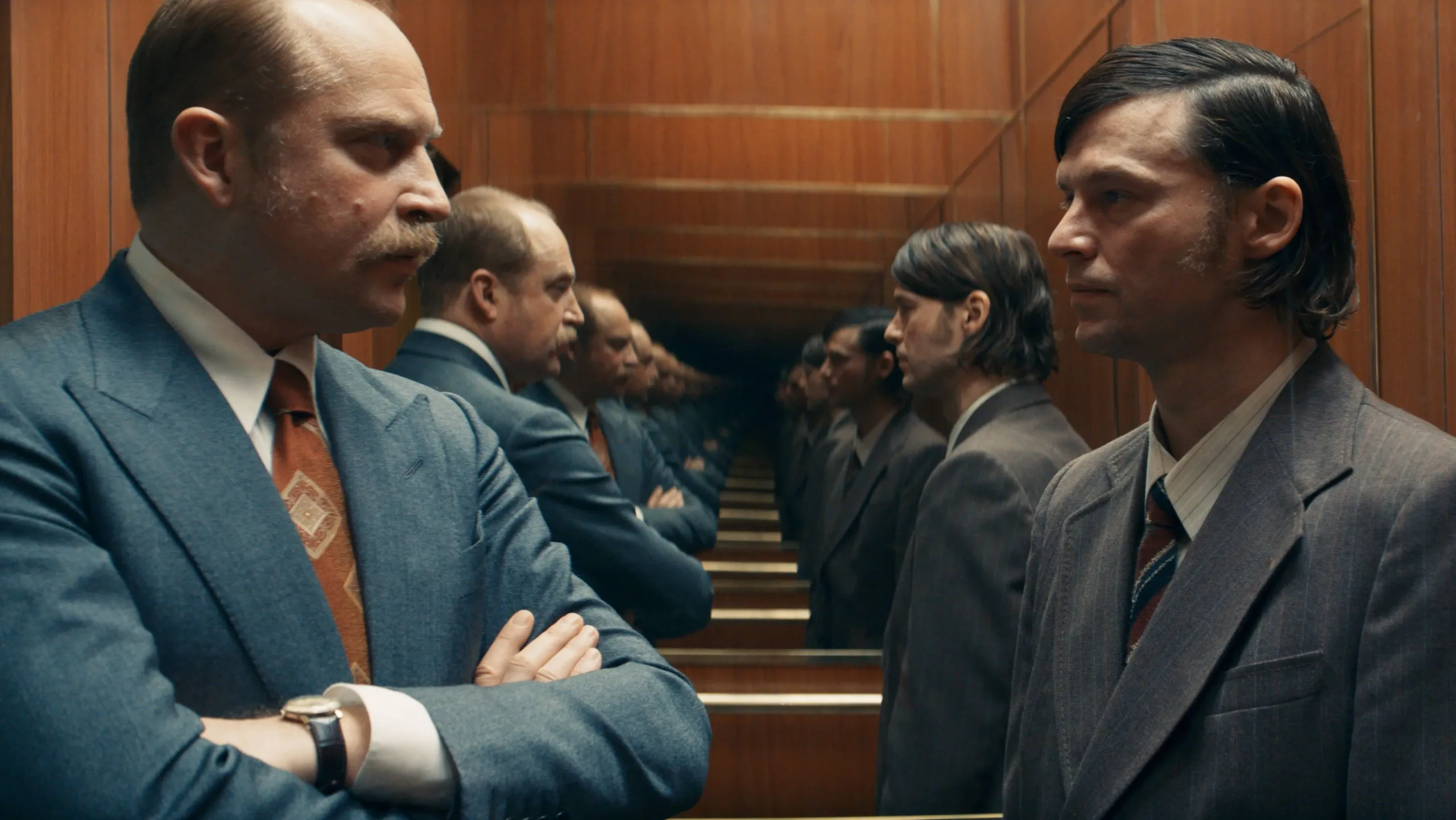
Jan Polgar (Piotr Adamczyk) begins as a polished debunker, trading scientific gravitas for nightly ratings. Adamczyk balances charisma with moral ambiguity: his studio persona radiates confidence, then slips into furtive glances when state directives arrive. Scenes of late-night rendezvous—far removed from broadcast formality—underscore the gulf between his public image and private compromises. Watching Polgar’s defenses erode under pressure, the actor captures the cost of trading integrity for comfort.
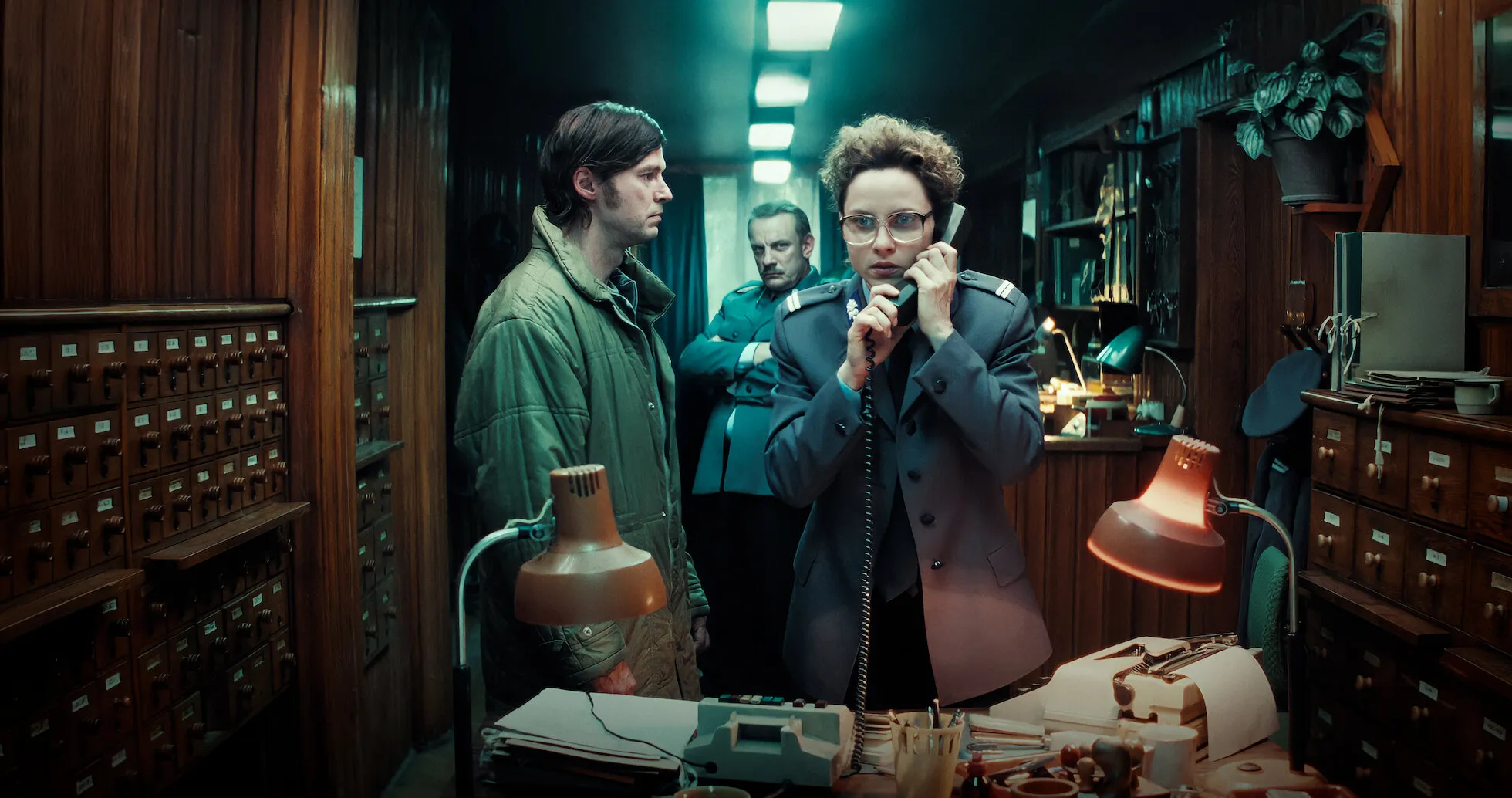
Julia Borewicz (Julia Kijowska) introduces grounded tension. A police corporal grappling with failing eyesight, she tutors her distracted daughter between interrogations. Kijowska’s portrayal nails that duality: steely resolve in uniform, gentle vulnerability in maternal moments. When she orders Sokolik’s arrest, her clipped delivery holds regret behind every syllable. An exchange with her daughter, Sara, feels unscripted: a fleeting touch, a look that lingers, hint at sacrifices made on both sides of the badge.
Maja Ostaszewska’s Wera Wierusz and Adam Woronowicz’s Comrade Secretary Henryk Wierusz form the rival power couple. Ostaszewska pivots from glamour to cold strategy in a beat, her raised eyebrow doing half the work. Woronowicz matches her wiles with bureaucratic menace, his hushed conference-room whispers a study in controlled ambition. Together, they infuse state intrigue with a flash of theatrical flair.
Among the supporting cast, Jozef Kunik’s farmer mystique (brief yet memorable) and Lenta Polgar’s domestic frustrations add texture. Even minor players—party functionaries, lab technicians—push against sparse dialogue, offering glimpses of life under surveillance. Their collective efforts help the series’ sparse script feel inhabited rather than hollow.
Visual Aesthetics, Production Design, and Sound
Project UFO’s look hinges on stark contrasts. Industrial interiors and gray apartment blocks form a muted canvas against which the lake’s neon-green glow snaps into view. Director of photography Tomasz Król often frames characters in deep shadow, leaving faces half-hidden to heighten doubt. Low-light exteriors around the lake feel claustrophobic; interiors burst with harsh fluorescent tones, as if the state itself illuminates every corner of daily life.
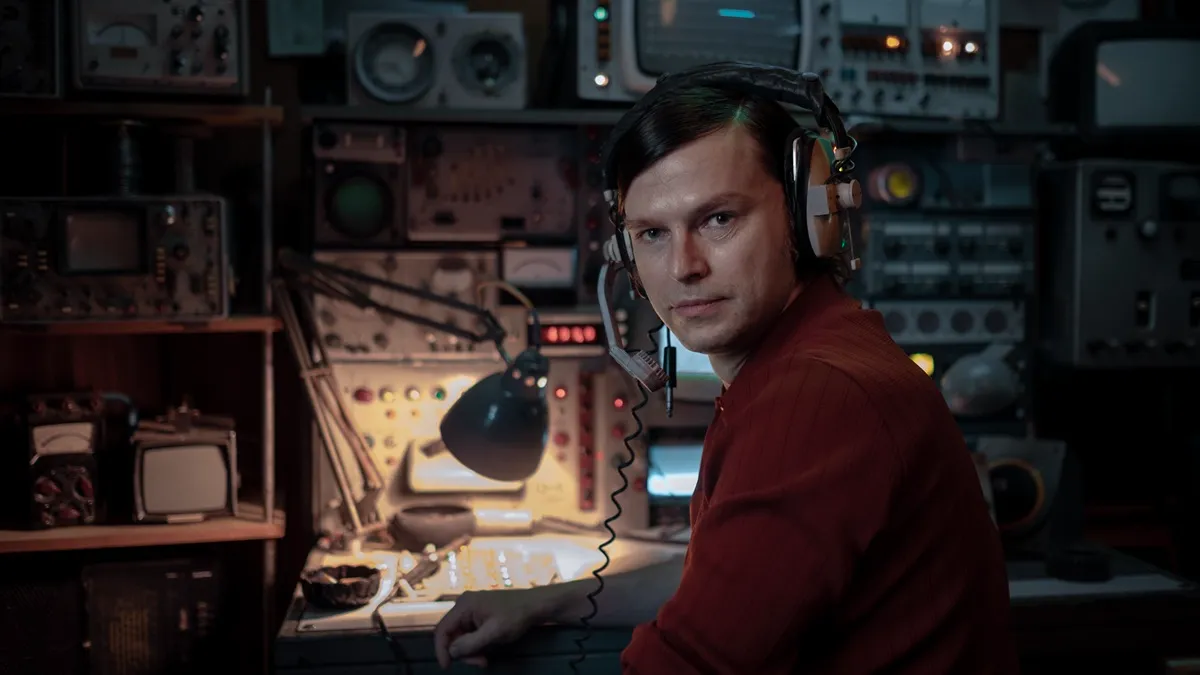
Production design leans into period precision. IBM monitors, rotary phones and analog SLR cameras appear in every newsroom, lending tactile weight to every cut. Costume choices draw clear social lines: Polgar’s tailored jackets and glossy hair recall the privileges of the party elite, while Sokolik’s threadbare sweater and Borewicz’s plain uniform underscore rural austerity. Even background extras—shopkeepers, technicians—wear muted fabrics that suggest frugality rather than fashion.
Art direction balances simplicity with purposeful distress. Minimal UFO effects—flickering lights above the water, brief power-line arcs—never cheapen the series’ grounded tone. Practical rigs, from smoke machines at the lakeshore to sparking wires in Sokolik’s workshop, foster immersion. CGI surfaces sparingly, used chiefly to smooth transitions rather than announce spectacle. Each visual cue reinforces that attention shifts toward character and power plays rather than alien fireworks.
Sound design and score complement the visuals with restraint. Sparse synth-wave pulses underscore investigative sequences, more mood than melody, like a heartbeat slowing when questions outweigh answers. Ambient field recordings—wind rustling over reeds, distant church bells, creaking radio static—draw attention to Poland’s uneasy stillness. Diegetic details—typewriter clicks in the studio, distant murmurs in police corridors, crackling walkie-talkie transmissions—ground each scene in its social and political environment. A single echoing footstep can carry more weight than a dramatic swell.
Together, these elements form a cohesive world where technology, geography and ideology intersect. Visual flourishes never overpower the story’s thrust. Instead, design and sound anchor each twist, inviting viewers to question every broadcast announcement and every eerie green shimmer.
Direction, Pacing, and Tone
Kasper Bajon approaches Project UFO with a steady hand, pairing deadpan satire and moody sci-fi. He leans on static wide shots—Polgar framed alone in a cavernous studio, Sokolik dwarfed by mist-wreathed lake shores—to underscore each character’s isolation. That choice speaks to the series’ thematic core: individuals boxed in by ideology.
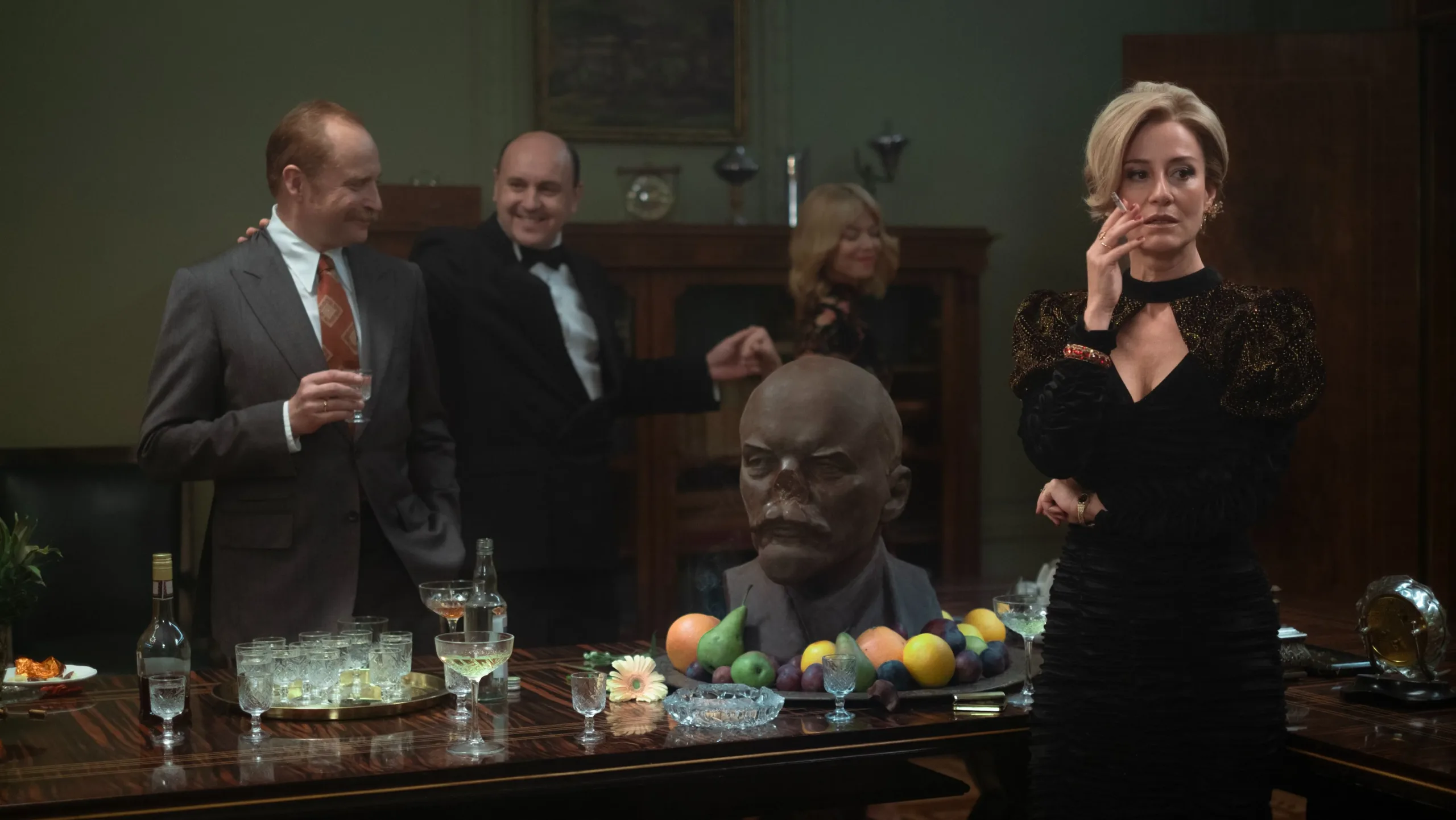
Scenes unfold at a measured pace. Moments of glacial tension linger long enough to let unease set in. A close-up of a flickering desk lamp can stretch into a full beat before a character finally speaks. Then, without warning, a cut to frenzied newsroom chatter jolts the tone, snapping viewers out of quiet observation.
Dry wit surfaces in Polgar’s on-air quips and the party officials’ absurdly choreographed press events. A staged reenactment of a “close encounter” plays out like a dark sketch, each awkward flourish reinforcing how propaganda and performance feed one another.
Yet these strengths come with pitfalls. With multiple subplots—secret service probes, personal dramas, political rivalries—the narrative risks fracturing attention. And without a traditional thriller’s set pieces, some may find their engagement tested. Still, Bajon’s restraint keeps every element in dialogue with the series’ deeper question: what happens when fear becomes the story itself?
Final Assessment
Project UFO weaves political commentary into its sparse sci-fi fabric with deliberate care. Bajon’s allegory of underwater invaders mirrors real tactics of fear used by authoritarian regimes—each flicker of neon-green light underscores propaganda’s power over truth. The series trusts narrative momentum over spectacle; the absence of tangible aliens turns viewer expectations against them, though some may find that choice frustrating when they seek narrative closure.
For audiences drawn to slow-burn dramas that examine how myths shape public opinion, this miniseries delivers steady engagement. If a concrete payoff defined by grand reveals is required, the show may feel unsatisfying.
Yet the true impact lies in its portrayal of media manipulation and state control through outdated broadcast technology and small-town intrigue. By subverting genre tropes, Project UFO contributes a thoughtful study of how storytelling itself can become a tool of power, inviting reflection on the fragile line between belief and coercion.
Full Credits
Director: Kasper Bajon
Writer: Kasper Bajon
Producer: Anna Kępińska
Cast: Piotr Adamczyk (Jan Polgar), Mateusz Kościukiewicz (Zbigniew Sokolik), Maja Ostaszewska (Wera Wierusz), Julia Kijowska (Julia Borewicz), Adam Woronowicz (Henryk Wierusz), Marianna Zydek (Lenta Polgar), Stanisław Pąk (Józef Kunik)
The Review
Project UFO
Project UFO combines political satire with retro sci-fi mood, using fear as its engine. Its measured pacing and thematic focus reward viewers drawn to media critique, though its refusal to deliver explicit extraterrestrial spectacle may test patience.
PROS
- Thoughtful political allegory anchored in everyday fear
- Authentic recreation of 1980s Poland’s look and feel
- Understated tension that rewards patience
- Strong, nuanced lead performances
CONS
- Pacing can feel sluggish in stretches
- Limited sci-fi resolution may frustrate genre fans
- Multiple subplots occasionally compete for focus
- Four episodes restrict narrative depth
- Tonal shifts sometimes feel uneven