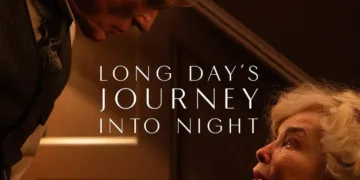

























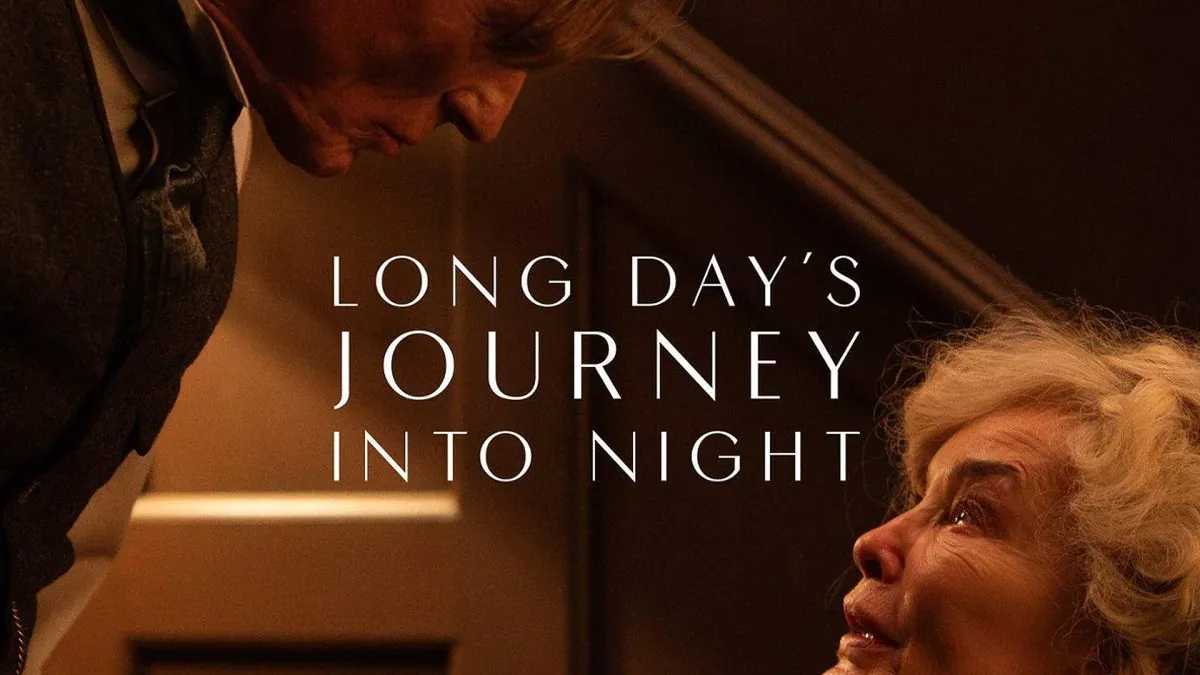

Long Day’s Journey into Night unfolds within a single April day in 1912, as the Tyrone family convenes in their Connecticut seaside retreat. Morning light filters through lace curtains (ghostly in its delicacy), hinting at both renewal and decay. Jonathan Kent adapts Eugene O’Neill’s Pulitzer Prize–winning drama with minimal fanfare: David Lindsay-Abaire’s screenplay preserves the play’s structural integrity while allowing microexpressions to carry seismic emotional weight.
Cinematographer Mark Wolf frames each encounter with a stillness that feels almost surgical, positioning Mary (Jessica Lange), James (Ed Harris), Jamie (Ben Foster) and Edmund (Colin Morgan) in tableaux where silent glances speak volumes. Ilan Eshkeri’s sparse score—or absence thereof—amplifies ambient creaks and a distant foghorn, rendering the house a character itself.
Lange’s Mary drifts between lucid charm and opioid-tinted disorientation, while Harris’s James masks paternal regret beneath a veneer of theatrical pride. Foster’s Jamie alternates between cynicism and hollow protectiveness, and Morgan’s Edmund, poised on the brink of consumption, articulates the fear of mortality with reluctant grace.
This intimate four-hander eschews cinematic flourish in favor of emotional precision, exposing cycles of accusation and apology that mirror broader reflections on familial denial during an era teetering toward global upheaval.
Structural Fault Lines
Kent’s adaptation adheres to a four-act framework that feels more architectural than theatrical, each act chiseling away at familial facades. Act I opens with a deceptively gentle breakfast; Act II tightens the screws as old resentments surface; Act III erupts in pitched accusations; Act IV resolves—if one can call it that—in hollow apologies (the kind that echo longer than any embrace).
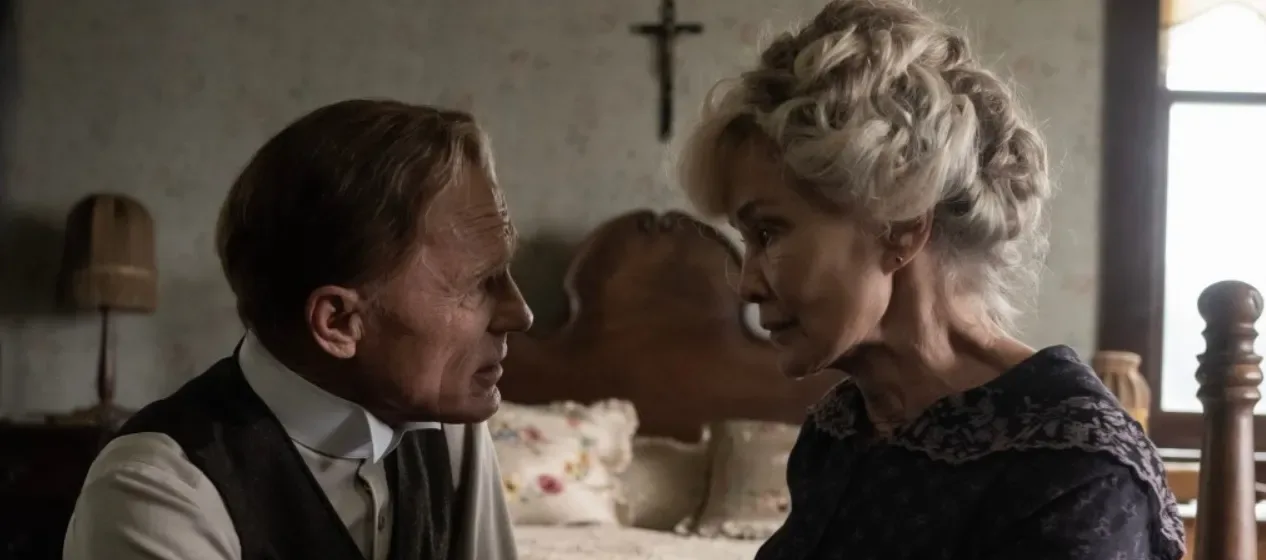
This temporal compression—morning drifting into muted afternoon, dusk glazed with sepia light, then night lit by ghostly bulbs—injects a relentless urgency. You sense every tick of the clock as an indictment: no scene padding, no respite. In a way, it’s like living through a single day of national crisis, where each hour compounds anxiety until the final collapse.
At the center lies addiction and shame. Mary’s morphine use becomes a mirror for collective denial: a society that whispers “keep it inside,” then feigns surprise when the body betrays the mind. Denial and confession loop like a sad refrain, with accusation and apology trading places as though scripted by grief itself. Edmund’s consumption diagnosis looms like a historical specter—tuberculosis once ravaged families by stealth—underscoring mortality as an uninvited guest. Beneath it all, guilt and buried sorrow (an infant lost, dreams undone) coalesce into an almost tangible pressure.
The house where they live feels hermetically sealed—walls that enclose emotions as much as rooms—while beyond lies the wild coastline, a reminder that the world continues (storm-lashed, indifferent). Fog and grey light slither through windows, turning the home into a slow-motion suffocation chamber.
Dramatic devices hinge on silences and glances—those loaded pauses where a sideways look can fracture trust more than any shout. Props play minor prophets: the foghorn’s distant cry, empty corridors, a half-closed door all foreshadow ruptures to come. In this microcosm, small sounds loom large, suggesting that sometimes the unspoken carries more weight than the words themselves.
Fractured Bonds and Buried Desires
Mary Tyrone moves through her home like a bruised thespian, gestures heavy with unshed tears (hands pressed to temples, fingers twitching as if the past still clings). Her voice can flicker between brittle clarity and tremulous haze in the same breath—a vocal tightrope that exposes the tension between former stardom and current fragility. The simplicity of her day dress—muted tones, soft fabrics—betrays whispers of opulence long since faded.
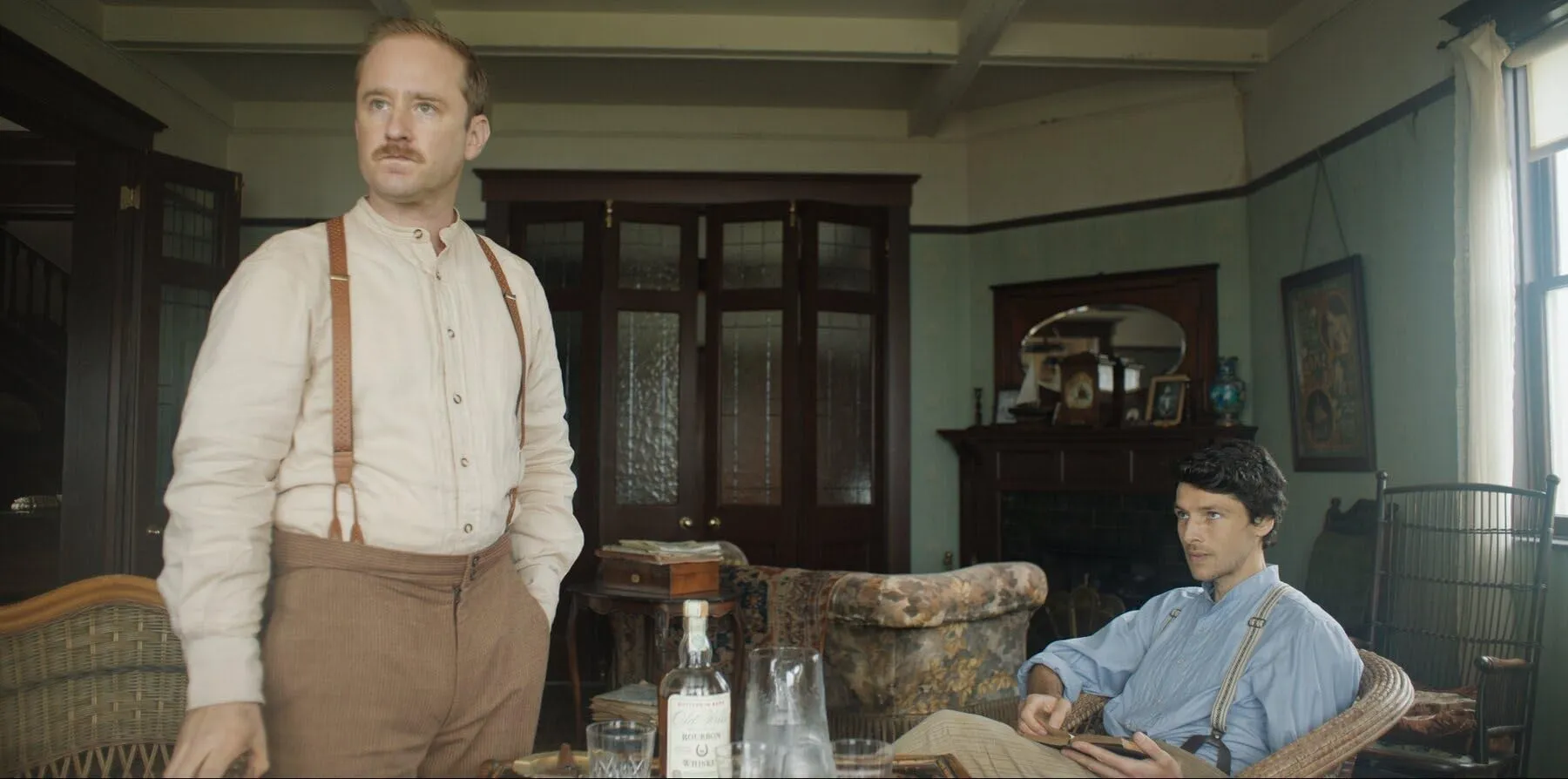
James Tyrone wears composure like an actor in perpetual performance. His chest puffs with patriarchal pride, yet eyes betray a man haunted by regret and unspoken regrets (yes, plural). He treats money as a balm, underwriting both family comforts and Mary’s relapses—an economic enablement that mirrors early twentieth-century power dynamics, where the paterfamilias often dictates both virtue and vice.
The older son, Jamie, deploys cynicism as armor. His barbed wit can flay his father’s insecurities and mother’s anxieties in equal measure. Yet there are fleeting moments—when he offers a hand to his brother, when his sneer falters—where compassion breaks through. It’s as if, beneath self-destruction, he aches for genuine connection.
Edmund Tyrone inhabits the role of sensitive cartographer, mapping every emotional fissure with poetic precision. Facing a tuberculosis verdict, he shifts between hopeful defiance (“I’ll beat this”) and resigned sorrow (“What chance does a sick man have?”). His literary inclinations carve a poignant counterpoint to the family’s brutal honesty.
Power oscillates across dinner tables and parlors. One minute James dominates with booming assertions; the next, Mary’s unraveling forces silence. Accusation and apology cycle in dizzying loops—false truces that cradle the family in fragile calm. And lurking beneath these dynamics is the weight of patriarchal expectation: men as providers, women as keepers of dignity. Here, familial roles both uphold and flatten individual desires.
In this microcosm, each interaction echoes larger cultural shifts: the tightening grip of social mores, the inevitability of decline, and the yearning for redemption in an unforgiving age.
Performances & Direction: Anatomy of Unspoken Words
Lange treats each micro-expression as a kind of Morse code of emotion—twitching fingertips, a sudden narrowing of the eyes, a voice that fractures mid-word. She honors Mary’s theatrical origins (an actress trapped by her own stage fame) while excavating raw vulnerability beneath every gesture. In doing so, Lange reflects how early twentieth-century society often silenced women’s suffering (morphine addiction was scandal, not illness), turning private pain into public taboo.
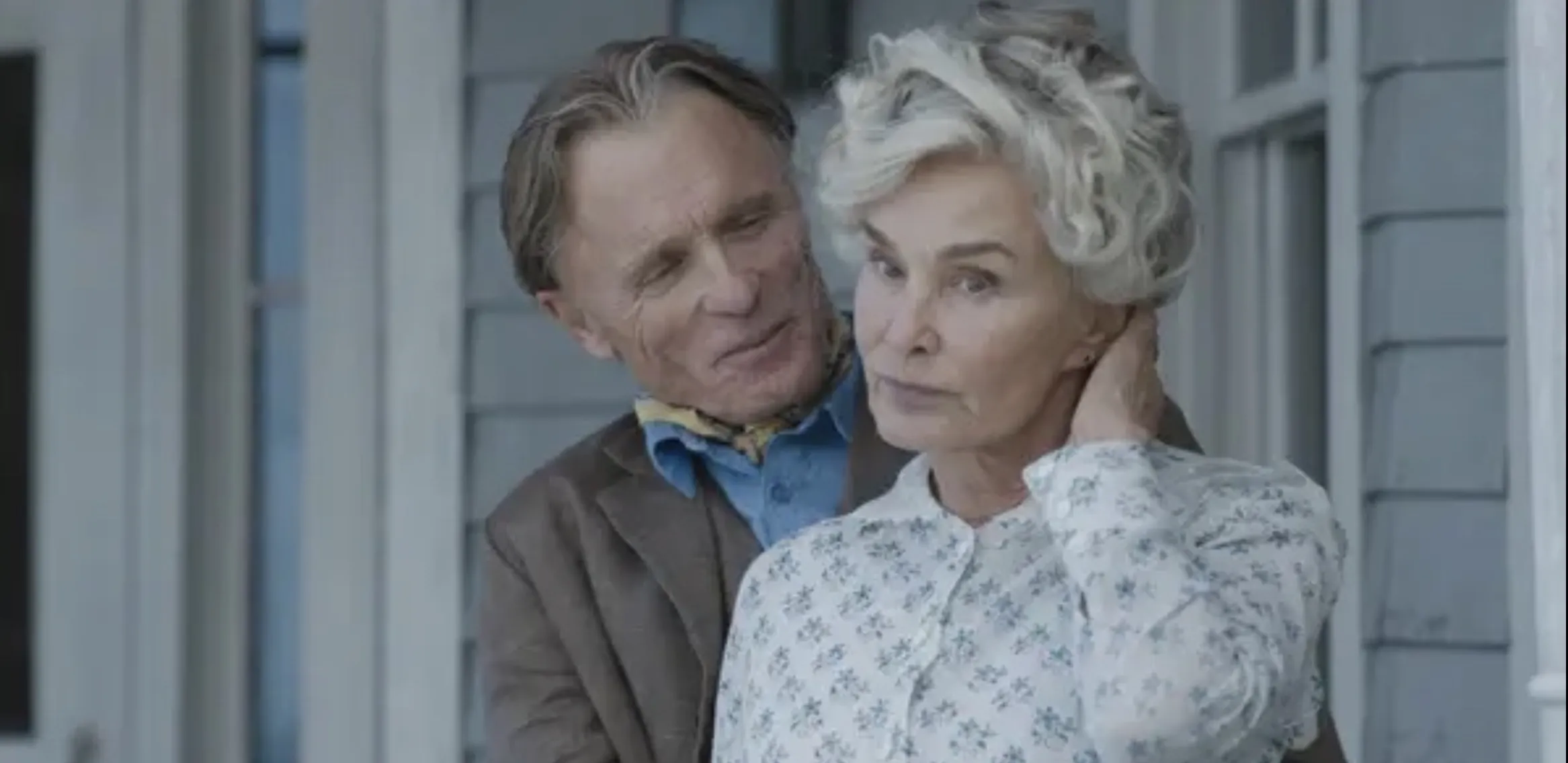
Harris occupies space with the measured stillness of a veteran performer—shoulders squared, back straight—yet allows his composure to crack at precise moments. A pregnant pause in his gaze can convey decades of paternal regret more effectively than a monologue. His controlled outbursts resemble Shakespearean storms (calm then fury), suggesting that patriarchal pride sometimes collapses under its own weight.
Foster’s Jamie flits between cruel jibes and fleeting compassion, his unpredictability creating its own rhythm—call it chamber acting, intimate yet explosive. Morgan’s Edmund offers polished restraint, voice soft as sea mist, yet betrays a poet’s soul on the verge of collapse. Neither performer bows to the star wattage of their elders; instead, all four actors sustain equal gravity in each frame, forging a delicate equipoise where every glance can tip the balance.
Jonathan Kent brings a stage director’s eye to each scene, arranging actors in static compositions that resemble silent tableaux. The camera rarely intrudes; it observes, lending filmic power to theatrical craft. Subtle shifts in perspective—a sudden cut to Mary’s reflection in a window, for example—highlight emotional undercurrents without resorting to showy technique. Here, the lens functions as confidant, bearing witness to every suppressed confession.
In tandem, these performances and Kent’s measured direction forge a cinematic anatomy of familial fracture, where unspoken words ripple louder than any shouted declaration.
Visual Design & Cinematography: Architecture of Emotion
The Tyrone home breathes authenticity. Every piece of furniture—worn leather chairs, timeworn carpets—feels salvaged from a century past. Costume fabrics whisper of wealth now tarnished by despair (silks dulled by salt air). This production design trades theatrical gloss for an “opaciscape” aesthetic: a muted palette where faded blues and greys convey emotional frost.
Morning scenes arrive bathed in soft, diffuse light. By afternoon, sunbeams take on a sepia warmth, as if the film itself is aging in real time. Then nightfall: incandescent bulbs emit a spectral glow, turning white nightgowns into drifting apparitions. Ilan Eshkeri’s hush of a score yields to ambient creaks and distant gull calls, accentuating each shift in illumination.
Kent’s static framing recalls stagecraft (actors move; camera remains still), but this restraint paradoxically heightens cinematic intimacy. Tight interior shots trap characters in claustrophobic compositions, while sudden cuts to the rugged coastline remind us that life beyond these walls is indifferent and vast.
Visual metaphors surface in empty hallways, where shadows stretch across polished floors, suggesting unseen emotional chasms. Fogged windows become lenses for internal haze—Mary’s addiction, James’s regrets. The recurring lighthouse beams in the final act serve as both beacon of hope and herald of doom, framing the Tyrone family’s struggle against an unforgiving world.
In this filmic microcosm, cinematography and design don’t simply dress the story—they map its emotional topology, guiding viewers through rooms of memory, shame, grief and fleeting hope.
Soundscape & Score: Echoes of Suppressed Cries
Creaking floorboards and the distant foghorn form a low-frequency undercurrent, as if the house itself is groaning under remembered sorrows. Soft gull calls punctuate dialogue, serving as a Greek chorus from beyond the walls. Silence plays its own role. In pivotal scenes—Mary’s tremulous confession, James’s frozen stare—absence of sound sharpens every inhalation. It’s deafening.
Ilan Eshkeri’s minimalist motifs whisper tension rather than shout it. A solitary piano note here, a sparse string tremolo there, creates an emotional tremor that lingers in the chest. Then, at the precise moment an argument peaks, music retreats entirely. The ensuing pause feels like collective breath held—and released.
Mixing balances clarity of each confession with ambient atmosphere. Dialogue floats above floorboard creaks; yet a sudden door slam or cough can feel jolting—reminding viewers that even small sounds carry the weight of unspoken truths. In this design, sound becomes a philosophical agent: every echo a comment on the fragility of human connection.
From Stage to Screen: Context & Adaptation Choices
Eugene O’Neill penned Long Day’s Journey into Night between 1939 and 1941, only for it to emerge in 1956 after his death—an opera of familial ruin long divorced from its author’s hand. Since Katharine Hepburn’s 1962 turn and subsequent revivals, the play has accrued a near-mythic pedigree, spawning two prior film versions and countless stage productions.
David Lindsay-Abaire’s screenplay trims a few period-specific quips—farewell, references to Edwin Booth’s post–Lincoln infamy—while safeguarding O’Neill’s thunderous monologues. Dialogue rhythms remain intact, so that a lullaby of accusation can still bloom into volcanic confession. It’s a tidy modernization. No pop-culture Easter eggs here.
Financing hiccups nearly stopped production after a single day, only for County Wicklow’s rolling grants to breathe life back into the shoot. Actors endured Irish rain soaked into wool coats meant to evoke New England chill—grim physical prep that seeps into every tremor of Lange’s hand, every quiver in Harris’s voice.
Kent resists cinematic showboating. He frames scenes like stage tableaux—static camera, actors blocking heavy with intent—eschewing dolly pushes or aerial flourish. Call it “chamber cinema.” This restraint yields an intimacy rare in period pieces. You feel the grain of wood underfoot.
Looking ahead, this version could become the touchstone for actor workshops and O’Neill scholarship, a masterclass in translating theatrical density into filmic subtlety. Future adaptations may borrow its austere lens, daring to trust audiences with silence and shadow rather than special effects or star cameos. In that sense, Kent’s film might chart new coordinates for stage-to-screen storytelling.
Full Credits
Director: Jonathan Kent
Writer: David Lindsay-Abaire
Producers: Gabrielle Tana, Jonathan Kent, Jessica Lange, Ed Harris, Ben Foster, Colin Morgan
Cast: Jessica Lange (Mary Tyrone), Ed Harris (James Tyrone), Ben Foster (Jamie Tyrone), Colin Morgan (Edmund Tyrone), Ericka Roe (Cathleen)
Director of Photography (Cinematographer): Mark Wolf
Editor: Jon Harris
Composer: Ilan Eshkeri
The Review
Long Day’s Journey into Night
Long Day’s Journey into Night proves a haunting exploration of familial decay, anchored by Jessica Lange’s magnetic performance and Ed Harris’s restrained power. Kent’s chamber-cinema approach magnifies every simmering glance and brittle silence, turning O’Neill’s text into visceral experience. Though its deliberate pacing may feel austere at times, its emotional payoffs resonate long after the credits roll.
PROS
- Jessica Lange’s nuanced portrayal of Mary channels profound emotional truth
- Ed Harris’s measured performance reveals layers of paternal regret
- David Lindsay-Abaire’s adaptation preserves O’Neill’s dramatic tension
- Jonathan Kent’s static framing heightens theatrical intimacy
- Mark Wolf’s natural-light cinematography maps emotional shifts
CONS
- Deliberate pacing may test viewers seeking brisk momentum
- Minimal camera movement can feel visually static
- Sparse musical cues leave some scenes feeling austere
- Dense, dialogue-driven scenes might overwhelm casual audiences