




























Sarah Miro Fischer’s debut, The Good Sister, unfolds like a fissure in a once‑unshakeable bond. Rose, freshly cast out by a broken romance, seeks refuge in her brother Sam’s cramped apartment—only to discover that sanctuary may be an illusion. Days after her arrival, a terse police summons demands her testimony against the very person who has been her anchor.
From its first moments, the film embraces a slow‑burn rhythm: each scene measured, every silence pregnant with unspoken tension. Jakob Mäsel’s sparse soundscape—heartbeat‑quiet score punctuated by the distant drip of water—amplifies the hum of anxiety that pervades Sam’s flat. Selma von Polheim Gravesen’s camera, largely static and unintrusive, lingers on close‑quarters interiors, revealing the claustrophobia of shared history and the shadows that lurk between siblings.
At stake is more than a question of guilt or innocence. Fischer frames loyalty as both a lifeline and a chain: how long can devotion endure before it fractures under the weight of doubt? And when the truth, half‑glimpsed, arrives in the form of a victim’s statement, what becomes of love tethered to silence? These are the questions The Good Sister sets before us, inviting us to dwell in the space where certainty dissolves and moral clarity trembles.
Contours of Doubt
Rose’s late‑night arrival at her brother’s apartment carries the hushed promise of refuge—and a tremor of unease. She slips inside, key turning in the lock, only to be reminded of her own limits when a muted clamor echoes through the adjoining room. A hurried silhouette slips past the slit of doorframe; Rose catches a flash of the woman who will later summon her conscience. That half‑glimpse, combined with the muffled cadence of voices, plants the seed of suspicion before a single word is spoken.
Days later, a crisp envelope from the police arrives like an accusation in itself. The summons propels Rose from familial inertia into an arena where loyalty and doubt collide. Reviewing Elisa’s statement in a sunlit café, she recoils as the narrative fractures her memory of that night. In a sterile beauty salon, she confronts Elisa beneath the waxing lamp—each painful tug of the strip echoing a pull against her own denial. Later, a life‑drawing class becomes a gallery of shadows when Rose’s pose mirrors an echo of the alleged crime, the pastel sketches staining her certainty with fresh questioning.
Fischer trusts silence as much as dialogue, crafting long takes that linger on restless hands and unfocused gazes. Elliptical edits skip through days and emotions with surgical precision: a breakfast scene dissolves into interrogation prep, leaving us untethered and off‑balance. Quiet domestic humdrum—coffee grounds grinding, shower water cascading—stands counterpoint to moments of sudden vertigo, those charged hushes when the frame seems ready to snap.
By limiting our vision to Rose’s vantage, the film invites us to inhabit her moral claustrophobia. We never see the alleged assault; we only absorb its aftershocks through her filtering mind. That insistence on off‑screen truth heightens complexity—each fragmentary memory gains weight, each unanswered question a small betrayal.
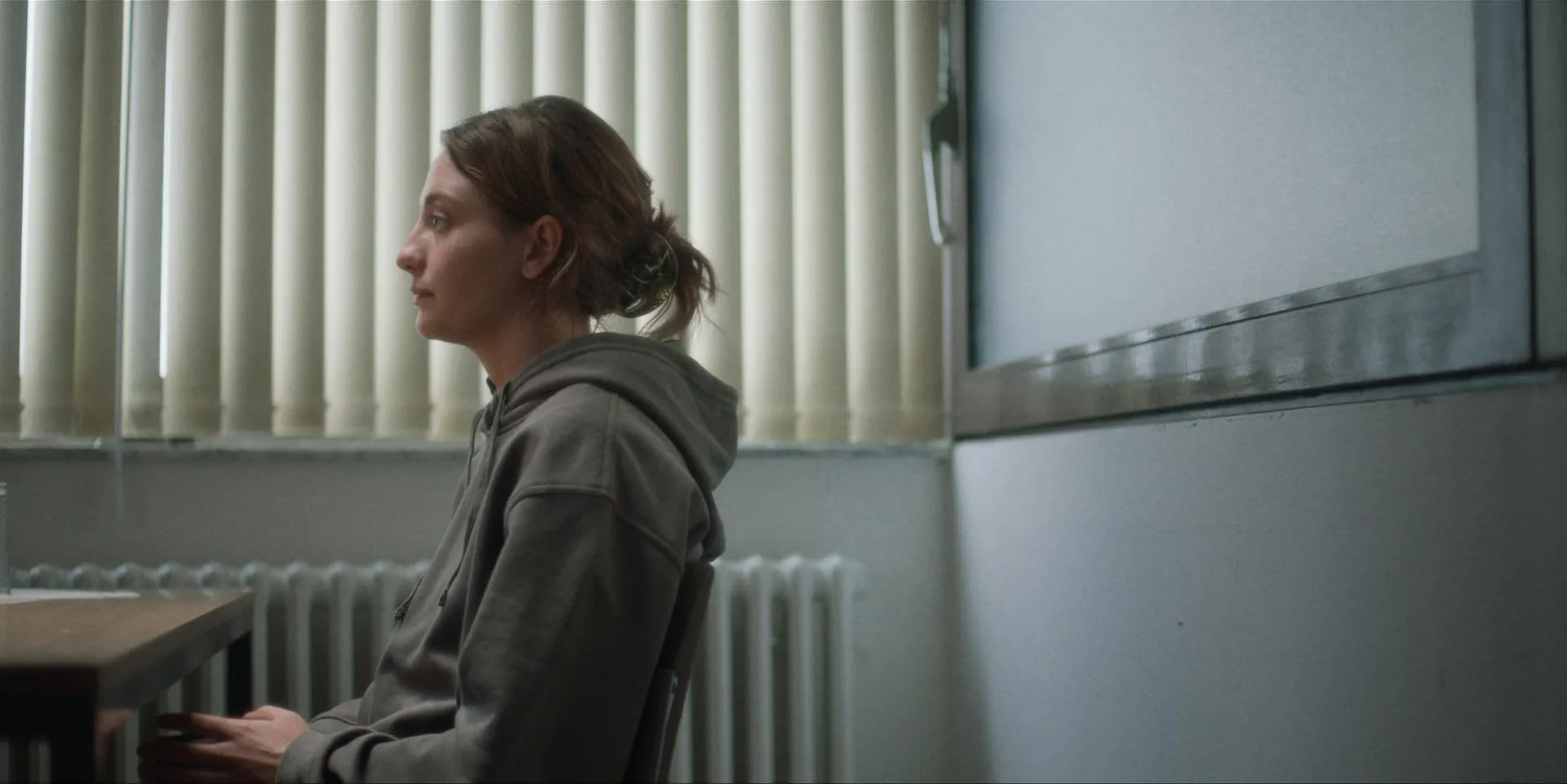
Midway, the interrogation room becomes crucible: Rose under harsh lights, words clipped and precise, her face a battleground of longing and dread. The climactic moment arrives not with a bang but a breath: her choice hangs in the air, unresolved, leaving the final frame charged with unspoken consequence.
Embodied Loyalties
Marie Bloching’s Rose emerges as a study in fissures: initially cast as the affectionate “family screw‑up,” her posture—slumped shoulders, restless hands—betrays a dependency that shifts with surgical precision. As the narrative deepens, Bloching’s face becomes a terrain of moral upheaval: a barely perceptible tightening around the eyes when she rereads Elisa’s statement, a fleeting tremble of the lip as she hesitates at the salon door. These micro‑expressions coalesce into a portrait of a woman shed of naïveté, her transformation carried wordlessly through gesture and glance.
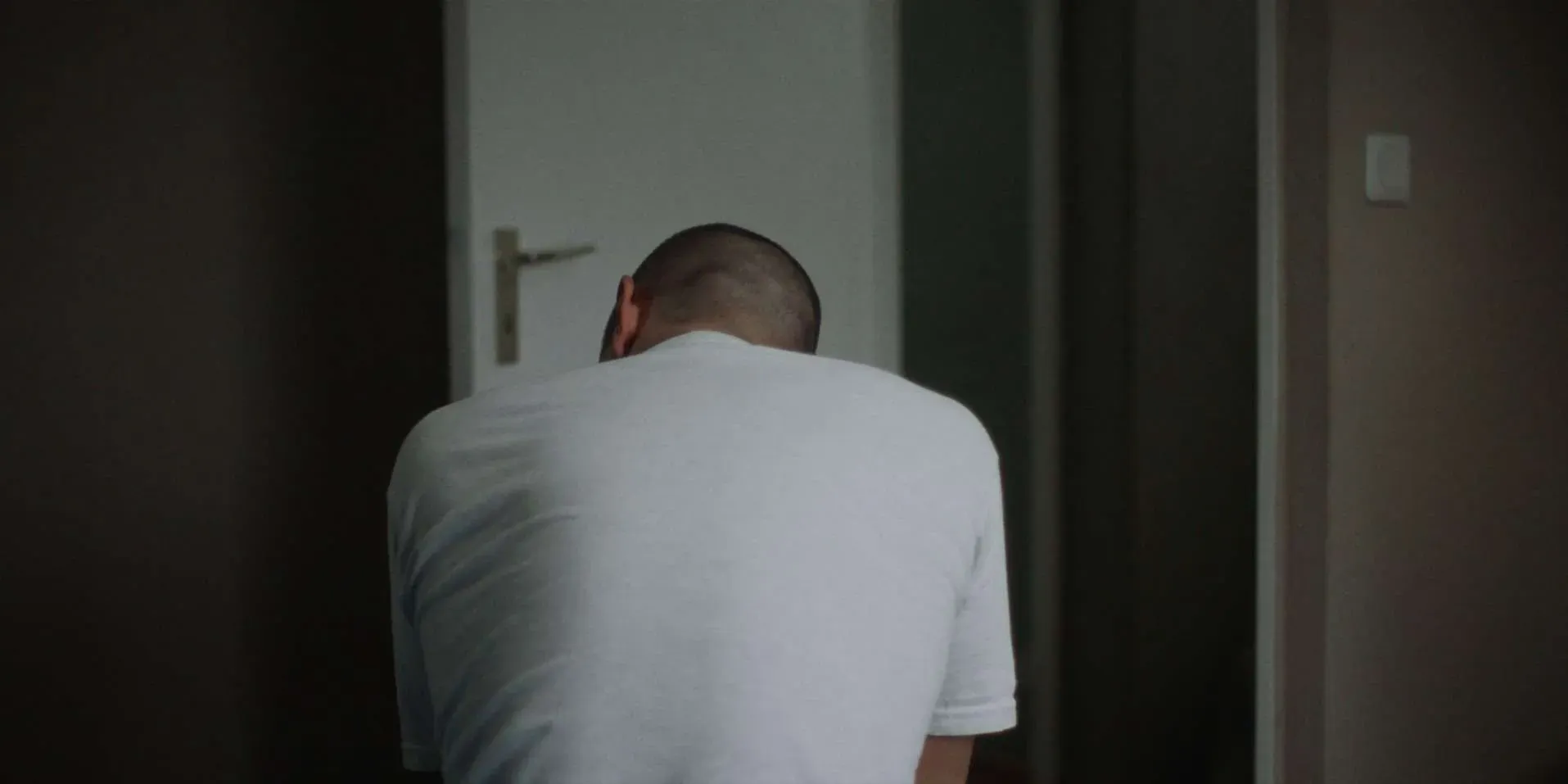
Anton Weil’s Sam inhabits the frame with warm magnetism: the easy grin, the casual reach to steady Rose’s trembling hand. Yet the same proximity that feels protective soon flickers with disquiet—an unexpected stiffness in his posture, the rapid blink when questioned about his whereabouts. In the aftermath of accusation, Weil reveals a fragile core: vulnerability peeks through the facade of brotherly benevolence, each retreat into silence echoing his dawning isolation.
Laura Balzer’s Elisa, though seen only in sharp interludes, resonates throughout the film’s emotional architecture. In the waxing scene, her measured rhythm—applying the strip, pausing for a deliberate question—anchors a confrontation that neither woman fully controls. Balzer’s restraint, a set of coolly tilted features and concise dialogue, imbues the sequence with the weight of unspoken grievance.
Secondary figures punctuate Rose’s orbit with mirrored tensions. Jazz, glimpsed in a hesitant embrace, recalls a tenderness now fractured, reminding us how recent heartbreak renders Rose both vulnerable and defensive. The life‑drawing peer, sketchpad in hand, becomes an unwitting echo of the central crime: his tentative invitation to pose unmasks Rose’s internal conflict, as if every stroke of charcoal maps her unease.
The siblings’ bond registers in subtle choreography: a shared cup of coffee at dawn, Rose looping her arm through Sam’s on a woodland path. Yet the film’s true currency lies in the spaces that open between them—half‑turned bodies, eyes that flick away at critical moments. These shifts in proximity and eye‑line articulate the fracture of trust more eloquently than any spoken line could.
Framing the Unspoken
Fischer’s approach is one of deliberate restraint: a stationary camera that lingers on faces, drawing attention to the smallest shifts in expression. Static framing holds space for silence, then eases into imperceptible movements—a slight push forward as Rose recoils, a near‑still tilt when her gaze drifts—that mirror her inward churn. This minimalism allows gestures to speak volumes, each blink and breath magnified.
Selma von Polheim Gravesen orchestrates compositions that evolve with the story’s fracture. Early scenes cradle Rose and Sam within a single frame—intertwined bodies at breakfast, their shadows overlapping on the wall. As suspicion seeps in, the lens tightens around Rose: isolating close‑ups where every line in her forehead carries weight. Art‑class sequences unfold in slow pans, the camera tracing charcoal strokes across paper, while the interrogation room is captured in claustrophobic tightness, suffocating any escape.
Water becomes a visual motif of rising tension: taps drip in hollow echoes, showers cascade like muted confessionals. A broken sink, its mold‑stained cupboard revealed, stands as a rite of unmasking: clean surfaces concealing decay. The apartment’s subdued palette—faded grays and washed‑out blues—accentuates cramped quarters, while fleeting outdoor shots of open fields offer a pale breath of release.
Every prop feels charged: a wrench abandoned on the kitchen bench, wax strips curled in the salon’s tray—extensions of Rose’s restless psyche. Off‑screen sounds—a faucet’s drip, a distant door click—linger at the frame’s edge, ensuring that what goes unseen holds as much sway as what unfolds before us.
Echoes Beneath the Surface
Jakob Mäsel’s soundscape begins in half‑light, confounding clarity. Opening long take: muffled scuffles and distant murmurs seep through walls, planting unease before visuals cohere. Diegetic sounds—door latches clicking, Rose’s breath catching in her throat—serve as punctuation marks, each a reminder of presence and absence.

A minimalist score threads discreet piano motifs and ambient drones, refraining from emotional punctuation. Music drifts at the edge of perception, its sparse notes colliding with silence to sharpen tension. Silence itself becomes a tool: the interrogation room’s hush, broken only by a pen’s tap, intensifies Rose’s isolation.
Water recurs as an auditory leitmotif—taps drip in measured Morse, a shower’s rush crescendos at moments of revelation, gears of tension turning in the subconscious. These aqueous echoes weave through the narrative, bridging scenes like memory’s tide, evoking dread that lingers in the ear long after images fade.
Silence and space amplify every detail, transforming tiny noises into harbingers of fractured trust.
Currents of Complicity
At its core, The Good Sister poses an unyielding question: when does loyalty morph into complicity? Rose’s devotion to Sam, born of shared history and refuge, collides with an ethical imperative that demands more than familial allegiance. Her struggle crystallizes in every measured glance—torn between the instinct to shield her brother and the flicker of solidarity she owes as a woman. Love, here, begins to resemble a chain, each link forged in silence.

Perspective becomes a narrative crucible. By confining our gaze to Rose’s limited vantage, Fischer holds up a mirror to our own blind spots about those closest to us. The film warns of the fragility inherent in giving “the benefit of the doubt,” revealing how easily certainty can be weaponized into denial. What remains unseen off‑screen gains as much gravity as the moments we witness.
Elisa’s trauma radiates outward, unsettling Rose’s equilibrium and fracturing every bond in her orbit. Secondary wounds register in Rose’s sudden recoil in social settings and her furtive retreats into solitude. Each behavioral echo—her tightening chest at a casual joke, her restless pacing at night—maps the invisible reverberations of a rupture she cannot fully name.
Gender and power dynamics surface in unexpected arenas. During the life‑drawing session, Rose’s poised vulnerability mirrors the alleged assault: language shifts from gentle invitation to cold command, posture flips from solidarity to dominance. Fischer compels us to confront how male aggression seeps into collective behavior, shaping interactions even when the perpetrator stands elsewhere.
Water flows through the film as silent testimony to hidden corruption. Dripping taps and mold‑stained sinks speak of facades concealing decay, while the waxing scene unfolds like a ritual of confession and pain. Each pull of the strip traces a line between consent and coercion, leaving behind a mark both literal and symbolic.
In this crucible of suspicion, Rose undergoes an unspoken coming‑of‑age. The final act becomes her rite of passage, a quiet reckoning that transforms her from dependent sister into moral agent. In that transformation, silence gives way to responsibility, and complicity yields to choice.
Echoes That Linger
The film’s wispy narrative threads and unspoken moments settle like late‑night echoes, each glance and every muted gesture resonating long after the credits roll. Marie Bloching’s voice‑soft performance and the film’s quiet cadences carve out memory spaces where doubt and devotion entwine, inviting the viewer to carry its tension home.

Sarah Miro Fischer demonstrates a deft touch with charged material, her restrained direction imbuing domestic interiors with seismic weight. She orchestrates mood through stillness and small details, suggesting a filmmaker whose confidence in nuance will only deepen in future work.
The Good Sister stands as a piercing study of trust’s fragility, a film that asks what remains when certainty fractures. Its slow‑burn architecture offers fertile ground for reflection, making it a compelling encounter for anyone drawn to character‑driven explorations of moral conflict.
This is a film tailor‑made for discerning audiences: those who savor festival discoveries, who seek psychological dramas that linger in the mind. Its subtle power rewards patience, leaving open questions that continue to pulse in the imagination.
Full Credits
Director: Sarah Miro Fischer
Writers: Sarah Miro Fischer, Agnes Maagaard Petersen
Producers: Nina Sophie Bayer-Seel, Janna Fodor
Cast: Marie Bloching (Rose), Anton Weil (Sam), Proschat Madani (Linda), Laura Balzer (Elisa), Jane Chirwa (Lia)
Director of Photography (Cinematographer): Selma von Polheim Gravesen
Editor: Elena Weihe
Composer: Francesco Lo Giudice
The Review
The Good Sister
The Good Sister is a quietly devastating exploration of trust under siege, anchored by Marie Bloching’s riveting performance and Sarah Miro Fischer’s assured, minimalist direction. Its patient tension and moral complexity linger long after the final frame, marking it as a compelling debut that rewards thoughtful reflection.
PROS
- Marie Bloching’s quietly powerful performance
- Sarah Miro Fischer’s assured, minimalist direction
- Taut slow‑burn pacing that sustains unease
- Rich interplay of sound design and visual motifs
- Thought‑provoking thematic depth
CONS
- Symbolism can feel heavy‑handed at times
- Pacing may strike some as sluggish
- Third act lacks dramatic propulsion
- Art‑class subplot underexplored