



























Under the neon glare of Miami’s art world—and beneath its opulence—Forge invites viewers into the intricate dance of deception. Jing Ai Ng’s first feature, unveiled at the 2025 SXSW Film & TV Festival, traces the daring path of Coco and Raymond Zhang, Chinese American siblings whose exquisite forgeries bankroll a precarious existence. When trust‑fund heir Holden Beaumont recruits them for a monumental scam, their calculated precision collides with the determined pursuit of FBI agent Emily Lee.
Shot by Leo Purman, Miami emerges as both sun‑drenched paradise and shadowy underbelly, its vibrant palettes and looming decay echoing traditions of Indian parallel cinema that merge realism with symbolic weight. As Forge unfolds, it channels the moral complexity of Bollywood capers—where family loyalty and personal ambition tangle in equal measure—and raises questions of belonging, artifice and self‑definition in a globalized age. This section will explore how Forge interlaces caper momentum with intimate family portraiture, while navigating the blurred lines between authenticity and illusion.
Crafting Suspense Through Three Acts
In its first act, Forge opens in a seedy Miami motel, where Coco’s playful deception immediately sets the tone. She feigns naïveté before a Craigslist appraiser, while Raymond stands guard—this scene stakes out their sibling bond and the contrast between Raymond’s day job at a resort and their secret forgery trade. When Holden Beaumont arrives with a high‑stakes offer, Coco nudges a hesitant Raymond into a scheme that will test their trust, planting the seed for mounting conflict.
The second act splits focus between Emily Lee’s careful FBI inquiry and the Zhangs’ expanding operation. Lee’s low‑key questioning—framing her as both outsider and insider—echoes the measured sleuthing found in Indian parallel films like those of Shyam Benegal, where investigation unfolds through small social cues rather than dramatic showdowns. Key moments—the restaurant dinner where cultures brush against each other, the revelation of Holden’s ruined collection after a hurricane, and the twins’ first large‑scale forgery—all arrive with weight. Yet the film’s deliberate pacing can stall: extended takes of Coco mixing lacquer or Lee scanning archives mirror Bollywood’s patience for character detail, but here they occasionally drain momentum.
In act three, the two worlds collide. An editing montage charts Lee closing in, while Coco and Raymond face personal stakes that can no longer be ignored. The final gathering in the family dim sum restaurant, shot in warm, golden light, reverses the motel setup and underscores the story’s full circle. This symmetry—tension loaded in opening and closing bookends—works well, even if the middle misses a sharper cut. The result feels crafted for emotional peaks, with crisp camera moves and an electronic score heightening urgency whenever the narrative finds its stride.
Faces of Deception and Duty: Forge’s Ensemble at Work
Andie Ju’s Coco Zhang is a study in controlled intensity. In her first scene—stalling a motel appraiser with faux grief—Ju channels the poise of a Bollywood heroine turned anti‑heroine, recalling Smita Patil’s quiet conviction in parallel cinema. Coco’s imposter‑syndrome arc unfolds subtly: when she stands before a six‑figure forgery, her eyes flicker between pride and doubt, conveying a woman who both owns her talent and questions her place in a world that values authenticity above all.
Brandon Soo Hoo’s Raymond functions as the narrative’s moral compass, torn between entrepreneurial daring and familial loyalty. His posture shifts—backlit against Miami’s neon at the resort, he appears secure; in dimly lit forgeries, shoulders hunched, you sense his anxiety. This tension mirrors sibling dynamics in Indian films like Kharij (1982), where duty to family collides with personal ambition. Soo Hoo and Ju share a rhythm in their silent exchanges: a glance in the restaurant kitchen, a whispered correction in the studio, building to moments of crackling trust and betrayal.
Edmund Donovan’s Holden Beaumont arrives with a practiced charm that belies desperation. His requests feel casual—“Can you redo my grandfather’s floods?”—yet the tremor in Donovan’s voice hints at deeper insecurity. The shift from client to co‑conspirator peaks when he first sees Coco’s large‑scale replica: his awe turns to thinly veiled envy, capturing how privilege can erode empathy.
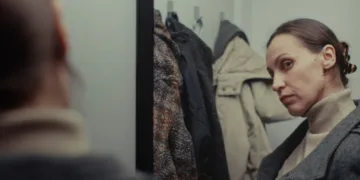
Kelly Marie Tran’s Agent Emily Lee brings welcome depth amid the schemers. Poised in her stark FBI office, she watches family dinner footage on her laptop, yearning for connection. Tran’s nuanced restraint—small smiles, a furrowed brow—echoes investigative leads in Indian thrillers like Talvar (2015), where performance carries the story when plot pauses.
Supporting turns enrich the tapestry: Dawn Ying Yuen’s mother grounds the film in cultural authenticity, her warm hospitality contrasting with criminal suspense. T.R. Knight’s motel dealer oozes sleaze, making you root for Coco, while Eva De Dominici’s Talia introduces subtle gender politics in Holden’s circle. Together, this ensemble strikes a balance between detached cool and flickers of genuine warmth, propelling Forge’s exploration of artifice into emotionally charged territory.
Visual Poetry in the Underbelly: Direction, Lens and Sound
Jing Ai Ng announces herself as a director to watch. In Forge, her confident debut marries disciplined plotting with bursts of raw feeling—echoing the measured pacing of Bollywood’s parallel stream, where storytelling often unfolds in quiet moments. Ng shifts effortlessly between playful caper beats (Coco’s motel hustle plays out like a cheeky heist vignette) and subdued thriller undercurrents (Emily Lee’s lone vigil at the archives). This restraint lends weight to each tonal pivot, inviting viewers to lean in rather than be jolted.
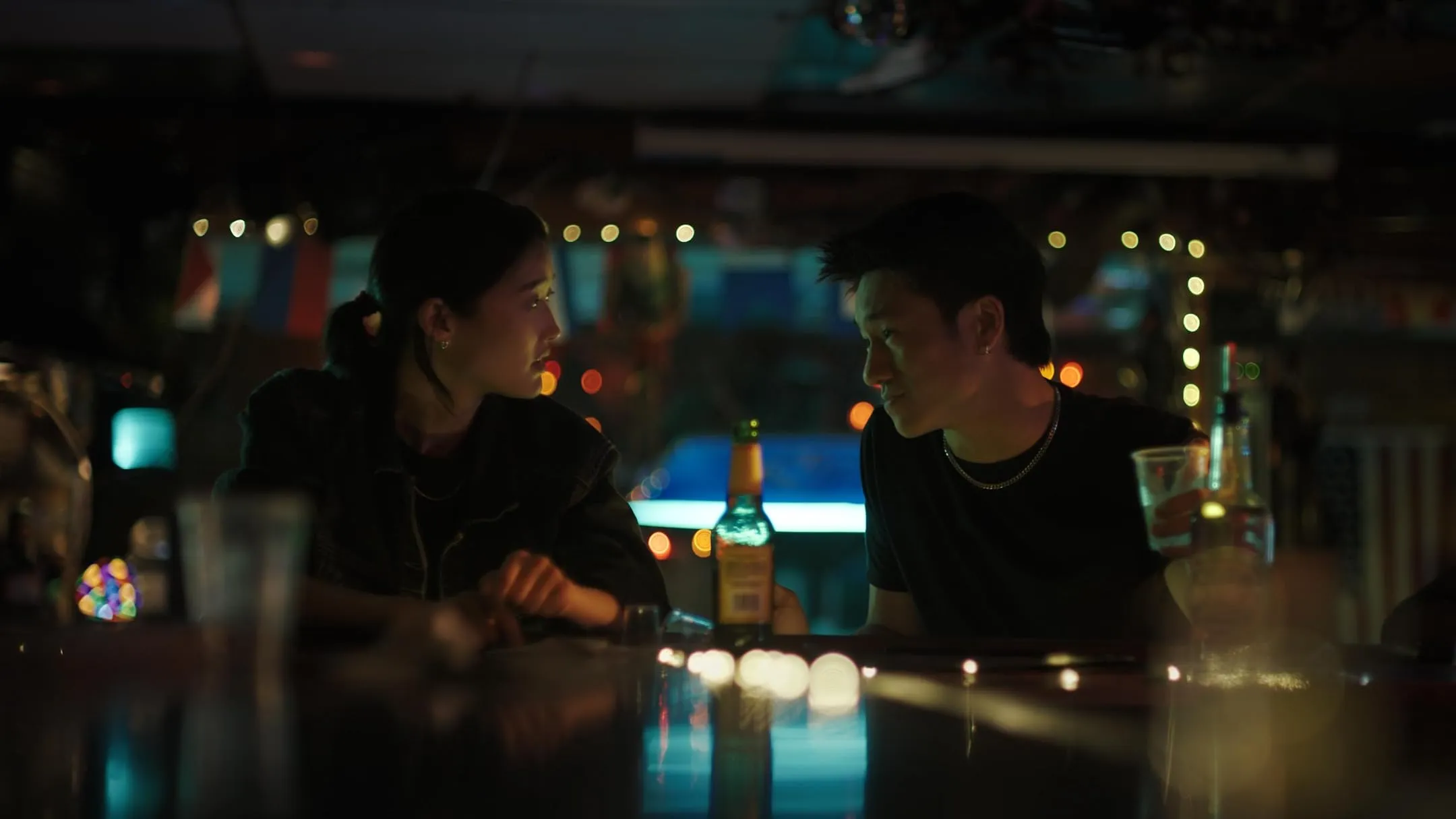
Leo Purman’s cinematography treats Miami as a living canvas. Neon‑lit club scenes pulse with kinetic energy, while the flooded McMansion sequence drips in hushed blues and grays, waterlogged memories seeping through cracked ceilings. Even the humble strip‑mall dim sum restaurant gains poetry in shadow and light, recalling the way Bengali auteur Satyajit Ray used Kolkata’s streets as more than backdrop—each frame in Forge underscores motifs of decay and transience.
Editing balances those striking bookends—high‑tension openings and closings—against a deliberately unhurried middle that sometimes stalls. The suspenseful montage of Emily piecing clues together nods to Fincher‑style precision, yet Ng diverges by granting space for cultural texture: lingered flourishes of family ritual or the rhythmic scraping of brush on canvas, underscoring the human cost of each forgery.
Ian Chang and Marco Carrión’s score hums with taut electronica, a subtle homage to Reznor/Ross but tailored to Miami’s melting pot. Diegetic sound—clinking teacups in the restaurant, pinpricks of lacquer being applied—melds with non‑diegetic synth pulses, crafting an auditory landscape where every heartbeat feels amplified.
When Mirrors Become Masks: Authenticity in Forge
In Forge, the tension between what’s genuine and what’s fabricated becomes a vivid portrait of identity. Art here doubles as metaphor: Coco and Raymond’s forgeries ask us to question what counts as “real”—a theme resonant with Bollywood’s exploration of self in films like English Vinglish (2012), where surface façades mask deeper truths. Their imposter syndrome—shaped by years of watching parents struggle—reflects a “second‑generation” dilemma seen in diaspora stories from Mira Nair to Gurinder Chadha.
Family and cultural roots anchor the narrative. The Zhang siblings juggle filial duty with personal dreams, a conflict familiar to Indian audiences through parallel cinema classics. The dim sum restaurant, with its chattering tables and red lanterns, serves as both refuge and stage: when Emily Lee steps inside, the space bridges her isolated FBI world with the Zhangs’ inherited community.
Class and power play out in every frame. The motel con in Act I flips racist assumptions—Coco’s quiet confidence outwits a presumptuous appraiser—mirroring moments in Lagaan (2001) where the underdogs claim cultural legitimacy. Later, Holden’s request for replicas forces questions of who gets to curate culture: is art a birthright of privilege or the province of those with passion?
Greed and consequence drive the siblings’ “one last job.” As they work on Holden’s water‑damaged paintings, each brushstroke carries risk: legal ruin for them, personal shame for him. Their stakes feel sharper because their struggle began on harder ground.
Finally, Miami itself embodies duality. Neon nights shimmer with promise while its flooded estates and empty boulevards echo isolation—a cinematic device akin to Satyajit Ray’s use of Kolkata’s rain‑soaked streets as emotional terrain. In Forge, external decay mirrors internal alienation, weaving space into the film’s very soul.
Crafting Tangibility: Design, Light and Sound in Forge
The production design grounds Forge in lived-in authenticity. The roadside motel feels worn at the seams—peeling wallpaper, flickering neon sign—while the Zhang family’s dim sum restaurant is rich with cultural detail: red lanterns, communal tables and hand-painted menus. In contrast, Holden’s flooded McMansion uses practical water tanks and distressed wood beams to evoke real decay, recalling how Satyajit Ray shot Kolkata’s rain‑soaked alleys to mirror inner turmoil.
Costumes and props play a subtle storytelling role. Coco and Raymond’s muted wardrobe—simple tees, denim, work aprons—reflects their blue‑collar roots, whereas Holden’s crisp linen and leather accessories signal inherited wealth. The film lingers on Coco’s lacquer tools—pins, coffee‑stained cloths—each close‑up turning forgery into a tactile ritual, much like Indian period dramas that emphasize artisans’ hands at work.
Visual effects and makeup remain transparent. Canvases bear genuine rustication—hand‑applied cracks and water stains—so that experts on screen could easily believe their age. Lighting choices underscore emotional shifts: family‑dinner scenes glimmer in warm amber, echoing Bollywood’s intimate domestic moments; FBI offices are lit with cool, clinical whites that heighten alienation. Neon cityscapes, rendered without heavy grading, nod to noir traditions in world cinema.
Sound mixing and foley enrich textures: the scraping of a paintbrush, the gentle creak of a motel door, ambient chatter in the restaurant—all layered to immerse viewers. These tactile details make Forge a study in how technical craft can embody thematic depth.
Final Brushstrokes: Forge’s Triumphs and Trials
Balancing its thematic ambition with intimate character work, Forge delivers a layered caper. Andie Ju’s Coco channels magnetism and moral complexity, while Kelly Marie Tran infuses Agent Lee with quiet determination. Leo Purman’s neon‑drenched tableaux and Ian Chang & Marco Carrión’s taut electronic score underline each twist. Yet around the midway point, tempered pacing invites reflection at the expense of tension, and Emily’s personal stakes could run deeper.
Standout sequences include the opening motel hustle—where Coco flips racist assumptions with sly confidence—and the final dinner in the family restaurant, lit by warm lantern glow as sibling bonds face reckoning. In spirit and style, Forge evokes slick art‑world thrillers like White Collar but trades blockbuster spectacle for human scale.
Art aficionados and fans of character‑driven schemes will find much to savor. Viewers drawn to Bollywood’s rich family dramas and global heist narratives will appreciate the film’s cross‑cultural textures. Rewarding for those who relish both intellectual depth and caper thrills, Forge earns three and a half stars.
Full Credits
Director: Jing Ai Ng
Writer: Jing Ai Ng
Producers: Jing Ai Ng, Liz Daering-Glass, Gabrielle Cordero, Damian Bao
Cast: Kelly Marie Tran, Andie Ju, Brandon Soo Hoo, Edmund Donovan, Eva De Dominici, T.R. Knight, Jack Falahee, Sonya Walger
Director of Photography: Leo Purman
Editor: Briana Chmielewski
Composers: Ian Chang, Marco Carrión
The Review
Forge
Forge delivers a compelling portrait of trust and deception that combines cultural depth with slick heist thrills. Andie Ju and Kelly Marie Tran anchor the story with vivid performances, while Leo Purman’s rich visuals and a pulse‑driven score heighten every turn. Though the middle stretches out, its emotional payoff in the final act and nuanced sibling bond leave a lasting impression.
PROS
- Andie Ju and Kelly Marie Tran deliver engaging, layered performances
- Leo Purman’s cinematography captures Miami’s duality of glamour and grit
- Electronic score heightens suspense without overwhelming scenes
- Themes of identity and authenticity resonate across cultures
- Intimate focus on family stakes adds emotional weight
CONS
- Mid‑film pacing occasionally drags
- Emily Lee’s personal backstory feels underexplored
- Limited high‑octane action may disappoint some thriller fans
- Tonal shifts between caper humor and quiet drama can feel uneven