


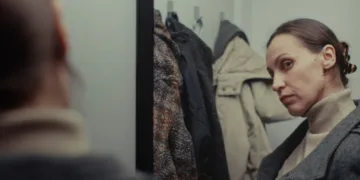

























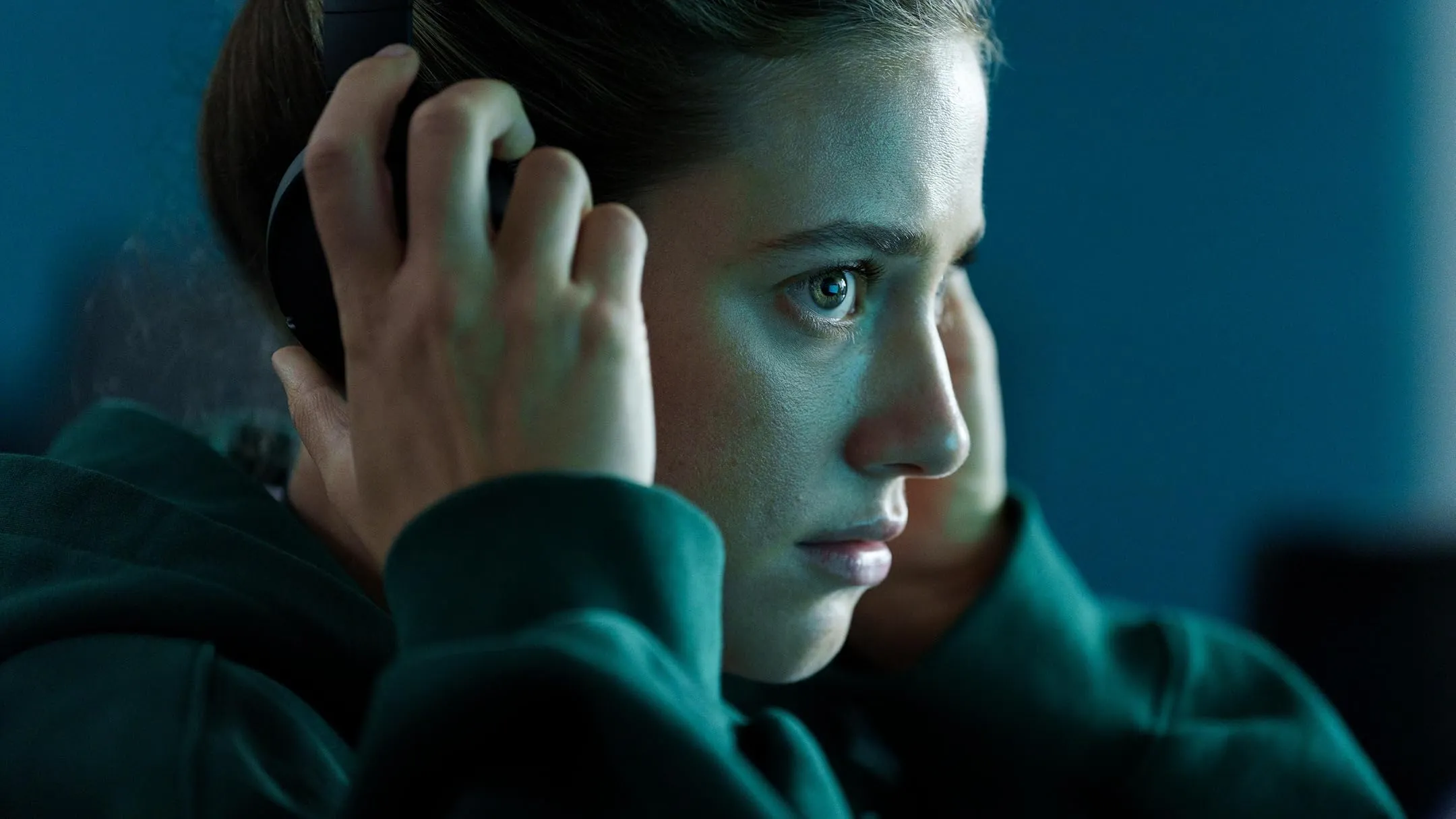

From the first frame, American Sweatshop positions itself as a tightly wound psychological thriller centered on the unseen mechanics of online content moderation. Uta Briesewitz makes a confident leap from television—where she honed her eye on shows like Stranger Things—into her feature debut, guiding each scene with the precision of a TV director accustomed to rhythm and restraint. Lili Reinhart anchors the film as Daisy, a newly minted moderator at Paladin Control whose daily task is heartbreakingly simple: watch flagged clips, then click “accept” or “reject.”
The story takes its cues from real-world moderation hubs, marrying newsroom efficiency with horror‑film unease. Rows of workstations stretch into shadowy corners, where fluorescent lights hum and keyboard clicks fall like a metronome marking sanity’s decline. Reinhart’s Daisy emerges as a vessel for our own digital anxiety—she scans titles like “Woman Jumps Off Building” or “Nail in Her,” each partial glimpse enough to lodge in her mind without showing us the grisly details.
Briesewitz resists graphic indulgence, instead crafting a world where implication carries the weight. The film’s clinical setting becomes a character in itself, and its atmosphere of corridors and cubicles sets a tone of relentless pressure. Ahead lies an exploration of narrative momentum, character fractures, stylistic choices, thematic depth and technical craftsmanship—each element bearing on how this tale unfolds.
Premise & Plot Mechanics
Paladin Control’s moderation center unfolds in precise, almost clinical detail: parallel rows of grey desks, banks of monitors glowing under stark fluorescent lights, and a ticking counter tracking each moderator’s quota. Daisy’s shift begins with the same ritual—slip on headphones, click “play,” watch twenty seconds of whatever horrors await, then choose “accept” or “reject.” Scheduled breaks and well‑meaning check‑ins with a corporate counselor provide brief respite, though his rehearsed reassurances feel perfunctory against the mounting tension.
Everything changes when Daisy hesitates on a flagged clip titled “Nail in Her.” We see only fleeting images—a distant scream, a shifting silhouette—before Daisy recoils. Her counselor, trained to classify rather than comfort, coldly labels it “fetish content” and moves on. That brush with professional indifference sparks Daisy’s obsession: she needs to know why this clip defies categorization.
What follows tightens the narrative noose. Daisy’s nightmares seep into waking hours; she nearly abandons a babysitting job in her distracted state. After hours, she trawls obscure corners of the internet, tracing digital breadcrumbs back to the video’s source. In the office, Bob’s gallows‑humor bets on which colleague will crack next underscore the fragile coping mechanisms here. Ava’s steely detachment highlights a different survival tactic, while Paul’s unwavering ethics remind us of a world not yet numbed to cruelty.
Then Daisy crosses the line: she abandons protocol for an off‑the‑books investigation. Undercover at a remote filming site, she confronts potential perpetrators, flouting laws she once enforced. The film builds to a tense face‑off that ends without tidy resolution—Daisy’s final decision hangs in the balance, leaving questions of accountability and justice unanswered.
Character Dynamics & Performances
Reinhart charts Daisy’s trajectory with careful precision. In Act I, she is nearly invisible—her face lit by monitor glow, body rigid with rote compliance. Then, at her first real breakdown, when a single clip sends her hand shaking over the mouse, the story pivots. Reinhart leans into Daisy’s growing obsession: those late‑night searches where her eyes dart across code and comments, the jittery call to cancel her babysitting gig. In quieter beats—her voice cracking as she tries to explain “Nail in Her” to a stunned friend—Reinhart layers trauma beneath Daisy’s veneer of duty. By the time Daisy crosses into vigilante territory, her impulsivity feels earned, the result of fracture and resolve entwined.
Fry’s Bob serves as both comic relief and warning sign. His penchant for off‑color jokes and the office pool on who will crack next undercuts the film’s tension, yet every outburst—desk‑pounding, monitor‑smashing—carries the weight of unchecked despair. Fry strikes a balance: Bob’s humor shields genuine pain, and in a moment when laughter dies in his throat, we glimpse a man at the edge. His arc underscores the film’s question: what happens when coping mechanisms fail?
Melchior’s Ava exemplifies learned detachment. She clicks through atrocity with practiced calm, yet a flicker of doubt in her eyes hints at buried empathy. Jones, by contrast, plays Paul as an ethical barometer. His revulsion at animal‑cruelty footage and the stakes of his visa status ground the narrative in real‑world consequences. Together, they bookend Daisy’s arc: one adapts, the other resists.
Paul’s Joy projects cool professionalism—her clipped directives carry corporate weight. Yet a brief falter when defending a questionable clip betrays conflicted loyalty. That split second reveals her dual role: gatekeeper for executives and reluctant custodian of human well‑being.
The counselor’s well‑meaning pep talks ring hollow, a scripted balm for unscripted trauma. Glimpses of other moderators—a shoulder‑shrug here, a stifled yawn there—map a spectrum of denial, numbness and fracture, sketching an ecosystem where every response is a form of survival.
Underlying Tensions and Motifs
Every passing thumbnail at Paladin Control chips away at the psyche. Moderators stare into pixelated horrors, each binary click reverberating with the weight of unseen wounds. Secondary trauma settles in unnoticed moments: Daisy jolts awake from nightmares of muffled screams, while Bob’s desk‑shaking outbursts break the office’s fragile rhythm.
Sorting these clips demands constant moral triage. A video that may depict genuine violence is flagged as fetish content. Legal teams draw rigid lines around liability. Those rules clash with human instincts, leaving moderators torn. When Daisy challenges a classification, the film throws her into a silent dispute over definitions that lack clear edges.
Here, everyone occupies one of three roles: the harmers, the responders and the watchers. At first, Daisy belongs to the middle group. She clicks damsel‑in‑distress titles like “Woman Jumps Off Building”, then moves on. Then her curiosity shifts; she catches herself lingering. That moment invites viewers to consider their own cursor’s authority, the ease with which we dismiss distress on a screen.
Her insistence on tracing the most disturbing clip transforms Daisy—she transcends her role as filter. She moves from moderator to detective. Each clandestine search, every clandestine meeting with potential creators, underscores the film’s question: is this metamorphosis an act of courage, or simply a descent into obsession? Her choices feel earned, driven by both compassion and compulsion.
Amid the strain, a fractured camaraderie sparks life. Whispered jokes circulate about quotas. A shared coffee break brings laughter that cuts tension. Then silence returns, as if the room exhales. Those brief exchanges shine a light on the human need for connection, even in an environment engineered for detachment.
This approach aligns with recent shifts toward restrained moral thrillers on streaming platforms. It trades grand gestures for the quiet collapse of its characters’ inner worlds.
Visual Direction & Cinematic Craft
Uta Briesewitz’s leap from high‑profile television to her first feature feels almost seamless. Her work on Stranger Things and Severance taught her how to balance serialized tension with visual restraint, and here she uses that discipline to serve a single, contained narrative. Rather than graphic imagery, she opts for suggestion—just a flash of movement or a muffled scream—letting the mind supply the worst details.
The film’s visual language is meticulously calibrated. Desks and monitors sit in muted grays and sickly greens, the overhead fluorescents casting long, oppressive shadows. Close‑ups drift handheld, breathing with Daisy’s anxiety, while wide shots lock the viewer in claustrophobic rows of cubicles. That push‑pull between intimacy and distance keeps the story’s emotional pressure steady.
Editing contrasts the machine‑like efficiency of the moderation pipeline—rapid thumbnail cuts, clicking through flagged clips—with stretches of silence where we linger on Daisy’s face. In those quieter moments, her eyes become the frame’s focal point, charting every flicker of doubt or horror.
Sound design complements the visuals. Headphones isolate Daisy in a cocoon of distant pings, whispered chatter and sudden, off‑screen yelps. When silence falls, it feels deliberate, as if the world is holding its breath—then snaps back with a single, devastating click.
Rhythm and Narrative Flow
American Sweatshop maintains a somber, unrelenting tone, punctuated by moments of dark humor—think a sudden quip about quotas just as tension snaps. The film’s atmosphere slips seamlessly between the drudgery of clicking through flagged clips and the sharpened pace of Daisy’s growing obsession. That balance keeps the viewer off-kilter, never entirely at ease in the sterile moderation center.
Structurally, the film unfolds in three clear acts. Act I immerses us in Paladin Control’s monotony: rows of desks, timed breaks and binary decisions set the groundwork. Act II shifts gears as Daisy chases the “Nail in Her” video, introducing investigative detours and raising personal stakes—her home life fractures alongside her resolve. Act III races into a vigilante climax and then hesitates, offering an open‑ended finale that leaves narrative threads deliberately untied.
The film’s steady escalation of tension and well‑placed character moments are undeniable strengths. Reinhart’s mounting desperation keeps each scene alive, and Bob’s gallows humor undercuts darker beats with welcome relief. Yet some tonal shifts in the final act feel abrupt, as if the thriller elements stumble over the established workplace realism. A few jolts in pacing suggest the story wants to sprint before it’s fully equipped to do so.
Sonic Texture & Atmospheric Impact
A minimalist electronic score underpins the film’s digital setting. Low, pulsating drones hover beneath dialogue, while sharp percussive hits punctuate moments of sudden dread. Composer and sound team resist melodic relief, opting instead for tonal pulses that echo the flicker of Daisy’s monitor.
Diegetic sound sits front and center. Mouse clicks tap like a metronome, notification pings slice through ambient hum, and hushed office chatter drifts in from neighboring desks. Then a distant scream—never fully revealed—cuts into the routine, heard only through Daisy’s headphones. That choice places the audience in her isolation, heightening every startled breath.
Sound becomes an extension of trauma. In quiet home scenes, echoes of blinking screens follow Daisy into her nightmares, each silence pregnant with unspoken terror. When complete stillness descends in the moderation center, tension sharpens; a single click or whispered reaction can feel catastrophically loud. In these moments, what isn’t heard haunts as much as what is.
Full Credits
Director: Uta Briesewitz
Writer: Matthew Nemeth
Producers: Uta Briesewitz, Anita Elsani, Tom Fontana, Barry Levinson, Jason Sosnoff
Executive Producers: Noor Alfallah, Remi Alfallah, Mark Axelowitz, Kirk D’Amico, Catherine Hagedorn, Sean O. McGuiness, Matthew Nemeth, Andreas D.T. Nolte, Alex Peters, Joanna Plafsky, Lili Reinhart, Michelle Shwarzstein, Martin Sosnoff, Trish Vasquez
Cast: Lili Reinhart, Daniela Melchior, Joel Fry, Christiane Paul, Josh Whitehouse, Tim Plester, Max Croes, Faith Delaney, Jeremy Ang Jones, Levi Mattey, Chris Ginesi, Alex Lee
Director of Photography: Jörg Widmer
Editor: Philipp Thomas
Composer: Michael Andrews
The Review
American Sweatshop
American Sweatshop immerses you in a claustrophobic world where each click carries moral weight. Lili Reinhart’s aching performance and Uta Briesewitz’s measured direction create sustained tension, even if the third act’s thriller detours feel slightly at odds with its grounded beginnings. It offers a compelling portrait of trauma and obsession, inviting reflection long after the credits roll.
PROS
- Riveting lead turn by Lili Reinhart
- Authentic, immersive depiction of a moderation center
- Tight pacing through early and middle sections
- Subtle visual and sound design that amplifies unease
- Provokes meaningful questions about digital ethics
CONS
- Tonal shift in the final act can jar the film’s realism
- Thriller elements occasionally overshadow character depth
- Some supporting figures feel underexplored
- Key narrative threads remain unresolved