


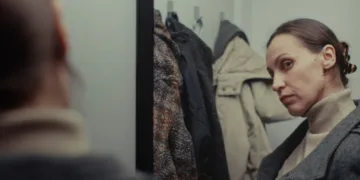

























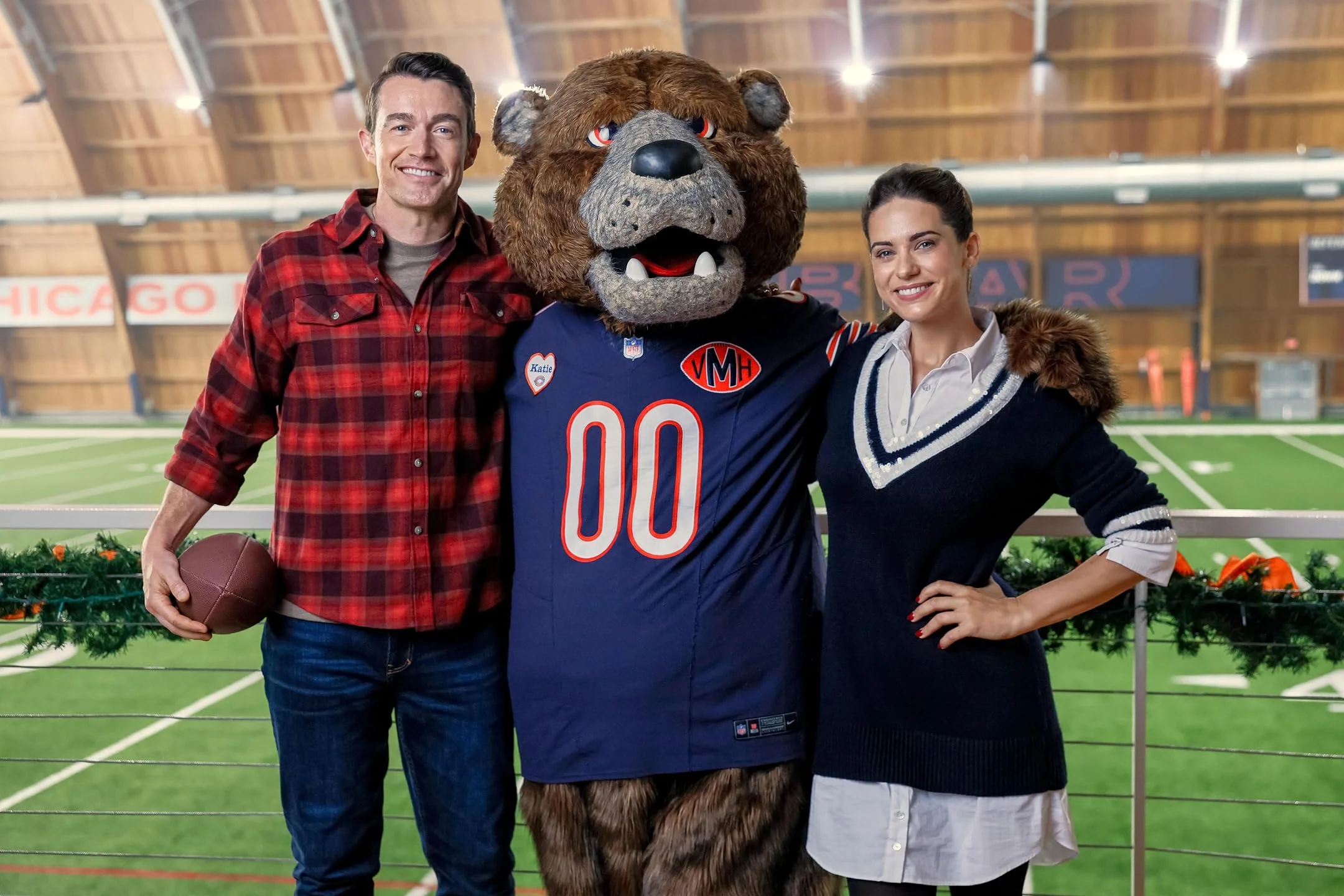

Avery reads while the people around her watch football. In her mother’s Chicago sports bar, this makes her conspicuous without making her unwelcome, a distinction Holiday Touchdown: A Bears Love Story handles with some care. When firefighter Matt Donnelly approaches, her lack of interest in the Bears gives their conversation a little friction. It never becomes an entrance examination. Lyndsy Fonseca and Robert Buckley establish an easy attraction here, helped by his willingness to be curious about someone who has brought entirely the wrong recreational equipment.
The bar presents a less comfortable prospect as a family space. Avery, a freelance journalist visiting for Christmas before another assignment, finds that her mother Jody has acquired a husband, a business, and an enthusiasm for football she scarcely recognizes. Barbara Alyn Woods gives her a mother whose happiness Avery can welcome while feeling displaced by its unfamiliar arrangements. Ron, played by Khary Payton, is nervous about making a good impression on his stepdaughter. His unease matters. This apparently settled household still has adjustments to make, and Avery’s arrival requires something from its inhabitants too.
The film extends the bar’s invitation across Chicago. The Riverwalk, a river cruise, and Christkindlmarket supply an appealing geography of shared leisure, places where spending time together already looks like a sensible decision. There is a promotional logic to this selection.
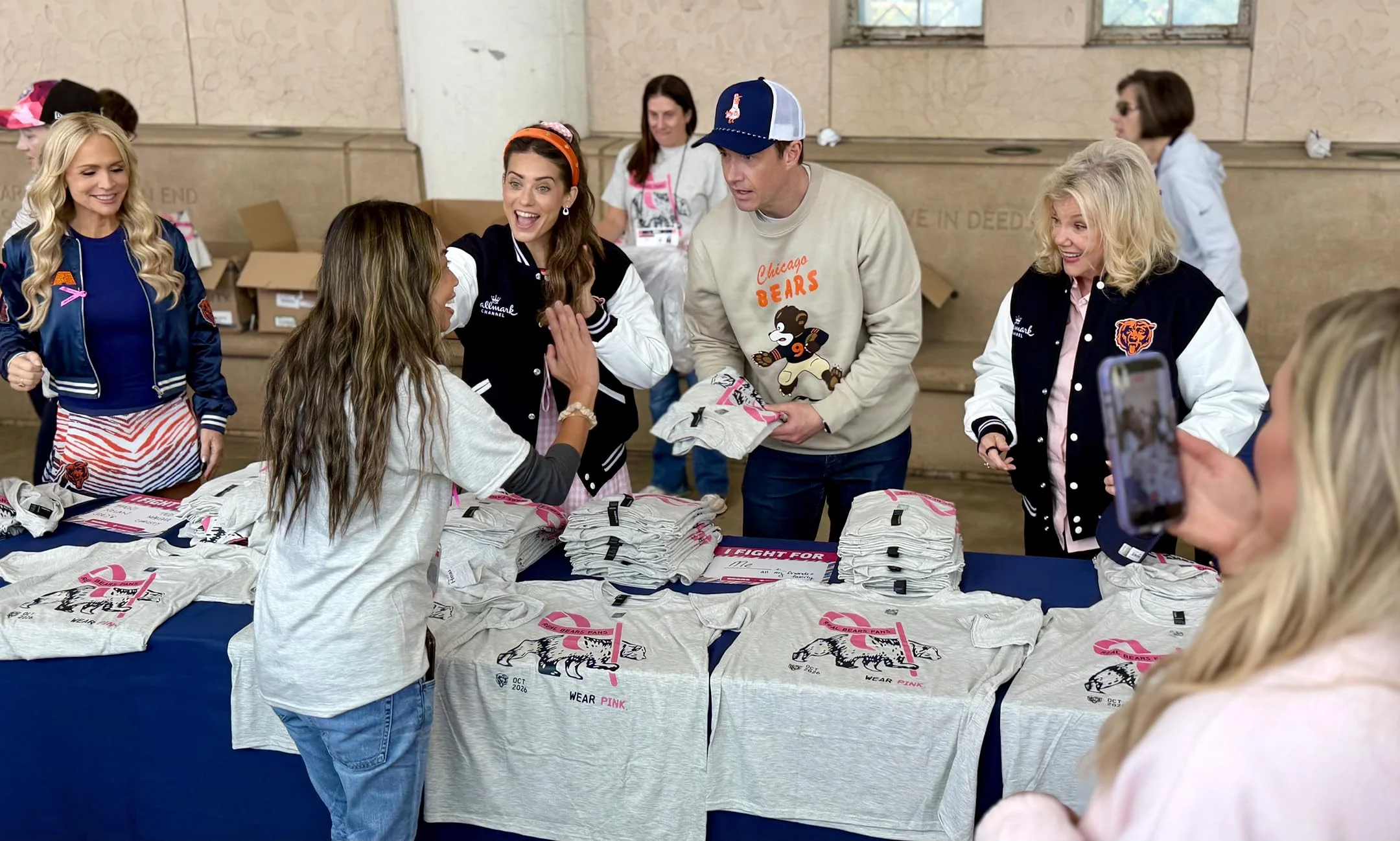
Chicago arrives ready for a visit, the Bears ready for renewed affection, and the merchandise ready for purchase. Team appearances, including Colston Loveland and Cole Kmet, reinforce the sense that fandom grants access to a particularly agreeable social world. Caleb Williams contributes a recorded message. Even reassurance has a guest list.
That commercial hospitality occasionally becomes too conspicuous. The Always Discreet placement briefly makes the invitation feel like a sales appointment, while the accumulation of team personalities gives the film the air of an officially approved celebration.
Yet suspicion alone would be an inadequate response to its branded surroundings. The important question is what these objects and allegiances mean to the people living among them. Avery’s assignment for the Chicago Herald, a profile of Matt’s grandmother before her 500th Bears game, gives the film a way to investigate that question at a human scale.
Darlene Donnelly, played by Marsha Mason, first attended a game with her husband. Their attendance became a repeated pleasure across their marriage, including trips away and a Super Bowl. After his death, she continues to go, carrying his favorite scarf and keeping ticket stubs in an album he gave her.
These details change the function of the football paraphernalia. Elsewhere, merchandise identifies the team a character supports. Here, a scarf belongs to a particular absent person, and an album preserves occasions on which two people were present together. The logo cannot explain the attachment by itself.
Mason gives Darlene’s optimism enough substance to coexist with that absence. Her interest in Avery and Matt, including her matchmaking, keeps her attention active in the present. Grief has not exhausted her capacity to notice other people’s possibilities.
The scarf and saved tickets therefore avoid becoming exhibits in a life that has stopped. Darlene takes the memory into an activity she still enjoys. The film’s emotional persuasion is strongest in this relationship between possession and practice: remembering her husband involves continuing to do something, with another game still ahead.
Matt’s efforts to secure the newspaper profile establish a similar distinction between declaring devotion and exercising it. He has repeatedly contacted the Herald because he wants his grandmother’s milestone recognized. That persistence gives Buckley something firmer to work with than the usual romantic qualifications of attractiveness and availability.
Avery, meanwhile, becomes attractive to Matt through the seriousness with which she listens to Darlene. Their shared task allows affection to develop through observed conduct. He sees how she treats someone important to him; she sees the care behind his local loyalties.
Their chemistry is apparent early, which does place a limit on the romantic suspense. Gentle teasing can sustain pleasure without generating much uncertainty, and the film has little interest in making these two damage their connection through an implausible misunderstanding.
The consequential difference concerns their lives outside the flirtation. Avery expects movement and another assignment. Matt has built his life in Chicago. Her growing attachment to Jody, Ron, and Darlene gives her reasons to reconsider leaving that exist alongside her attraction to him. The family relationships do useful dramatic work here, allowing a desire to stay to develop across several encounters.
Matt’s previous relationship makes his response worth examining. His former partner moved to San Diego; they chose against attempting distance, and the film permits that separation without assigning her a moral failure. Leaving was a legitimate choice. That allowance protects Avery from becoming the virtuous replacement whose chief accomplishment is remaining available. Fonseca’s initial uncertainty about her mother’s changed life and her increasing investment in Darlene provide a credible progression from temporary guest to someone who has begun making commitments of her own.
With Avery, Matt is prepared to consider following her or trying a long-distance relationship. The settled man becomes capable of movement while the habitual traveler discovers reasons to remain. This reciprocity is the film’s most persuasive answer to the pressure exerted by its welcoming settings. Avery begins wanting Chicago before she knows how far Matt might accommodate her. His willingness leaves her next assignment as something they could discuss and organize their lives around, even after the holiday visit has ended.
Holiday Touchdown: A Bears Love Story premiered on the Hallmark Channel on October 17, 2026, and is available to stream on Hallmark+. Directed by Dustin Rikert, the romantic holiday comedy follows a freelance reporter who returns to Chicago and sparks a romance with a local firefighter while profiling an ultimate Chicago Bears superfan about to attend her 500th game.
Where to Watch Holiday Touchdown: A Bears Love Story (2026) Online




Full Credits
Title: Holiday Touchdown: A Bears Love Story
Distributor: Hallmark Channel, Hallmark+
Release date: October 17, 2026
Rating: TV-G
Running time: 1 hour 24 minutes (84 minutes)
Director: Dustin Rikert
Writers: Christine Garver, Stephanie Jackson, Marcy Holland
Producers and Executive Producers: Molly Mayeux, Andrew Gernhard, David O’Donnell, Jesse Sisgold, Jason T. Reed, Jessica Matthews
Cast: Lyndsy Fonseca, Robert Buckley, Marsha Mason, Barbara Alyn Woods, Khary Payton, Abraham Benrubi, Marilu Henner, Tamera Mowry-Housley
The Review
Holiday Touchdown A Bears Love Story
Holiday Touchdown: A Bears Love Story makes its commercial invitation surprisingly personal. Marsha Mason gives Bears loyalty the weight of a remembered marriage, while Lyndsy Fonseca and Robert Buckley make attraction feel compatible with independent lives. Chicago’s attractions and team cameos occasionally resemble an approved sales itinerary, and romantic uncertainty is scarce. The affection earns its credibility through people willing to accommodate each other.
PROS
- Fonseca and Buckley’s easy chemistry.
- Mason’s convincing coexistence of grief and pleasure.
- A romance that respects Avery’s independence.
- Family relationships that develop alongside the courtship.
CONS
- Conspicuous branding and product placement.
- Early attraction leaves limited romantic suspense.