

















As James and his friends search the woods for his missing sister, the birds fall silent. It’s a small sound choice, and one of the most effective in Scott Windhauser’s You Can’t Leave. Background noise usually helps a location feel continuous: the world carries on beyond the people we’re watching. Removing it makes the forest seem suddenly sealed off. Before the searchers understand the place they have entered, we can hear that something has changed around them.
The paths then begin returning them to the same cabin, giving that acoustic isolation a physical shape. Walking away no longer produces distance. I like the simplicity of this idea because it makes an ordinary activity frightening without needing much explanation.
The story moves forward in a fairly straight line, but the landscape refuses to cooperate. Each attempted departure offers an opportunity to change our understanding of the trap. The film struggles to make those returns feel progressively worse, however, and eventually starts explaining a danger it was better at suggesting.
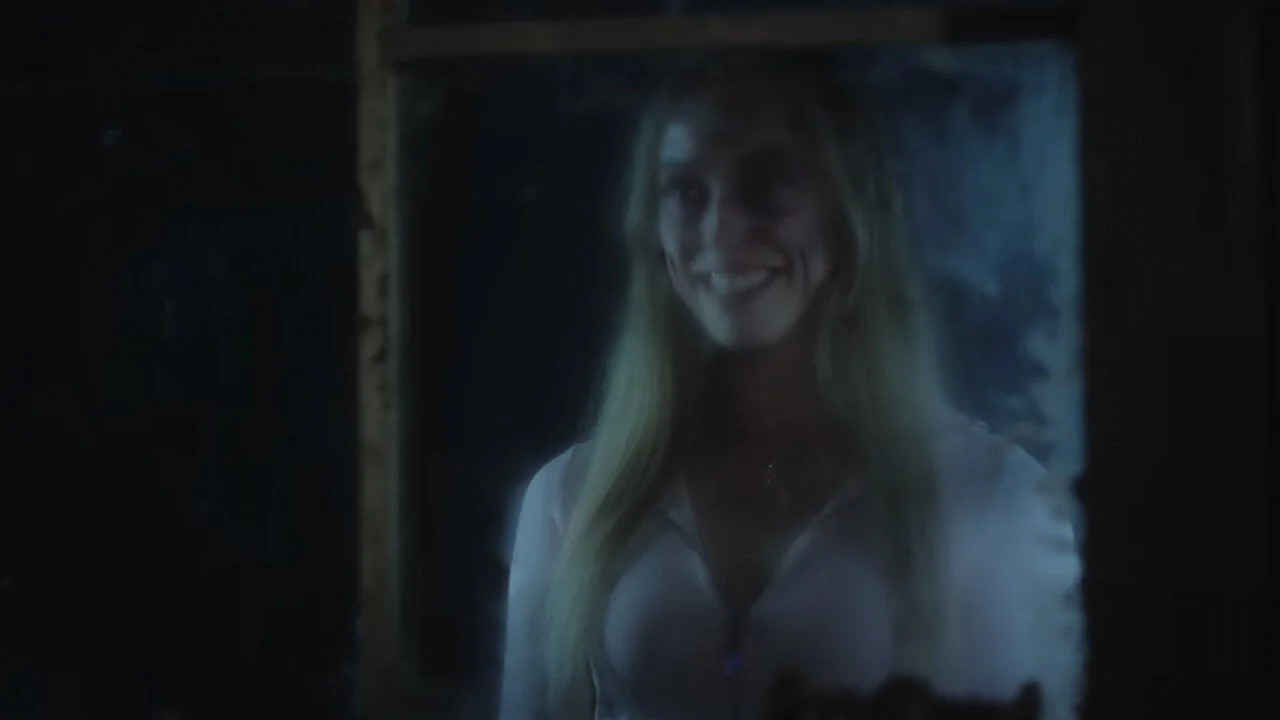
The missing sister, Gabby (Cameron Inman), has already encountered that danger in a brief opening built from familiar woodland-horror ingredients. An empty rocking chair moves on the porch; an unseen force drags her away. These images establish the cabin quickly, leaving James (Spencer Boldman) and his companions to discover what happened.
Windhauser finds stronger material when the threat borrows something personal. James hears his name called without anyone visible to account for it. Olivia (Paola Andino) encounters Aiden after we have seen him attacked by the shadow entities. A voice or a familiar face becomes difficult to trust, extending the uncertainty beyond the forest’s geography.
Those moments give the smoky creatures useful reach. They can unsettle a scene before appearing in it. The repeated cabin cutaways, accompanied by emphatic bass sounds, are less persuasive. A musical sting can make a familiar image feel newly threatening when the image reveals a change. Here, the repeated emphasis keeps announcing danger that has already been established. The cabin needs to acquire a new significance with each return, and the soundtrack cannot supply that development by itself.
Confinement also puts pressure on the ensemble. Once escape attempts keep failing, their conversations must make spending time with them worthwhile. Will’s bag of snacks gives him an appealingly ordinary concern amid the supernatural trouble, and his worries about phone power fit the situation. The casual relationships and slang place this group in the present, but the writing leans heavily on those signals. Repeated uses of “bro” do little to distinguish personalities, while James and Olivia’s supposedly secret involvement has little clear consequence within the group.
Their early exchange exposes a related difficulty in the staging. Blocking is the placement and movement of actors within a scene, and it can communicate a relationship before anyone explains it. James and Olivia stand stiffly apart, with little physical ease between them. That distance supplies few signs of an intimacy the script asks us to accept. It’s difficult to isolate the actors’ responsibility here: the dialogue and the arrangement of their bodies give them limited help. Later danger has to generate attachment to a couple whose everyday connection has barely registered.
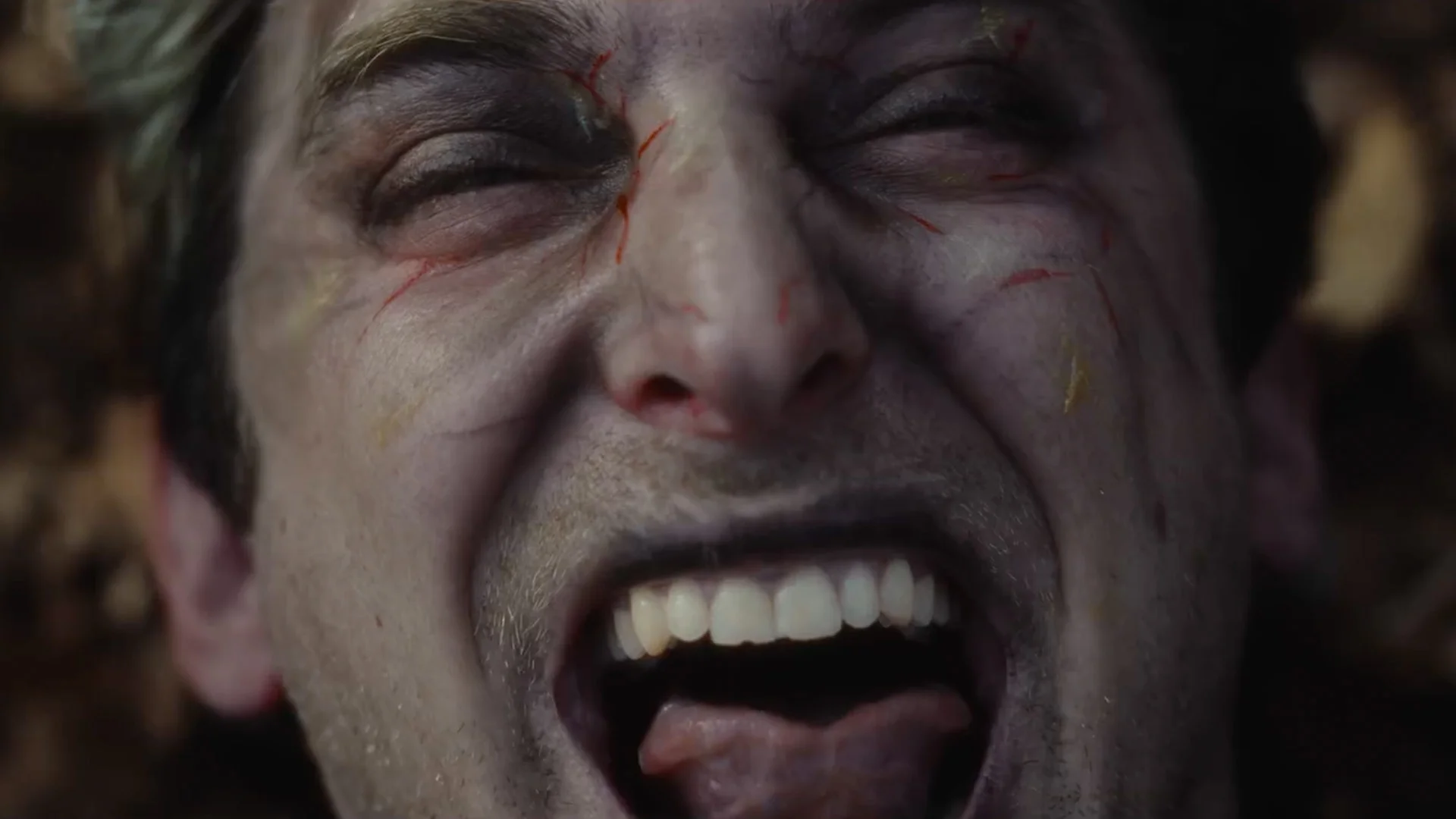
The group’s responses to danger are harder to accept. Sophia discovers skeletal remains in an abandoned vehicle, yet that discovery barely changes the searchers’ approach. Continuing to look for Gabby could still make sense; a rescue story can accommodate frightened people taking serious risks.
What’s missing is the sense that this evidence has entered their thinking. The same problem affects James’s confrontation with Aiden, which escalates toward gun violence while Olivia and Sophia remain passive. Their lack of intervention leaves the scene without the reactions that might make its escalation believable. The forest keeps changing their circumstances, but their behavior often seems detached from those changes.
Henry Chase (Joe Nemmers), a teacher who has survived inside the enclosure, eventually arrives to provide answers. His introduction around the hour mark changes the film’s task. The searchers now have information they might use to escape, so the audience needs to understand how that information affects their choices. Yet when Olivia asks what the entities are, Chase recounts his experience without adequately answering her. She has to repeat the question. The exchange slows the immediate danger while leaving the practical uncertainty in place.
There is an important distinction here between keeping a monster mysterious and making a survival strategy difficult to follow. I’m happy to leave the ancient evil’s full history unexplained. Suspense needs enough clarity for a proposed action to carry a recognizable risk. Chase’s reliance on complete darkness, followed by his disastrous use of a lighter after dropping his glasses, provides a readable connection between a warning and a consequence.
Elsewhere, the crucifix’s possible protective role and the changing importance of physical illumination leave the audience trying to reconcile several explanations. The late escape device introduces another possibility without enough earlier preparation for us to recognize it alongside the characters.
The emotional timing remains awkward after the immediate escape business, too. A late affectionate exchange between Gabby and Olivia asks us to enjoy a little warmth after their ordeal, but Olivia is still seriously injured. My attention stayed with her need for treatment while the conversation settled into reassurance.
You Can’t Leave was released in theaters on October 16, 2026, and is available to watch in cinemas. Written and directed by Scott Windhauser, the supernatural horror film follows a young man searching for answers after his sister mysteriously disappears, leading him and a group of friends deep into an isolated forest where they become trapped by an ancient evil.
Where to Watch You Can’t Leave (2026) Online
Full Credits
Title: You Can’t Leave
Distributor: Rialto Distribution, Gravitas Ventures
Release date: October 16, 2026
Rating: R
Running time: 1 hour 32 minutes (92 minutes)
Director: Scott Windhauser
Writers: Scott Windhauser
Producers and Executive Producers: Gopal Bala, Robert Paschall Jr., Austin Taylor
Cast: Spencer Boldman, Paola Andino, Taylor Ashley Murphy, Cameron Inman, Kristos Andrews, Joe Nemmers, Don Worley, Thomas Bauer
The Review
You Can't Leave
You Can’t Leave finds genuine unease in a forest falling silent and paths returning to the same cabin. I wish its explanations had the same precision. Repeated scare cues wear down the atmosphere, while stiff relationships and unconvincing reactions weaken the rescue story. Once escape depends on understanding the supernatural rules, the film leaves too much practical information unclear for its solution to feel earned.
PROS
- Effective use of silence and disembodied voices.
- An unsettling premise built around looping woodland paths.
CONS
- Repetitive cabin imagery and musical stings.
- Unconvincing relationships and responses to danger.
- Unclear survival rules and an inadequately prepared escape.