






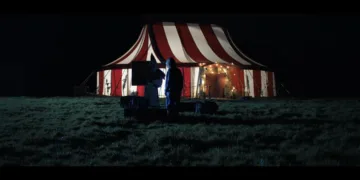










In its opening moments, The Marching Band hums with a quiet unease—an elegy in rehearsal rooms and factory canteens. We witness Thibaut’s collapse mid-score, his life reduced to a single, fragile heartbeat. From this fracture emerges the film’s true inquiry: what does it mean to be bound by blood when every other bond has dissolved into exile?
When Thibaut learns of his adoption and tracks Jimmy to the coal-dusted streets of Northern France, we are invited into an uneasy covenant between privilege and want. Their shared love of music becomes a mournful dialect, one that asks whether harmony can heal the rifts carved by circumstance. Yet the film never surrenders to sentimentality alone; Emmanuel Courcol’s direction lingers on jagged edges—Thibaut’s emptied concert halls, Jimmy’s cramped quarters—each frame a meditation on absence and the heavy weight of possibility deferred.
Though the narrative glows with small bursts of laughter—café banter or a trombone’s brassy flourish—underneath there pulses a darker rhythm. A brother’s life hinges on another’s sacrifice, and the specter of mortality shadows every note. Courcol coaxes this tension into being, his own scars visible in the alternation of Parisian austerity and coal-town warmth. Music here is both balm and incantation, a fragile talisman against the infinite unknown.
Cadence of Fate
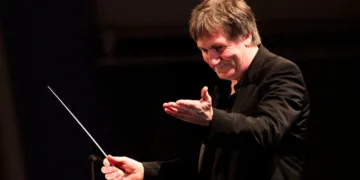
The film opens on Thibaut’s poised silhouette, baton aloft, every gesture precise—until his collapse fractures the illusion of mastery. In that sudden sting of silence, the spectator glimpses mortality’s uninvited guest. Cut to Jimmy, elbow-deep in stew pots, the clang of cutlery stitching slices of working life. His world is earthy, warm, shot through with the rhythms of survival.
The call to blood unspools swiftly: Thibaut learns he was adopted, that only a biological kin can save him. There is hesitance in Jimmy’s eyes—a flicker of stranger’s fear—but then the ledger of obligation and compassion is inked in marrow. An exchange both intimate and clinical, life offered and life claimed.
When transplant success blooms, the brothers meet beneath cold fluorescent lights, two silhouettes held together by DNA. Discovery follows: Jimmy’s trombone voice all but absent from concert hall polish, echoing instead among factory walls. A marching band without a leader yearns for direction, and Thibaut steps forward, baton trembling in unfamiliar air.
By midfilm, Thibaut sends a gleaming instrument—a gift heavy with guilt and aspirations. Jimmy cradles its brass curves, yet feels the weight of privilege pressing down. Friction surfaces: is guidance kindness, or a reminder of lives denied?
The crescendo approaches as the band prepares for a regional benefit concert. Ravel’s pulsing Bolero underscores their toil, every percussive thump drumming up both hope and dread. When Thibaut’s illness reasserts its claim, tension tightens like a drawn string. Then comes the final performance: a chorus of ragged triumph, applause rising in a collective exhale—and a fragile promise that two fractured lives might yet find harmony.
Echoes of Kinship
Thibaut drifts through concert halls like a ghost in silk—each bow of his baton precise, yet hollow. As a conductor celebrated on five continents, he presides over symphonies that drown out his own solitude. Beneath the applause lies a debt he cannot repay: gratitude tangled with guilt, a need to offer more than medical reprieve to the brother he has never met.
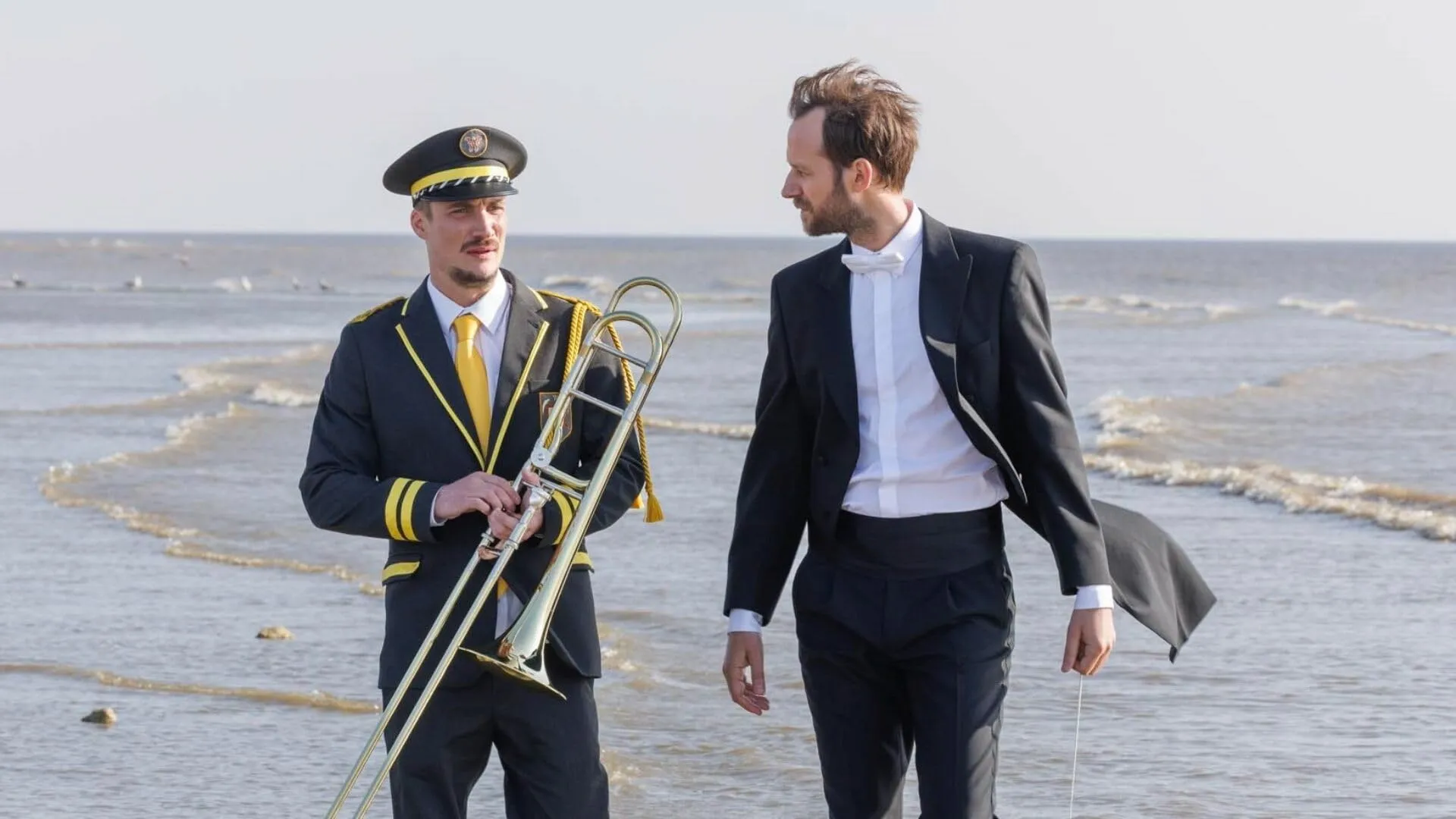
Jimmy, by contrast, is carved from grit and worn denim. He tends a cafeteria line by day and breathes life into trombone solos by night, his perfect pitch rising above factory whistles. A daughter’s laughter echoes at home, anchoring him to community rituals of picket-line solidarity and impromptu jam sessions. He carries in his lungs a promise he barely trusts—this stranger in Paris who saved his life.
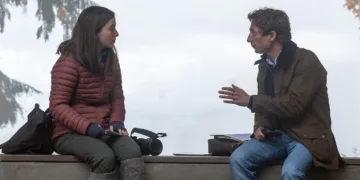
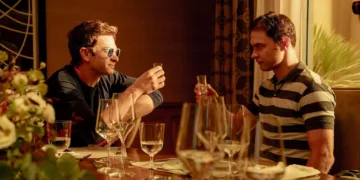
When they stand face to face, the brothers resemble two halves of a broken mirror. Thibaut’s cultivated polish meets Jimmy’s raw resonance. They speak in tentative harmonies, learning at once that kinship sounds nothing like ease. Will Thibaut’s instruction feel like mentorship—or a reminder of chance denied? Does Jimmy’s pride fracture beneath every “gift” from privilege?
Around them swirl figures of quiet strength: Sabrina, whose errands and gentle laughter tether Jimmy to daily cares, reminding us that love persists in small gestures. The band members, each weathered by factory closures, exemplify unity born from shared struggle. Even the doctors, with their measured eyes and sterile gloves, stand as mute witnesses to Thibaut’s impermanence.
Together, the brothers navigate a melody of obligation and trust—sometimes discordant, sometimes sublime—seeking a resonance that might offer more than survival.
Motifs of Becoming
At its heart, The Marching Band meditates on the collision between blood and the bonds we choose. Thibaut’s lineage is a question mark etched in DNA, while Jimmy’s roots lie in coal-dusted soil and shared labor. This tension presses us to wonder whether talent is fate’s whisper or the echo of upbringing—does perfect pitch spring from genes, or from the hours spent honing calloused fingers?
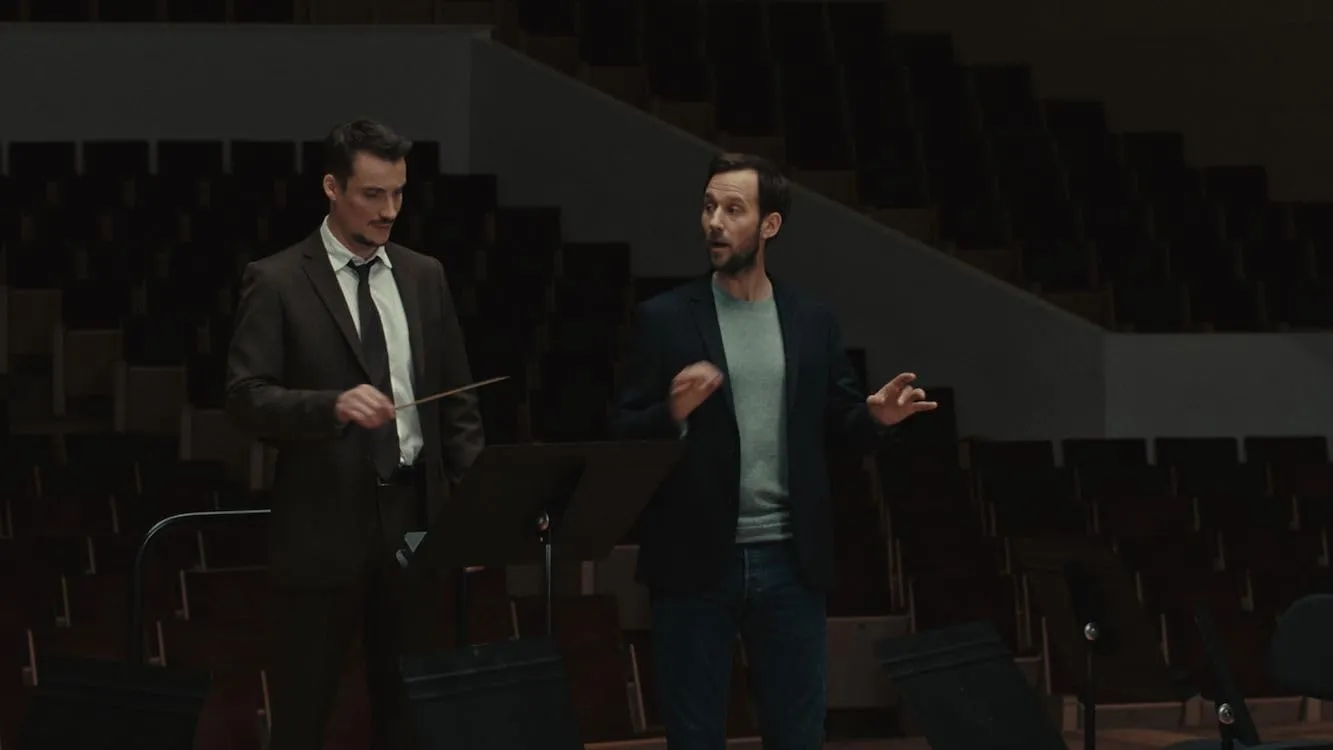
The film paints class in stark chiaroscuro: Parisian concert halls gleam with poised audiences, each seat a luxury, each program a testament to cultivated taste. Then comes the grey of northern factories, picket lines riven by hunger and hope, where €11 wages feel like a daily reckoning. In these frames, social injustice is neither abstract theory nor distant rubric, but the rhythm of broken machines and clamoring voices demanding dignity.
Yet against this friction blooms a scene of solidarity. The marching band functions as a living organism: brass and percussion forging a fragile shield against alienation. Neighbors share broken mouthpieces and borrowed sheet music, reminding us that community often sings its loudest when everything else falls silent.
Music itself becomes a bridge. Thibaut’s sweeping orchestra passages dissolve into Jimmy’s trombone solos, which then give way to crackling jazz spinning on vinyl. Sound moves like a pilgrim—unbound by border or class—inviting us to traverse spaces we once deemed closed.
Chance and choice swirl through the narrative like notes in a fugue. Adoption reveals a stranger’s face; bone marrow binds two lives in a moment of impossible generosity. Yet it is Thibaut’s deliberate gesture—handing Jimmy that polished instrument, stepping onto a makeshift podium—that offers redemption. Both brothers learn that salvation may arrive in unplanned measures, and that sometimes the only way to become whole is to conduct one another through the unknown.
Architect of Echoes
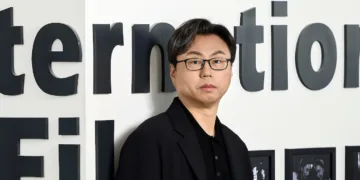
Emmanuel Courcol guides The Marching Band with a surgeon’s precision and a poet’s eye. He calibrates laughter and sorrow alike—one moment a trombone’s brassy honk cracks the quiet, the next a lingering shot on Thibaut’s hollow expression speaks volumes. His cross-cutting between the reverberating sanctum of the Paris rehearsal hall and Jimmy’s steam-laden canteen is less montage than philosophical contrapuntal, each edit weaving two disparate lives into a single thematic fugue.
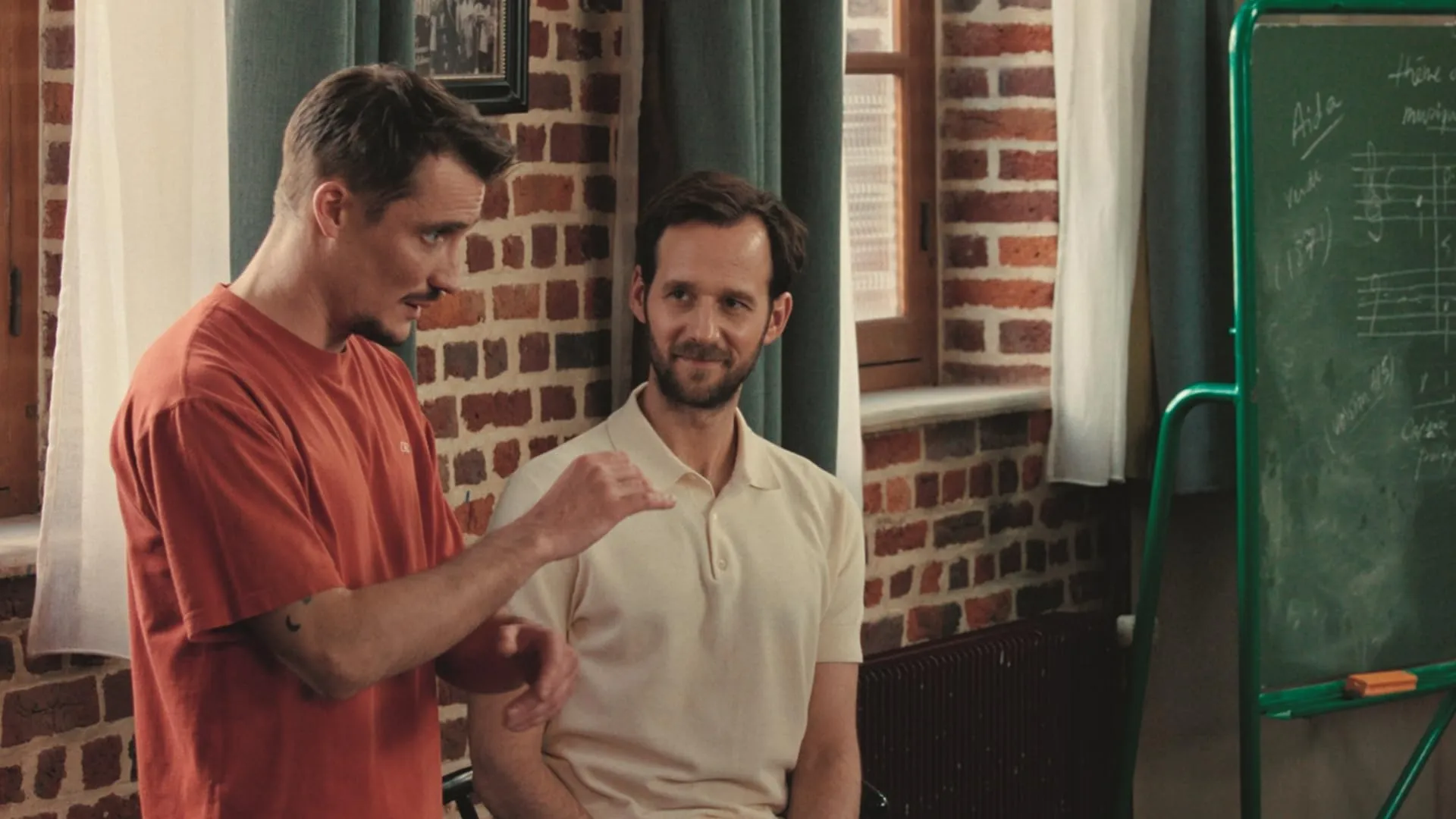
The screenplay, co-crafted with Irène Muscari, moves with lean urgency. They resolve the leukemia subplot almost before the opening credits fade, banking narrative capital to explore the richer territory of brotherhood and class. Subplots—family tensions, factory unrest—arrive swiftly then recede, like distant refrains, ensuring the central motif remains focused. Dialogue is economical yet charged: Thibaut’s measured, clipped tones contrast Jimmy’s colloquial candor, their conversations often pregnant with unsaid longing.
Tone is Courcol’s tightrope. He skirts the edge of saccharine, only to anchor each emotional peak with the grind of picket-line reality or the dull ache of uncertain futures. The resulting camaraderie feels neither forced nor flirtatious—no romantic undercurrents distract from the frailty of male intimacy here. Instead, we witness brothers tuning one another’s dissonance toward shared resonance, under a director who trusts shadows as much as light.
Symphony of Light and Shadow
Courcol’s visual palette reads like a philosophical treatise on duality. In Paris, the camera lingers on cool symmetry—orchestal rows aligned with mathematical precision, each instrument a monument to cultivated order. These frames feel detached, as though artifice protects Thibaut from life’s entropy. Then, in Lille’s once-thrumming mining town, handheld lenses roam warmer hues, breathing intimacy into sun-faded façades and picket-line fervor. The contrast between factory gate and rehearsal room becomes a dialectic on authenticity: one world composed, the other raw.
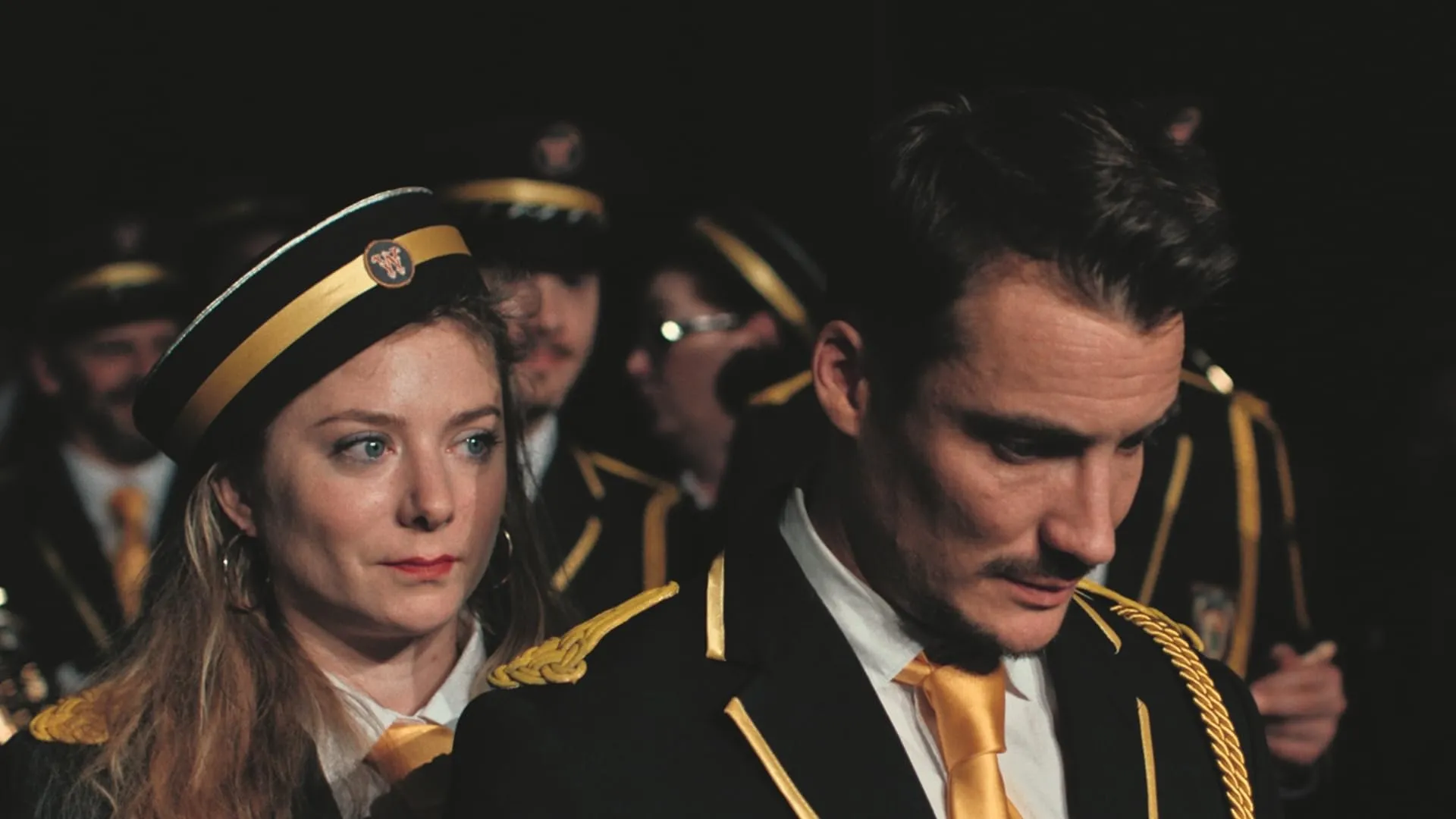
Editing here functions as a reflection on time itself. Musical crescendos trigger brisk, rhythmic cuts that mimic the pulse of orchestral hearts. In quieter emotional beats, the pace stalls, allowing grief and hope to settle like dust in abandoned halls. A montage of bone marrow extraction and trombone practice loops as if to ask: what measures mark survival, and which mark transcendence?
Sound design acts as the film’s metaphysical core. Classical motifs echo Thibaut’s lofty realm, while crackling jazz vinyl anchors us in Jimmy’s everyday reverie. When Ravel’s Bolero emerges, it feels less a popular finale than a spiral toward collective catharsis. Diegetic rehearsals bleed into non-diegetic underscore, blurring the boundary between lived experience and cinematic invocation. Even props contribute to truth: well-worn band uniforms, lacquered trombones, a canteen ladle’s metallic scrape—all resonate with the weight of real lives in motion.
Resonances of the Soul
Moments in The Marching Band unfold like sudden cadences of grief and hope—Jimmy’s tremulous first embrace of Thibaut, the small triumph when a hesitant ensemble finds its collective voice, the final encore ringing with both triumph and fragility. Even as medical fears lurk in the wings, they never feel like mere plot devices; instead, they underscore every rehearsal, every breath drawn before a solo.
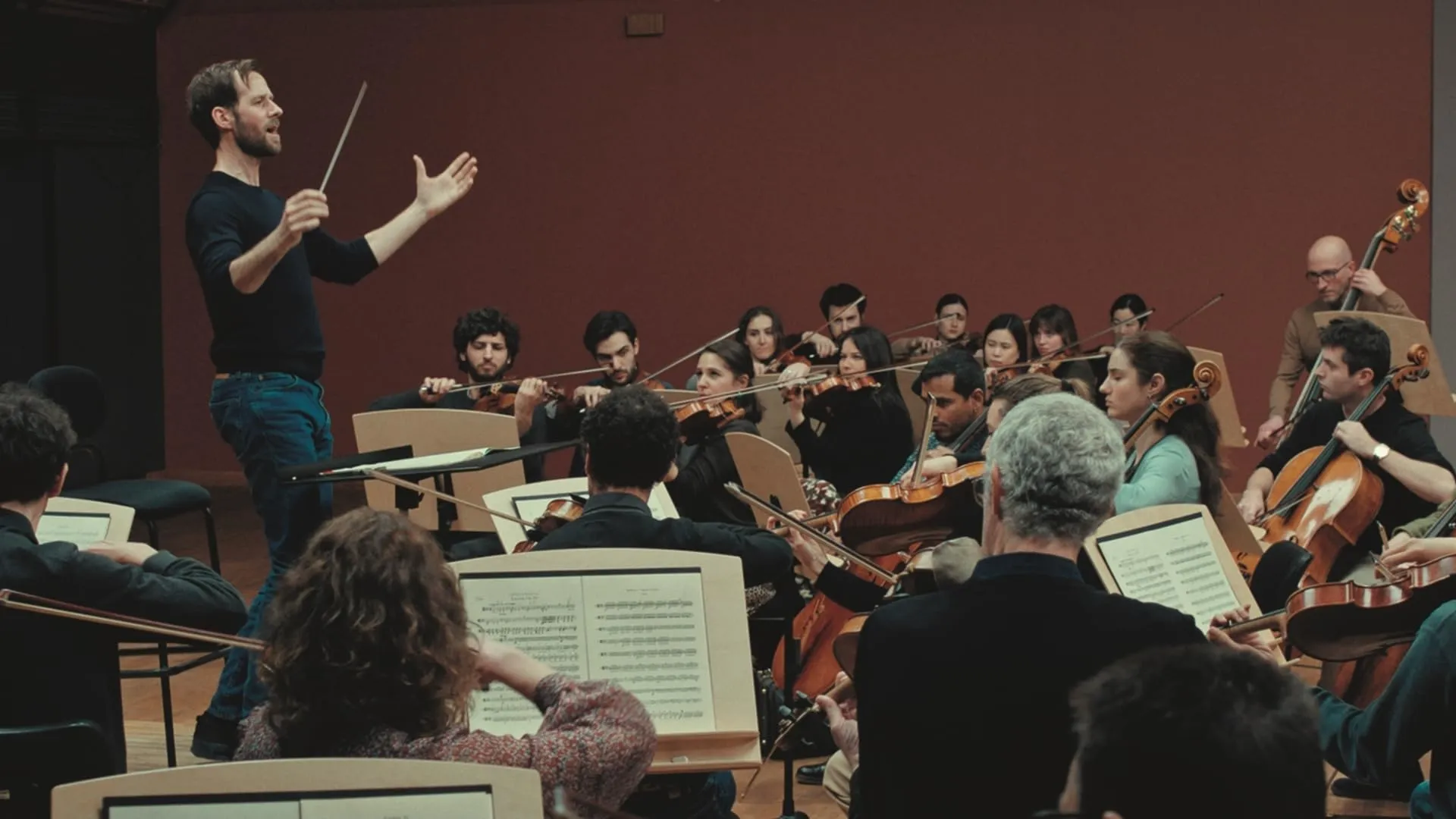
Music here is a binding force, a universal pulse that threads individual sorrow into communal heartbeat. We inhabit both brothers’ worlds at once: the hushed worship of the concert stage and the raucous solidarity of picket lines. In these overlaps, pain and joy merge, offering a genuine intimacy that lingers beyond the screen.
Lead performances anchor this fragile architecture—Benjamin Lavernhe’s wary refinement, Pierre Lottin’s grounded warmth—while each musical interlude carries the weight of real toil. And though certain narrative turns tread familiar territory, they acquire fresh depth under Courcol’s deliberate gaze.
Full Credits
Director: Emmanuel Courcol
Writers: Emmanuel Courcol, Irène Muscari, Oriane Bonduel, Marianne Tomersy
Producers: Marc Bordure, Robert Guédiguian
Cast: Benjamin Lavernhe, Pierre Lottin, Sarah Suco, Jacques Bonnaffé, Ludmila Mikaël, Clémence Massart-Weit, Anne Loiret, Mathilde Courcol-Rozès, Yvon Martin, Isabelle Zanotti, Nicolas Ducron
Director of Photography (Cinematographer): Maxence Lemonnier
Editor: Guerric Catala
Composer: Michel Petrossian
The Review
The Marching Band
This film unfolds as a meditation on fate, class, and the redemptive power of shared music. Courcol’s precise direction and the leads’ quiet intensity transform familiar formulas into moments of genuine ache. Its earnest heart and the brothers’ fragile bond linger like a mournful refrain.
PROS
- Powerful lead performances by Lavernhe and Lottin
- Music sequences feel authentic and emotionally charged
- Thoughtful exploration of class and identity
- Courcol’s direction balances humor with existential weight
- Visual and sound design underscore themes of duality
CONS
- Some narrative beats follow familiar genre tropes
- Occasional shifts in pacing can feel uneven
- Sentimental moments flirt with cliché