

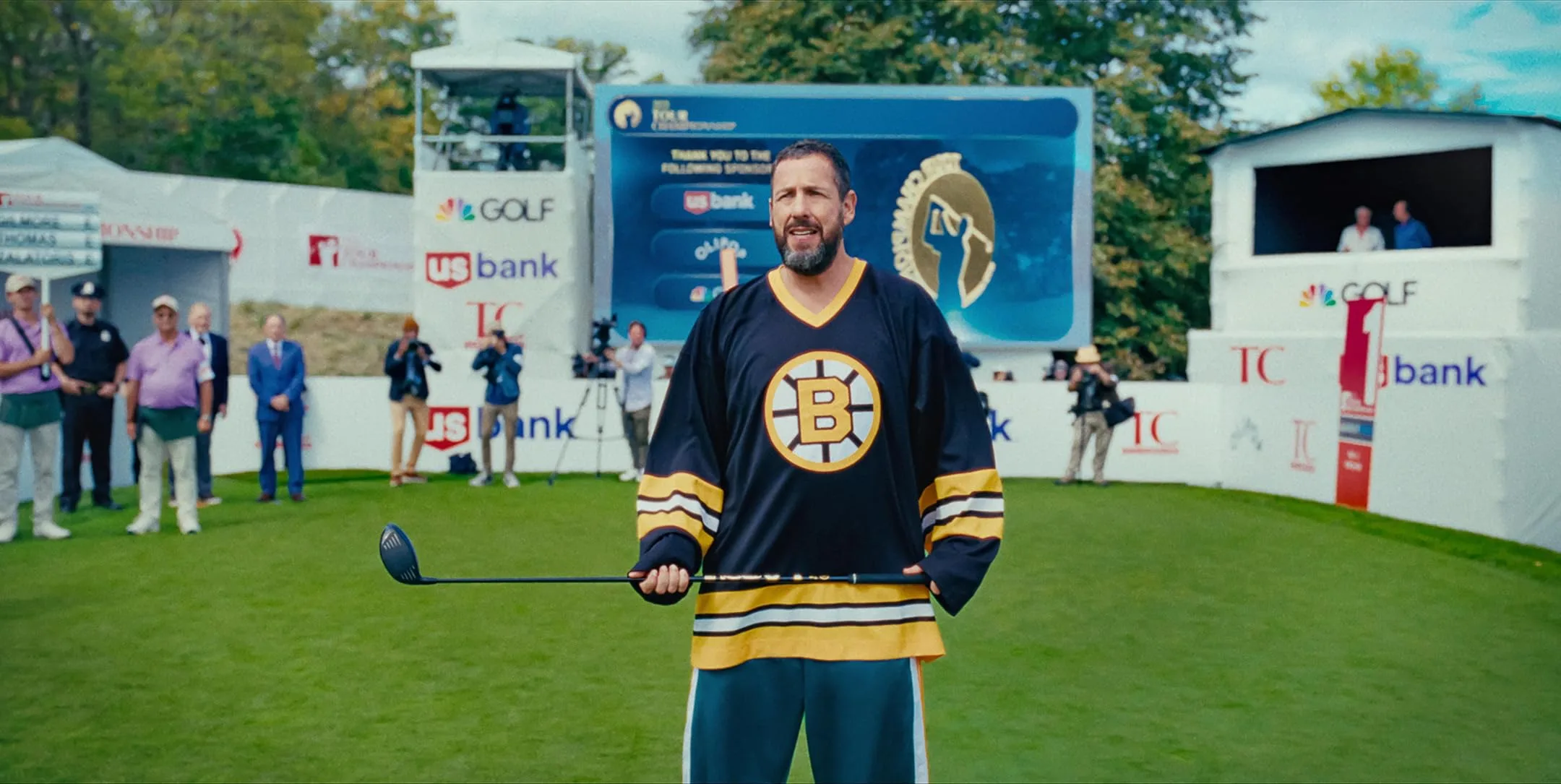

Nearly 30 years after Happy Gilmore first took a slap‑shot swing at professional golf, Adam Sandler’s fan‑requested sequel has landed on Netflix, teeing off a fresh round of nostalgia and big‑ticket cameos that signal the staying power of the 1996 comedy icon.
Sandler wrote the new film with longtime collaborator Tim Herlihy and handed the director’s chair to Kyle Newacheck, who calls the project “part of my comedic DNA” and credits the original with shaping his sense of humor. Newacheck told PEOPLE he was “floored” by the professionalism of Sandler’s teenage daughters, Sadie and Sunny, who appear on‑screen for the first time beside their father.
The story picks up nearly three decades after Happy’s Tour Championship win, sending the retired heavy‑hitter back to the tee box to finance daughter Vienna’s ballet tuition. Sandler returns opposite Julie Bowen’s Virginia Venit, with Christopher McDonald again needling him as Shooter McGavin; McDonald said reading page one of the script gave him “finally”‑level relief that the sequel was real.
Casting expands to include pop star Bad Bunny, NFL tight end Travis Kelce and a roster of PGA Tour favorites, a mix ESPN noted drew cheers when the trailer premiered during last month’s Travelers Championship broadcast.
Dennis Dugan, director of the 1996 original, shifts to executive producer and even reprises his cameo as commissioner Doug Thompson, assuring Decider the follow‑up “keeps the same rowdy spirit” despite Newacheck’s newer stylistic touches. The sequel’s marketing has leaned into golf‑culture lore: Callaway’s $500 replica of Happy’s hockey‑stick putter sold out within hours of its announcement, echoing the first movie’s Subway‑sponsorship bump in sandwich sales.
Early responses run the spectrum—some critics argue the streaming‑era lighting “mutes the energy,” while fan forums celebrate the return of Shooter’s smug grin and a climactic beach‑shot sequence that left Newacheck “covered in goosebumps on set.” Sandler, for his part, says he finally gave in after “28 years of people yelling ‘Happy Gilmore 2?’ at me on the street,” suggesting the film owes its existence to audience persistence as much as studio calculus.
Read Gazettely’s review of Happy Gilmore 2 in this link.