

























![Kingdom Hearts Collection [I-III] Review](https://gazettely.com/wp-content/uploads/2026/10/Kingdom-Hearts-Collection-I-III-1-360x180.webp "Kingdom Hearts Collection [I-III] Review: KHII Holds Steady as Newer Entries Fluctuate 37")



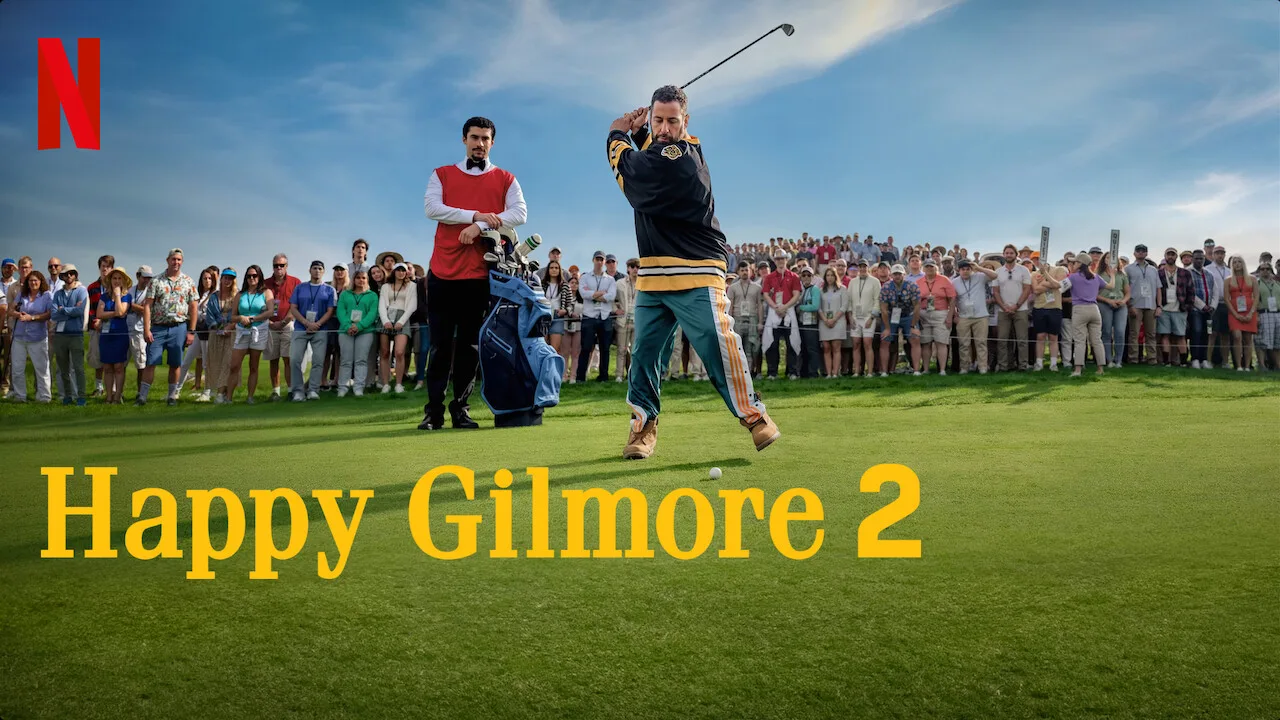

To wait nearly three decades for the return of a folk hero is a curious exercise in cultural patience. In the interim, Happy Gilmore ceased to be a mere movie character and became something akin to a generational poltergeist, the angry ghost of 90s anti-establishment sentiment.
So, what happens when he is finally resurrected in Happy Gilmore 2? He is, fittingly, a ghost of himself. We find our hero not on a victory tour but in a purgatory of fluorescent lighting at a local supermarket, a widower haunted by a profound, darkly comic tragedy. His fortune is gone. His rage has curdled into a quiet, flask-fueled despair.
The engine of the plot is his daughter Vienna’s preternatural talent for ballet, a calling with a Parisian price tag that forces Happy back to the one place he associates with his loss. His new nemesis isn’t just a person; it’s an idea. “Maxi Golf” is a hyper-commercialized, TikTok-ified mutation of the sport, forcing Happy—the original disruptor—into the uncomfortable posture of a traditionalist. He must defend the very institution he once gleefully terrorized.
A Narrative Schizophrenia
The film suffers from a profound case of narrative schizophrenia, existing as two separate, warring entities trapped in a single, overlong body. This is not simply a matter of a main plot and a subplot; it is a fundamental division of purpose, a cinematic civil war. One film is a somber, almost mumblecore meditation on middle-aged grief, a story about a father attempting to navigate an emotional void left by an unthinkable accident.
The other is a loud, abrasive, almost desperate satire of modern entertainment, pitting the staid traditions of the PGA against the absurd, obstacle-laden spectacle of Maxi Golf. The script never successfully sutures these two halves together, resulting in a film that lurches violently between genuine pathos and slapstick absurdity. The whiplash is palpable. We move from a quiet scene of paternal anxiety to a sequence involving surgically enhanced golfers and bad-breath-activated security doors without any tonal connective tissue.
This structural instability feels like a byproduct of filmmaking-by-committee, an attempt to appease every possible demographic quadrant—the fans of Sandler’s dramatic turns, the fans of his classic idiot-comedy, and the younger audience that consumes content in 30-second clips.
This division is cemented by the film’s catastrophic opening gambit: the accidental death of Virginia Venit, by Happy’s own errant golf ball. It’s a decision so tonally deaf it borders on the avant-garde. What is intended as a dark echo of the original’s opening gag (the death-by-hockey-puck of Happy’s father) becomes a narrative black hole. That first death was a cartoonish, throwaway beat to establish a backstory; this one is a foundational trauma inflicted by our protagonist upon a beloved character. It casts a pall over the entire film, making every subsequent joke land with a wince.
The film wants us to laugh at a man hiding liquor in a cucumber, but we can’t forget that he’s doing so because he accidentally killed his wife. It’s a miscalculation of staggering proportions from which the movie never recovers. The runtime, ballooning by a full half-hour past the original, is then padded not with the necessary character work to navigate this trauma, but with what can only be described as Celebrity Spackle—an endless procession of famous faces used to patch over the story’s considerable cracks and distract from its hollow core.
The Entropy of an Icon
Adam Sandler’s performance is a fascinating, if uneven, study in contained entropy. This is not the explosive, boyish rage of 1996; this is the implosive fatigue of a man comprehensively worn down by life. With a gravelly voice and a grief-beard that seems to have absorbed all surrounding light, Sandler presents a Happy who seems physically heavier with loss. He’s a walking bruise.
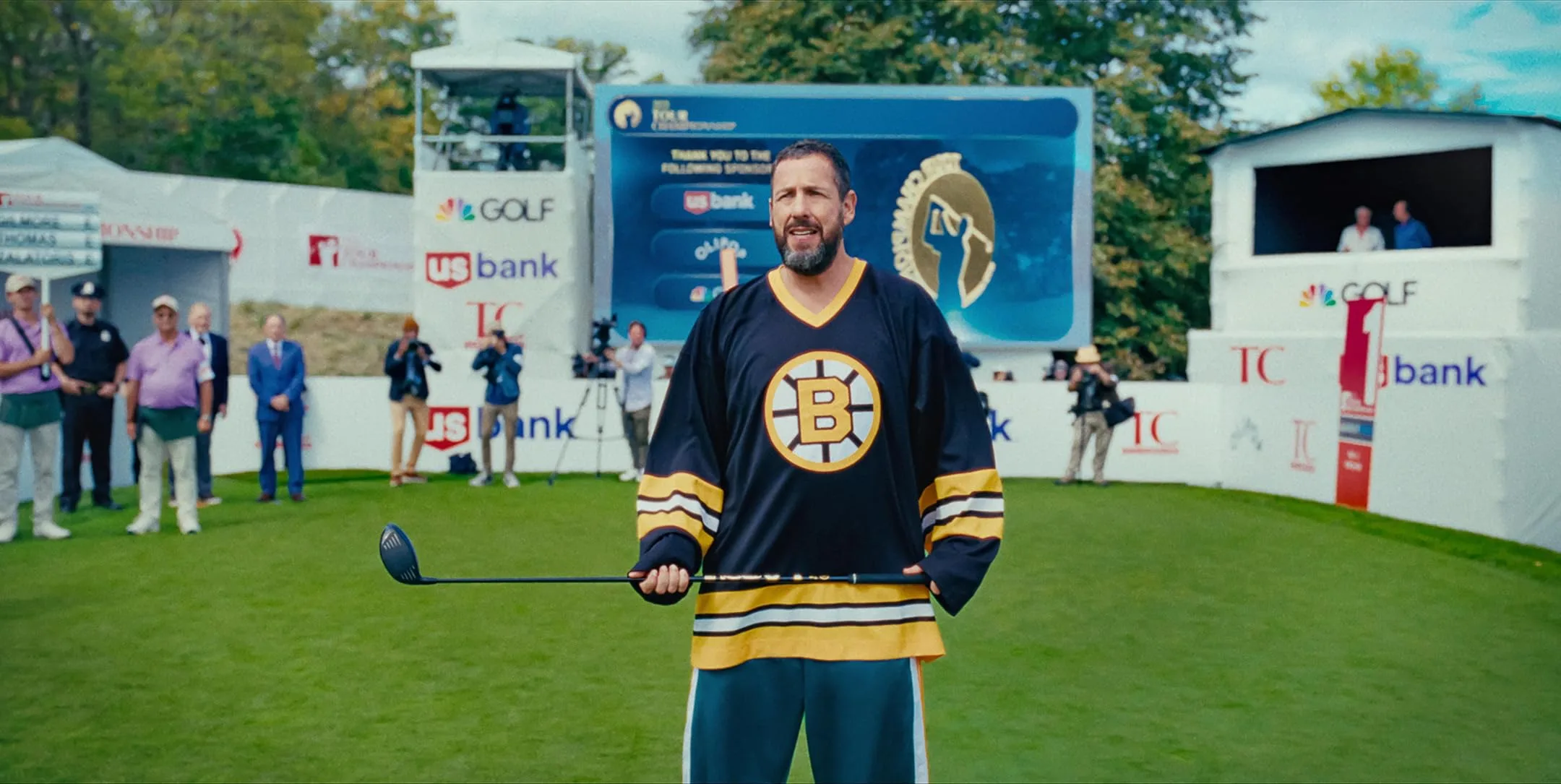
The film’s most persistent gag—Happy’s endless array of comically disguised liquor flasks—functions as a surprisingly potent metaphor for hiding one’s pain in the mundane. It is silly, yes, but it is also a quiet, almost sad depiction of functional alcoholism that feels uncomfortably real in a way the rest of the film often does not. It is here, between the man-child he was and the dramatic actor he has become, that the character exists in a state of limbo.
The film’s only true emotional anchor, the single element that feels entirely uncalculated, is found in the scenes between Happy and his daughter Vienna. Here, the artifice of the “Sandlerverse” recedes. The casting of his own daughter, Sunny, creates moments of unvarnished authenticity that the script alone could never achieve. This dynamic serves as the movie’s heart, a fragile organ protected by layers of cynical comedy. It is in these moments that we see a plausible evolution of the character: the defiant outsider transformed into the anxious patriarch.
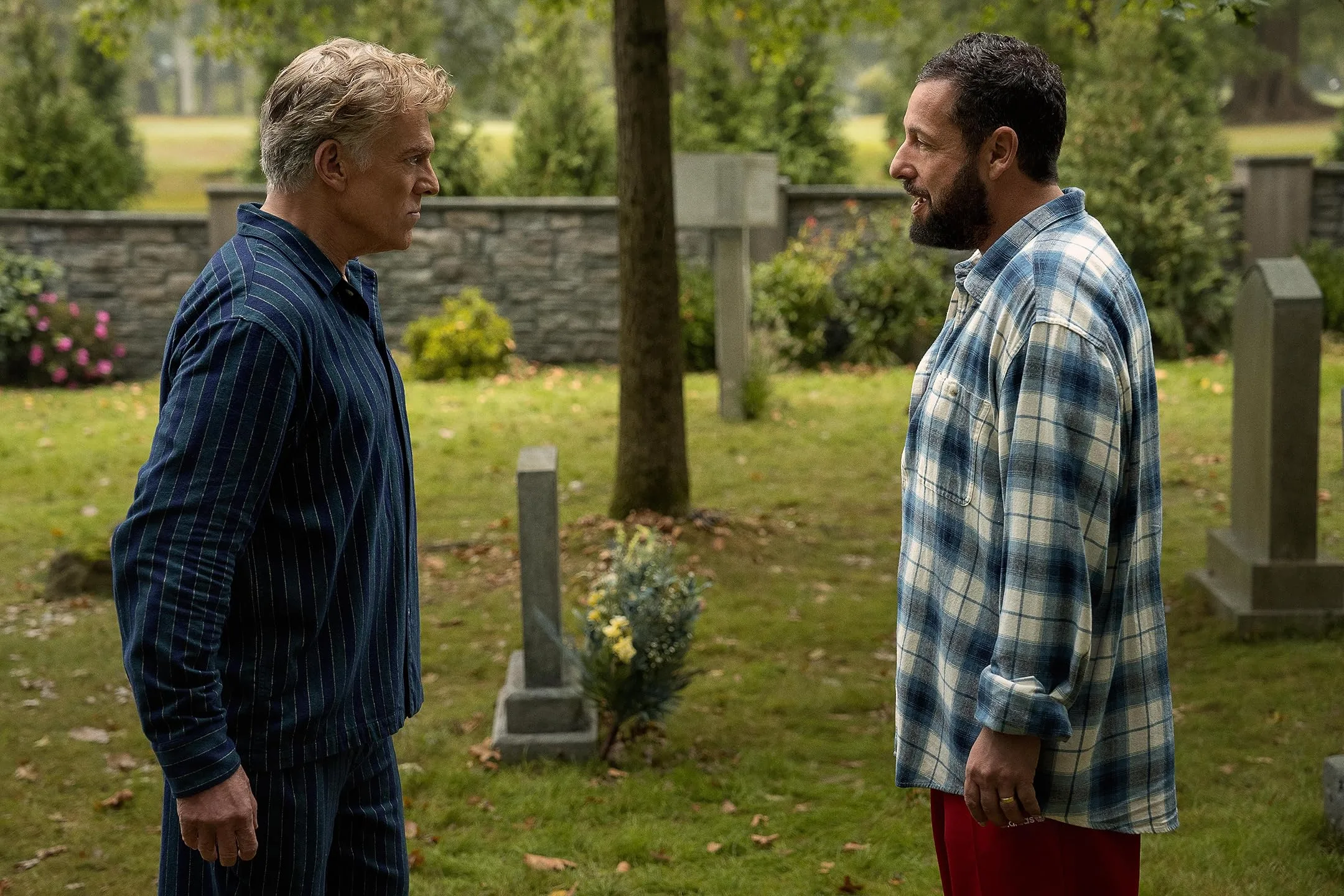
Of course, the old Happy is still in there, a ghost in the machine. His temper flares, but its target has shifted. It is no longer directed at the snobs of the establishment but at his own failings, at a world that has moved on, and at a golf ball that will not obey. The graveyard brawl with Shooter McGavin is a glorious, cathartic explosion, a brief return to form for the character that provides the kind of visceral, juvenile satisfaction that made him an icon in the first place.
A Parade of Ghosts, Real and New
Christopher McDonald returns to the role of Shooter McGavin with a manic, finger-gun-blasting glee that is an absolute joy to behold. He is a magnetic force of comic villainy, his arrogance now fermented by decades of confinement and resentment. He is, for his limited screen time, perfect. It is therefore a source of immense frustration that the script neutralizes him so quickly.
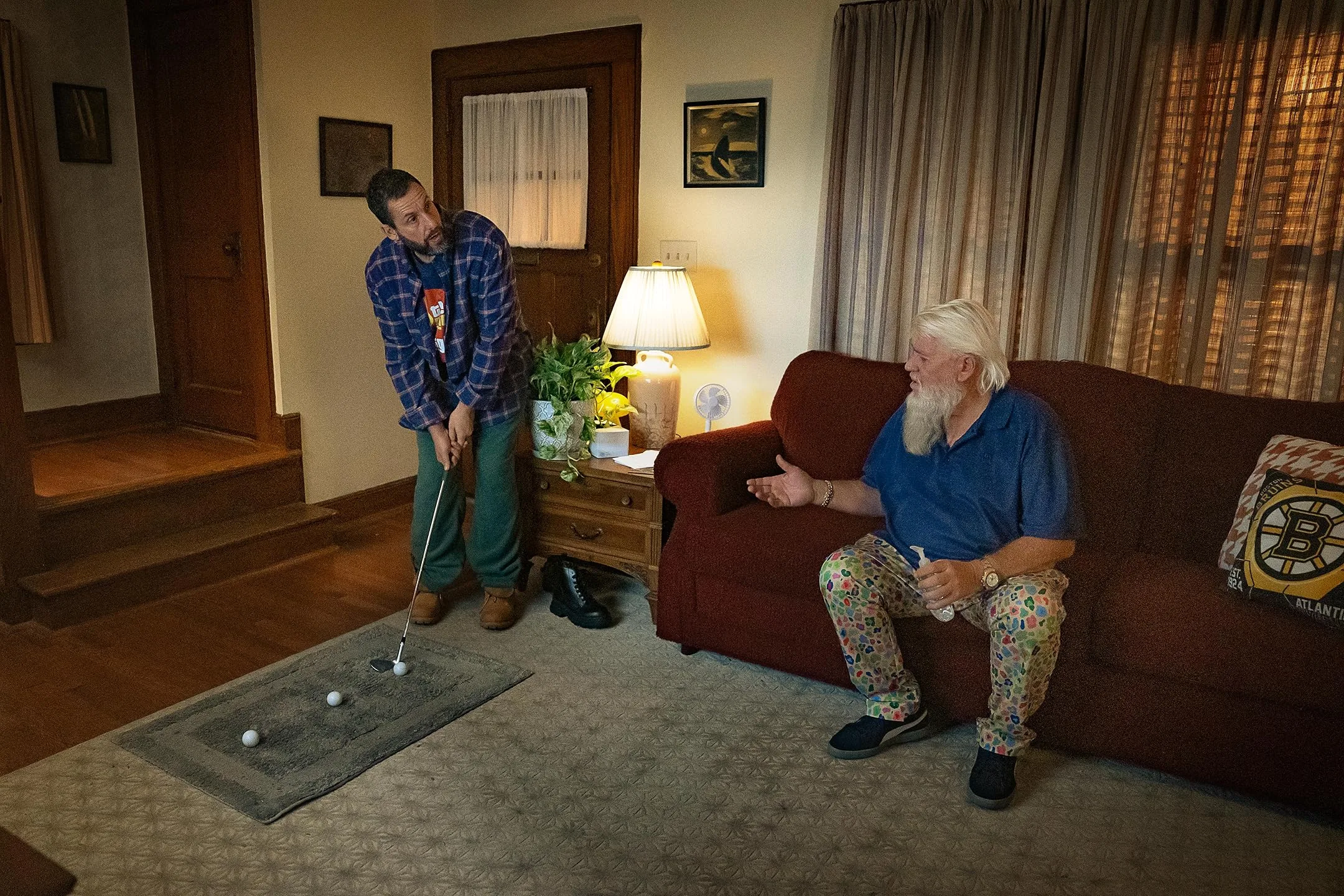
After their spectacular cemetery confrontation—a sequence that understands the history between them—the two rivals form an alliance against Maxi Golf. This decision is a failure of nerve. It deflates the film’s central tension and squanders the potential for a richer, more complicated relationship between two aging titans. Instead of a complex rivalry, we get a toothless team-up, a retreat from the very conflict that defined the original.
Among the newcomers, two figures manage to make a significant impression against the tide of stunt casting. Benny Safdie, as the rancid-breathed CEO of Maxi Golf, Frank Manatee, is perfectly repellent, a caricature of the soulless tech-bro impresario. More surprisingly, Benito Antonio Martínez Ocasio (the musician Bad Bunny) is a revelation as Happy’s new caddy. He delivers a performance of such understated charm and genuine comedic timing that he nearly walks away with the entire picture. His presence feels natural in a way that so many others do not, an island of calm in a sea of frantic “look at me” moments.
And there are many, many of those moments. The film is a firehose of cameos, a relentless procession of pro golfers, comedians, actors, and miscellaneous athletes. It creates a peculiar viewing experience, one less focused on story and more on recognition. This isn’t filmmaking; it’s a form of curated content, a living IMDB page where the act of spotting Travis Kelce or Eminem is the primary source of engagement. The sheer volume transforms the practice from a fun nod to a systemic distraction, a symptom of a film that has more faith in the borrowed equity of its guest stars than in its own narrative momentum.
The Burden of Memory
Nostalgia is the film’s primary currency, and it spends it with the reckless abandon of a lottery winner on a weekend bender. At times, this investment pays off. The film expertly recreates the slightly chintzy, sun-bleached aesthetic of a mid-90s comedy; from the lighting to the soundtrack choices, it feels like a genuine artifact pulled from a time capsule.
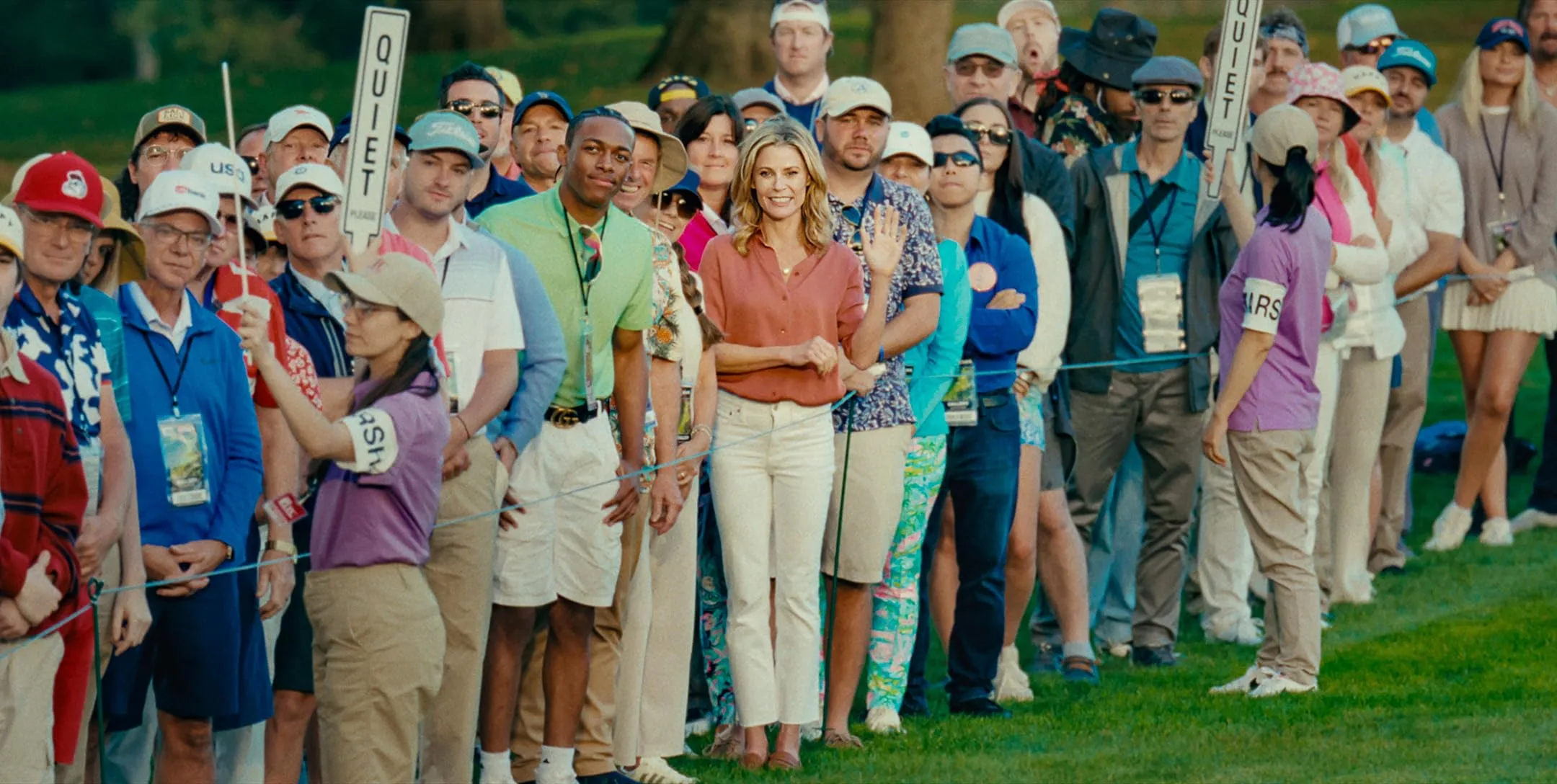
A few callbacks, like the inspired casting of golfer Will Zalatoris as the grown-up version of Happy’s first caddy or the morbidly funny graveyard roll call of deceased characters, connect with the past in a meaningful, clever way. They are jokes for those who have been paying attention.
But for every successful withdrawal from the bank of nostalgia, there are a dozen failures. The film engages in a uniquely lazy form of fan service I can only call “Annotated Nostalgia.” It doesn’t trust its audience to remember the original, so it constantly, jarringly inserts split-second flashbacks to the 1996 film to explain its own references. Hal L. says, “Check out the nametag,” and we are instantly shown the clip of him saying it three decades ago.
It is a technique that is not only insulting but demonstrates a profound lack of confidence. It’s a filmmaker nervously whispering, “Did you get it? Remember how funny that was?” It turns the movie into a reaction video of itself, constantly pausing its own momentum to admire its predecessor. This is not a loving homage; it is a symptom of deep-seated creative anxiety, a film so haunted by its own, better past that it must continually exhume the corpse to prove it once lived.
An Unplayable Lie
The film is, in the end, an unplayable lie. It contains moments of authentic heart, surprising humor, and strong performances from key actors who understand the assignment. Yet it is buried under the weight of a disjointed script, a cripplingly dark inciting incident, and a cynical reliance on cameos and callbacks that mistakes recognition for resonance.
It asks if a man can rediscover his passion after it has been poisoned by tragedy—a fascinating question that the film itself is too distracted and chaotic to answer with any coherence. It is a product perfectly designed for the streaming era: not quite a movie, but an endless scroll of “content” to be consumed passively.
Does this sequel justify its existence after nearly thirty years? As a piece of cinema, it is a failure, a case study in how not to construct a legacy sequel. As a cultural artifact, however—a bizarre, fractured, occasionally touching reflection of our current obsession with resurrecting the past, no matter the cost—it is undeniably fascinating. The film is a paradox, a story about learning to love something again that is, itself, profoundly difficult to love. The lovable golfer did return, but he brought all our modern anxieties back with him.
Full Credits
Director: Kyle Newacheck
Writers: Tim Herlihy, Adam Sandler
Producers: Adam Sandler, Tim Herlihy, Jack Giarraputo, Robert Simonds
Executive Producers: David Bausch, Barry Bernardi, Dennis Dugan, Kevin Grady, Judit Maull, Dan Bulla
Cast: The cast includes Adam Sandler, Julie Bowen, Christopher McDonald, and many others. For a full list of the extensive cast, please refer to the referenced document.
Director of Photography (Cinematographer): Zak Mulligan
Editors: Brian Robinson, Tom Costain, J.J. Titone
Composer: Rupert Gregson-Williams
The Review
Happy Gilmore 2
A frustrating and fascinating failure, Happy Gilmore 2 is less a cohesive film than a chaotic autopsy of 90s nostalgia. While bright spots of genuine heart and sharp humor exist, they are ultimately buried under a mountain of baffling story choices and empty fan service. It is a cinematic ghost, haunted by the memory of a better movie and unable to justify its own resurrection.
PROS
- Christopher McDonald’s delightfully energetic return as Shooter McGavin.
- A surprisingly charming and funny performance from Bad Bunny as Happy’s caddy.
- The father-daughter scenes between Adam and Sunny Sandler provide genuine emotional weight.
- Successfully recreates the aesthetic and feel of a mid-90s comedy.
CONS
- A fractured, unfocused script torn between family drama and broad satire.
- The opening tragedy is a tonally disastrous decision that poisons the film.
- An overwhelming and distracting number of gratuitous celebrity cameos.
- Lazy reliance on flashbacks and repetitive callbacks to the original film.







