

























![Kingdom Hearts Collection [I-III] Review](https://gazettely.com/wp-content/uploads/2026/10/Kingdom-Hearts-Collection-I-III-1-360x180.webp "Kingdom Hearts Collection [I-III] Review: KHII Holds Steady as Newer Entries Fluctuate 37")



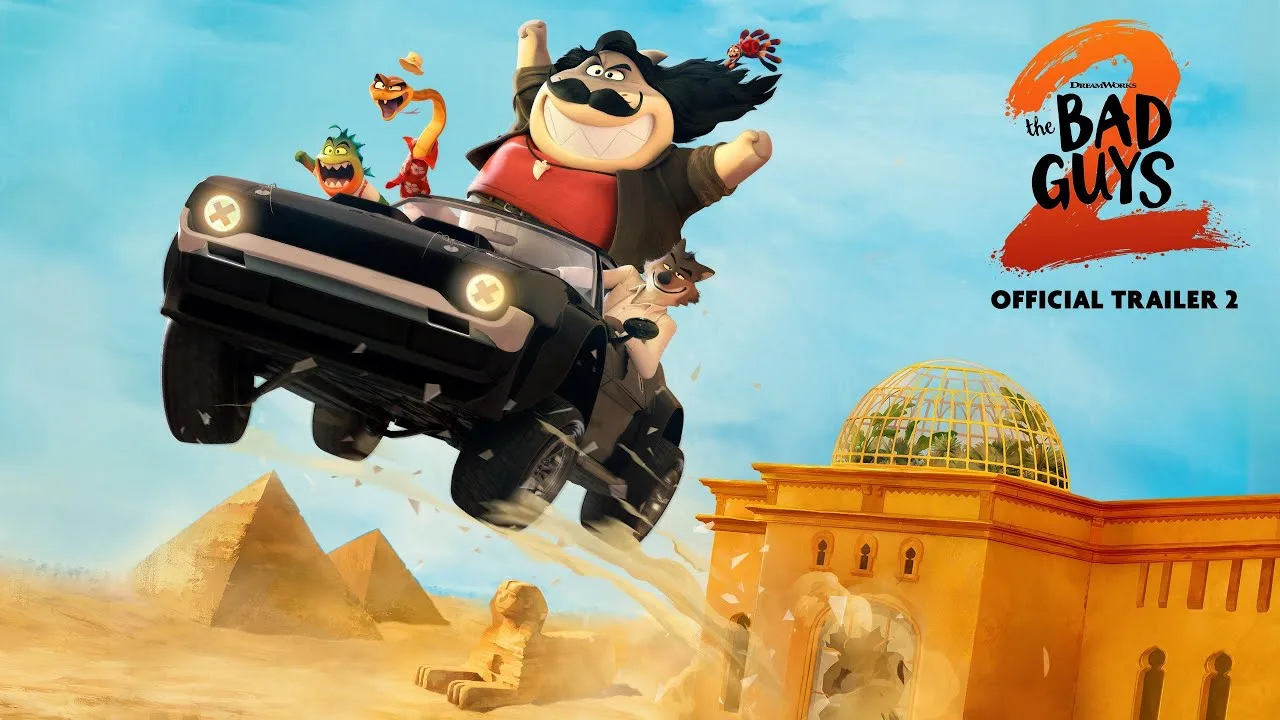

The gang is back, but the thrill is gone. When we reconnect with Mr. Wolf, Mr. Snake, Ms. Tarantula, Mr. Shark, and Mr. Piranha, they are on the other side of a prison sentence and attempting to walk the straight and narrow. The problem is, the straight and narrow is paved with late bills, dead-end jobs, and a general sense of societal side-eye.
Mr. Wolf, the debonair leader once suited for high-stakes heists, is now stuck with a beat-up hatchback. This stark contrast between their legendary criminal past and their mundane present forms the uneasy bedrock of The Bad Guys 2.
The world may have forced them to be good, but it hasn’t forgotten they were great at being bad, and a new threat simmering in the criminal underworld is about to test whether their rehabilitation is a new identity or just a temporary disguise.
Second Acts and Second Thoughts
What happens after the credits roll on a redemption story? The Bad Guys 2 bravely dives headfirst into this question, building its entire narrative on the surprisingly thorny idea of recidivism. In an era where conversations about the justice system are more prominent than ever, it feels significant to see a family film tackle the concept that a prison sentence doesn’t magically erase societal prejudice.
The film’s most compelling thread is this genuine struggle; the crew faces constant rejection, making their old life seem not just alluring but necessary for survival. This exploration moves the franchise into a more mature space, asking what happens when personal change collides with a world that refuses to acknowledge it. It’s a theme that elevates the story beyond a simple caper, reflecting a very real cultural anxiety about whether second chances are truly possible.
The plot mechanics that drive this theme are both clever and, at times, unwieldy. The team is framed for a new wave of thefts centered around a rare metal cheekily named “MacGuffinite”—a self-aware wink to film buffs that I couldn’t help but appreciate. This forces them to use their illicit skills for a supposedly good cause, leading them into the path of a formidable all-female gang led by the cunning snow leopard, Kitty Kat.
The central conflict is further complicated by a blackmail subplot, where Kitty Kat leverages knowledge of Governor Diane Foxington’s past as the infamous Crimson Paw. From a screenwriting perspective, this is the narrative’s shakiest pillar. The stakes of the blackmail feel muted because Diane is largely absent from the proceedings, making the threat feel distant and mechanical rather than personal and immediate.
The most jarring decision, however, is the film’s structural leap in its final act. The story begins as a grounded crime story about reputation and redemption, then abruptly pivots into a science fiction epic, complete with a rocket launch and a battle in Earth’s orbit. It’s a narrative escalation that reminds me of the Fast & Furious franchise’s journey from street racing to saving the world.
While the spectacle is undeniable, one has to ask if the film earns this tonal shift. The whiplash is palpable, and the wildly over-the-top finale threatens to undermine the very real, personal themes the movie so carefully established. It’s a bold choice that pushes the story’s credibility to its breaking point, trading emotional resonance for sheer scale.
Familiar Voices, New Foes
A story like this is powered by the charisma of its ensemble, and the returning voice cast demonstrates an electric, lived-in chemistry. Sam Rockwell’s performance as Mr. Wolf is the anchor, a masterful channeling of old-school Hollywood charm. His line deliveries have a rhythm that feels both improvised and perfectly timed, creating a character who is effortlessly cool even when he’s failing. The supporting players are given more room to shine this time around.
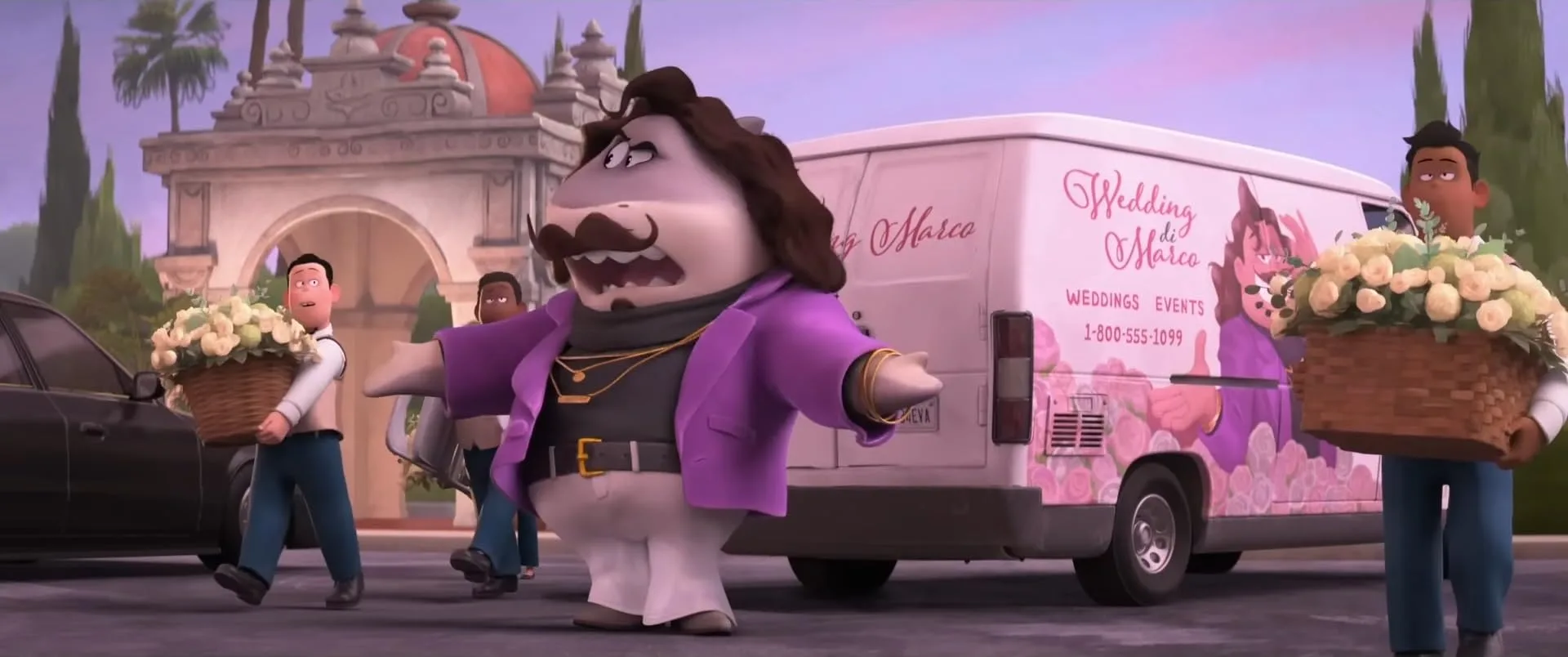
Marc Maron’s distinctive gravelly cadence is perfect for Mr. Snake, whose newfound identity as a kombucha-sipping, yoga-practicing wellness fanatic provides some of the film’s sharpest comedy. For anyone familiar with Maron’s own public persona, the performance becomes a delightful inside joke. Craig Robinson continues to get huge laughs from the simple, brilliant running gag of Mr. Shark’s absurdly transparent disguises somehow fooling everyone, a testament to his earnest and hilarious delivery.
The new additions to the cast bring a fresh dynamic. Danielle Brooks is a standout as Kitty Kat, imbuing the antagonist with a vocal presence that is both menacing and tinged with a bitterness that makes her a compelling mirror to Wolf. She represents the path of embracing infamy when society offers no alternative. Her crew, including a wonderfully pugnacious Maria Bakalova as Pigtail, functions as a tight-knit unit that effectively contrasts with the Bad Guys’ more chaotic family dynamic. However, the film’s roster feels slightly overstuffed.
The return of Richard Ayoade as Professor Marmalade, now a muscle-bound, tattooed inmate, is a fantastic sight gag but his subplot feels disconnected from the main story. This, along with Zazie Beetz’s brief appearances as Diane, points to a common trend in contemporary franchise-building. These characters feel less like integral parts of this specific story and more like strategic placements for a future installment. It’s a narrative compromise that makes the film feel, at times, like a single chapter in a larger saga rather than a complete, self-contained work.
Anarchy in Motion
Visually, The Bad Guys 2 is a masterpiece of controlled chaos. Where the first film introduced a refreshing new style, the sequel perfects it, creating one of the most dynamic and artistically confident animated features in years. The aesthetic is a brilliant fusion of slick 3D models and expressive 2D animation principles. You can see it in the use of “smear frames” during fast movements or in the stylized, hand-drawn impact effects that give every action a tactile punch.
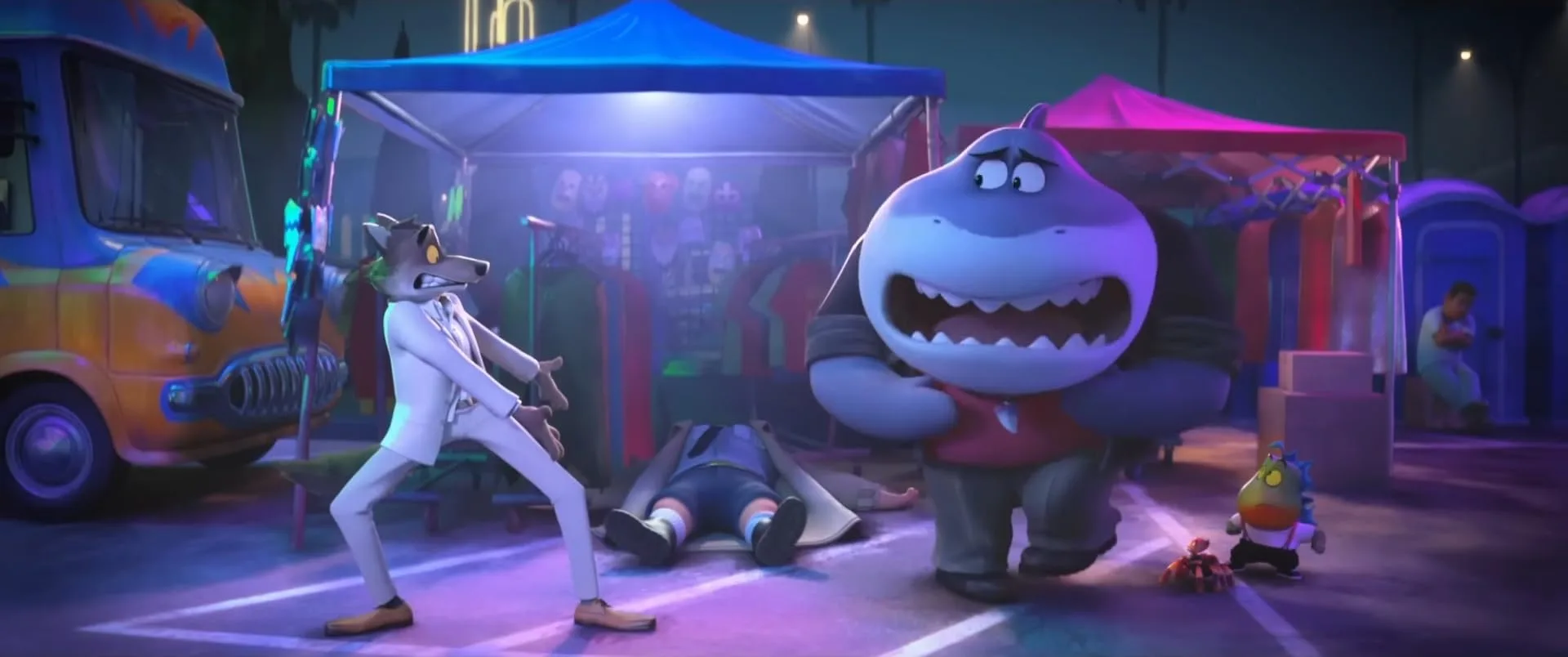
The character models themselves stretch and squash with a freedom that recalls the golden age of Warner Bros. cartoons, breaking their digital constraints to achieve a level of expression that feels organic and alive. In an industry often chasing photorealism, this film’s bold, graphic-novel-inspired look, heavily influenced by the flair of anime like Lupin III, is a welcome and exhilarating counter-movement.
This distinct visual language allows for action sequences that are simply breathtaking. Director Pierre Perifel orchestrates these set pieces with incredible verve. An opening flashback car chase through Cairo is a marvel of kinetic editing and sound design, the screech of tires and a driving musical score immediately signaling the film’s heightened ambitions.
A later scene at a Lucha Libre match descends into a beautiful, trippy brawl where the vibrant colors and exaggerated physics perfectly capture the characters’ public humiliation. But the film’s crowning achievement is the rocket launch sequence. Watching the crew attempt to board a soaring rocket from a helicopter is a stunning piece of action filmmaking, regardless of the medium. The animation conveys an astonishing sense of speed, height, and vertigo. The camera work is dynamic, the editing is sharp, and the sound design makes the spectacle feel immense.
It’s a sequence that channels the practical, high-stakes stunt work of a Mission: Impossible film, using the unique freedom of animation to create a moment of pure, unadulterated cinematic awe. The climactic confrontation in orbit is equally ravishing, a cascade of color and motion that solidifies the film’s status as a premier action spectacle.
Full Credits
Director: Pierre Perifel
Writers: Yoni Brenner, Etan Cohen
Producers: Damon Ross, Rebecca Huntley
Executive Producers: Dean DeBlois
Cast: Sam Rockwell, Marc Maron, Craig Robinson, Anthony Ramos, Awkwafina, Zazie Beetz, Richard Ayoade, Lilly Singh, Alex Borstein, Danielle Brooks, Maria Bakalova, Natasha Lyonne
Editors: John Venzon
Composer: Daniel Pemberton
The Review
The Bad Guys 2
While it stumbles in its ambitious narrative reach, The Bad Guys 2 is a visual triumph. It elevates the franchise with breathtaking action and a surprisingly mature emotional core, even if the overstuffed plot occasionally loses its focus. A feast for the eyes and a worthy sequel that proves going good is the hardest job of all.
PROS
- A stunning and unique animation style that blends 2D and 3D elements.
- Spectacular, inventive action sequences that rival live-action blockbusters.
- Excellent chemistry and charismatic performances from the voice cast.
- A surprisingly mature and resonant theme exploring the difficulties of rehabilitation.
- Sharper humor and wittier dialogue than its predecessor.
CONS
- The plot becomes overstuffed, and the tonal shift in the final act is jarring.
- Key subplots and characters feel underdeveloped to make room for the spectacle.
- The story feels more like a bridge to a third film than a self-contained narrative.
- The wildly ambitious finale risks overshadowing the film's emotional core.







