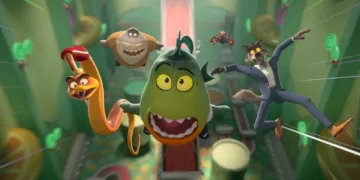

























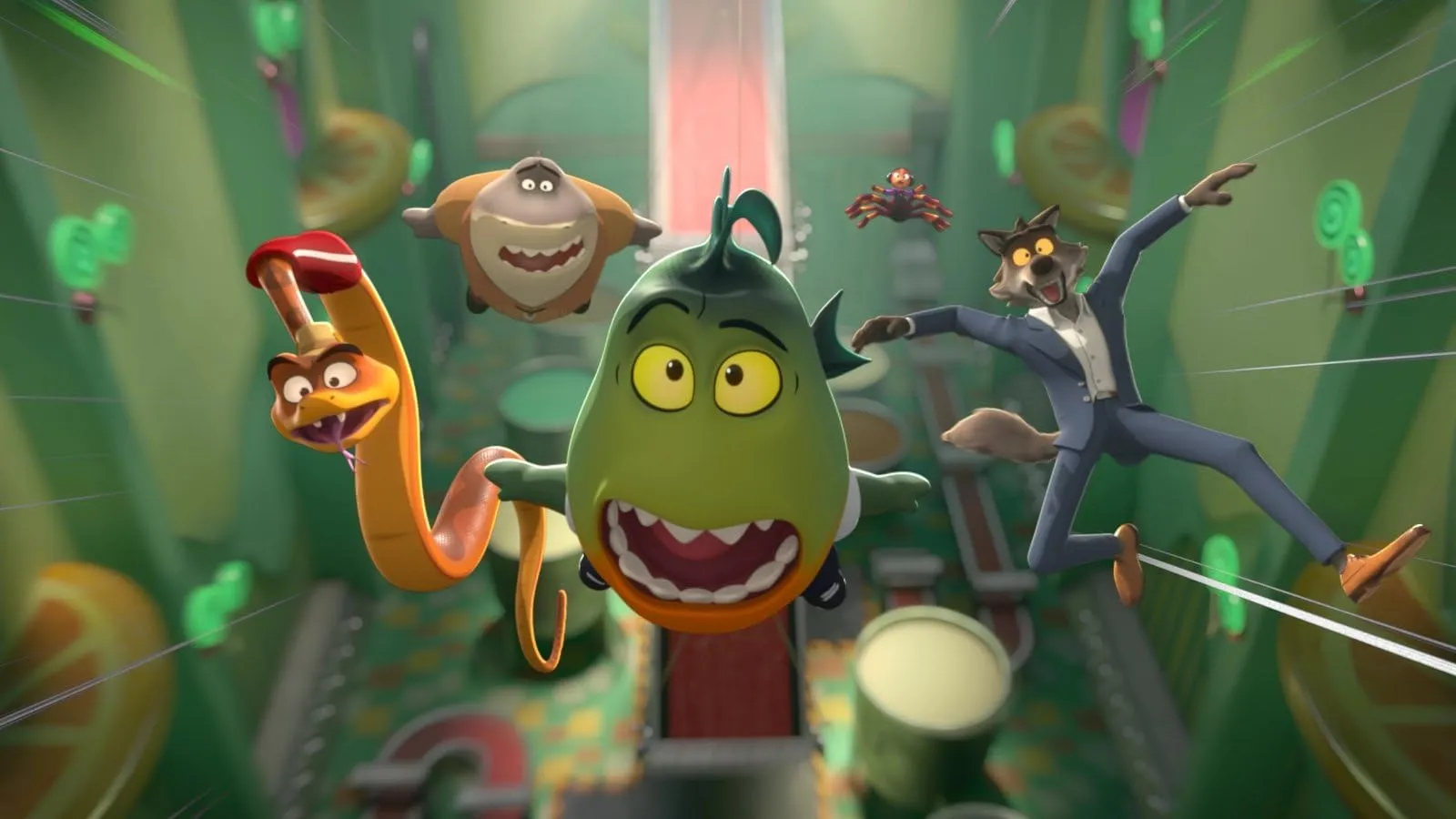

The current wave of genre entertainment likes to hand every famous villain or anti-hero an origin story. For The Bad Guys: Breaking In, that means winding the clock back to a phase when this criminal crew lacked finesse and reputation, long before they drew serious attention from law enforcement. The Netflix animated comedy heist series plants itself well ahead of the film events and reintroduces Mr. Wolf and his crew, Mr. Snake, Ms. Tarantula, Mr. Shark and Mr. Piranha, at a point where they operate with the enthusiasm of professionals and the track record of amateurs.
The show builds itself around the team’s craving for relevance. They chase recognition instead of bank balances. Wolf, the would-be ringleader, fixates on climbing the city’s criminal hierarchy and insists they deserve a spot on the nightly news’ much-coveted “Worst List.”
Each bad night of ratings, every time their names fail to appear, fuels another harebrained scheme. The series quickly locks into a rapid, breezy rhythm driven by slapstick, fast-talking banter and lively visual gags. It keeps the sleek, stylized look of the big-screen animation while trimming that style to fit an episodic, at-home format, like someone resizing a designer suit for weekend wear.
The Prequel Pack’s Shifting Dynamic
The episodes pull much of their comic energy from the gang’s early ineptitude, which turns every caper into a crash course in crime. The core relationship among the five animals faces constant stress tests. They behave like a working family that argues over both life choices and logistics. Wolf’s oversized hunger for legendary status runs into Snake’s deep cynicism.
Tarantula’s precision hacking goes up against Shark’s eccentric method acting and Piranha’s untamed chaos, and plans unravel almost as soon as they leave the whiteboard. Their personal anxieties often function as the real opposition, dismantling schemes with far more efficiency than anything the police manage.
This ensemble chemistry is what lets the series breathe as a weekly-style watch. The need for their friendship keeps the show’s moral compass steady. They operate as anti-heroes who must master cooperation to achieve their ethically murky objectives. We see them coordinate to pull off a museum break-in, then apply the same skill set to keeping their home livable with a chore chart.
Teamwork becomes a survival tool when the goal involves dodging a jail sentence and when the goal involves sorting out who scrubs the toilet. A key element of the series is its completely new voice cast. The actors slip into these familiar roles with ease and echo the vocal rhythms of their big-screen counterparts. The new performance for Wolf stands out in particular, carrying the character’s charismatic, slightly frayed confidence with an easy swagger.
Caper Comedy and Low-Stakes Satire
Breaking In sticks closely to episodic adventure, with each of its nine segments built around a fresh heist or caper. The emphasis rests on lively, chaotic activity, so deep, serialized story arcs take a back seat. Individual plots, from stealing rare arcade cabinets to sneaking off with a famous weeping painting, primarily provide scaffolding for loose, jokey planning sessions and bursts of comic panic. The writers treat the visual language of heist stories as a toy box, leaning on quick cuts, flash-forwards and a chatty narrative style that nods toward films devoted to glossy crime.
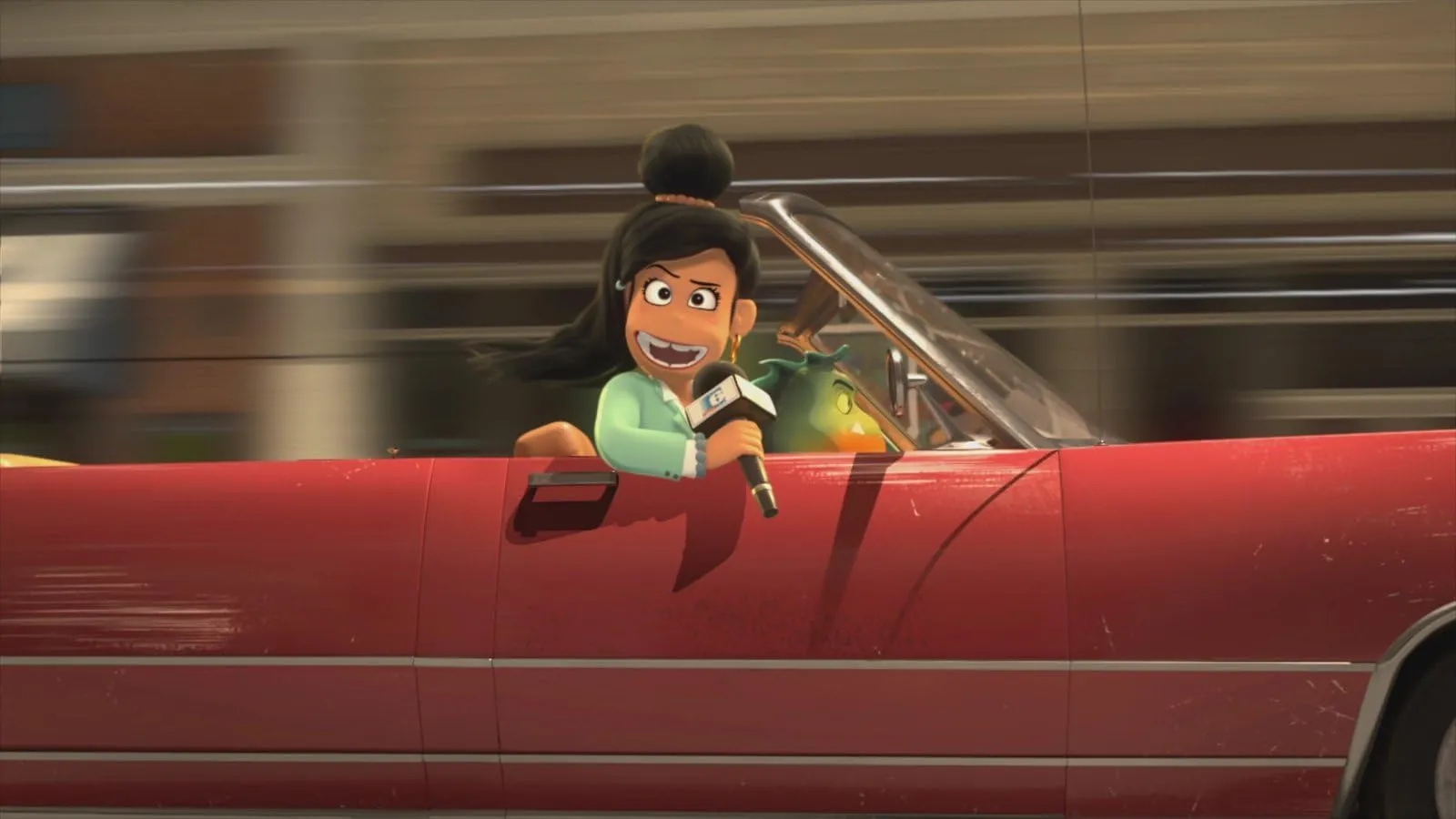
The humor plays to two audiences at once. Younger viewers get physical comedy, wild chases and the occasional bit of mild bathroom humor. Adults receive a softer brand of satire tucked into the design of the city, including a news media fixated on criminal rankings and an over-eager reporter chasing the perfect scandal. This light mocking of media and genre habits gives the show an extra wink.
The stakes remain intentionally low. The crew often misses their criminal targets and ends up causing accidental good, such as derailing a candy tycoon’s mind-control scheme without quite meaning to. Their own principles stop them from causing serious harm, so the tone stays firmly in the territory of mischievous caper and stays away from a hard-edged crime saga.
Animation Quality and Moral Playfulness
Visually, the series carries forward the look of the films: bright, expressive and full of kinetic motion. Bold, colorful designs support the show’s preference for speed and snap. At the same time, the step down from feature film to television budget shows.
Character animation occasionally looks stiff in sequences that call for elaborate movement, and the camera work and shot composition feel more limited when set beside the richer cinematic presentation of the movie. The recognizable style survives the transition, while the level of technical shine drops a notch.
For content, the show arrives ready for family viewing. It contains no foul language or sexual material. The moral landscape stays hazy, with protagonists who delight in burglaries and smaller-scale rule-breaking such as graffiti. That picture is balanced by the consistently light tone and by the clear limits the stories set around physical harm.
Violence stays in cartoon slapstick territory: high-speed chases, exaggerated hits and near misses with improbable dangers like missile launches or explosions that leave everyone walking away intact. The series dodges a heavy-handed moral lecture and proposes instead that loyalty and friendship can stand apart from the crew’s chosen line of work. It ends up asking a playful question: how “bad” can these Bad Guys really be if their own better instincts keep blowing up the perfect crime?
The Bad Guys: Breaking In is a computer-animated comedy heist series that serves as a prequel to the popular 2022 DreamWorks film The Bad Guys. The show premiered globally on November 6, 2025, and is available to stream exclusively on Netflix. The series takes audiences back to the amateur days of Mr. Wolf and his crew, chronicling their early, often chaotic attempts to become infamous master criminals in The City. It follows the animal gang’s humorous schemes to get noticed and finally make it onto the city’s “Worst List” of notorious offenders.
Full Credits
Title: The Bad Guys: Breaking In
Distributor: Netflix
Release date: November 6, 2025
Rating: TV-Y7
Running time: Approximately 25 minutes per episode
Directors: Bret Haaland, Kevin Peaty, Emmanuel Deligiannis, Pete Jacobs, etc.
Writers: Katherine Nolfi, Kyel White, Ben Glass, Elizabeth Chun, etc.
Producers and Executive Producers: Bret Haaland, Katherine Nolfi
Cast: Michael Godere, Ezekiel Ajeigbe, Raul Ceballos, Chris Diamantopoulos, Mallory Low, Zehra Fazal, Patton Oswalt, Kate Mulgrew, Maria Bamford, Keith Silverstein
Editors: Ben Glass
Composer: Taylor Page, Daniel Futcher
The Review
The Bad Guys: Breaking In
The Bad Guys: Breaking In is a charming, chaotic expansion that successfully translates the film’s energetic comedy to the small screen. Its fast pace, witty humor, and commitment to the anti-hero team dynamic make it an ideal, low-stakes watch for families. While the animation fidelity occasionally reflects its smaller budget, the quality of the new voice cast and the playful satire ensure it delivers consistent, light-hearted fun. It confirms the franchise's enduring appeal.
PROS
- High-quality voice acting sustains character performance.
- Retains the kinetic, visually punchy aesthetic of the film.
- Effective blend of witty verbal humor and slapstick.
- Features a strong, positive theme of friendship and teamwork.
CONS
- Character animation can appear stiff at times.
- Limited shot composition and camera work.
- Episodic focus means no deep story arcs or high stakes.