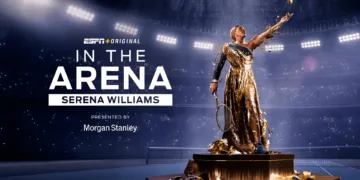

















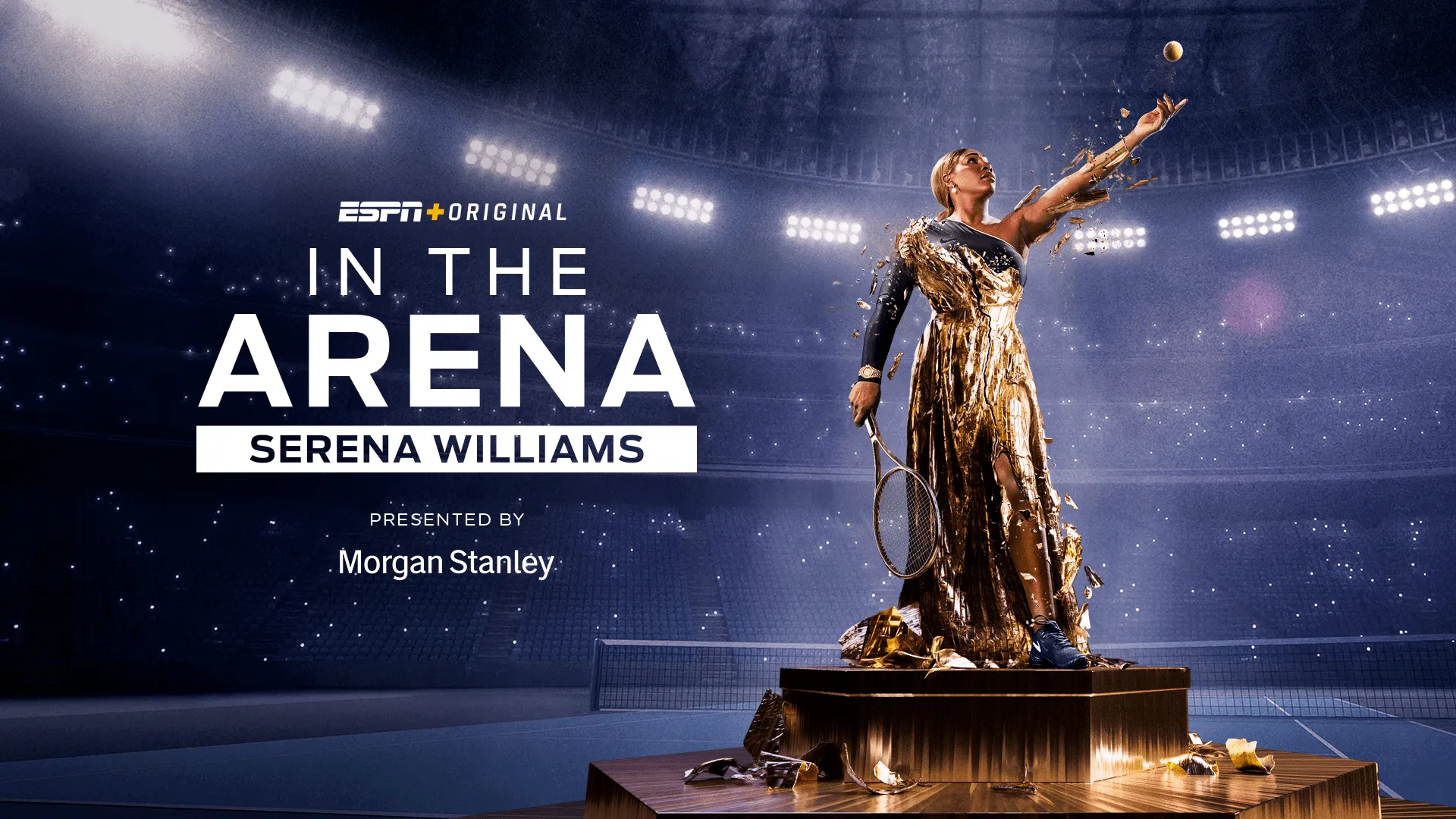

There is no shortage of documentaries about Serena Williams, but the eight-part series In the Arena announces itself as the definitive article. This is not biography; it is autobiography. With Williams herself serving as an executive producer and chief narrator, the series promises a guided tour through a career that fundamentally altered modern sports.
From the cracked courts of Compton to a record-setting 319 weeks as World No. 1, the story is vast. The series lays out the legend for inspection: the 39 Grand Slam titles, the cultural upheaval of two Black sisters dominating a historically white, moneyed pastime, and the sheer force of will that powered a 27-year reign. It positions itself as the final word, delivered directly from the person at the center of it all. This is Serena’s story, told on her terms, with her voice guiding every volley.
Her Story, Her Rules
The series title is lifted from a 1910 Theodore Roosevelt speech celebrating the “man who is actually in the arena,” whose face is “marred by dust and sweat and blood.” It’s a quote that has become a go-to defense for the powerful, a rhetorical shield to deflect scrutiny.
Here, it functions as the series’ mission statement. In the Arena is a legacy project, a polished chronicle where Williams is both the subject and the architect of her narrative. This approach firmly places the show within the modern genre of the athlete-produced hagiography, a space perfected by projects like Michael Jordan’s The Last Dance. The promise is intimacy, but the price is inquiry.
The result is a work that feels celebratory and personal, granting remarkable access to her mindset while neatly sidestepping journalistic interrogation. Difficult questions are acknowledged and then swiftly dispatched with a knowing smile. Her father, Richard Williams, is lauded as a “marketing genius,” a framing that papers over decades of public debate surrounding his intense, controversial methods. We see his foresight, not the friction.
This gentle focus creates a sanitized reality, a version of the past where every tough decision was the right one. The message is clear: the credit belongs to the one in the arena, and the critic does not count. This is the authorized version.
The Queen and the Phenom
For all its careful curation, the series finds its most potent emotional register in the astounding saga of the Williams sisters. It is here that the filmmaking breathes, moving beyond talking points into something genuinely captivating.
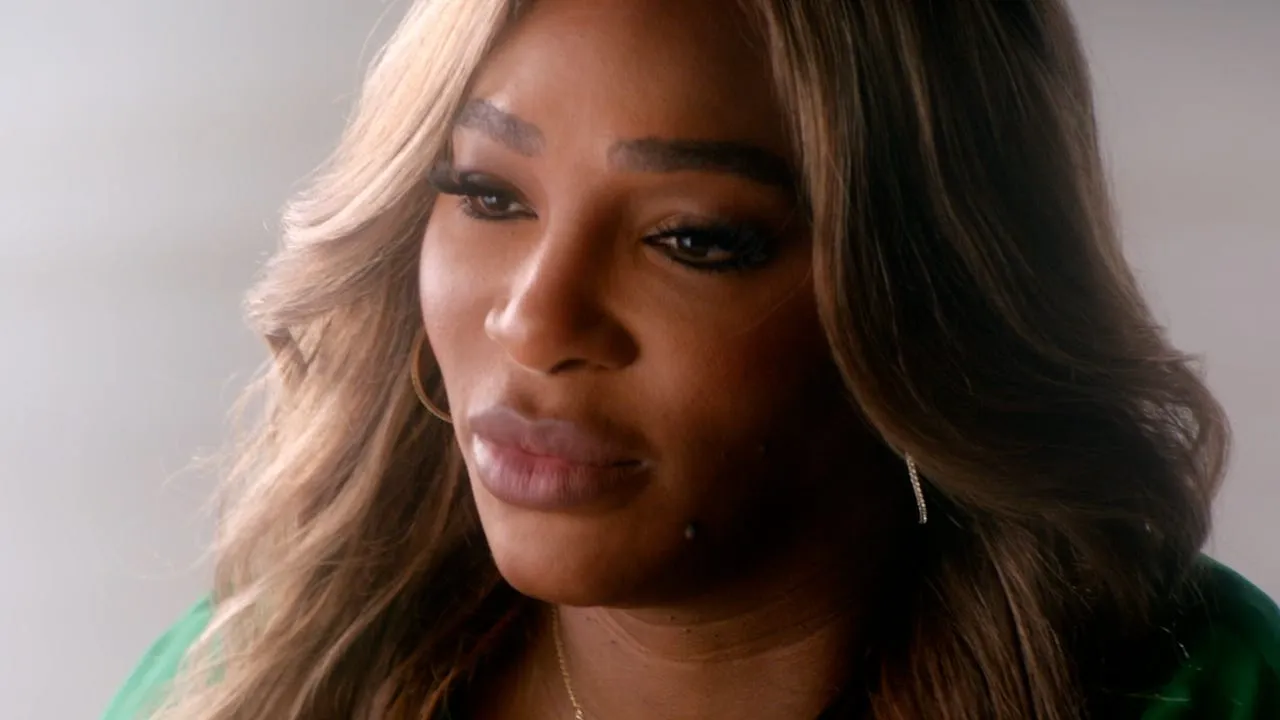
The early episodes beautifully reconstruct a dynamic that is central to the legend: Venus, the elder, was the original “prodigy,” the serene and lanky trailblazer who absorbed the initial shock of the professional tour. The archival footage is a glorious time capsule of ’90s tennis—the baggy sportswear, the beaded hair, the percussive thwack of graphite rackets. The series excels at showing how Venus cleared a path, facing the press and the pressure first, allowing a young Serena to develop in her shadow.
Yet the series truly digs into the immense psychological weight of this sibling rivalry once they both reach the top. How does one compete for history against the person they love most? Serena’s admission that she had to learn to not look at Venus across the net—to literally pretend she was playing a stranger—is a stunning piece of insight into a champion’s mind.
Her first “Serena Slam,” a streak of four consecutive major titles won at her sister’s expense, is painted not just as a triumph but as “absolute torture.” The direction smartly uses Nina Simone’s mournful “Isn’t It a Pity” to score the 2003 Australian Open final, turning a moment of supreme achievement into a portrait of anguish.
By placing candid interviews with both sisters side-by-side, the show provides an intimate look at the awkward trophy ceremonies, the pained smiles, and the shared burden of their joint success. It captures an unprecedented bond, one strong enough to withstand the pressure of becoming each other’s greatest and most heartbreaking opponent.
The Edited Replay
A storyteller’s power lies as much in what is omitted as in what is shown. In the Arena moves with a lurching, discretionary pace, a narrative rhythm dictated by its subject’s comfort. An entire season can be condensed into a two-minute montage, while a single grudge might receive a full episode. This selective focus is most apparent in its treatment of rivals.
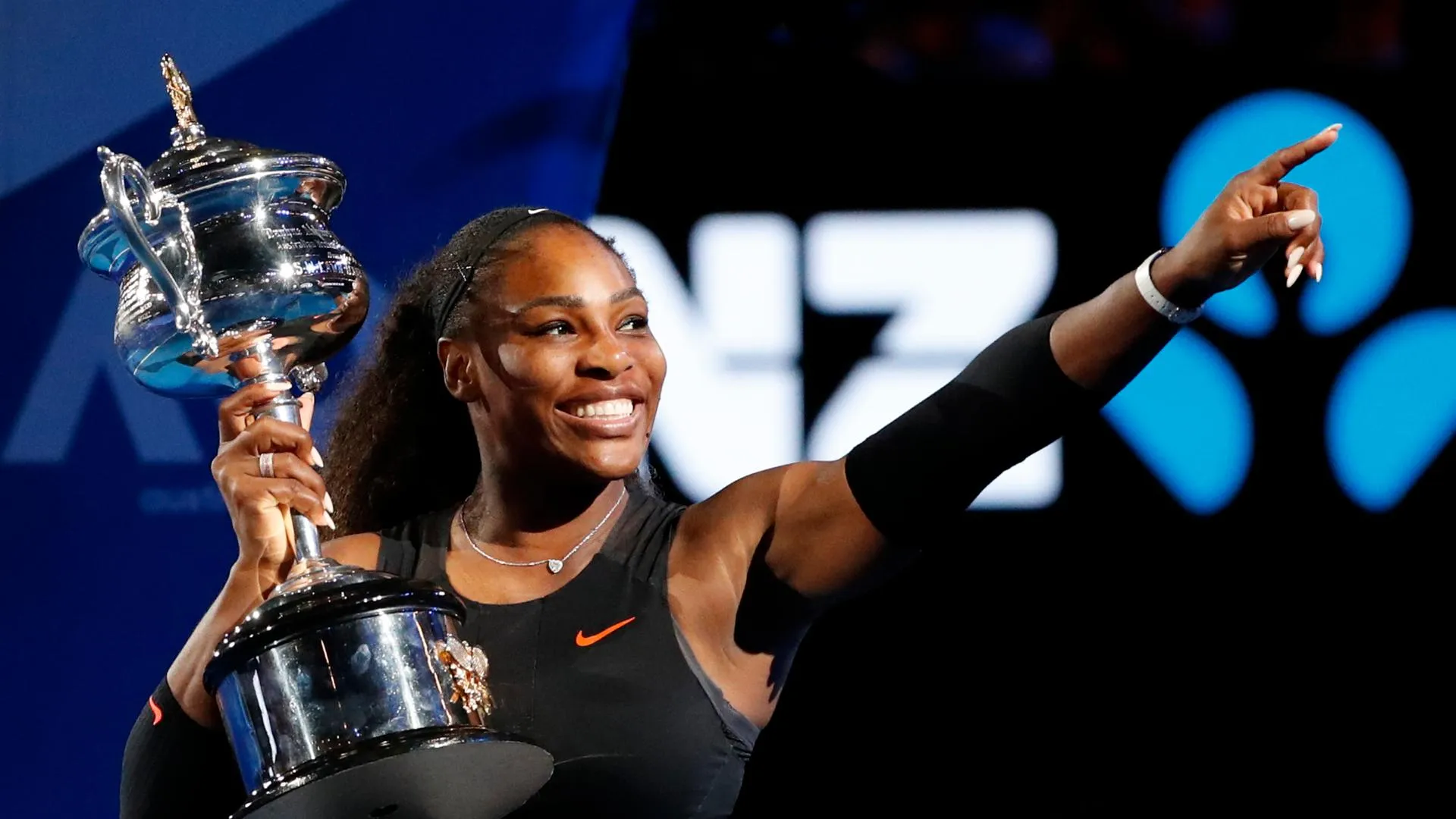
After an early focus on Martina Hingis, Serena’s other significant adversaries largely disappear from the narrative, leaving a vacuum in the story of her long-term dominance. Great champions like Justine Henin or Jennifer Capriati are reduced to faceless opponents in highlight reels.
Key context is also left on the cutting room floor. There is no mention of the so-called “Capriati Rule,” the age-eligibility restriction prompted by Capriati’s teenage burnout, which directly shaped the timing and strategy of the Williams sisters’ entry into professional tennis.
This omission makes their path seem less calculated than it was. The series presents a narrative of resilience, highlighting Serena’s fight against racial abuse and life-threatening health scares. But these moments are islands in a carefully constructed archipelago, their full political or personal complexity often smoothed over.
This is not history as it happened, but history as it is chosen to be remembered. One is left to wonder what truths might exist in the unselected footage, and what a story looks like when the athlete becomes the sole gatekeeper of their own myth.
The eight-part docuseries “In the Arena: Serena Williams” had its world premiere at the Tribeca Film Festival in June 2024. It began streaming exclusively on ESPN+ starting July 10, 2024, with new episodes released weekly.
Full Credits
Director: Gotham Chopra, Lauren Fisher
Producers and Executive Producers: Victor Buhler, Gotham Chopra
Cast: Serena Williams, Venus Williams
The Review
In the Arena: Serena Williams
In the Arena: Serena Williams offers a compelling but carefully controlled look at a sports icon. It succeeds brilliantly as an intimate chronicle of the complex and powerful bond between two history-making sisters. However, as a definitive documentary, its refusal to engage with controversy or outside criticism makes it feel more like a well-produced legacy statement than a comprehensive biography. It’s essential viewing for fans who want Serena's perspective, but it is not the full story.
PROS
- An intimate and emotionally resonant exploration of the Williams sisters' rivalry and relationship.
- Offers unparalleled access to Serena's personal perspective and mindset.
- Makes excellent use of rich archival footage, capturing the essence of a specific sports era.
CONS
- Functions as a one-sided, curated project rather than an objective documentary.
- Avoids addressing controversial topics and omits important historical context.
- The narrative feels controlled, with Serena serving as the primary gatekeeper of her own story.