
























![Kingdom Hearts Collection [I-III] Review](https://gazettely.com/wp-content/uploads/2026/10/Kingdom-Hearts-Collection-I-III-1-360x180.webp "Kingdom Hearts Collection [I-III] Review: KHII Holds Steady as Newer Entries Fluctuate 37")





Every few years, television reminds us that some of the most unsettling stories don’t require sci-fi premises; they just require a charismatic leader, a patch of English countryside, and a flock in search of meaning. Enter Inside the Cult of the Jesus Army, a two-part documentary that peels back the curtain on the Jesus Fellowship.
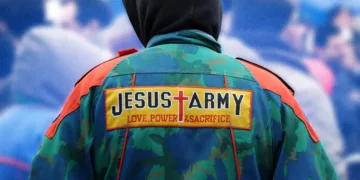
Founded in 1970s Northamptonshire by Noel Stanton, the group presented itself as a pious refuge from a wicked world. The archival footage is a trip: rainbow-colored buses, earnest followers in combat jackets, and hymns sung with an unnerving fervor. Stanton himself, with his wispy hair and a smile that never quite reaches his eyes, looks like a man auditioning to be a Bond villain’s less successful brother.
The series immediately establishes its grim trajectory, contrasting the “happy-clappy” public face with the dark reality of psychological cages and unspeakable acts that festered just beneath the surface of this supposed Christian haven. It’s a familiar setup in the cult documentary genre, but the sheer Britishness of it all—the dreary villages and cups of tea—makes the eventual horror feel chillingly close to home.
The Velvet Trap
No one wakes up and decides to join a cult. They join a group of friends, a cause, a family. Inside the Cult of the Jesus Army is meticulous in building this case for the group’s initial appeal, dedicating significant screen time to understanding the pull of its promise. The documentary’s pacing in its first hour is patient, almost seductive, mirroring the process of indoctrination itself.

Director Ellena Wood skillfully deploys a trove of archival footage, not just as evidence, but as atmosphere. We see the grainy, saturated colors of 1970s film capturing young people with extensive facial hair and kipper collars, their faces alight with what looks like pure joy during ecstatic worship sessions. They speak in tongues, they writhe on the floor, they seem utterly transported.
This visual record is key to understanding why anyone would sign up for a life where they surrender their possessions and autonomy. The documentary shows how the Jesus Army offered a powerful antidote to the anxieties of the era. For vulnerable individuals like Sarah, a contributor who joined after losing both her parents at 15, the church’s offer of a surrogate family and a faith in the afterlife was an irresistible anchor.
It wasn’t just spiritual; it was practical. Behind the evangelizing was a surprisingly astute business operation, a network of farms, shops, and even a GP surgery that made the movement seem stable and self-sufficient. By the end, it was a multi-million-pound organization. This wasn’t a fringe group of oddballs; it was a formidable corporation built on faith. Stanton’s sermons, peppered with bizarre commands to “surrender the middle part of you” to Jesus, are presented without immediate judgment.
The film lets his strange charisma hang in the air, allowing the viewer to see how his confidence could be mistaken for divine authority. The followers weren’t just members; they were soldiers in a spiritual war, a narrative that gave their lives an epic dimension. The documentary’s great strength here is its refusal to rush. It makes you sit with the appeal, to almost understand it, which makes the inevitable turn all the more jarring.
The Smile Cracks
The shift from sanctuary to prison is a gradual, chilling process, and the documentary charts this descent with forensic precision. The idyllic communal life slowly curdles as the rules become more arbitrary and the punishments more severe. The film leans on the powerful metaphor used by the on-screen psychotherapist: members were like frogs in a pot of water being slowly brought to a boil, unaware of the danger until it was too late.
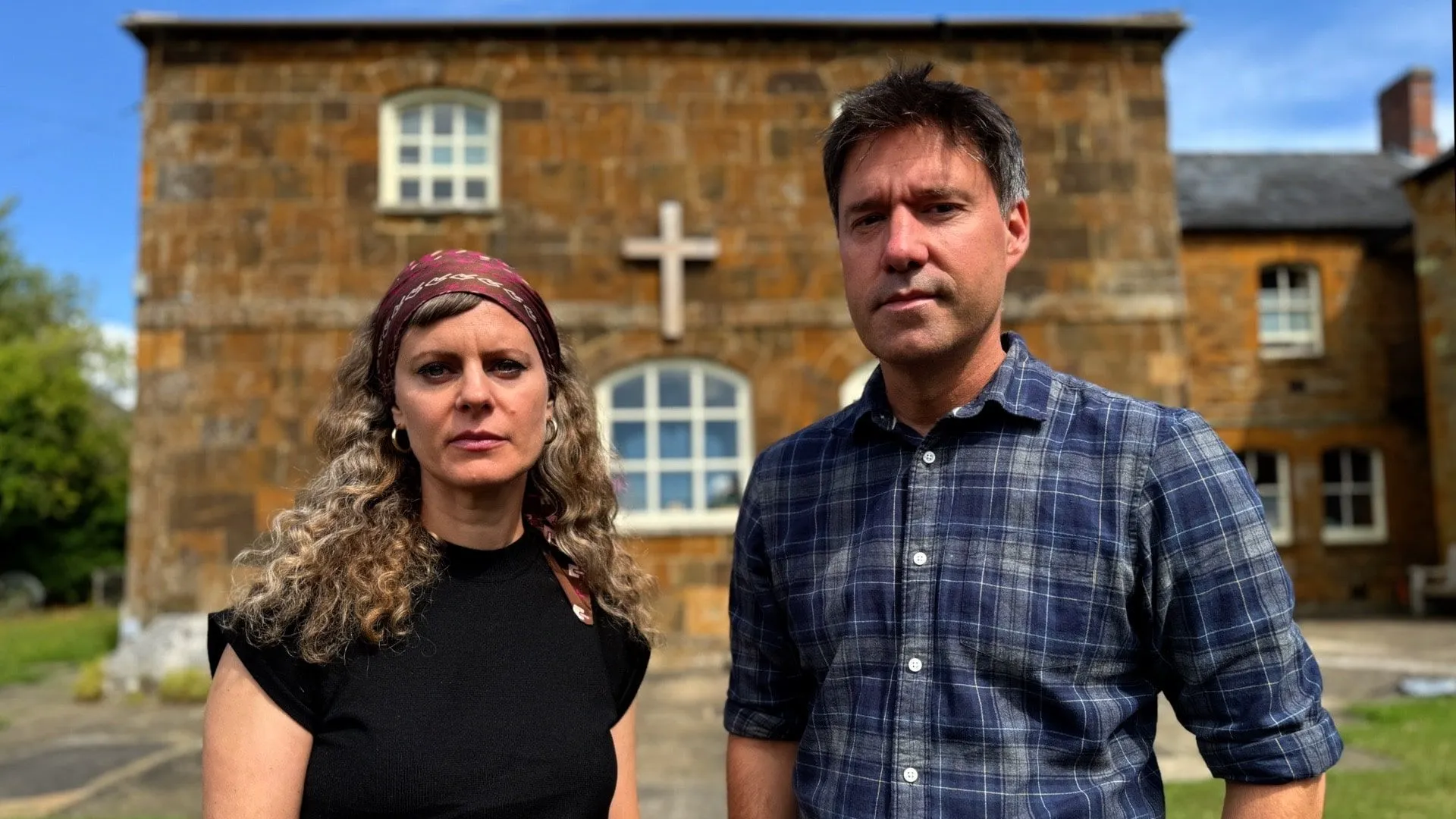
This section of the series transitions from the wide shots of happy communes to intimate, painful close-ups on the faces of survivors recalling the mechanisms of control. The definition of “worldly” became a moving target, encompassing everything from books to bags of crisps, all designed to isolate members and make them dependent on the leadership for their sense of reality. Women were taught to suppress their “Jezebel spirit,” and members were given new “virtue names” like “Submissive,” a psychological branding that erased their former identities.
This spiritual abuse was the bedrock for physical and sexual violence. The practice of “rodding”—beating children with birch sticks—is described as a routine, almost mundane feature of life. But the series saves its most devastating material for the exploration of sexual abuse. The statistic that an estimated one in six children in the Jesus Army was abused is dropped with staggering weight, reframing the entire history of the movement.
The documentary gives voice to the profound trauma through specific, harrowing accounts. We hear from Abigail, who was told her assault wasn’t rape; from Philippa, who reported an abuser as a child only to be branded a “traitor” by Stanton himself; and from Nathan, who endured abuse for years and whose testimony reveals the deep, lasting confusion of his indoctrination.
The film exposes a rot that went straight to the top, detailing the 33 allegations against Stanton and the complicity of the hierarchy below him. A former Shepherd named Jez admits on camera that when rapes were confessed to him, he was told the sins were “under the blood of Jesus” and therefore cancelled out—a divine loophole for monstrous acts.
The Awkward Aftermath
What happens when the prophet dies and the walls come down? The documentary’s final act examines the messy, unsatisfying search for justice in a post-scandal world. It meticulously documents the aftermath: the church’s dissolution in 2019 and the frustratingly impotent police investigation, Operation Lifeboat.
Launched in the wake of the Jimmy Savile scandal, a period of national reckoning for British institutions, the investigation gathered over 200 allegations but resulted in only a handful of convictions. This profound disconnect between the scale of the harm and the limits of legal accountability becomes the documentary’s closing argument. It’s here that the series makes its boldest structural choice: framing the narrative with group therapy sessions.
Led by psychotherapist Gillie Jenkinson, these scenes are not exploitative; they are a masterclass in ethical filmmaking. They slow the pace, forcing the audience to witness the difficult, non-linear process of healing. We see Sarah have a panic attack while discussing the need to “appease” her abuser, a raw, visceral moment that shows how trauma lives on in the body decades later.
This therapeutic frame allows the film to move beyond a simple chronicle of events into a deeper exploration of memory and recovery. Director Ellena Wood’s role evolves from observer to gentle inquisitor. Her careful, persistent questioning of former elders forces a reckoning on screen.
The emotional climax is not a dramatic courtroom scene, but the quiet moment a former leader, David, breaks down in tears, finally acknowledging the reality of the survivors’ pain. It is the first crack in the official wall of denial, a small but significant concession.
The series offers no neat resolution. The financial redress scheme that paid victims an average of £12,000 feels insultingly small. The documentary ends not with a sense of closure, but with a lingering question about what accountability truly means when the perpetrators are dead, the institution is gone, and the survivors are left to rebuild their lives from the rubble.
“Inside the Cult of the Jesus Army” is a two-part documentary that premiered on BBC Two on July 27, 2025.
Full Credits
Director: Ellena Wood
Producers: Sophie Daniel, Katie Buchanan, Esme Ash, Ellena Wood, Polina Borshchevska
Executive Producers: Katie Buchanan, Helen Littleboy, Nick Fraser, Duncan Heath
Cast: Sarah Everett , John Everett
Director of Photography (Cinematographer): Matthias Pilz
Editors: Tom Herrington, Andrew Rushton
Composer: Laura Fairbanks
The Review
Inside the Cult of the Jesus Army
Inside the Cult of the Jesus Army is a masterclass in ethical true-crime documentary filmmaking. It transcends its familiar genre framework with a patient, deeply empathetic approach that centers the long-term process of healing over cheap thrills. By skillfully weaving survivor testimony with a unique therapeutic lens, the series offers a powerful and unsettling examination of institutional betrayal and the difficult, often incomplete, path to justice. It is essential, albeit difficult, viewing.
PROS
- Employs a unique and ethical framing device with real therapy sessions, focusing on the survivors' healing process.
- Masterful pacing that effectively builds the initial allure of the community before revealing its dark underbelly.
- Skillful use of rich archival footage that provides crucial context and atmosphere.
- Features incisive, sensitive questioning from the director that elicits moments of genuine reckoning.
CONS
- The detailed descriptions of physical and sexual abuse are extremely harrowing and may be too distressing for some viewers.
- Its narrative structure, while effective, follows the familiar lure-and-betrayal arc of the cult documentary genre.
- The real-life lack of comprehensive legal justice for the perpetrators may leave viewers feeling frustrated and unsettled.







