

























![Kingdom Hearts Collection [I-III] Review](https://gazettely.com/wp-content/uploads/2026/10/Kingdom-Hearts-Collection-I-III-1-360x180.webp "Kingdom Hearts Collection [I-III] Review: KHII Holds Steady as Newer Entries Fluctuate 37")





Prime Video’s “The Summer I Turned Pretty” returns for its third and final season, carrying with it the weight of a generation’s romantic expectations and the peculiar burden of being both a nostalgic artifact and a contemporary cultural phenomenon. Based on Jenny Han’s beloved trilogy, this series has managed to capture something essential about how young people process love in the streaming era—not just the love between characters, but the love between audiences and the stories that shape their understanding of intimacy, choice, and identity.
The series follows Belly Conklin through her evolution from awkward teenager to college student, caught in the gravitational pull of the Fisher brothers: brooding Conrad and golden-boy Jeremiah. What began as a simple summer romance has transformed into something far more complex—a meditation on how we carry our formative relationships into adulthood, and how the stories we tell ourselves about love can both sustain and imprison us. Season 3 jumps four years forward, placing our characters firmly in the messiness of early adulthood, where the stakes feel simultaneously higher and more mundane than the heightened drama of adolescence.
This temporal shift signals something significant about television’s relationship with its audience. The show has grown up alongside its viewers, refusing to remain trapped in the amber of eternal summer. In an era where streaming platforms desperately chase the next viral moment, “The Summer I Turned Pretty” has chosen the radical path of allowing its characters—and by extension, its audience—to mature.
Architectural Shifts: How Streaming Redefines the Coming-of-Age Arc
The four-year time jump represents more than narrative convenience; it’s a structural acknowledgment of how streaming television has fundamentally altered the relationship between story and audience. Where traditional television might have dragged out the “will they or won’t they” tension across multiple seasons, this series compresses and accelerates, mirroring the binge-watching habits of its core demographic.
The season opens with Belly contentedly enrolled at Finch College, her world seemingly organized around maintaining proximity to Jeremiah. This setup immediately establishes the central tension: the comfort of familiar patterns versus the terrifying possibility of growth. When Belly discovers she’s been accepted to a study abroad program in Paris, the conflict isn’t just romantic—it’s existential. The show understands that for young adults, choosing between love and ambition isn’t just a plot device; it’s the defining challenge of their generation.
The revelation of Jeremiah’s infidelity during spring break serves as the season’s emotional earthquake, but what’s particularly striking is how the show handles this betrayal. Rather than treating it as a simple moral failing, the series examines the messier reality of how people navigate relationships when they’re still figuring out who they are. This approach reflects a broader cultural shift toward complexity in how we discuss romantic relationships, moving away from the binary thinking that has traditionally dominated young adult narratives.
The expanded focus on Steven and Taylor’s relationship—complete with their own infidelity subplot—creates a parallel structure that reinforces the season’s central theme: the gap between the stories we tell about love and the messy reality of how we actually behave. This isn’t just character development; it’s cultural commentary on how young people navigate relationships in an era of endless options and delayed commitment.
The show’s commitment to honoring key moments from Han’s source material while adding original elements demonstrates a sophisticated understanding of adaptation in the streaming age. The Christmas flashback sequence, pulled directly from the novels, serves as both fan service and emotional anchor, while new additions like Steven’s car accident feel organic rather than forced. This balance suggests a production team that understands their audience’s relationship with both the source material and the medium itself.
Performance as Cultural Commentary: Bodies, Voices, and the Politics of Representation
Lola Tung’s performance as Belly represents something significant in the landscape of young adult television: an Asian-American actress anchoring a mainstream romantic narrative without her ethnicity becoming the primary source of conflict or character development. This casting choice, while not explicitly political, carries cultural weight in an industry still grappling with authentic representation. Tung’s portrayal of Belly’s internal conflict—torn between the security of familiar love and the uncertainty of personal growth—captures the specific anxieties of a generation raised on social media and infinite choice.
What’s particularly compelling about Tung’s performance is how she navigates Belly’s evolution from reactive teenager to someone beginning to understand her own agency. The moments when Belly processes Jeremiah’s betrayal showcase an emotional sophistication that feels earned rather than imposed. This isn’t just good acting; it’s a reflection of how young adult narratives have matured to acknowledge that emotional intelligence isn’t automatic or universal.
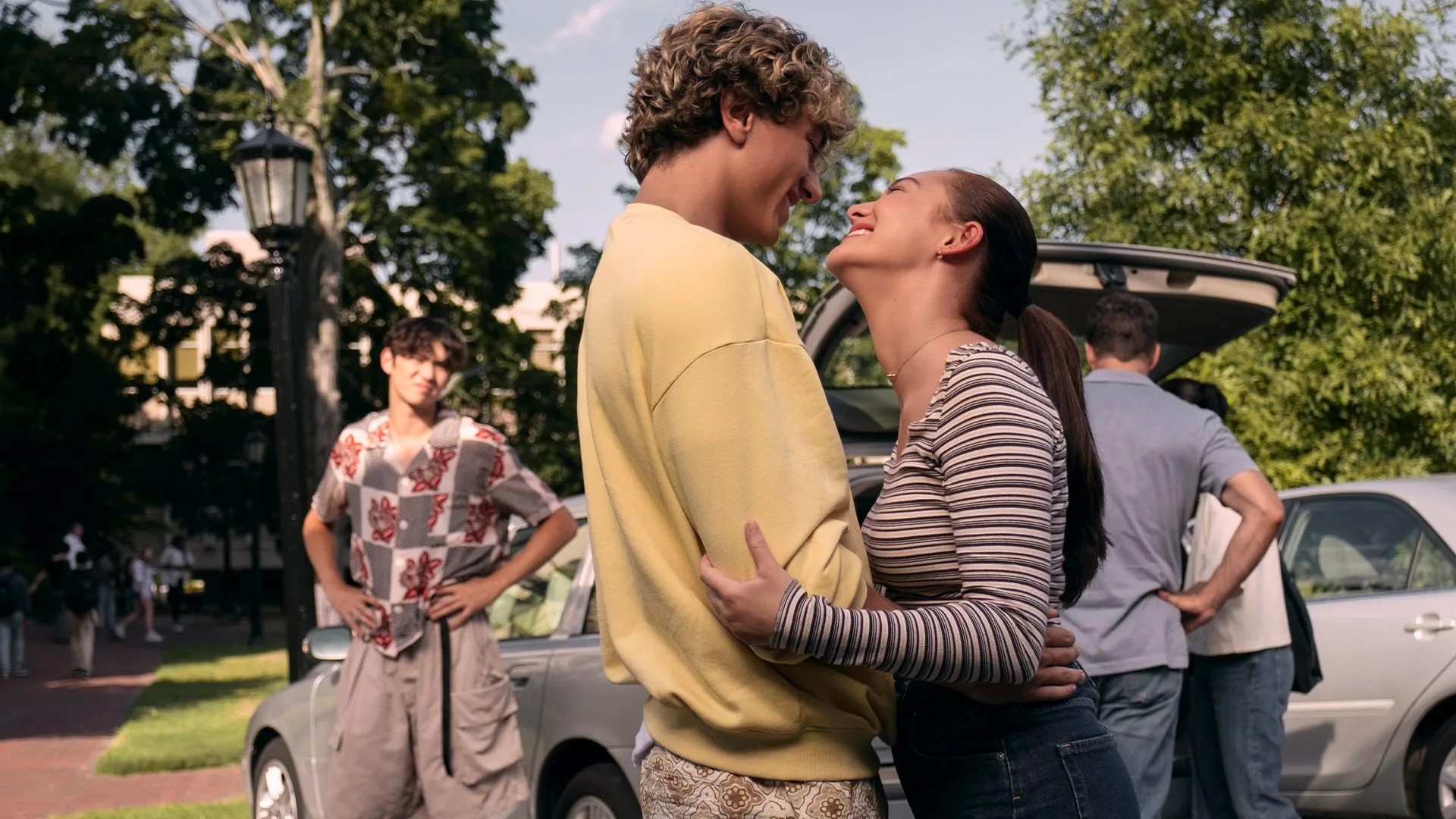
Gavin Casalegno’s Jeremiah presents a fascinating case study in how contemporary television handles the “golden boy” archetype. Rather than simply being the obvious choice, Jeremiah’s character becomes a commentary on privilege and consequence. His academic struggles and the casual way he handles his infidelity reveal someone who has coasted on charm and assumption, now confronting the reality that actions have consequences. Casalegno’s performance captures the specific discomfort of someone realizing that being likeable isn’t enough.
Christopher Briney’s Conrad represents perhaps the most interesting character evolution in the series. His therapy journey and life in San Francisco suggest someone actively working to break destructive patterns, yet his inability to confront his feelings for Belly reveals the limits of self-improvement. Briney’s performance captures the millennial anxiety of being simultaneously self-aware and self-destructive, understanding your patterns while feeling powerless to change them.
The supporting cast, particularly Rain Spencer as Taylor and Sean Kaufman as Steven, embodies the show’s commitment to exploring the moral complexity of young adulthood. Their relationship, built on mutual infidelity and emotional unavailability, serves as a dark mirror to the central love triangle. Spencer’s performance captures the specific exhaustion of someone who understands her own destructive patterns but can’t quite break free from them.
What emerges from these performances is a portrait of young adulthood that feels both specific to this generation and universally resonant. These characters aren’t just navigating love; they’re navigating the gap between who they thought they would be and who they actually are, a theme that resonates particularly strongly in an era of social media perfectionism and delayed milestones.
The Aesthetics of Longing: Visual Language in the Instagram Age
The visual evolution of “The Summer I Turned Pretty” reflects broader changes in how young people consume and create media. The transition from the sun-drenched beaches of Cousins to the more muted tones of college campuses and urban environments mirrors the characters’ emotional journey from the heightened drama of adolescence to the more complex realities of young adulthood.
The show’s costume design deserves particular attention for how it navigates the challenge of dressing characters who exist both as fictional creations and as style influencers for their audience. Belly’s wardrobe evolution from bohemian beach girl to polished college student reflects not just character development but the pressure on young women to constantly reinvent themselves while maintaining some essential authenticity.

The integration of contemporary music—particularly artists like Taylor Swift, Lana Del Rey, and Chappell Roan—creates a sonic landscape that feels both current and timeless. These musical choices function as emotional shorthand, allowing the audience to access feelings that might be difficult to articulate. The soundtrack becomes a form of cultural commentary, reflecting how young people use music to understand and express their emotional experiences.
The cinematography’s handling of intimate moments reveals a sophisticated understanding of how physical intimacy functions in contemporary relationships. Rather than relying on the male gaze or the sanitized romanticism of earlier young adult adaptations, the show presents physical relationships as complex negotiations between desire, vulnerability, and power. This approach reflects broader cultural conversations about consent, agency, and the politics of intimacy.
The party scenes, in particular, demonstrate how the show navigates the challenge of depicting college social life without glamorizing destructive behavior. The neon-lit chaos of the fraternity party where Belly discovers Jeremiah’s infidelity creates a visual representation of how social media and party culture can function as both connection and performance, intimacy and isolation.
The Streaming Economy of Emotion: How Digital Platforms Shape Narrative
The show’s exploration of betrayal, forgiveness, and moral complexity reflects broader cultural shifts in how young people understand relationships and personal growth. The central tension isn’t just between two romantic options but between different philosophies of how to navigate love, ambition, and identity in an era of infinite possibility and delayed commitment.
The theme of therapy and emotional growth, particularly through Conrad’s storyline, represents a significant cultural shift in how young adult narratives approach mental health. Rather than treating therapy as a sign of weakness or crisis, the show presents it as a normal part of personal development, reflecting changing attitudes toward mental health support among younger generations.
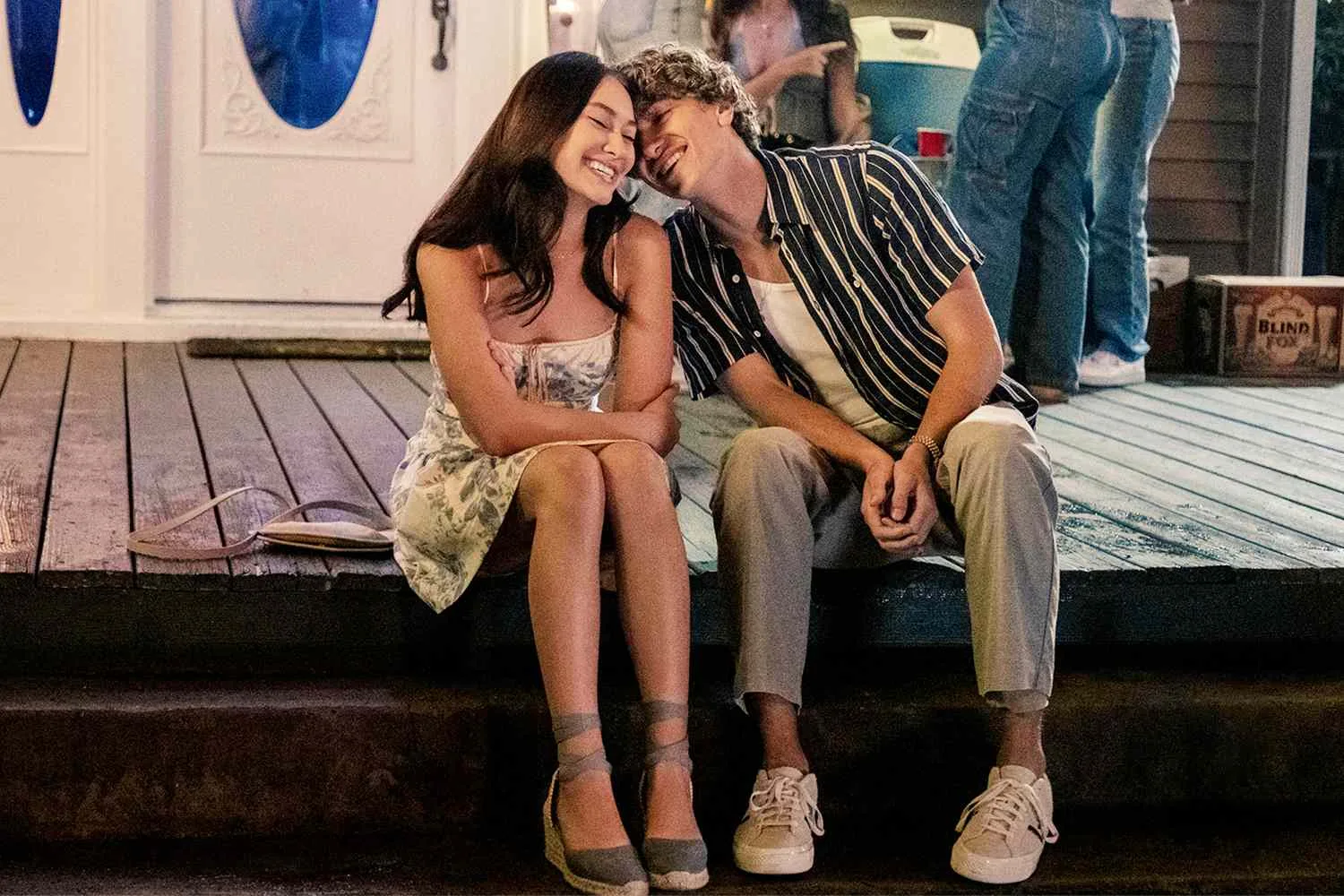
The Paris study abroad subplot functions as more than just a plot device; it represents the specific challenges facing young women who have been raised to believe they can “have it all” while still feeling pressure to prioritize relationships over personal ambition. Belly’s hesitation to pursue opportunities that might threaten her relationship reflects broader cultural anxieties about feminism, independence, and the cost of personal growth.
The show’s handling of infidelity—both Jeremiah’s betrayal and Steven and Taylor’s affair—refuses to offer easy moral conclusions. Instead, it presents these situations as complex negotiations between desire, commitment, and personal growth. This approach reflects a cultural shift away from absolute moral categories toward a more nuanced understanding of how people actually navigate relationships.
The fan culture surrounding the series—particularly the “Team Conrad” versus “Team Jeremiah” phenomenon—reveals how streaming platforms have fundamentally altered the relationship between audiences and narratives. Social media engagement becomes part of the viewing experience, creating a feedback loop between audience investment and narrative development. The show’s awareness of this dynamic influences everything from casting choices to story structure, creating a new form of collaborative storytelling that challenges traditional notions of authorship and audience.
The series’ exploration of memory and nostalgia, particularly through the Christmas flashback sequences, examines how young people use past experiences to understand present relationships. This theme resonates particularly strongly in an era when social media makes it impossible to fully escape past versions of ourselves, when every relationship exists in the context of digital archives and shared memories that can be accessed and re-examined at will.
Full Credits
Directors: Zoe R. Cassavetes, Erica Dunton, Jeff Chan, Jesse Peretz, Megan Griffiths, Isabel Sandoval, Sophia Takal
Writers: Jenny Han, Gabrielle Stanton, Sarah Kucserka, Jenny Zhang, Becca Gleason, Marty Scott, Deborah Swisher, Speed Weed, Bayan Wolcott, Keith Antone, Scarlett Curtis, Krystle Drew, Vanessa Rojas, Cameron J. Ross, Sabrina Sherif, Sarah Choi, Sinead Daly, Jessica O’Toole, Doug Stockstill, Siobhan Vivian, Robin Wasserman, Leah Nanako Winkler
Producers & Executive Producers: Jenny Han, Gabrielle Stanton, Karen Rosenfelt, Hope Hartman, Mads Hansen, Nne Ebong, Sarah Kucserka, Marty Scott, Deborah Swisher, Jenny Zhang, Nicole Colombie, Paul Lee, Becca Gleason, Rhonda L. Moore, Speed Weed, Sarah Choi
Cast: The series features a large cast including Lola Tung, Christopher Briney, Gavin Casalegno, Sean Kaufman, and Jackie Chung. A comprehensive list of the cast can be found in the provided sources.
Director of Photography (Cinematographer): J.B. Smith, Sandra Valde-Hansen
Editors: Jamie Kennedy, Lauren Schaffer, Lindsay Armstrong, Alisa Lepselter, Sean Fawcett, Victor Du Bois, Martin Wilson, Kate Hickey, Isabella Dinh, Isla Nobel
Composer: Zachary Dawes
The Review
"The Summer I Turned Pretty" Season 3
"The Summer I Turned Pretty" Season 3 succeeds as both satisfying fan service and sophisticated cultural commentary, elevating familiar young adult romance tropes through genuine emotional complexity and contemporary relevance. While occasionally weighed down by predictable relationship drama, the series demonstrates remarkable maturity in its exploration of how digital natives navigate love, ambition, and identity. The performances anchor increasingly complex moral territory, creating television that feels both nostalgic and urgently contemporary.
PROS
- Sophisticated handling of young adult themes
- Strong lead performance by Lola Tung
- Thoughtful adaptation balances source material with original elements
- Culturally relevant exploration of modern relationships
- Excellent soundtrack and visual aesthetics
CONS
- Some plot developments feel contrived
- Familiar love triangle dynamics can feel repetitive
- Pacing occasionally drags between major revelations
- Supporting character arcs sometimes feel underdeveloped







