













![Kingdom Hearts Collection [I-III] Review](https://gazettely.com/wp-content/uploads/2026/10/Kingdom-Hearts-Collection-I-III-1-360x180.webp "Kingdom Hearts Collection [I-III] Review: KHII Holds Steady as Newer Entries Fluctuate 37")



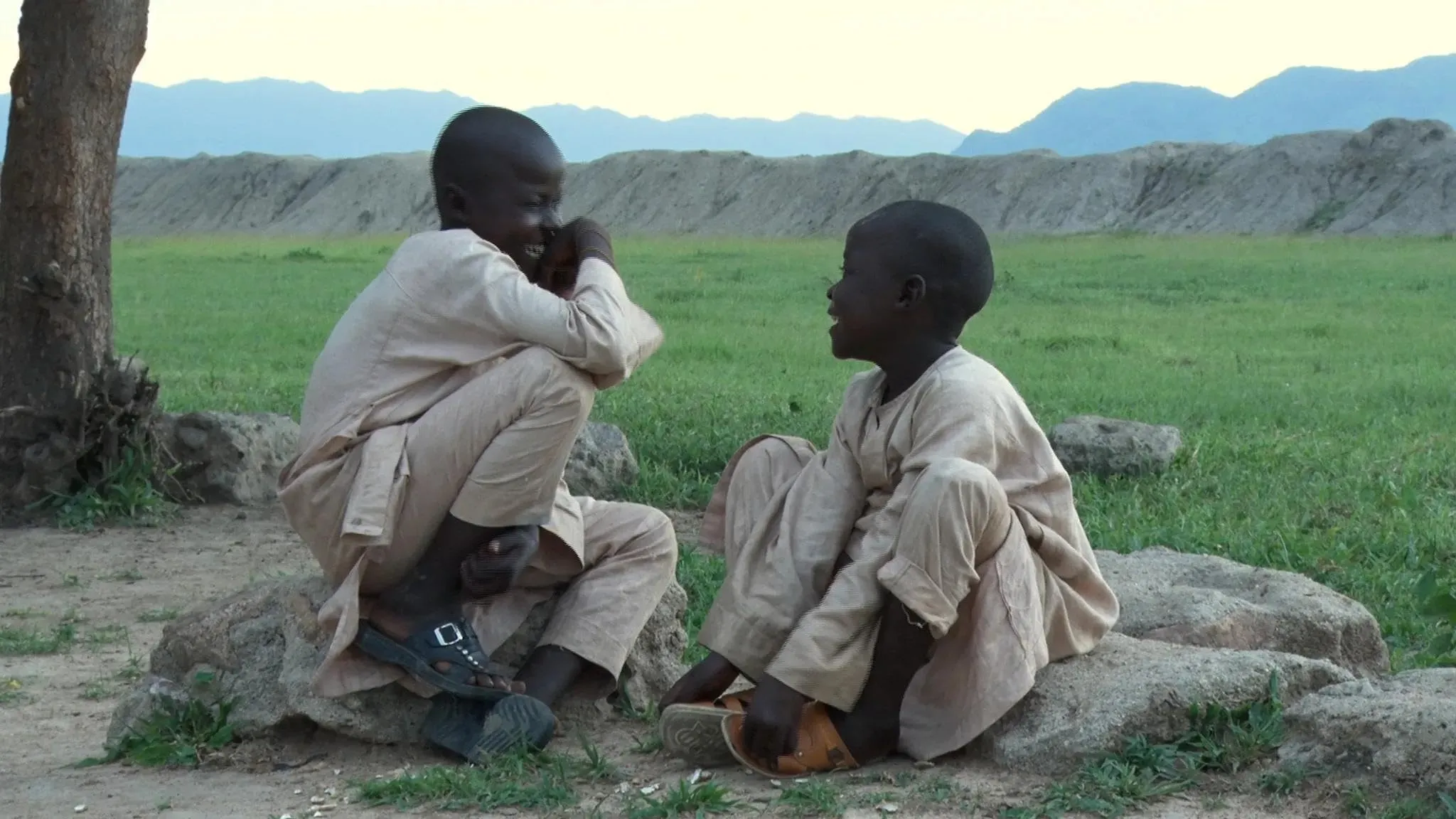

What is a child, if not a territory of becoming? A space where the self is formed against the world it encounters. But what becomes of this formation when the world is a permanent state of siege, when the air itself is thick with an invisible threat? In the village of Kolofata, on the unstable edge of Cameroon, director Cyrielle Raingou’s documentary The Spectre of Boko Haram finds its answer.
Here, daily life persists under the watchful eyes of the military, a visible shield against a phantom menace that lurks in the mountains and in memory. This film is no geopolitical treatise. It offers no analysis of the terrorist group whose name it bears.
Instead, it places its unadorned lens on the psychological fallout, the deep indentation left upon a community’s soul. The narrative belongs to three children, and it is through their games, their work, and their hushed conversations that we understand how trauma ceases to be an event and becomes the very atmosphere one breathes.
Two Paths Through the Rubble
A human spirit, confronted with the absurd, must choose its own method of survival. In Kolofata’s dust, we see two such divergent paths, born from the same fractured soil. There is Falta, a girl whose solemn gaze seems to hold the weight of her history.
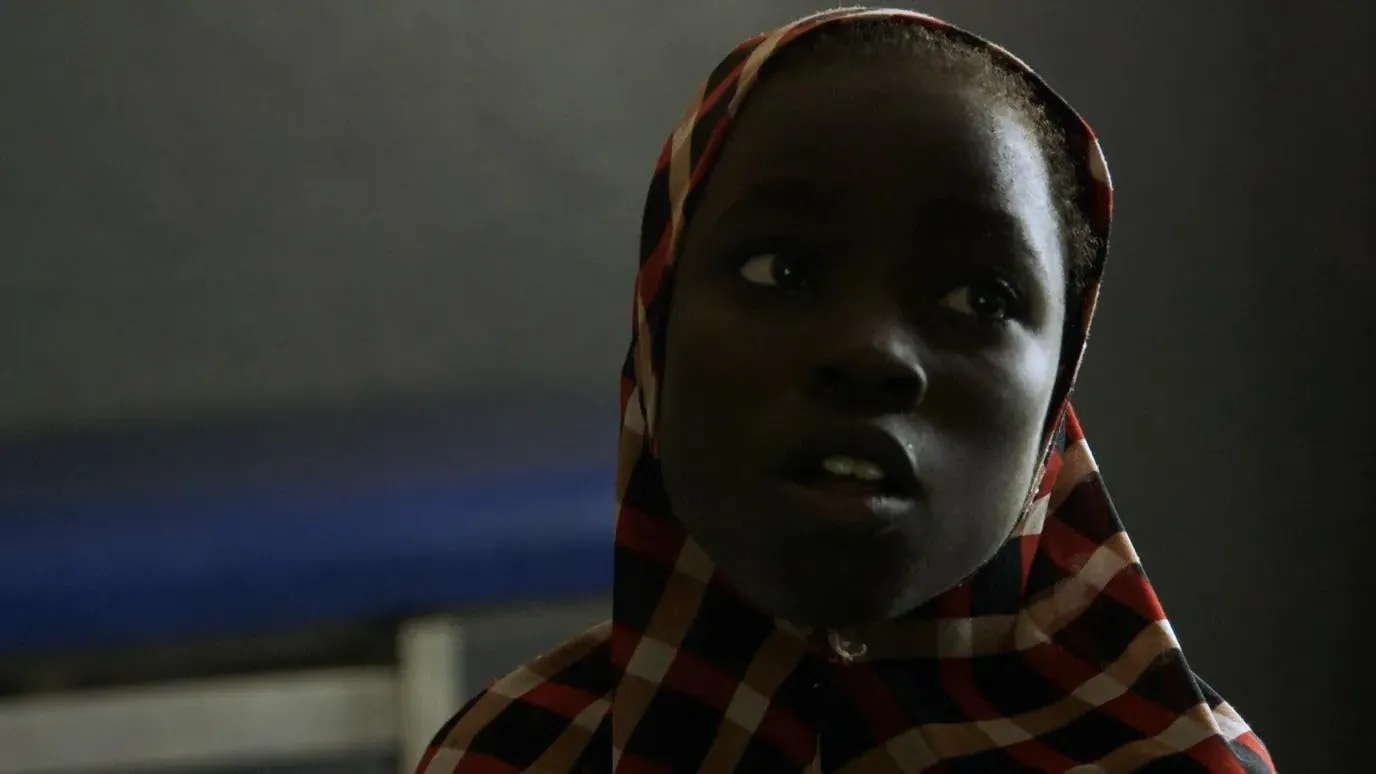
Her father was erased by a suicide bomber, and she now seeks to build an internal fortress against the world’s chaos through the rigid logic of her schoolbooks. Her diligence is more than ambition; it is a quiet act of defiance, an attempt to impose order on a life ruptured by violence.
When she asks her mother to recount the details of her father’s death, it is not a simple question. It is a daughter’s search for a creation myth rooted in destruction, an attempt to reclaim the narrative and make her father’s end a story she can hold, rather than an abstract horror that holds her.
Opposing this path of disciplined perseverance are the brothers, Mohamed and Ibrahim. They are agents of truancy, their rebellion a rejection of the systems that failed to protect them. Their freedom is found wandering the untamed fields, a flight into the physical world that contrasts with Falta’s retreat into abstraction.
Refugees with a past shrouded in silence, they speak of atrocities—of bombings and slit throats—with the chilling cadence of a playground chant. This is not just normalization; it is a performance of hardness, a fragile shield against their own vulnerability.
Their stories begin to drift into the realm of witches and supernatural events, a necessary leap into mythology. When reality offers no justice, a world governed by dark fantasy might feel more coherent. They are creating their own folklore to explain the inexplicable, a testament to the mind’s need for a story, any story, to survive a world stripped of logic.
The Grammar of Silence
Raingou’s camera is a patient, distant witness, and its philosophical weight is found in this restraint. It does not intrude or presume to know; it simply watches, its steady gaze mirroring the universe’s own indifference. Yet, by virtue of its sustained attention, it also bestows a kind of grace, affirming the profound importance of these small, forgotten lives.
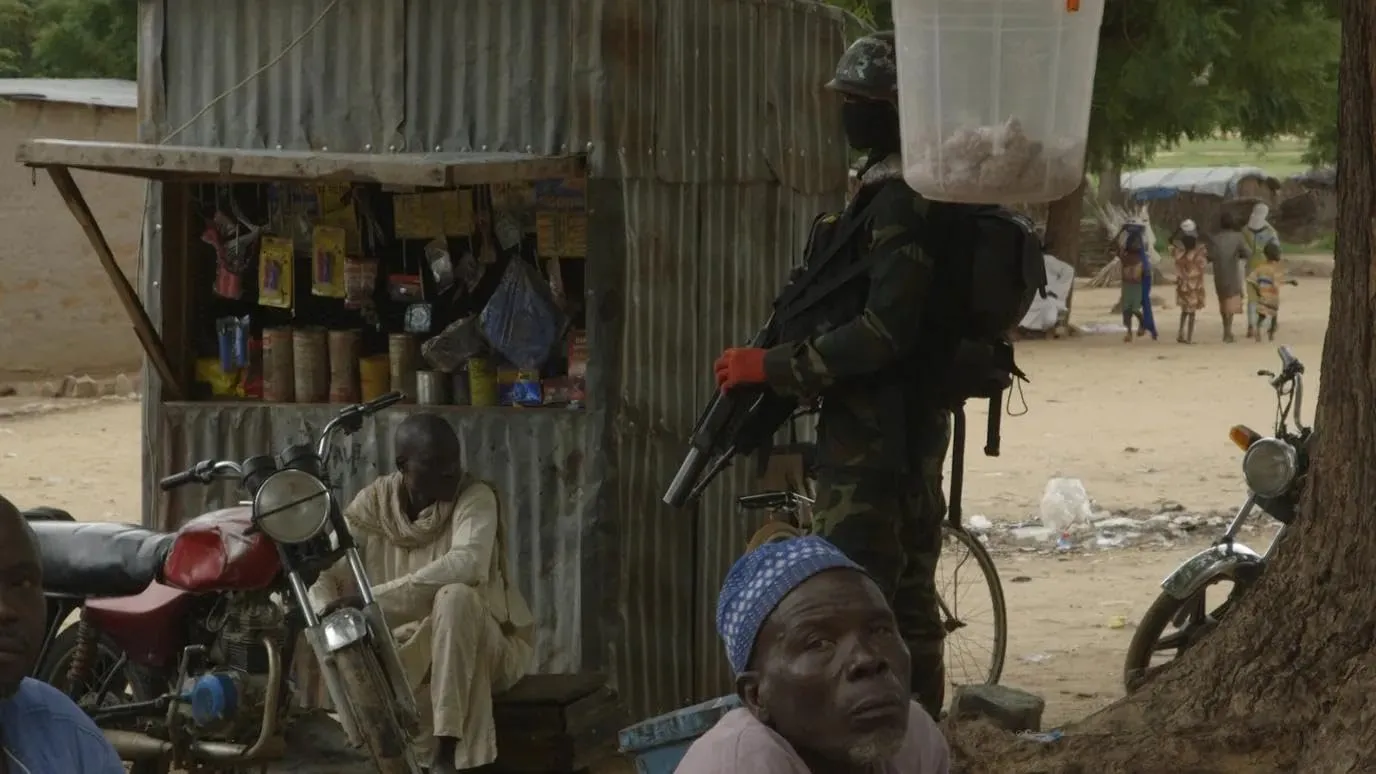
It captures the mundane—a shared meal, a listless afternoon—with the same gravity as the signs of conflict, suggesting survival is located in these quiet acts of persistence. The film’s power builds in this negative space.
Boko Haram is an apparition, its presence confirmed not by sight but by sound: the pop of distant gunfire is a puncture in the fabric of normalcy, a reminder that the perimeter of their world is fragile. The Cameroonian soldiers, meant as protectors, become part of the menacing landscape, their uniforms and rifles as natural and as unsettling as the storm clouds that gather overhead.
The true evidence of this haunting is found in the children’s own creations. Their art is their unconscious speaking aloud. Drawings mix playful subjects with armed men, mapping the geography of their psyches where the battlefield and the playground have become a single territory.
The act of drawing a soldier is an attempt to master the image, to contain the source of fear by rendering it on a page. It is a form of primitive magic, a bid for power over a force that is otherwise overwhelming. The film’s rejection of a musical score or explanatory voice is its core ethical choice. It refuses to orchestrate our feelings, leaving us instead in the stark, unadorned reality of their world, to listen to its disquieting silences.
An Unending Present
Do not search for a story with a beginning and an end here. To impose such a structure would be a profound betrayal of the lives depicted. The film rejects a linear progression of events for a more truthful, cyclical sense of time. It presents not a narrative arc but a condition of being, a state of waiting for a change that may never arrive.
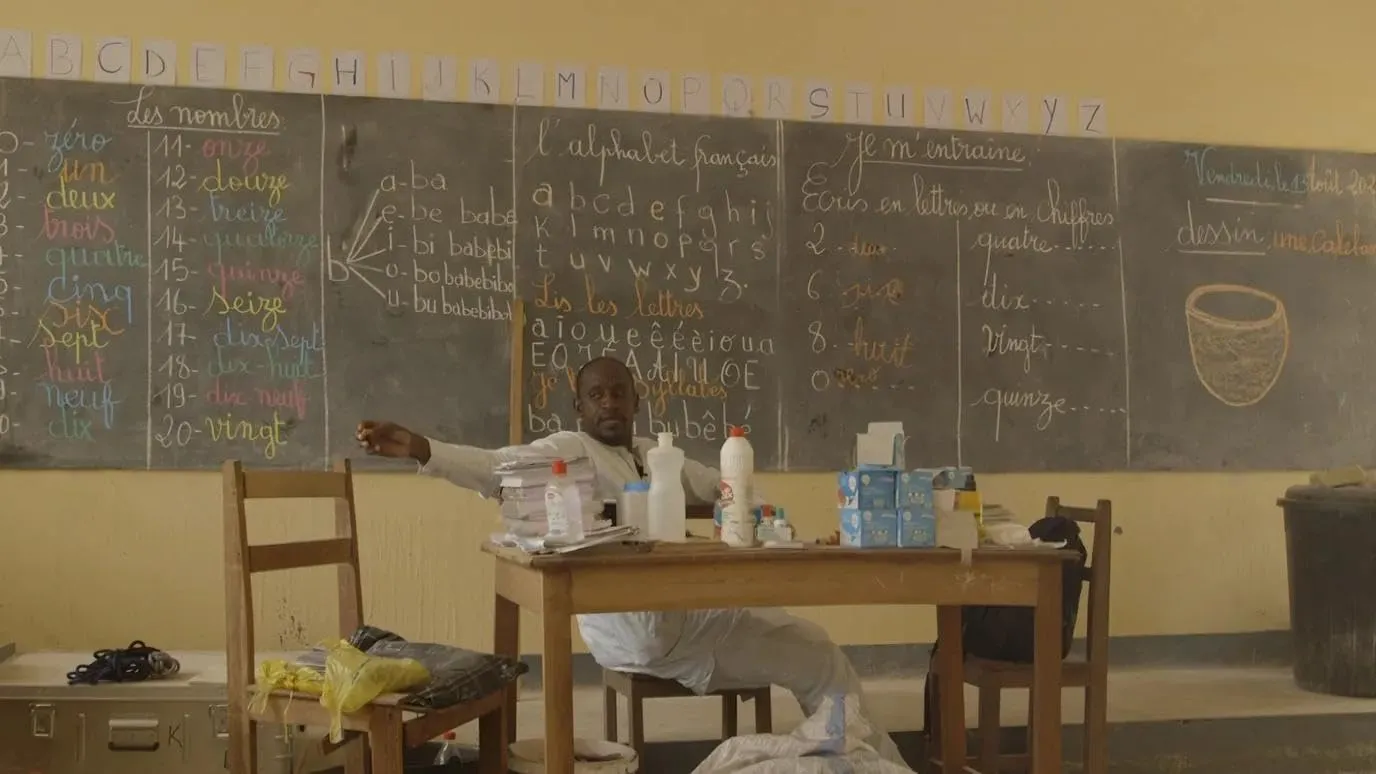
This forces the viewer to experience the stasis, to feel the immense weight of an unending present where there can be no catharsis because, for the subjects, there is none. This sense of a world unmoored is deepened by the clash of belief systems. When Falta’s mother consults a marabout after receiving a doctor’s diagnosis, it is not simple ignorance.
It is a sign of a deeper crisis of faith. When modern institutions—the state, the military, the school—cannot guarantee safety or mend a fractured soul, a turn to older, mystical systems is a desperate search for agency in a world that offers none.
The documentary does not resolve these tensions. It simply lets them be. Its final moments offer not an answer but an image: a vast landscape suffocating under a heavy, dark sky. A narrow band of light breaks through. This is not a sentimental symbol of hope.
It is the bare fact of light’s existence, a neutral phenomenon offering no promises. It is a perfect visual summation of the film’s existential stance. Existence is neither benevolent nor cruel; it simply is. And within that immense, impassive space, these small, incandescent lives burn for a short, precarious time.
The Spectre of Boko Haram is a 2023 Cameroonian documentary film. It premiered at the International Film Festival Rotterdam on January 30, 2023. The film received the Tiger Award at the 52nd International Film Festival Rotterdam.
Full Credits
Director: Cyrielle Raingou
Writers: Cyrielle Raingou
Producers: Véronique Holley, Dieudonné Alaka
Cast: Falta Souleymane, Ibrahim Alilou, Mohamed Alilou, Lamine Yerima, Balou Sanda, Talba Lamine
Director of Photography (Cinematographer): Cyrielle Raingou, Bertin Fotso
Editors: Christine Bouteiller
Composer: Griots
The Review
The Spectre of Boko Haram
The Spectre of Boko Haram is a work of profound quietude and immense power. It is not a documentary about a conflict, but a cinematic meditation on the state of being that a conflict produces. Refusing the ease of narrative resolution or emotional guidance, the film trusts its audience to witness the subtle, devastating ways trauma rewrites the landscape of childhood. Its unflinching gaze and patient rhythm make for a challenging, yet essential experience. This is a film that lingers, a quiet hum of truth about survival in a world that offers no easy answers.
PROS
- A deeply respectful and unobtrusive observational style.
- Powerful psychological insight into how children process extreme trauma.
- Masterful creation of atmosphere and an unseen, ever-present threat.
- An intellectually honest structure that mirrors the unresolved nature of the conflict.
CONS
- The deliberately slow, meditative pace may feel inaccessible to some viewers.
- Its narrow focus offers little wider context on the political situation.
- The emotional austerity could be perceived as detachment.