


























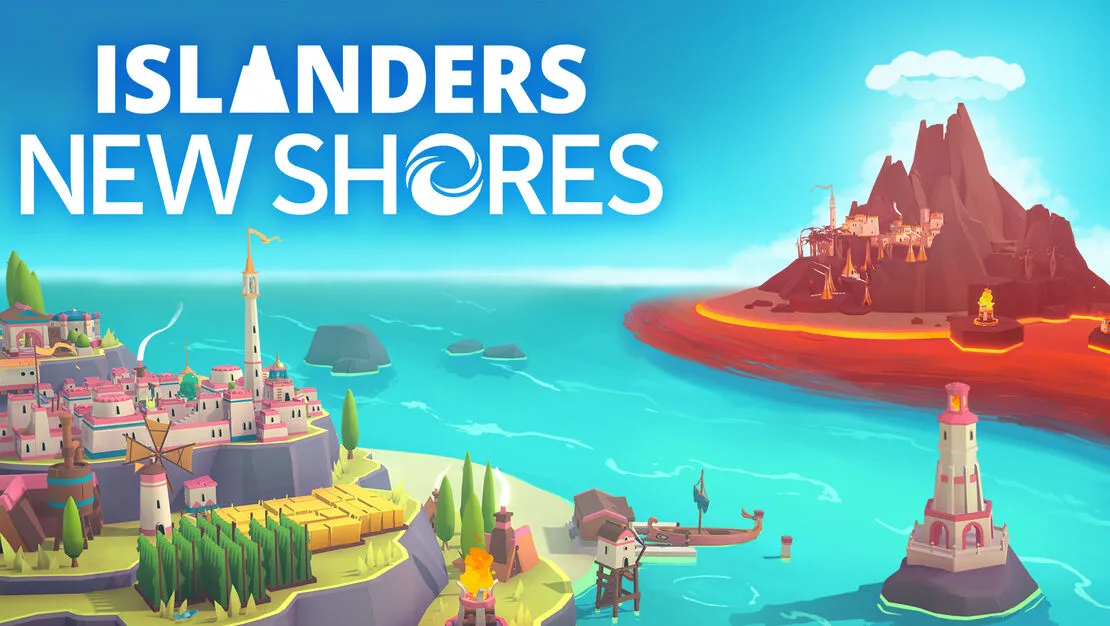

Many games that ask you to build a city, like Cities: Skylines or the Tropico series, bury you in the minutiae of governance. You manage power grids, citizen happiness, and complex economies. ISLANDERS: New Shores sheds all that bureaucracy.
It presents a simple, tranquil fantasy: here is an empty island, and here are some buildings. Your only job is to decide where they go. The game is less a city-simulator and more a zen puzzle experience, where strategic placement is the beginning and the end of your responsibilities. You are given a procedurally generated landscape and a simple task: build thoughtfully and earn points.
The core mechanic is beautifully straightforward. You don’t have an endless catalog of structures to choose from. Instead, the game offers you a choice between two “packs” of buildings, such as a Seaweed Farm Pack or a Brickmaker Pack. This limited choice injects a light strategic element, forcing you to work with what you’re given.
The real depth comes from the point system, a complex web of spatial relationships. Every building gains or loses points based on its proximity to other structures and terrain features. A brewery, for example, thrives near a hop field but suffers if placed next to another brewery. A circus delights nearby houses, boosting your score.
This system of adjacency bonuses turns island development into an intricate geometric puzzle, reminiscent of tile-laying games like Dorfromantik. Some buildings have fixed requirements, like seaweed farms which must be built on the coast.
You place buildings from your pack to reach a score threshold, which in turn unlocks the next set of packs. If you deplete your building supply before hitting the target, your time on that island is over. Success lets you move to a new island, continuing your high-score run.
New Shores, New Strategies
While the original ISLANDERS established this relaxing formula, New Shores is more than a simple re-release with improved graphics. It feels like a definitive edition, evolving the core experience with new strategic layers. The most significant addition is the Boons system.
As you reach score milestones on an island, you unlock these powerful, one-time-use abilities. They act as a crucial safety net and a tactical tool. One boon might let you destroy a poorly placed building to free up valuable space, while another multiplies the points from your next placement.
The “Neighbourly” boon is a lifesaver, temporarily preventing buildings from inflicting negative point penalties on each other. These boons introduce a meaningful choice: do you use one to solve an immediate problem, or hold it for a more opportune moment?
This version also grants more control over your journey. Instead of being sent to a random new location after completing an island, you now choose your destination from a handful of options. Each choice offers a distinct biome, like a rocky coast or a lush tropical expanse, and often introduces a unique building with its own scoring rules.
Some islands are even dynamic, with new landmasses literally rising from the sea as your score increases. This adds variety and player agency to each run. Finally, the scoring system itself has been refined. At the end of an island, your performance is tallied with score multipliers that reward skillful play, such as using few “undos” or leveraging boons effectively. This provides an extra incentive for dedicated players to master the game’s systems.
The Architect vs. The Artist
ISLANDERS: New Shores effectively caters to two distinct types of players by splitting its experience into two modes. The main game is High Score Mode, a challenge of optimization and efficiency. Here, the objective is to chain together successful islands, accumulating the highest score possible to earn a spot on the global leaderboards.
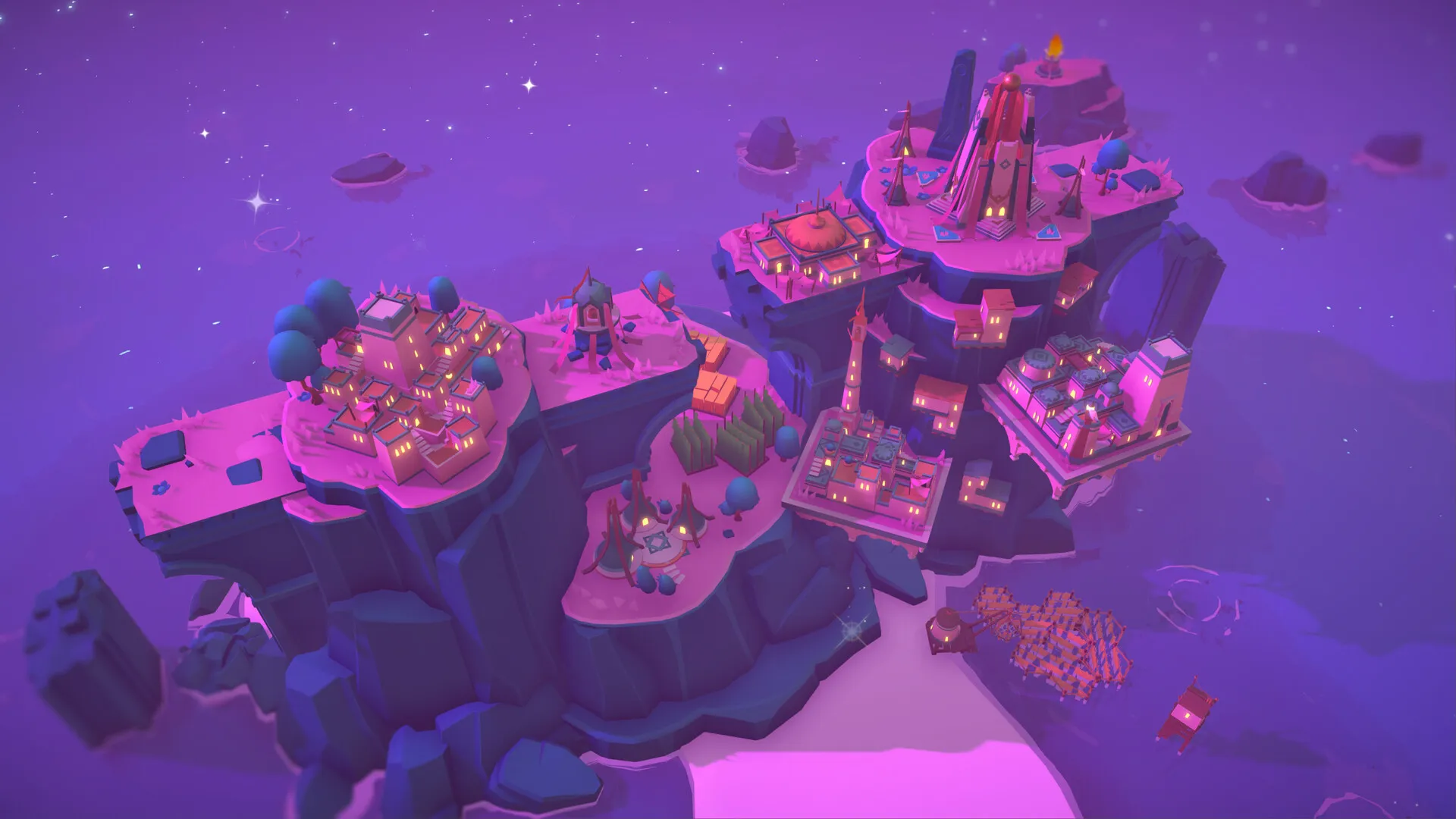
The pressure is light but persistent; each placement must be considered to ensure you can meet the next score threshold. This creates the compelling “one more run” feeling found in the best puzzle games, where you are constantly learning from your mistakes and refining your strategy for the next attempt.
On the other side of the coin is Sandbox Mode, which provides complete creative freedom. This mode strips away all the rules and pressures of the main game. There are no points to earn, no building packs to unlock, and no risk of failure. The player is given a blank canvas, with the ability to customize the island’s size, shape, and climate.
All building types are available from the start, allowing you to design picturesque towns purely for aesthetic satisfaction. This mode is a perfect outlet for those who admire the game’s charming art style and wish to act as an artist rather than a competitive architect, similar to the creative modes offered in games like Minecraft.
A Picturesque but Prickly Paradise
The game’s appeal is immediately apparent in its presentation. The art style is a minimalist and vibrant delight, with colorful, toy-like buildings that combine to create living dioramas. Each island is a procedurally generated postcard, and the intricate details on structures like mansions and harbors invite you to zoom in and admire your work.
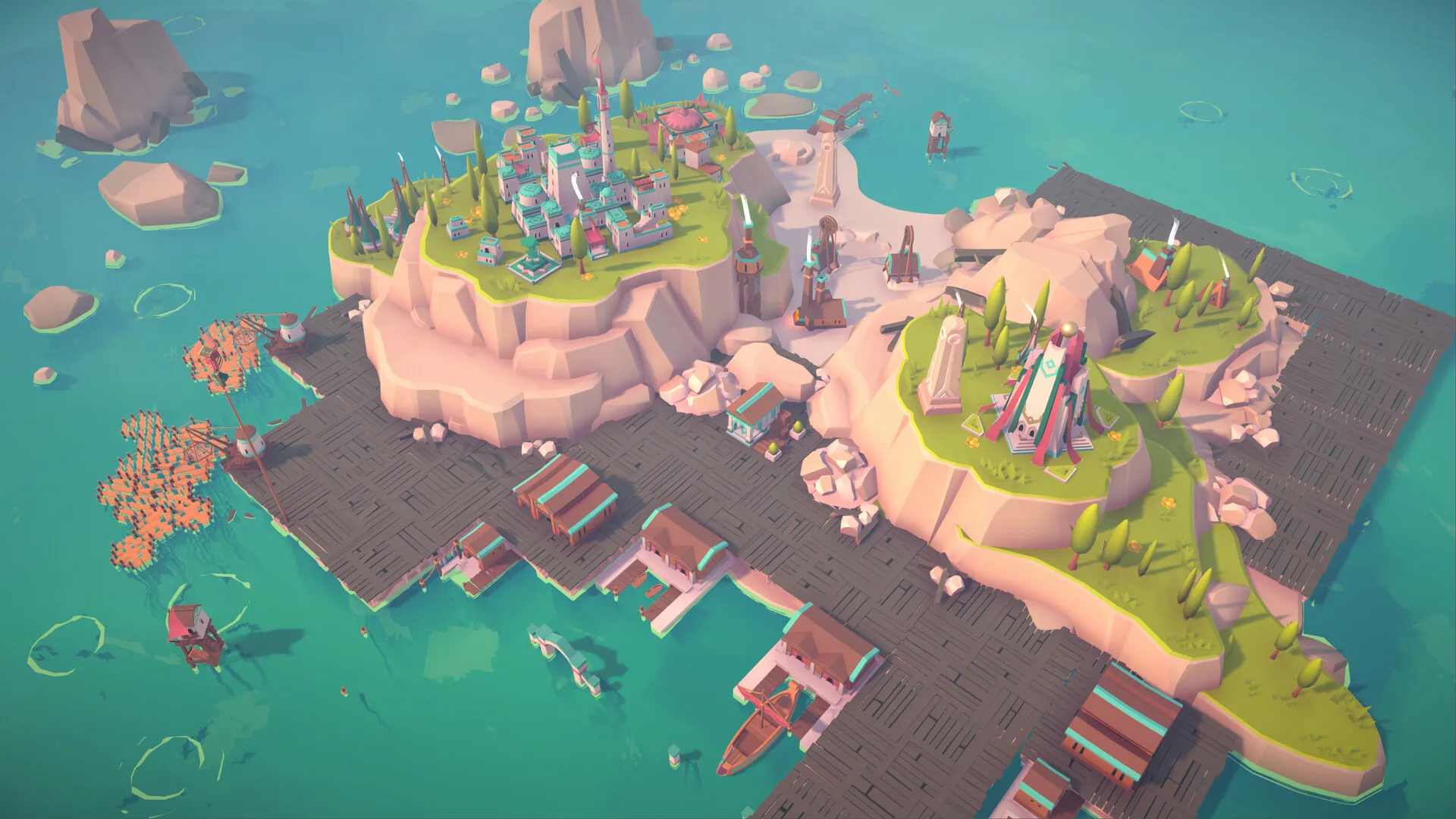
The sound design complements this serene atmosphere perfectly. A peaceful, ambient soundtrack featuring instruments like kalimba and glockenspiel provides a relaxing backdrop, while the soft clicks and thuds of placing buildings are satisfying. The music can become a bit repetitive during long sessions, but the ambient sounds of wind and the bustle of a growing town are highly effective.
This tranquility can be interrupted by a few points of friction. The game’s primary challenge sometimes devolves into a tedious “pixel hunt.” Finding the single, mathematically optimal spot for a building to maximize points can feel like searching for a needle in a haystack.
This hunt for points often forces you to compromise a beautiful, organic layout in favor of a messy but efficient one. The controls, especially with a gamepad, can feel sticky and imprecise when you need to make the subtle adjustments the scoring system demands.
At times, the game seems to fight you as you try to slot a building into a tight space. This is compounded by a camera that can feel restrictive, making it difficult to zoom in on taller islands and appreciate the very details the art style works so hard to create.
The Review
ISLANDERS: New Shores
ISLANDERS: New Shores is a beautifully polished and deeply calming puzzle game. It successfully builds upon its predecessor's foundation, offering a deceptively simple yet strategically rich experience. Its core loop is wonderfully addictive, and the addition of Boons and island selection provides meaningful depth. While the hunt for perfect placement can become tedious and the controls occasionally frustrate, these are small blemishes on an otherwise serene and captivating package. It’s an ideal game for anyone seeking a relaxing yet engaging challenge.
PROS
- Relaxing and highly addictive puzzle loop.
- Charming minimalist visuals and a serene atmosphere.
- Two distinct modes cater to both competitive and creative players.
- New features add welcome strategic depth over the original.
CONS
- Finding optimal building placement can feel tedious.
- Controls can be imprecise, especially on a gamepad.
- The music, while pleasant, becomes repetitive.
- The camera can be restrictive on certain island types.