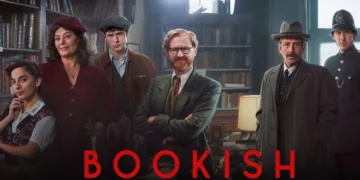























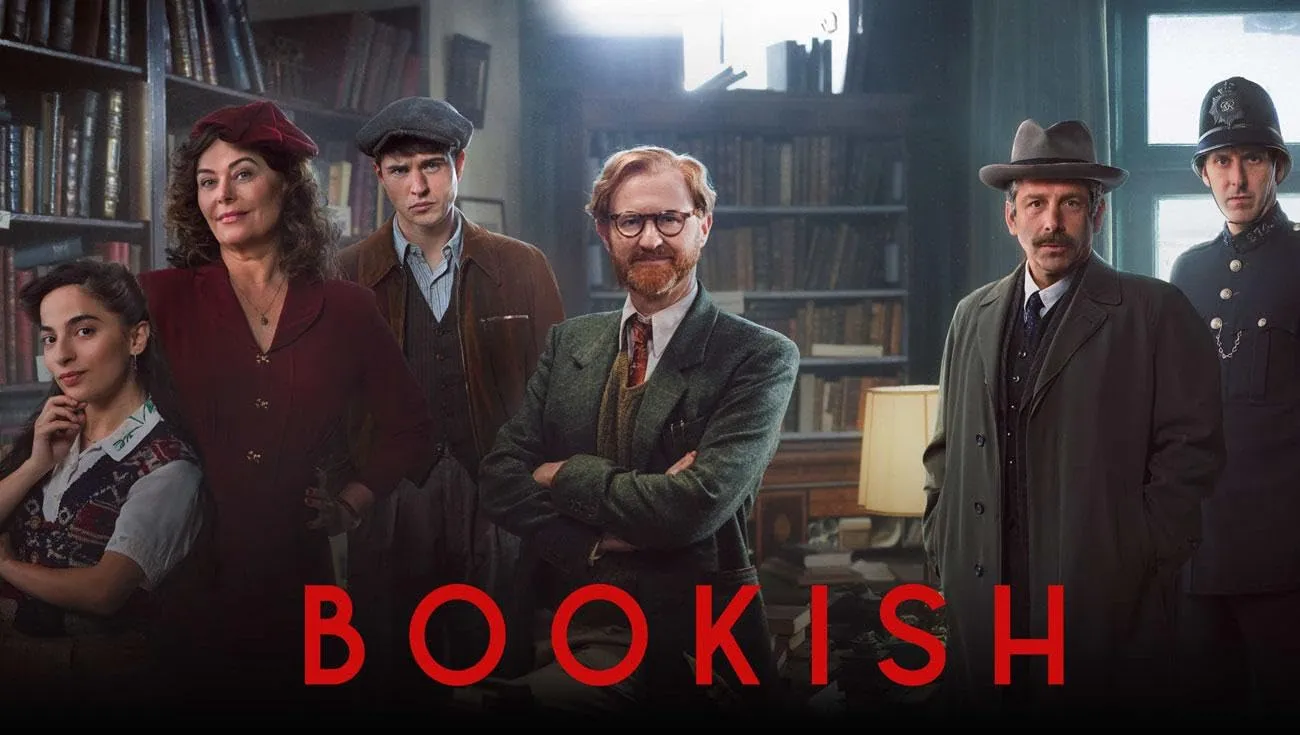

The television schedule has a seemingly endless supply of gentlefolk detectives, leaving one to think the field is full. Yet Bookish carves out its own space amidst the atmospheric rubble of 1946 London. We are introduced to Gabriel Book, a man whose passion for a well-preserved first edition is matched by his sharp eye for a misplaced clue.
His secondhand bookshop, a sanctuary of paper and print, serves as his base of operations. He is not an official officer of the law, but a mysterious letter from his wartime service gives him special access to crime scenes, much to the occasional chagrin of the local constabulary.
The series presents satisfying whodunnits, but its real substance comes from a quiet, persistent melancholy. It is a show less about the crime and more about the people haunted by it, their secrets stacked as high as the books on Gabriel’s shelves.
Rubble, Rations, and Reading Nooks
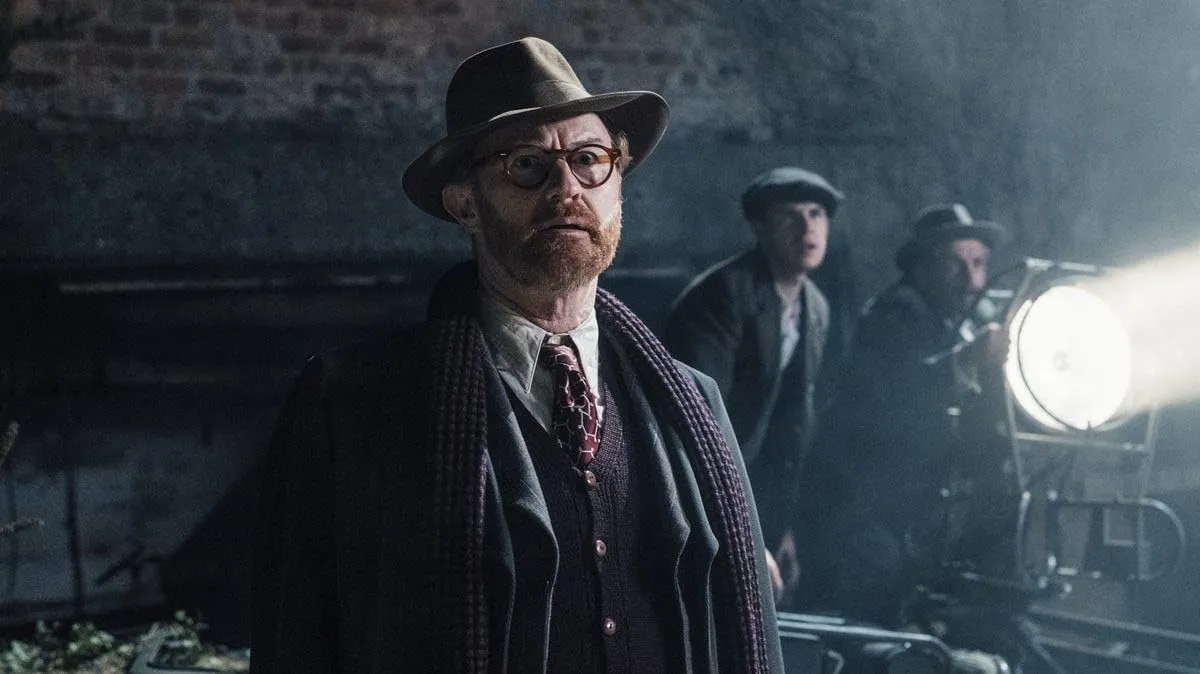
The London of Bookish is a city of ghosts and scaffolding. The cinematography captures a world still coated in a fine layer of dust, where an uncovered bomb site can just as easily reveal a 17th-century plague pit as it can unexploded ordnance.
This is 1946, a landscape of austerity where ration books dictate the menu and powdered eggs are a grim staple. The production design wisely avoids a polished, museum-piece look, instead giving us a London that feels genuinely weary, a place where the populace is collectively holding its breath to see what will rise from the rubble.
Against this backdrop of grey uniformity, Gabriel Book’s bookshop is a defiant pocket of warmth and intellectual clutter. It is a sanctuary where the chaos of the outside world is held at bay by towering shelves of stories. This contrast is the show’s most effective atmospheric tool. It grounds the escapist pleasure of the whodunnit in a tangible, difficult reality.
The series understands that the appeal of a cosy mystery is heightened when the world outside is anything but cosy. Specific period details, from a debate over the merits of Georgette Heyer to the presence of former ARP wardens, add texture, painting a picture of a society grappling with its new, uncertain identity.
A Trio Bound by Secrets
At the center of the series is Gabriel Book, an intellectual powerhouse who wields literary quotes like a weapon and finds a split infinitive more horrifying than a crime scene. Mark Gatiss plays him not as a mere eccentric, but as a man whose formidable intellect is a fortress built to protect a host of secrets. His methods are pure armchair detective, filtered through a lifetime of reading.
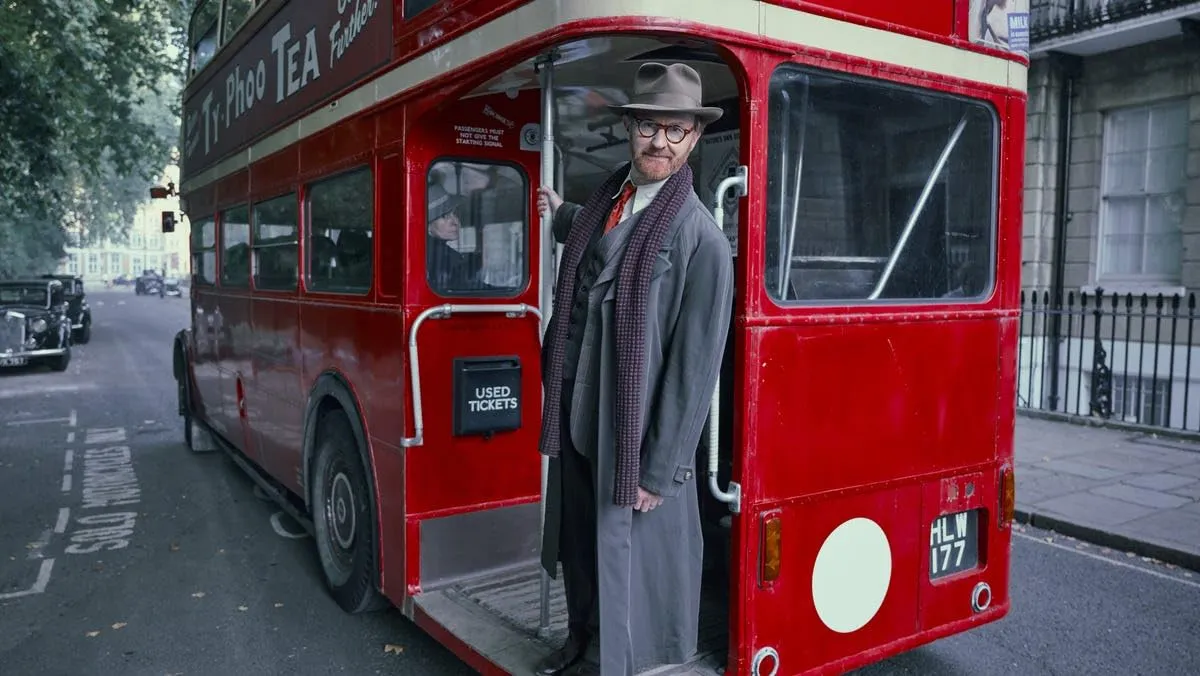
Yet beneath the witty, sometimes prickly exterior is a carefully concealed vulnerability. His past is hinted at by a letter from Churchill he keeps in his breast pocket, but his present is defined by a more immediate danger: he is a gay man at a time when that truth could lead to prison. Gatiss’s performance is a masterclass in controlled emotion, allowing glimpses of the fear and melancholy that shadow his every move.
He is not alone in this charade. His wife, Trottie, played with a magnificent, earthy intelligence by Polly Walker, is his willing co-conspirator. She is no passive spouse but an active partner in both his life and his investigations, running the wallpaper shop next door with a keen eye for business and clues.
Theirs is a “lavender marriage,” a union built on a foundation of deep, platonic love and mutual protection. They are childhood friends who share a history and a home, but not a bed. Their tender, pragmatic bond is the show’s emotional anchor, a portrait of a partnership that is far more compelling than any of the murders they solve.
Into their carefully constructed world comes Jack, a young orphan fresh out of prison. Hired as a shop assistant, his presence is an immediate question mark. The Books’ interest in him feels far too specific for simple altruism. He represents the series’ long-form mystery, a puzzle whose solution is clearly tied to the past his new employers are so desperate to keep hidden.
A Well-Paced Page-Turner
Bookish rejects the frantic pace of the modern procedural, opting instead for a more novelistic structure. Each case unfolds over a luxurious two hours, allowing the narrative to meander through red herrings and character moments without a rush to the finish line.
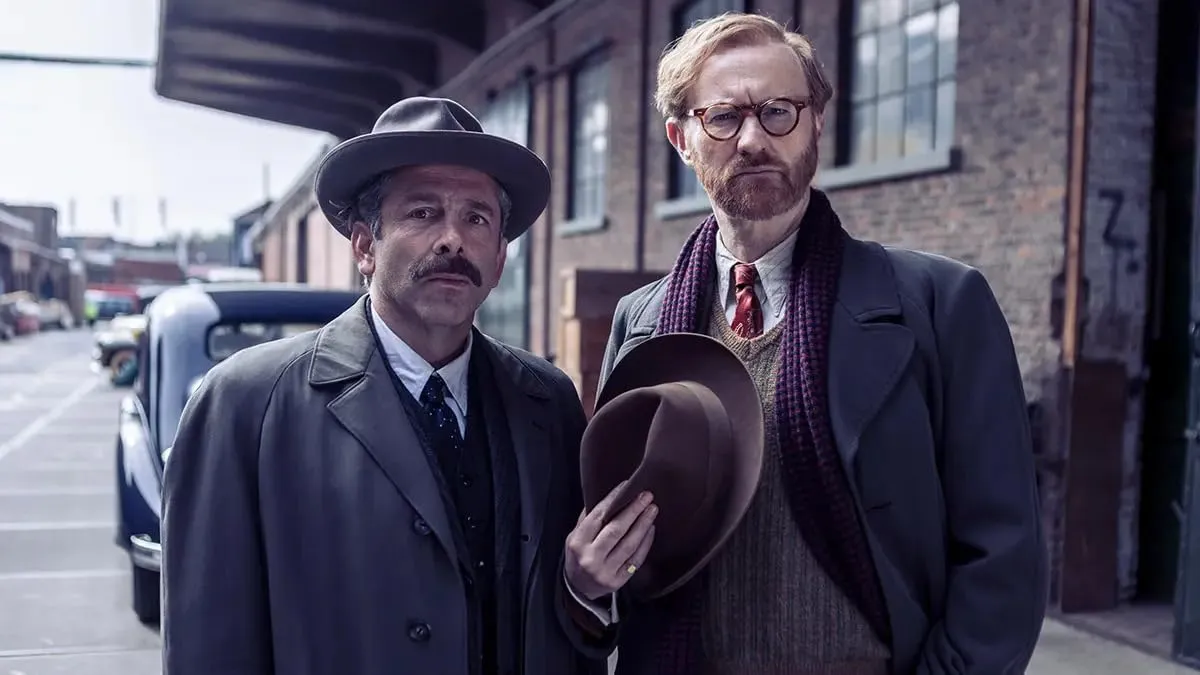
The first mystery, a knotty affair involving a poisoned chemist, a rediscovered plague pit, and missing morphine, has enough room to breathe, letting suspects develop and clues accumulate organically. This leisurely tempo is a direct homage to the golden age of detective fiction.
The series lovingly deploys the greatest hits of the genre: poisons like prussic acid are discussed with connoisseurial glee, and flashbacks peel back layers of the crime in a distinctly Christie-esque fashion. It even finds room for a touch of whimsy, most notably in the form of a message-carrying dog named, with perfect dryness, “Dog.” The familiar framework is the point; it provides a sturdy, comfortable structure upon which the show hangs its far more complex character study.
The Plot Beneath the Plot
The murders in Bookish are, in many ways, incidental. The real mystery is the marriage at its center. The relationship between Gabriel and Trottie—a tender, fiercely protective alliance born of necessity and deep affection—is the show’s true emotional core.
Their unconventional partnership gives the series a weight and an originality that elevates it far above a simple period piece. It is a quiet, moving portrait of love and survival in a world that refuses to accommodate you.
This central arrangement is the anchor for the show’s exploration of secrecy and its costs. The constant threat hanging over Gabriel due to his homosexuality injects a genuine sense of jeopardy that most cosy mysteries lack.
The danger is not from a poisoner in the pantry, but from a policeman on the beat. This sharp, dark undercurrent runs through the entire series, connecting to a wider post-war melancholy that touches every character. They are all survivors of a kind, nursing private griefs and navigating a world where the old certainties have been bombed into history.
The show is less interested in who committed the crime and more in how a society rebuilds itself from the emotional rubble. It is the unfolding questions—about Gabriel’s survival, Trottie’s devotion, and the true reason for young Jack’s arrival—that provide the most compelling reason to keep turning the page.
The Polished Surface
The success of Bookish rests squarely on the shoulders of Mark Gatiss, who delivers a performance of immense control and depth. He perfectly captures Gabriel’s intellectual sparkle while letting a profound, deep-seated sorrow bleed through the cracks.
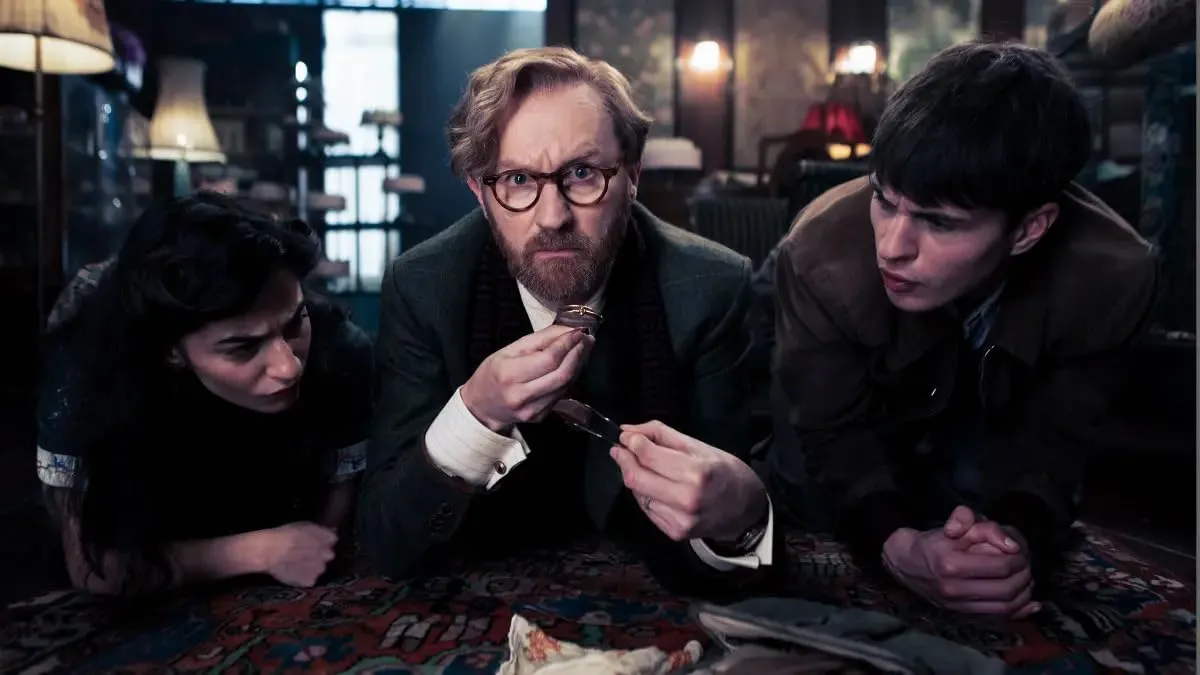
Yet this is no one-man show. Polly Walker is indispensable as Trottie, bringing a sensual, grounded warmth that ensures the central relationship feels like a genuine partnership of equals. The writing, from Gatiss and Matthew Sweet, is a joy—a cascade of literary wit and clever plotting that deftly integrates the weekly crime with the slow-burn revelations of its characters’ lives.
The direction and cinematography follow suit, creating a meticulously crafted aesthetic that is both beautiful and suffused with a persistent sadness. It is a series that provides the intellectual satisfaction of a well-made puzzle box, but its true achievement is in exploring the secrets people keep to survive. In a world where the greatest crime might be who you love, what’s one more body in the library?
Full Credits
Director: Carolina Giammetta
Writers: Mark Gatiss, Matthew Sweet
Producers: Christopher Arcache, Marc Dalmans, Roger Evans, Hiskia Van Aert
Executive Producers: Jo McGrath, Walter Iuzzolino, Dries Vos, Helen Perry
Cast: Mark Gatiss, Polly Walker, Connor Finch, Elliot Levey, Buket Kömür, Blake Harrison, Daniel Mays, Joely Richardson, Jonas Nay, Rosie Cavaliero, Jacob Fortune-Lloyd, Tom Forbes, Amanda Drew, Michael Workéyè, Ella Bruccoleri, Luke Norris, Tim McInnerny, Loveday Smith, Paul McGann, Isabelle Connolly, Angeliki Papoulia, Gerard Horan, Rina Krasniqi, Shaniqua Okwok, Charlie Cattrall, Amanda Payne, Elizabeth Berrington, Anton Antoniadis, Mark Umbers, Hannah Snow, Mariken van Lammeren, Harry Taurasi, Mark Winstanley, Chris Brooker, Samantha Fadahunsi, Nadia Albina, Anna Munden, Patrick Jeffries, Claire King, Mark Benton, Ruben Francq, Joseph Smallwood, Andrew Mockler, Tanguy De Backer, Andreas Perschewski, Milo Thresher, Elodie Blomfield, Christian Bronchart, Edwin Gillet
Composer: Sarah Warne
The Review
Bookish
Bookish uses the cosy mystery framework to deliver a surprisingly deep and moving character study. Mark Gatiss and Polly Walker are superb as a couple bound by secrets, and the witty script is layered with a genuine post-war melancholy. The weekly cases are clever, but the show’s true strength is its poignant exploration of love and survival against a backdrop of historical prejudice. It’s a sharp, stylish, and unexpectedly touching entry into a crowded genre.
PROS
- Superb lead performances from Mark Gatiss and Polly Walker.
- Intelligent, witty writing with sharp dialogue.
- Adds emotional depth and darkness to the cosy crime format.
- Meticulously crafted post-war atmosphere.
CONS
- The leisurely two-episode pace for each mystery may not appeal to all.
- Occasionally relies on familiar genre conventions.
- Some minor plot points feel slightly contrived.