
























![Kingdom Hearts Collection [I-III] Review](https://gazettely.com/wp-content/uploads/2026/10/Kingdom-Hearts-Collection-I-III-1-360x180.webp "Kingdom Hearts Collection [I-III] Review: KHII Holds Steady as Newer Entries Fluctuate 40")


Kick’n Hell doesn’t begin; it erupts. You are a martial artist plunged into the depths of a pixelated Hell, armed only with the kinetic potential of your feet. This is not a journey with a gentle start but a vertical trial by fire, a modern digital reinterpretation of a Dantean ascent.
Your only goal is to climb, to kick your way upward through a world designed to break you. Watching from afar is Satan himself, not as a grand boss, but as a psychological tormentor whose taunts echo with each misstep and fall.
Fire Foot Studios, hailing from Belgium, has crafted an experience that strips the platformer down to its most punishing core. It offers no comfort, only the stark contract between player skill and an unforgiving environment, creating a space for pure, unadulterated challenge.
The Violent Ballet of Kicking
The entire interactive language of Kick’n Hell is distilled into a single, profound action: the kick. This is not a button press that triggers a canned animation but a complete system of physical expression. It’s a ludic verb that serves as the foundation for movement, combat, and environmental interaction.
The player learns to navigate this brutalist hellscape by striking grotesque, fleshy brains and other objects, each with distinct properties of restitution and trajectory. A kick to the center of a brain might send you soaring vertically, while a glancing blow at its edge produces a low, horizontal arc.
Mastering this system feels less like learning a game and more like internalizing a new form of physics. It demands a granular understanding of angles, momentum, and the subtle art of mid-air control. This mechanical purity elevates the simple kick into a deep, expressive toolset, where every successful traversal is a testament to the player’s acquired knowledge.
This philosophy of mechanical focus finds a powerful parallel in the traditions of martial arts cinema, particularly the golden era of Hong Kong action films. The game’s demand for precision, repetition, and the perfection of a single form is reminiscent of the grueling training sequences in Shaw Brothers classics, where mastery is achieved not through a wide array of techniques, but through the flawless execution of one.
The protagonist of Kick’n Hell is defined not by a complex backstory or branching dialogue, but by the singular, violent grace of their kick. In this, the game achieves a remarkable synergy between its narrative premise and its core mechanic. The act of kicking is the story. It is a physical manifestation of defiance against an oppressive world. Each kick is a word in a sentence of rebellion, a percussive retort to Satan’s taunts. This is ludonarrative harmony at its most visceral.
Furthermore, the integration of combat and traversal recalls the dynamic, environmental choreography of Jackie Chan. Enemies are not merely obstacles to be dispatched; they are opportunities. A lunging skeleton is not just a threat but a potential launchpad. A flying snake can be kicked into a lava pit or, more cleverly, redirected to trigger a distant switch.
The environment itself becomes a weapon and a tool, creating a fluid, improvisational ballet of violence and movement. The game forces the player to see the world not as a static set of platforms, but as a dynamic physics simulation ripe with kinetic potential. This approach stands in stark contrast to many contemporary platformers that offer a vast arsenal of tools and abilities.
Kick’n Hell’s minimalism is its greatest strength. By restricting the player to a single, deep mechanic, it fosters a level of mastery and intimacy with its systems that more complex games often sacrifice for breadth. The experience feels focused and authored, a deliberate choice to prioritize depth over variety, demanding that the player meet its challenge on its own uncompromising terms.
The Agony and Ecstasy of the Climb
The architectural and philosophical design of Kick’n Hell is a direct engagement with the myth of Sisyphus. The game is structured as a colossal, vertical ascent, a digital tower of Babel built from damnation. Its primary challenge lies not in complex enemy patterns or intricate puzzles, but in the psychological weight of gravity.
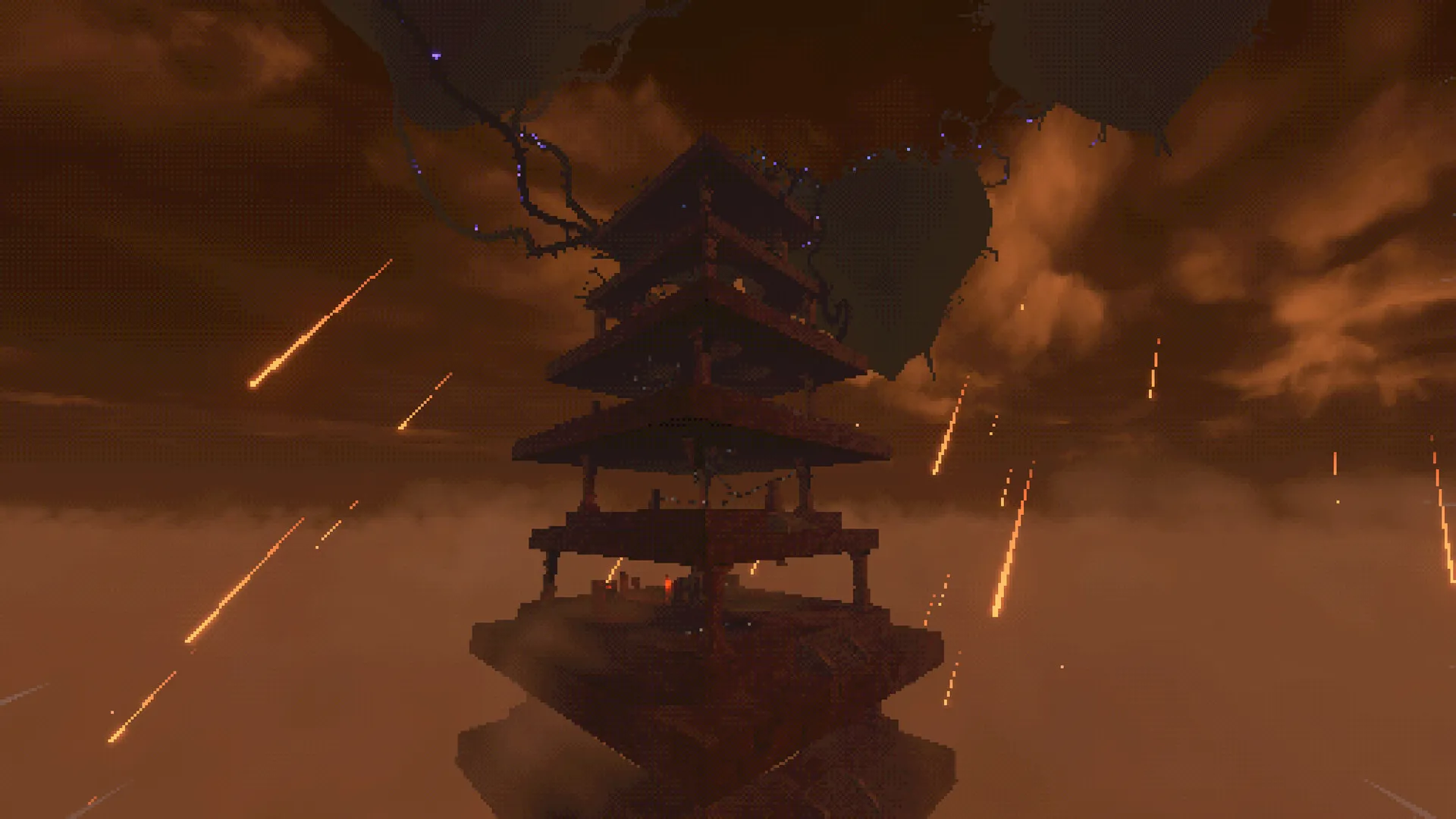
A single misjudged kick can undo minutes, sometimes hours, of painstaking progress, sending the player plummeting back to the unforgiving ground. This design choice transforms the act of climbing from a simple objective into a profound emotional journey.
It creates a potent cycle of tension, focus, frustration, and, eventually, a catharsis so powerful it borders on the sublime. This is a game that understands that the value of an achievement is directly proportional to the struggle required to obtain it.
In his essay The Myth of Sisyphus, Albert Camus argues that one can find meaning, even happiness, in a seemingly futile struggle by embracing the process itself. “The struggle itself toward the heights is enough to fill a man’s heart,” he writes. “One must imagine Sisyphus happy.” Kick’n Hell is an interactive exploration of this very idea.
The game offers two modes: “Apprentice,” which includes sparsely placed checkpoints, and “Champion,” which removes them entirely, presenting a purely Sisyphean ordeal. Even in the “easier” mode, the checkpoints are so infrequent that they serve less as a safety net and more as brief moments of respite in a relentless trial. The player is forced to find their reward not in reaching the next save point, but in the perfect execution of a difficult sequence of kicks, in the mastery of their own movement, in the very act of the climb.
This punishing design philosophy also creates a fascinating cross-cultural dialogue. The game’s aesthetic is rooted in a distinctly Western, Christian iconography of Hell—fiery pits, grotesque demons, and a taunting Satan. Yet, the player’s path to overcoming this damnation is based on principles often associated with Eastern philosophies: discipline, patience, and the attainment of mastery through endless repetition.
The martial artist protagonist uses their internal focus to conquer an external, chaotic world. It is a narrative of transcendence achieved not through divine grace, but through sheer force of will and personal skill.
This fusion of Western eschatology and Eastern discipline creates a unique thematic texture, suggesting a universal path to salvation found in self-mastery. Satan’s dynamic, responsive taunts further enhance this psychological struggle, positioning the game’s designer as a direct antagonist and turning the experience into a deeply personal duel between creator and player.
A Beautiful, Pixelated Nightmare
The visual presentation of Kick’n Hell is a deliberate and masterful exercise in retro aesthetics. It evokes the blocky, low-polygon look of the Nintendo 64 and original PlayStation era, a style born from technical limitations that is now wielded as a powerful artistic choice.
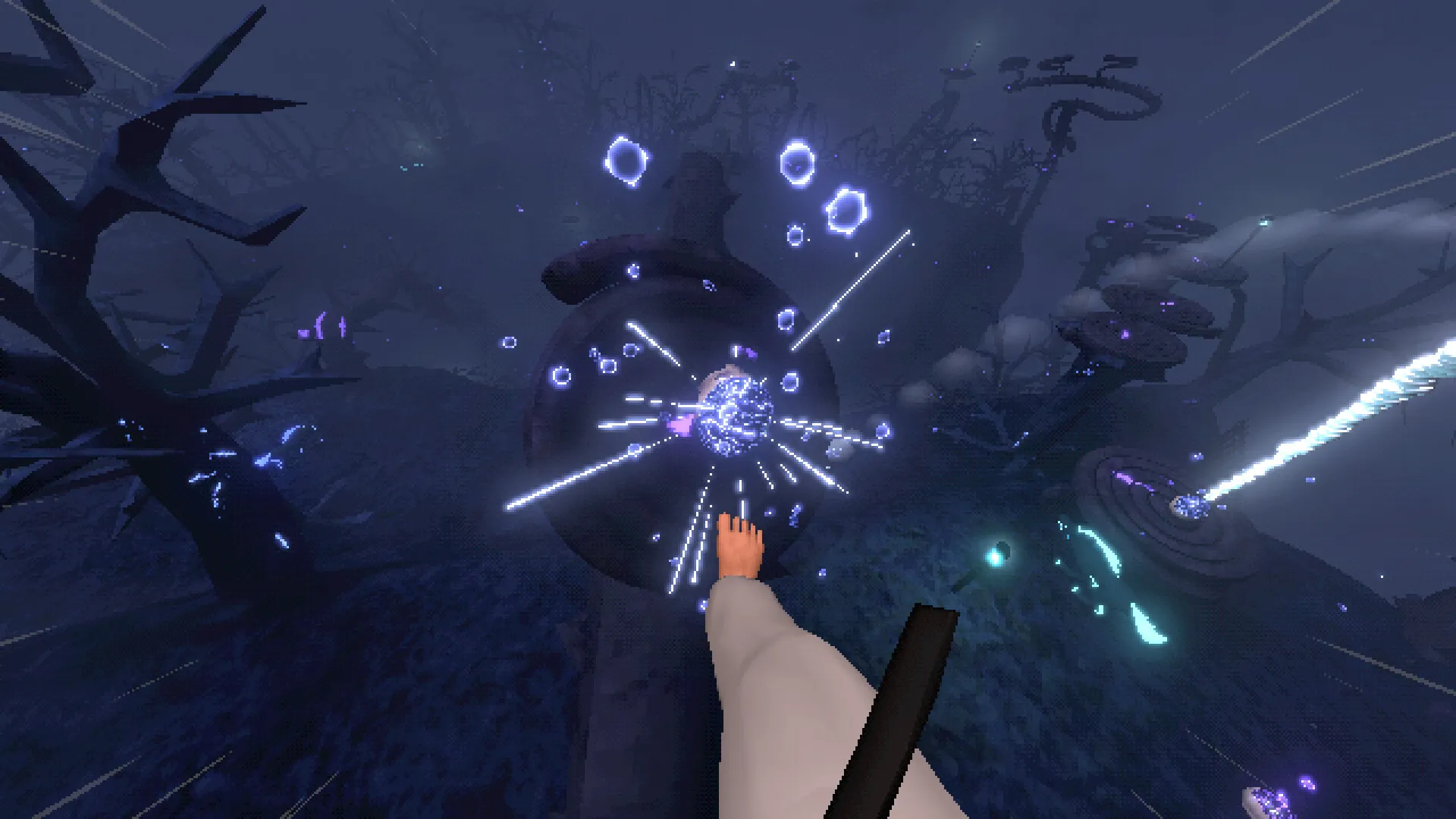
This is not simple nostalgia; it is a form of digital brutalism. The stark, minimalist environments, illuminated by the eerie glow of brains and flickering torches, force the player to engage their imagination. Like the sparse set of a theatrical production, the game’s visuals suggest a world far larger and more terrifying than what is explicitly shown.
This aesthetic choice connects to a broader “hauntological” trend in contemporary art, evoking the memory of a “lost future” of video games, a path not taken when the industry began its relentless pursuit of photorealism. The result is a world that feels both familiar and deeply alien, a dreamlike memory of a game from a past that never quite existed.
This visual minimalism creates a powerful sense of scale. When standing at the bottom of a new section and looking up at the impossible climb ahead, the player is struck by a feeling of genuine awe and intimidation. The abstract, pixelated forms become monolithic structures in the mind’s eye, turning the vertical ascent into a pilgrimage through a nightmarish, abstract cathedral.
The art style serves the gameplay perfectly; by reducing visual noise, it allows the player to focus entirely on the crucial information of platform placement, enemy positions, and their own trajectory.
The sound design works in perfect harmony with this aesthetic. The soundtrack is a brilliant fusion of two seemingly disparate genres: gothic, angelic choirs and driving, industrial electronic beats. This combination creates a sonic landscape that is at once ancient and modern, sacred and profane. The choirs represent the timeless, tragic grandeur of Hell, while the electronic rhythms mirror the player’s aggressive, percussive, and relentlessly modern intrusion into this space.
The sound effects are equally impactful, providing a rich, tactile feedback that gives weight and substance to every action. The wet, squelchy impact of a kick connecting with a brain, the crumbling of a fragile platform, and the guttural roars of demonic foes all contribute to a deeply immersive and atmospheric experience. The audio-visual presentation of Kick’n Hell is a testament to the power of cohesive, authored design, proving that artistic vision can be far more compelling than mere technical fidelity.
A Test of Will
Ultimately, Kick’n Hell stands as a bold and uncompromising piece of interactive art. It is not designed for everyone, and it makes no apologies for its exclusionary nature. This is a game built for a specific global subculture of players who seek out profound difficulty not as a barrier to enjoyment, but as the very source of it. It is for the digital ascetic, the player who understands that true satisfaction is earned through struggle.
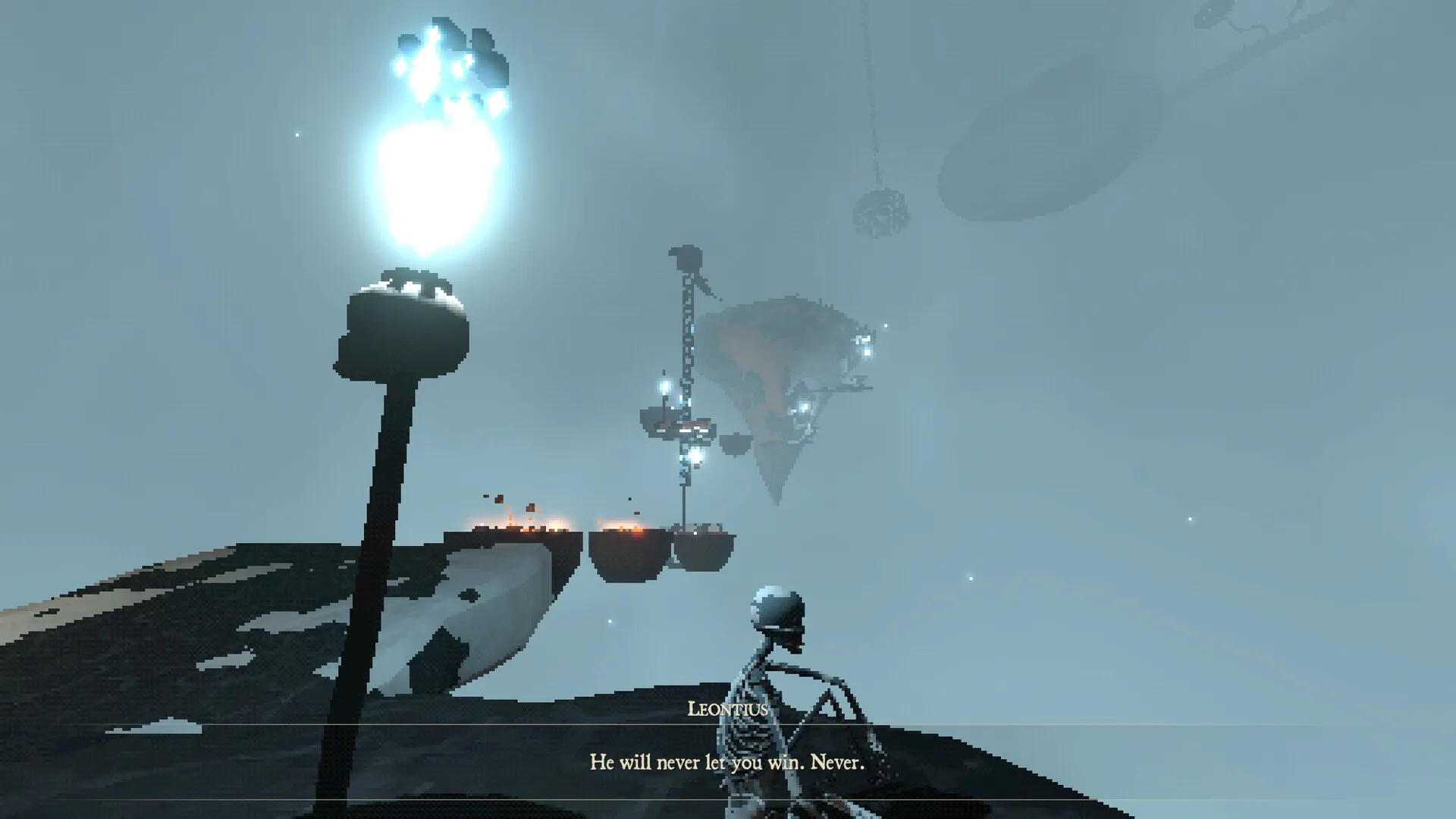
The game’s core identity is defined by its punishing nature, and its value is measured in the quiet, internal victory of overcoming a challenge that once seemed insurmountable. It is a dialogue between Western concepts of damnation and Eastern philosophies of discipline, a conversation between retro aesthetics and modern design theory.
The experience is a test, not merely of reflexes, but of patience, determination, and spirit. It asks one simple, profound question: when you are cast into the abyss, do you have the will to kick your way out?
The Review
Kick'n Hell
Kick'n Hell is a masterclass in minimalist design, offering one of the most focused and demanding platforming experiences in recent memory. Its singular kick mechanic is a triumph of depth and precision, creating a brutal yet deeply rewarding gameplay loop. While its uncompromising difficulty and sparse narrative will deter many, it is an essential experience for players who relish a true test of skill and patience. This is a beautiful, infuriating, and ultimately unforgettable descent into a masterfully crafted digital hell.
PROS
- Exceptionally deep and rewarding single-button mechanic.
- Cohesive and atmospheric audio-visual design.
- A pure, high-stakes challenge for skill-focused players.
CONS
- Unforgiving difficulty can be intensely frustrating.
- Minimalist narrative may leave some players wanting more.
- Repetitive structure is not for everyone.