

























![Kingdom Hearts Collection [I-III] Review](https://gazettely.com/wp-content/uploads/2026/10/Kingdom-Hearts-Collection-I-III-1-360x180.webp "Kingdom Hearts Collection [I-III] Review: KHII Holds Steady as Newer Entries Fluctuate 37")




The Fantastic Four: First Steps arrives with a refreshing lack of baggage, sidestepping the requisite origin story to place us in a world already shaped by its heroes. This is not a tale of becoming; it is a story of being. Four years into their career, the team is a public institution, a family of celebrity-scientists whose existence has fundamentally altered society for the better.
The film’s atmosphere is one of profound optimism, a stark departure from the grim, rain-slicked cynicism that has come to define much of the genre. Here is a world where science, diplomacy, and intellectual curiosity are the primary tools for salvation.
The narrative finds its footing not in the spectacle of an alien invasion, but in the quiet, seismic news of Sue Storm’s pregnancy. A cosmic adventure is immediately anchored by a deeply human event, establishing the stakes on both a planetary and a personal scale.
The Promise of a Bygone Tomorrow
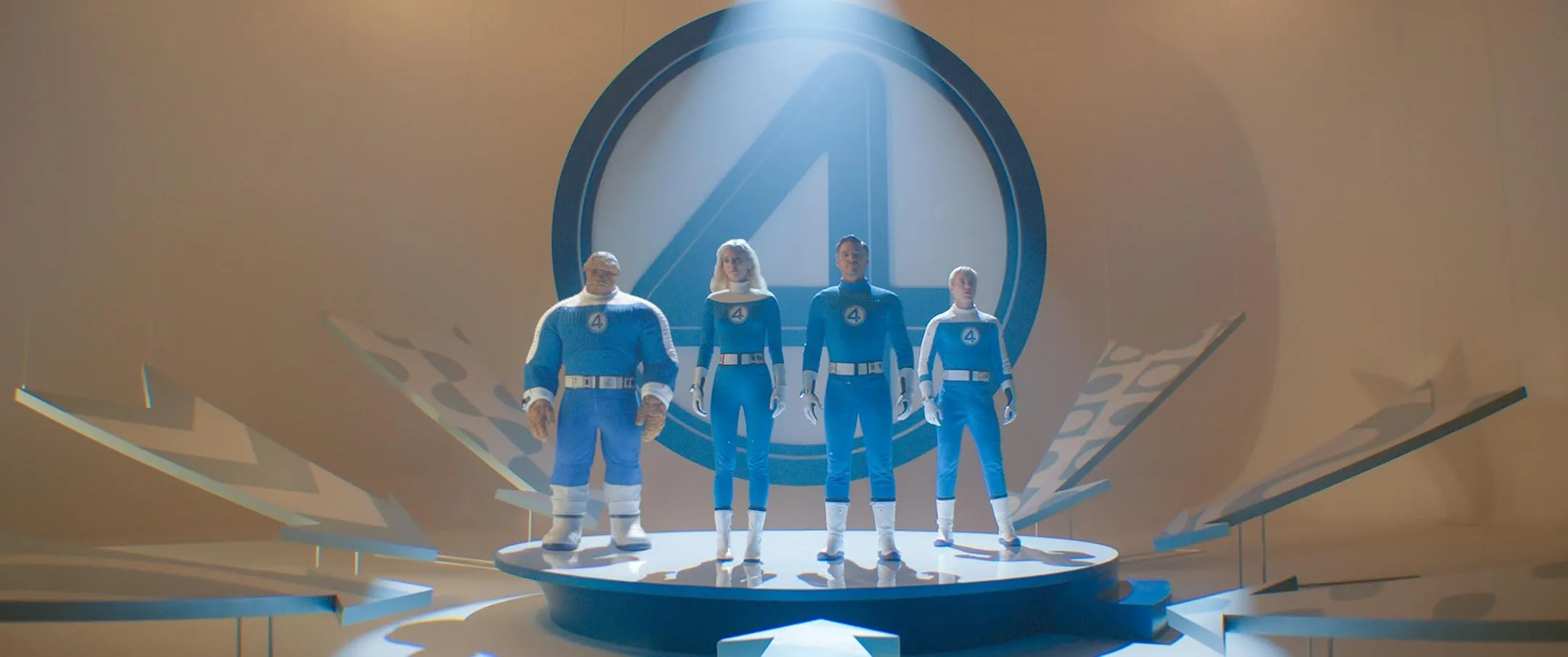
The film’s most immediate and defining success is its aesthetic. Director Matt Shakman and production designer Kasra Farahani have constructed an alternate 1960s with breathtaking conviction, a retro-futuristic landscape that feels pulled from the most hopeful, ink-saturated panels of a Silver Age comic.
This is the future as promised by the World’s Fair, realized not as a sterile fantasy but as a tangible, lived-in reality. The architecture of the Baxter Building, a marvel of cantilevered floors and panoramic glass, is softened by the warm wood tones and textured fabrics of its domestic spaces. This world-building is more than mere set dressing; it is a thematic statement.
The utopian qualities of this New York, from the friendly, whirring efficiency of the robotic assistant H.E.R.B.I.E. to the elegant, silent swoop of the Fantasticar through pristine city canyons, are a direct result of the Four’s benevolent influence.
They have engineered a better world, one where technology serves humanity with grace. Michael Giacchino’s score reinforces this vision, providing a classic, brass-filled orchestral soundscape. Its heroic fanfares and soaring melodies feel both authentically of the period and timelessly cinematic, a perfect complement to a world that dares to be inspiring.
A Family Forged in Cosmic Rays
The film’s emotional weight rests entirely on the palpable, lived-in chemistry of its central quartet. They operate as a genuine, sometimes fractious, family unit, and it is this dynamic that gives the cosmic proceedings their soul. Pedro Pascal portrays Reed Richards as a man whose towering intellect is both a gift and a prison.

His mind can solve the riddles of the universe, but it leaves him isolated and anxious, a condition exacerbated by his impending fatherhood. Pascal gives this internal conflict a quiet, desperate gravitas, showing a man literally stretching himself thin.
Counterbalancing him is Vanessa Kirby’s Sue Storm, who is positioned not as a reactive damsel but as the team’s unwavering tactical and emotional leader. She is a stateswoman and a scientist, and Kirby embodies her with a fierce, steely resolve that makes her the group’s true anchor, her invisibility a stark contrast to her powerful presence.
The undeniable heart of the team is Ebon Moss-Bachrach’s Ben Grimm. Rendered in photorealistic CGI, The Thing could have been a lumbering special effect, yet Moss-Bachrach infuses the rock-hewn giant with extraordinary warmth and sensitivity.
The pathos of his condition is acute; his sadness is visible in the soft glow of his eyes and the careful, hesitant way he moves through a world no longer built for him. His quiet yearning for normalcy, shown in a touching subplot with a local teacher played by Natasha Lyonne, is deeply affecting.
Joseph Quinn provides the necessary spark as Johnny Storm, a charming hothead whose bravado masks a deep-seated need for his family’s approval. His flirtatious, almost boyish interactions with the film’s herald of doom add an unexpected layer of humanity to both characters.
That herald, Julia Garner’s Shalla-Bal, is an eerie, chrome-plated figure whose emotionless facade eventually cracks to reveal a sorrowful history. Garner’s performance is one of stillness, conveying cosmic weariness with the slightest shift of her gaze. Looming behind her is Galactus, given a terrifyingly immense voice by Ralph Ineson. He is less a villain and more a force of nature, an ancient cosmic entity whose hunger is a simple, horrifying fact of the universe.
An Impossible Choice
By dispensing with the origin, the narrative propels itself forward with dual engines: the personal milestone of a coming child and the cosmic threat of a planetary devourer. The script cleverly intertwines these threads, creating a central conflict that is far more potent than a simple fight for survival.

Galactus, in a moment of chilling reason, presents the team with an impossible choice: sacrifice their unborn son, Franklin, to spare the Earth. This ethical dilemma elevates the story, transforming it from a disaster movie into a harrowing moral test that questions the very nature of heroism. The film’s pacing is deliberate, allowing the first act to luxuriate in the characters’ world before the crisis hits.
The second act sees the team on the defensive, a shift in momentum that allows the weight of their choice to settle. This section is a study in tension, as Reed’s frantic search for a scientific solution clashes with Sue’s primal need to protect her child.
The narrative slows, but it is a purposeful lull, thick with dread and debate. The climactic confrontation, when it arrives, is a large-scale event, yet the focus remains squarely on the family’s decision and the unity required to face a god. The resolution is not found in a punch, but in an answer to an impossible question.
Crafting Gods and Monsters
The technical craft on display is exceptional, with visual effects that work to serve character rather than overwhelm the screen. The Thing possesses an expressive weight that makes him feel entirely present and real, his rocky hide seemingly carrying the burden of his sorrow.
The Silver Surfer moves with a sleek, otherworldly grace, the light of distant stars refracting from her metallic skin as she glides through the cosmos. The film’s depiction of Galactus is a triumph of scale. He is not just big; he is an awesome, terrifying presence that dwarfs the Manhattan skyline, a true godlike figure from the pages of a comic book brought to stunning, terrifying life. The action sequences are constructed with purpose and creativity.
A scene involving the birth of Franklin in zero-gravity during a desperate escape is a moment of unique and breathtaking tension, a masterful blend of intimate drama and sci-fi spectacle. The final battle is a showcase of ingenuity over brute strength. It is a conflict resolved through strategy and the combined, clever use of the team’s powers, reinforcing the film’s core idea that the greatest weapon is a brilliant, unified mind.
The Blueprint for a Better Hero
What lingers after the credits is the power of the film’s central ideas. It makes a quiet but firm argument that a family’s bond is its own kind of superpower, the one force capable of standing against an indifferent cosmos.
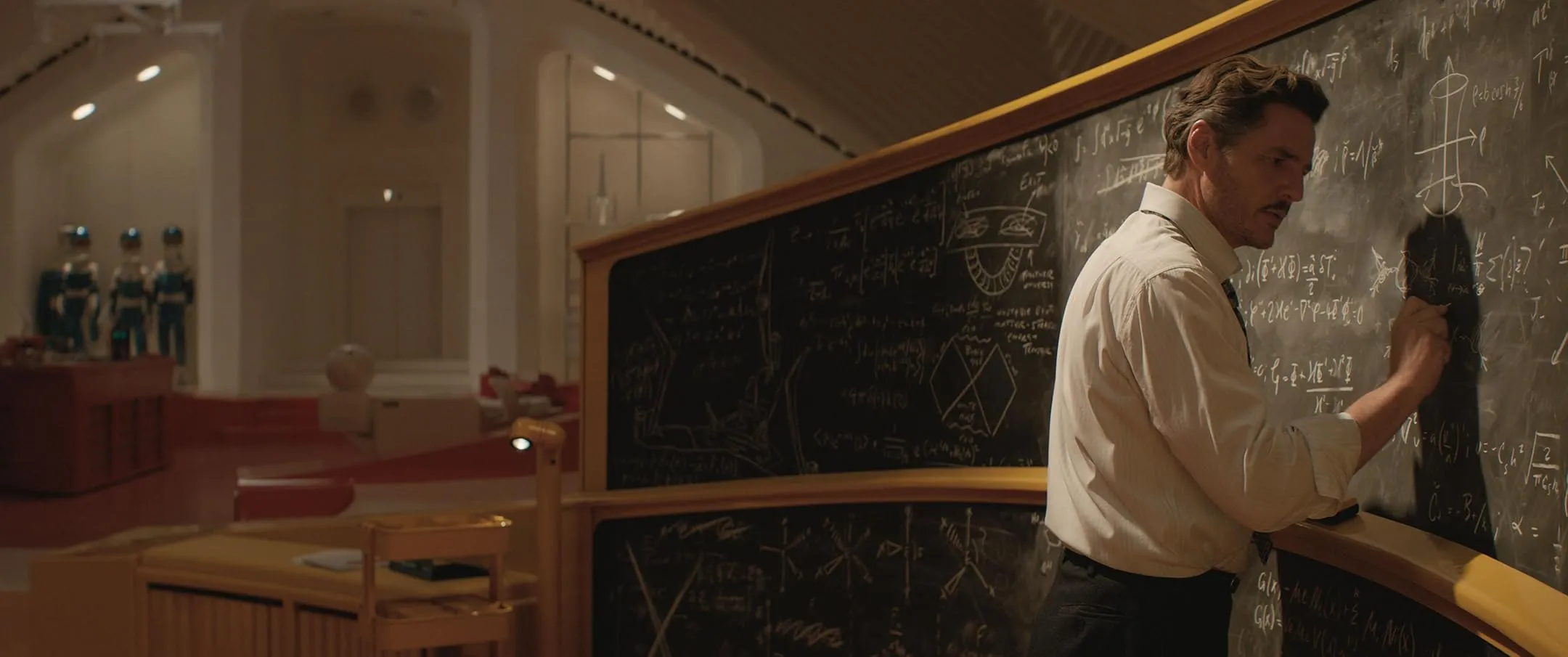
The narrative consistently champions intelligence, reason, and diplomacy over fists and firepower. Reed’s mind and Sue’s leadership are presented as the team’s greatest assets, a potent counter-narrative to the genre’s frequent celebration of might. First Steps succeeds as a self-contained story, a refreshing piece of filmmaking that does not require homework or a deep knowledge of a sprawling cinematic mythology.
It is an accessible, hopeful statement on the potential of its genre, proof that such stories can explore complex emotional and ethical territory without sacrificing wonder. The film suggests that a superhero story can be, above all, a human story—a tale of flawed but decent people working together to build a better, brighter world.
Full Credits
Director: Matt Shakman
Writers: Josh Friedman, Eric Pearson, Jeff Kaplan, Ian Springer
Producers: Kevin Feige
Executive Producers: Louis D’Esposito, Grant Curtis, Tim Lewis, Robert Kulzer
Cast: Pedro Pascal, Vanessa Kirby, Ebon Moss-Bachrach, Joseph Quinn
Director of Photography (Cinematographer): Jess Hall
Editors: Nona Khodai and Tim Roche are listed as editors.
Composer: Michael Giacchino
The Review
The Fantastic Four: First Steps
With its confident vision, emotional depth, and stunning retro-futuristic design, The Fantastic Four: First Steps is a triumphant return for Marvel's first family. The film champions intelligence over brute force and finds its power not in cosmic battles, but in the intimate bonds of its central quartet. While a deliberate slowdown in the second act may test some viewers, the journey is a beautifully crafted, hopeful, and deeply human adventure. It stands as a remarkable achievement and a potential new blueprint for the superhero genre.
PROS
- The four leads create a believable and compelling family dynamic that provides the film's emotional core.
- The 1960s retro-futuristic aesthetic is visually gorgeous and thematically rich.
- The plot is driven by a powerful personal dilemma rather than just a generic world-ending threat.
- Offers a refreshing, optimistic alternative to the cynicism prevalent in many modern superhero films.
- The character designs for The Thing, Silver Surfer, and Galactus are masterfully realized.
CONS
- The film's momentum noticeably slows during the second act.
- Some interesting side characters are given limited screen time.
- Despite a unique resolution, the final confrontation leans on the familiar trope of a massive threat descending upon a major city.







