
























![Kingdom Hearts Collection [I-III] Review](https://gazettely.com/wp-content/uploads/2026/10/Kingdom-Hearts-Collection-I-III-1-360x180.webp "Kingdom Hearts Collection [I-III] Review: KHII Holds Steady as Newer Entries Fluctuate 37")





There are certain ideas so perfectly formed they seem to exist in our collective imagination long before they are made real. The fantasy of living a simple, peaceful life in the Shire is one of them. For anyone who has found comfort in the pages of Tolkien or solace in the quiet toil of games like Stardew Valley, the concept is a promise of pure hygge.
Tales of the Shire attempts to deliver on that promise, placing you in the hairy feet of a new hobbit in the sleepy community of Bywater. You inherit a neglected hobbit-hole and are gently nudged toward the goal of helping your new home gain official village status.
The game beautifully captures the painterly aesthetic and deep lore of its source material, a love letter to the quiet corners of Middle-earth. Yet, this undeniable charm is in a constant battle with shallow gameplay and profound technical flaws, resulting in a game of wonderful ideas that falter in their execution.
The Heart of the Hobbit: Cooking and Community
At the center of any hobbit’s life is the kitchen, and it is here that Tales of the Shire feels most alive and fully realized. The cooking system is the game’s strongest feature, a genuinely engaging minigame that asks you to be a culinary artist. Every dish is a balancing act. You must consider the texture, adjusting your preparation along a Chunky/Smooth axis by how vigorously you chop, and a Crisp/Tender axis based on your work with a frying pan.
On top of this, you add seasonings to create different flavor profiles like Sweet, Salty, or Sour. There is a tactile satisfaction in the sizzle of the pan and the thud of the cleaver that connects you to the fantasy. This isn’t just pressing a button to craft; it’s a performance. Imagine making a simple fish pie. The process begins not in the kitchen, but out by the river with a flimsy fishing rod.
Once you secure your catch, you return home. In the kitchen, the process becomes a series of satisfying actions: kneading dough, vigorously chopping potatoes to make them smooth, then gently frying the fish to keep it tender. Each step is a small, interactive moment that makes the final product feel earned.
This delightful system is elegantly woven into the game’s social fabric. Instead of grinding for cash, your progress is tied to the bonds you form. You advance by building friendships, and the primary way to do that is through “Shared Meals.” You invite your neighbors over, learn their culinary cravings, and attempt to serve them a perfect dish.
A successful meal strengthens your bond, which in turn unlocks new recipes, tool upgrades, and home improvements. This focus on hospitality as the core progression path feels wonderfully authentic to the source material. It’s a design choice that understands hobbits. The problem is that the hobbits themselves feel less like friends and more like objectives. The game fails to translate this mechanical community into an emotional one.
The interactions are heavily scripted and limited to these mealtime events. You might see a neighbor walking through town, but they have little to say. The world lacks the emergent, surprising moments that make virtual towns feel alive. There are no recurring festivals, no spontaneous gatherings at the Green Dragon Inn, no sense that these people have lives outside of waiting for your dinner invitations.
This emptiness is punctuated by their strangely demanding nature. Ignore a hobbit for too long, and you’ll receive a curt letter from the postman, chiding you for your lack of hospitality. This creates a bizarre dissonance, where the game’s system punishes you for not engaging with characters who give you very little reason to care about them beyond the tangible rewards they provide. The warmth of the hobbit community, so central to the lore, is rendered as a cold, transactional system.
The Daily Toil: Shallow Chores and Repetitive Quests
Once you step outside the kitchen, the game’s mechanical depth drops off sharply. Your gardening efforts, a cornerstone of the life-sim genre, are confined to small, sterile planter boxes. There’s a neat strategic puzzle in arranging companion plants to boost crop quality, and figuring out the optimal layout for your radishes and cauliflowers provides a brief spark of satisfaction.

But the fantasy of sinking your hands into the good tilled earth of the Shire is absent. You look at the lush, beautiful gardens outside every other hobbit-hole, filled with plants growing directly from the soil, and you are left to wonder why you are restricted to these wooden containers. The system feels artificial and limited, a shadow of what it could have been.
Fishing is even more simplistic to the point of being hollow. The activity is the same every single time: you go to one of a few designated spots, cast your line, and engage in a basic, unvarying button-press minigame. The true disappointment comes with progression. After hours of work, you might complete a series of quests to earn an upgraded fishing rod.
In any other game, this would be a moment of excitement, unlocking new possibilities. Here, it means nothing. You return to the same spots to catch the exact same fish with the exact same method. The reward for your effort is effectively nonexistent, which makes the time invested feel disrespected.
These activities support a quest structure that heavily relies on running back and forth across the small map. The main story feels more like a tutorial that overstays its welcome than a compelling narrative arc. A typical quest might involve trying to find a missing book. You’ll be sent from one hobbit to the next in a long chain of conversations, padding out a simple task by forcing you to traverse the entire village multiple times. This loop becomes tedious quickly.
The central narrative of getting Bywater recognized is surprisingly brief and feels disconnected from these daily chores. Its requirements are so low that you can complete it without meaningfully engaging with the friendship or club systems, leaving the post-game feeling utterly directionless. The game lacks a clear structural rhythm, a sense of one system feeding into another to create a cohesive and motivating experience.
A Place to Call Home: Hobbit-Hole Customization
A key part of the appeal in this genre is making a space your own, pouring your personality into a virtual home until it becomes a sanctuary. Tales of the Shire begins this journey promisingly. Your inherited hobbit-hole is a wreck, with a broken door, smashed gates, and a garden choked with logs. The initial hours spent repairing this space provide a clear and satisfying sense of accomplishment.

With each fixed fence and cleared path, the place begins to feel more like a home. It’s a strong start that makes the limitations that follow all the more frustrating. Once the structural repairs are done, your ability to express yourself is severely limited.
The furniture selection, while aesthetically perfect for the setting, is surprisingly small. Worse, the interior layout of your home is completely static. You cannot move walls, add windows, or reshape your space in any significant way. This rigidity stifles creativity. You might have a vision for a cozy reading nook by the fire, but if the pre-set layout doesn’t allow for it, you’re simply out of luck.
This stands in stark contrast to other games in the genre that treat the player’s home as a personal canvas. Here, it feels more like you are decorating a model home with a catalog of pre-approved items. The decorations are also purely cosmetic, lacking the gameplay functions that can make furnishing a home a strategic choice.
Ultimately, the system succeeds in creating a house that looks exactly like a hobbit-hole should, but it provides few tools to make it feel like your hobbit-hole, weakening the emotional bond between player and place.
A Disturbance in the Peace: Pervasive Technical Issues
Any sense of cozy immersion the game manages to build is consistently shattered by its technical state. These are not minor, occasional issues; they are foundational problems that define much of the experience. Performance is a constant struggle. Simply entering Bywater can cause the framerate to plummet, turning what should be a pleasant stroll into a stuttering slide show.
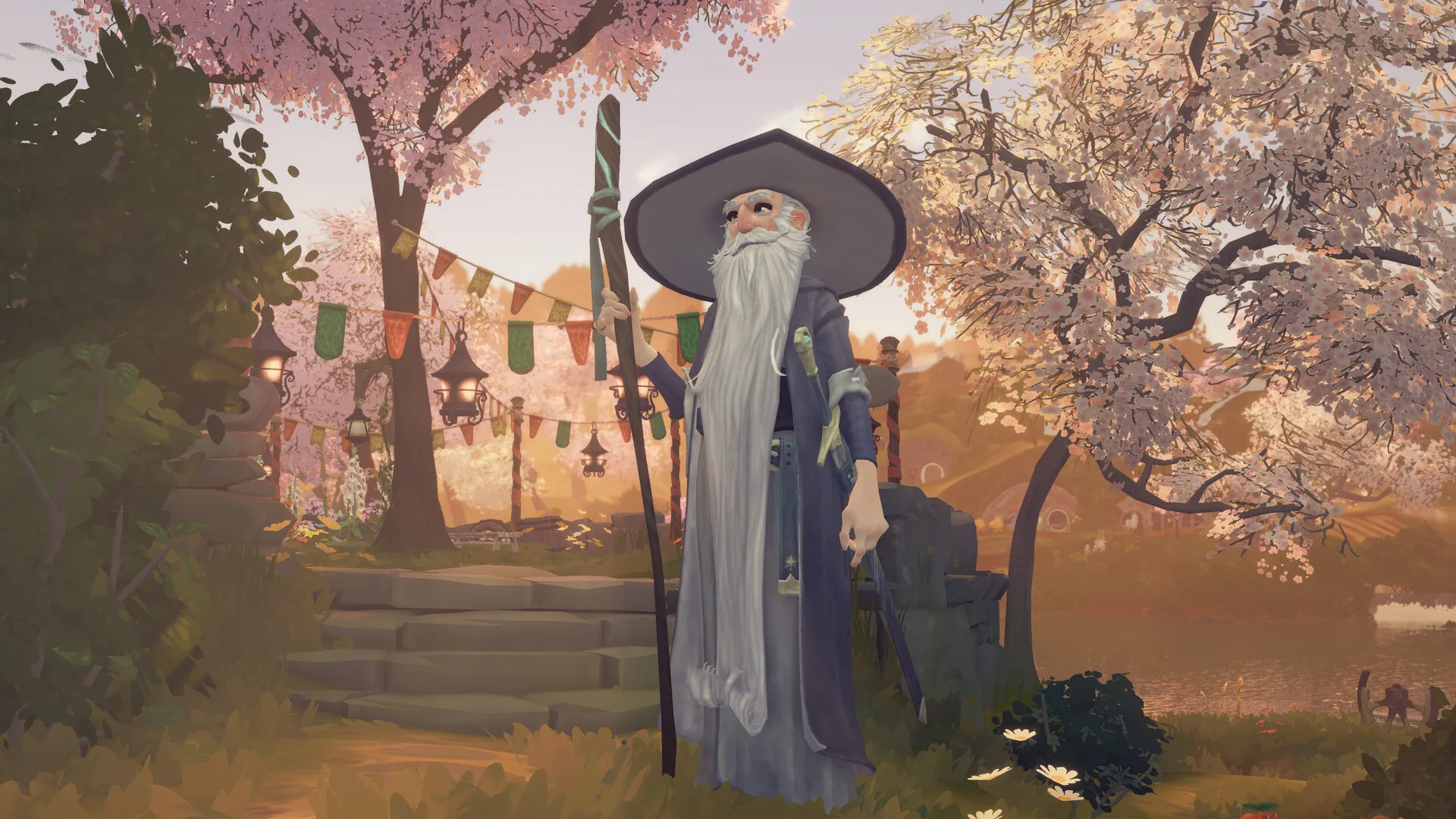
It’s difficult to appreciate the painterly art style when the world is constantly tearing and textures are popping into view just inches from your character’s face. This persistent instability makes the simple act of navigating the world a chore.
Beyond the poor performance is a host of bugs and frequent crashes. The game can crash to the desktop without warning, often erasing an entire day’s progress. The frustration of this cannot be overstated. Imagine spending twenty minutes gathering rare seasonal ingredients, carefully preparing a perfect three-star meal to finally win over a difficult neighbor, only for the game to crash on the results screen, wiping out all your effort.
It’s a narrative and emotional gut punch delivered by poor programming. Other bugs are less devastating but just as immersion-breaking. You might encounter a hobbit with no textures, a smooth, featureless mannequin having a silent conversation with a fence post. The fishing UI might vanish, forcing you to rely on controller vibrations alone to know when to reel in. These technical flaws are not just annoyances. They actively undermine the game’s core premise, transforming a world designed for relaxation into a source of frustration.
Final Thoughts on a Flawed Paradise
Tales of the Shire presents a potent fantasy, one of quiet days and warm hearths in the most comforting corner of fiction. Its central cooking mechanic is a triumph of design, and its dedication to Tolkien’s lore is evident in every corner of Bywater.

Yet, the experience is like a beautifully decorated pie with an under-baked filling and a burnt crust. The core concept is let down by shallow supporting mechanics, a lack of meaningful progression, and disruptive technical failures that make relaxation difficult.
It feels like a journey that ended too soon, offering a tantalizing glimpse of a wonderful cozy game that, sadly, remains just out of reach.
The Review
Tales of the Shire: A The Lord of the Rings Game
Tales of the Shire is a heartbreaking glimpse of a brilliant idea. Its charming world and fantastic cooking system are a perfect tribute to Tolkien's vision of hobbit life. However, this delightful core is buried under an avalanche of severe technical problems, repetitive quests, and gameplay systems so shallow they offer no lasting satisfaction. What should have been a relaxing escape into Middle-earth is too often a frustrating, unfinished journey. It captures the look of the Shire but fails to deliver its soul.
PROS
- An inventive and satisfying cooking mechanic is the game's highlight.
- The art style and world design beautifully capture the cozy aesthetic of the Shire.
- Progression tied to friendship instead of money is a clever, lore-appropriate concept.
CONS
- Pervasive technical issues, including frequent crashes and debilitating performance drops.
- Gameplay loops like fishing and gardening are overly simplistic and lack depth.
- Quest design is monotonous and heavily reliant on repetitive fetch quests.
- Home customization is extremely limited and offers little room for creativity.
- The world feels static and the hobbit community lacks life outside of scripted meal events.







