



























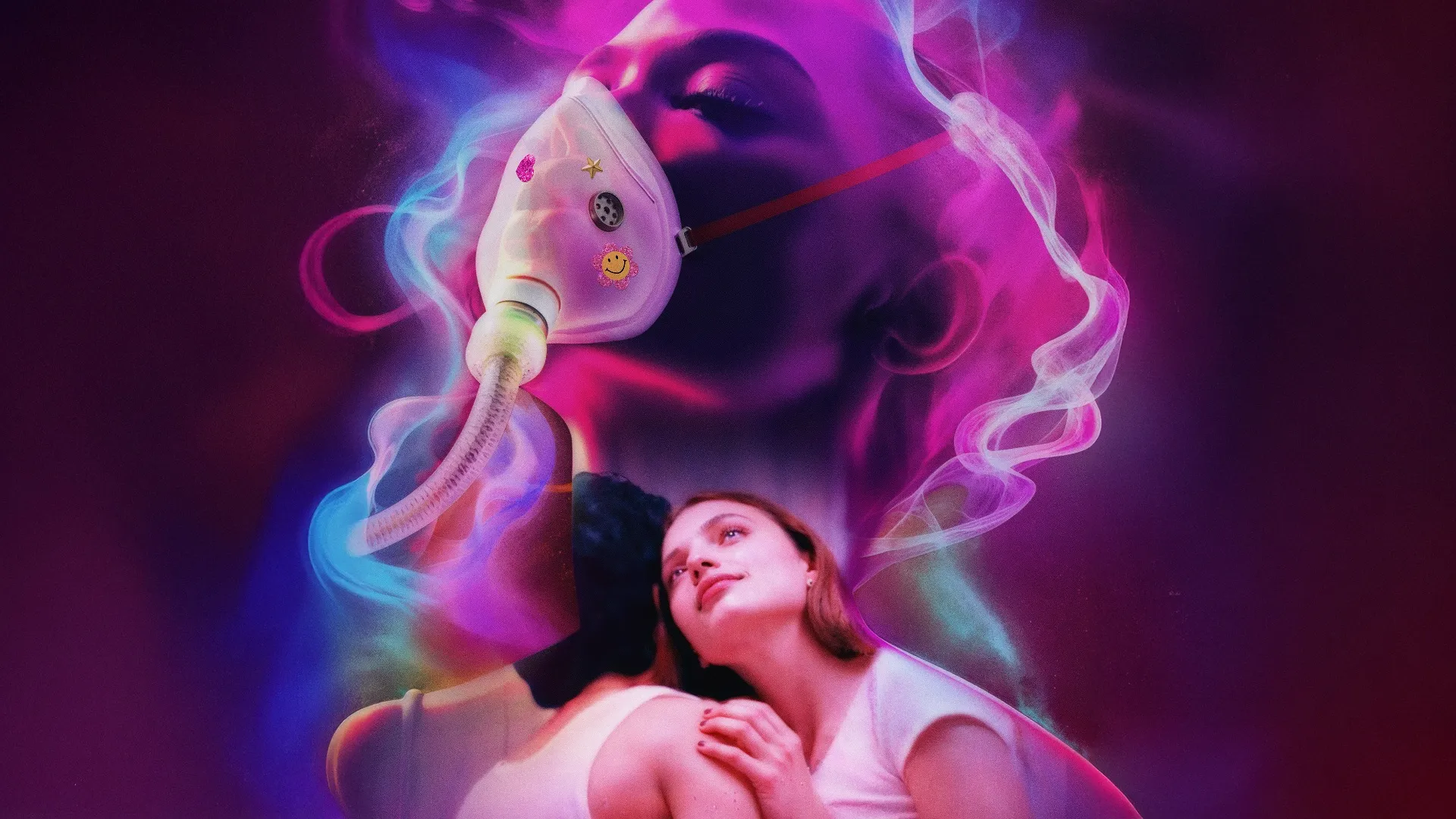

To be young is to inherit a world you did not make, a void decorated with the artifacts of previous generations. Snorkeling presents the latest ritual for this inheritance: a chemical communion called “troxy,” inhaled through a mask in a rite that gives the film its name. Here we find Michael, a boy who sees the world through a lens, and Jameson, the girl who offers him a way to dissolve it.
Theirs is not a simple romance. It is a relationship brokered by a third party, the drug itself, a shared sacrament against the crushing weight of a future that seems to promise nothing. They are children of a quiet suburbia, where material comfort conceals a profound spiritual famine, and their escape is not into rebellion, but into a beautiful, synthetic dream.
The Architecture of Sensation
Emil Nava does not direct a film so much as he constructs a cathedral of feeling, a sensory space where reality is subordinate to style. His past in music videos is evident not as a crutch, but as a native language for expressing interior states.
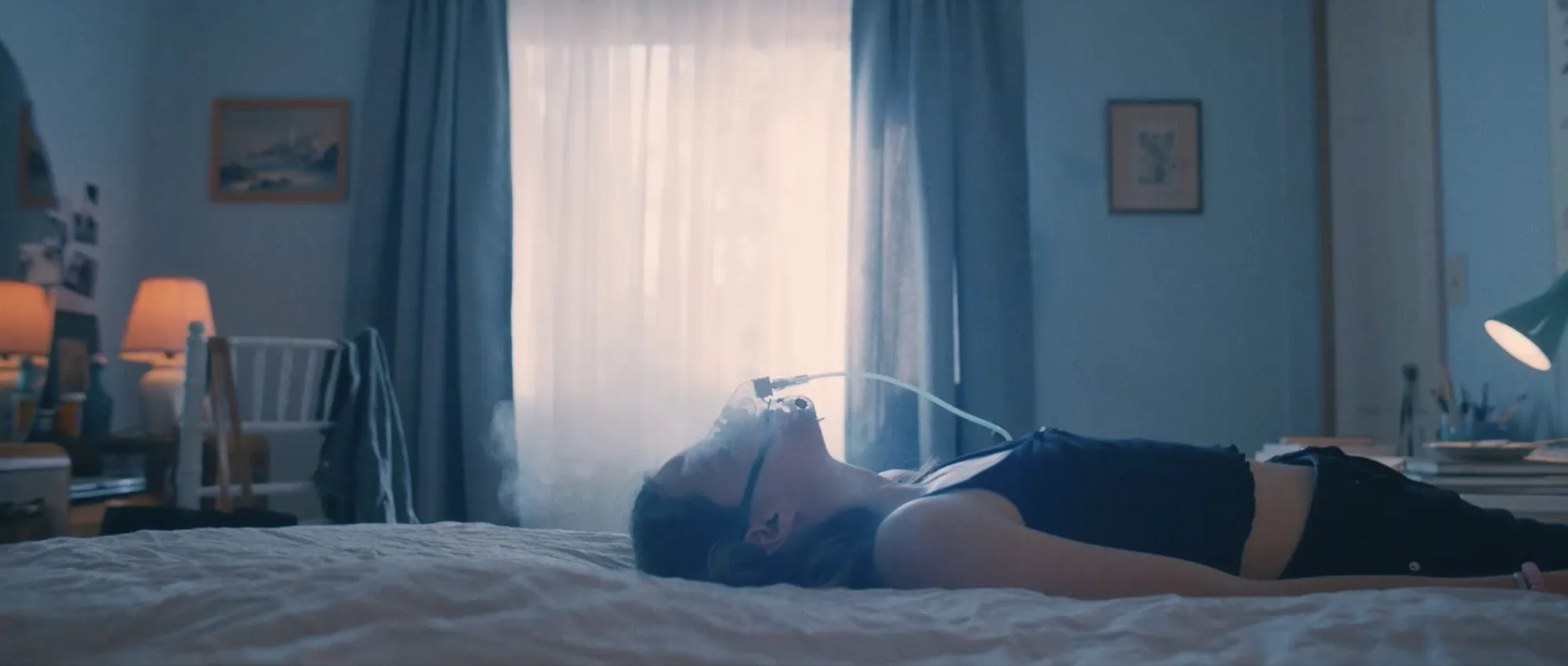
The screen dissolves into a fever dream painted in rose and neon, a cascade of distorted perceptions where hallways stretch into infinity and faces melt in the digital static. This is a deliberate rejection of the objective world, a flight into a solipsistic paradise built from light and code. The hallucinatory flights are the film’s true destination, its most honest form of expression.
Reality, by comparison, is merely the departure lounge, a grey space to be endured between trips. The narrative is fractured, abandoning the logic of sequence for the pure immediacy of sensation. What results is a series of atmospheric vignettes that pulse to the rhythm of an overpowering soundtrack.
This sonic tide is not mere accompaniment; it is an architectural element, washing over everything, filling the silences where meaningful dialogue might otherwise exist, and guiding emotion where a script would have guided thought. The experience is total immersion by design, a surrender to a carefully engineered perception, a choice to feel everything precisely because the characters wish to feel nothing of their actual lives.
Ghosts in the Machine
Who are Michael and Jameson? Are they people, or are they ghosts haunting the shell of a generation? They drift through their affluent homes like specters, blessed with everything except a reason to exist. This suburban comfort is the source of their peculiar torment; freedom from material want has left a vacuum where a soul should be.
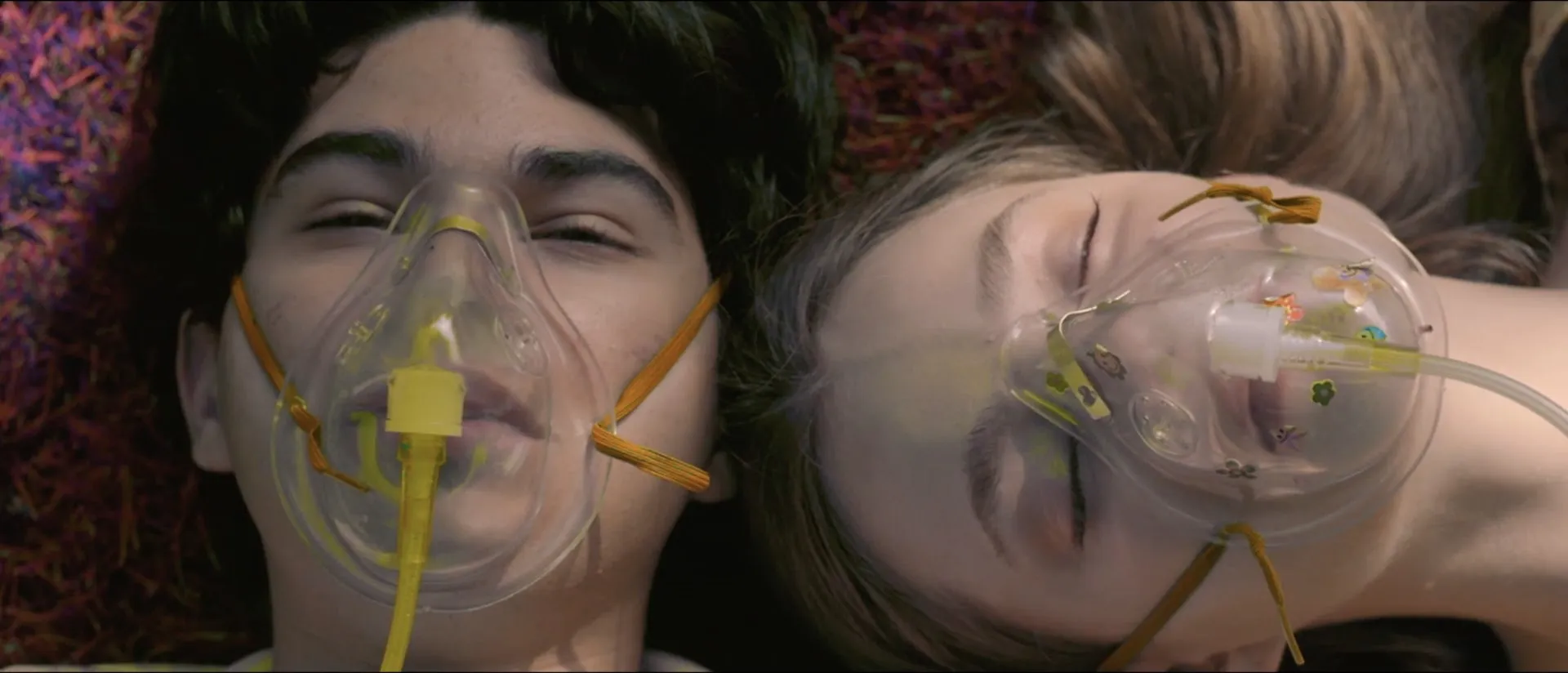
They are vessels for a pervasive cultural ennui, figures lacking the agency of classic protagonists. Their actions feel dictated by a pre-written script of youthful despair. We watch them performing a sorrow that feels both deeply felt and strangely inauthentic. Their dialogue is a collection of whispered, poetic aphorisms that feel less like human speech and more like transmissions from a collective unconscious.
Daniel Zolghadri and Kristine Froseth are tasked with an impossible performance: to embody an absence, to portray the human form as a container for a mood. Their connection is not one of chemistry but of a shared resonance with the void.
At times, they turn to the camera, confessing to an unseen interrogator, an absent god. This shattering of the cinematic dream does not draw us closer. It is a pseudo-confession, a performance of intimacy that only reinforces their isolation, a cry for help directed at an audience that can do nothing.
The Beautiful, Empty Promise
The film asks a timeless, terrifying question: when the world offers no meaning, is it not rational to invent your own? Snorkeling suggests that transcendence is now a commodity, a shortcut available to a generation promised instant gratification in all things.
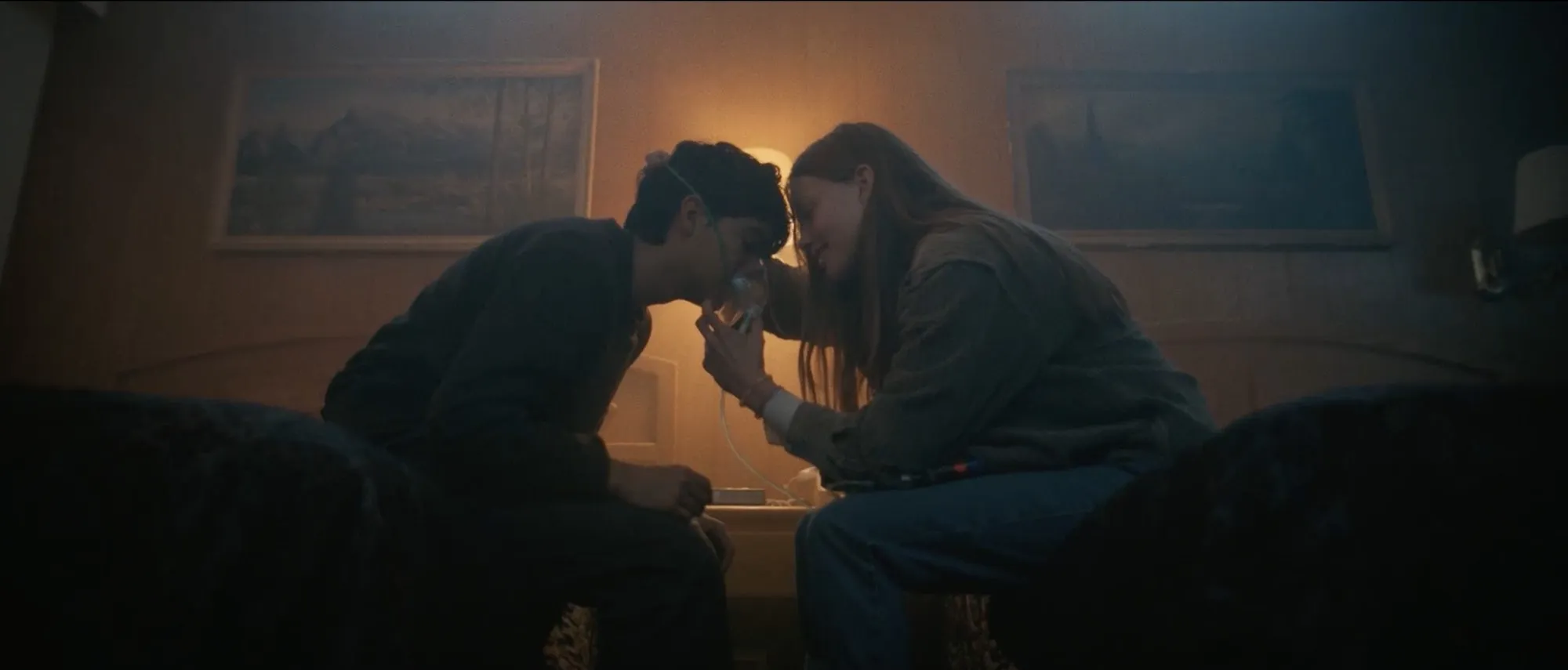
For a time, the drug appears as a valid answer, a key to a private heaven that reliably dispenses a manufactured profundity. Nava’s camera lingers on the sublime beauty of this escape, presenting addiction not as a disease but as a spiritual choice, a temporary cure for the soul’s malady. The danger is a distant rumor, a specter that only arrives when the aesthetic pleasure begins to wane.
Herein lies the film’s central failure of nerve. It presents a designer addiction, an art-directed self-destruction scrubbed of grime and stripped of the visceral terror of true physical decay. It aestheticizes the fall, making it another beautiful object for consumption.
The film perfectly captures the symptom of a generation’s despair—the desperate need to escape—but it shies away from the horrifying reality of the disease itself. Its brevity feels less like an artistic choice and more like an admission that the idea is too thin to sustain itself, a high that is potent but mercifully short.
“Snorkeling” is a 2023 drama film directed by Emil Nava. It premiered at the Manchester Film Festival, where it won Best Cinematography. The film was digitally released in the United States on July 25, 2025. You can currently rent or buy the film on platforms like Apple TV, Fandango At Home, Google Play Movies, YouTube, and Plex.
Full Credits
Director: Emil Nava
Writers: Jack Follman
Producers: Brian Kavanaugh-Jones, Mark Gillespie, David Ayer, Chris Ferguson, Emil Nava
Cast: Kristine Froseth, Daniel Zolghadri, Brian Ioakimedes, Tim Johnson Jr., , Michael Jakes, Craig March, Rosie Sedghi, Lee Tomaschefski
Director of Photography (Cinematographer): Patrick Meller
Editors: Graham Fortin
Composer: Michael Yezerski
The Review
Snorkeling
Snorkeling is a sensory masterpiece and a narrative ghost. It perfectly captures the disaffected mood of a generation through its stunning, hallucinatory visuals and immersive soundscape, creating a potent atmosphere of beautiful despair. However, this stylistic triumph comes at the cost of story and soul. The characters are hollow vessels, and the film’s sanitized portrayal of addiction feels like a profound failure of nerve. It’s a gorgeous, meticulously crafted film about being lost that ultimately has nothing meaningful to say about the state of being found.
PROS
- Visually arresting, with creative and memorable hallucinatory sequences.
- A powerful and atmospheric soundtrack that effectively drives the film's mood.
- Successfully captures a specific feeling of youthful alienation and ennui.
- A unique aesthetic that blends music video sensibilities with cinematic language.
CONS
- A weak, fractured narrative that lacks forward momentum.
- Characters are one-dimensional and emotionally distant.
- The depiction of addiction is overly clean and lacks consequence.
- Its heavy focus on style creates a superficial and hollow viewing experience.