



















Sports documentaries are everywhere now, but every so often one comes along that feels less like a victory lap and more like a cultural document. Built In Birmingham: Brady & The Blues is one of those shows. It drops us into the world of Birmingham City FC, a club defined by its working-class roots and a long history of just about getting by.
The series kicks off when American financier Tom Wagner and his firm Knighthead Capital take the keys to the kingdom, bringing with them a very big gun: NFL icon Tom Brady. From the opening moments, it is clear this is not just a story about football. It is about the collision of American high-finance and data-driven ambition with the stubborn, heartfelt soul of English sport. The project is framed as a “rebirth,” but the central question is what has to die for that to happen.
The Gospel of Brady
The series orbits Tom Brady like a planet, and his gravity bends the entire narrative. Despite his minority stake, he is the ideological engine of the show, and the filmmakers wisely position him as our complex, often inscrutable, protagonist. We see a fascinating, and at times uncomfortable, culture clash play out in real-time.
Brady’s philosophy, forged in the hyper-competitive furnace of the NFL, is all about eliminating weakness and maximizing every edge. It’s a mindset rooted in the American conception of sport as a science of eternal sacrifice and limitless dedication. I was reminded of visiting the US and trying to explain the quiet, communal satisfaction of a hard-fought 0-0 draw in football; it’s a cultural language he does not yet speak, a sentiment that doesn’t compute on a spreadsheet of wins and losses.
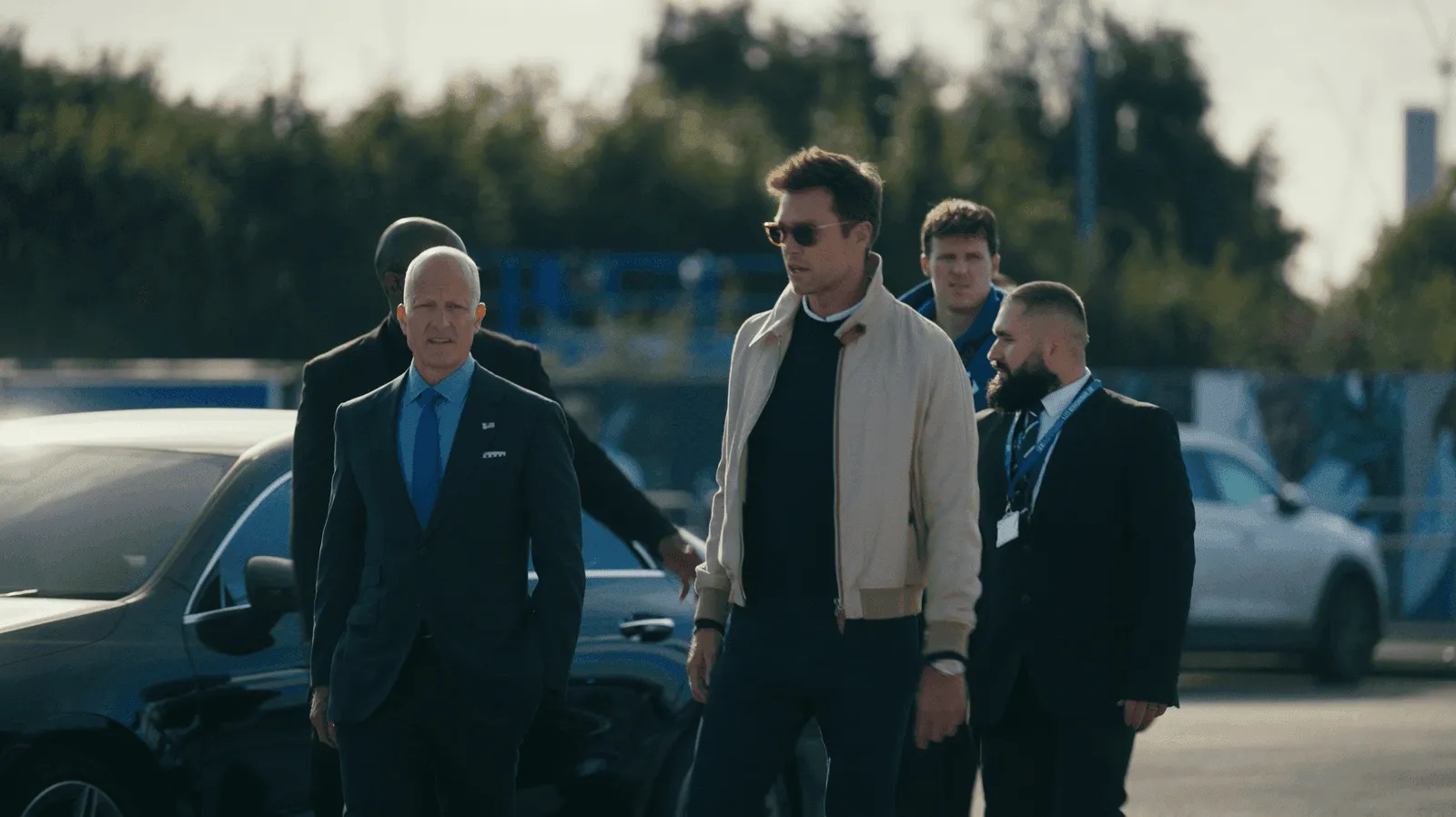
The show excels by refusing to sand down his sharp edges. He is presented as a kind of sporting sociopath, a control freak so absolute that he has his own satnav running while being chauffeured. The documentary’s cinematography supports this, often framing him in tight, intense close-ups that emphasize his piercing gaze.
This is juxtaposed with sweeping shots of his almost alien lifestyle: the private jets, the impossibly large water bottle, the Caribbean beach vacations. When placed against the cold, grey, unmistakably English backdrop of Birmingham, the contrast is stark and intentional. He is not one of them. The show’s most revealing moments come from this friction.
It captures his candid, cutting assessments of players he deems lazy and entitled, and his private questioning of manager Wayne Rooney’s work ethic. We see him awkwardly navigating a pub full of fans, a man visibly out of his element, even asking his handlers if he will have to shake hands. Minutes later, we see him trash-talking Peterborough supporters with a profane ferocity that is both shocking and deeply revealing of the competitor within.
The series leaves his motivation open to interpretation. Is he a missionary for a winning mindset or is this the ultimate celebrity vanity project? The frequent, slickly edited cuts to his own NFL glory days, turning a Birmingham team talk into a backdrop for his own legend, suggest the truth is a complex and perhaps cynical mix of both.
From Catastrophe to Coronation
The narrative structure of the season itself is a rollercoaster, and the editing sharpens every peak and valley, creating a powerful two-act structure of hubris and correction. The story begins with a truly baffling decision: firing the popular manager John Eustace while the team was performing well.
The series presents this not as a cold calculation, but as the ownership’s first major, unforced error. The filmmakers portray the subsequent hiring of footballing legend Wayne Rooney as the inciting incident for a complete disaster. The pacing here is brilliant, becoming frantic and unsettling. The editing uses jarring cuts and shaky, handheld footage during team talks to mirror the team’s freefall down the league table.
The sound design uses a recurring, unpleasant tinnitus-like beep whenever the team concedes a goal, putting the viewer directly into a state of anxiety that culminates in a painful and humiliating relegation to League One. It’s a spectacular miscalculation, laid bare for all to see, with the documentary unflinchingly showing us the raw anger and despair in the dressing room.
The second act of the story is a hard pivot, and the entire cinematic language of the show shifts. The frantic pacing is replaced by a calm, confident glide. The shaky camera gives way to sweeping, heroic shots of the stadium and triumphant musical scores. This half of the story is about the ownership’s response: a firehose of cash. We watch as expensive new players arrive, like the £15m forward Jay Stansfield, whose journey becomes a key subplot.
We are also introduced to figures like striker Alfie May, who the camera loves for his humble, down-to-earth demeanor, providing a necessary emotional anchor amidst the high finance. The hiring of rookie manager Chris Davies, a calculated risk, is framed as a masterstroke. The show tries to build suspense around their campaign in the lower league, but the outcome feels certain.
The filmmaking choices reflect this. The team’s journey is often shown in montage, a cinematic shorthand for inevitable progress. This part of the series is a portrait of overwhelming force, not a tense battle. Birmingham’s record-breaking promotion is less a fairytale comeback and more a calculated, and extremely expensive, market correction, demonstrating a philosophy of problems being solvable if you throw enough money at them.
The Polished and the Raw
As a piece of filmmaking, Built In Birmingham exists in a strange, fascinating space between slick corporate promotion and a surprisingly frank documentary. It’s a cultural artifact that speaks volumes about the current state of sports entertainment.

The producers try hard to weave the club into the fabric of the city, using poignant fan interviews, including one who perfectly captures the local spirit: “Everyone says Birmingham is a shhole, but it’s our shhole.” This fierce, protective pride is what the new ownership wants to bottle and sell.
Yet, their attempts can be clumsy. The repeated inclusion of clips from the drama Peaky Blinders feels like a heavy-handed and superficial attempt at establishing a tough-guy credibility, a rare misstep in an otherwise savvy production. It’s an outsider’s idea of what Birmingham culture looks like.
The show’s real strength, and what elevates it above its peers, is its willingness to keep the raw, unpolished moments in. The on-pitch story in the second half lacks genuine jeopardy, but the decision to include Brady’s unfiltered car-ride commentary or a player telling a cameraman to leave the dressing room after a loss gives the series a vital, authentic pulse.
The filmmakers understand that in a post-Welcome to Wrexham world, pure slickness is suspect. Curated authenticity is the new currency. The comparison to the Wrexham documentary is unavoidable and instructive. That show was about Hollywood charm meeting Welsh town dreams. This is about New York finance executing a corporate strategy.
The narrative here is less an underdog tale and more a look at a high-risk, high-stakes reinvention. It depicts a beloved local institution being openly discussed by its chairman, Tom Wagner, as a “product” and an “opportunity.” The series doesn’t judge this so much as it presents it as the new reality of globalized sport, asking what it really means for the soul of a club when its future is determined by men who see it as another asset in a portfolio.
Full Credits
Director: Gotham Chopra, Claudia Corbisiero
Writers: Not specified in the provided search results.
Producers and Executive Producers: Steven Knight, Matt Alvarez, Tom Brady, Chris Grubb, Tom Wagner
Cast: Tom Brady, Tani Dulay, Chris Davies, Tom Wagner, Jay Stansfield, Birmingham City Football Club players, Coaches, Stakeholders
Director of Photography (Cinematographer): Michael Kheng (drone camera operator / drone operator)
Composer: Paul Saunderson
The Review
Built in Birmingham: Brady & the Blues
Built in Birmingham is less a triumphant sports story and more a fascinating, unvarnished look at the modern soul of football. While the on-pitch action can feel predetermined by financial might, the series excels in its raw portrayal of a culture clash between American ambition and English tradition. It’s a compelling, if sometimes cynical, watch that smartly values uncomfortable honesty over simple heroism, making it a must-see for anyone interested in what happens when a community's passion becomes a global business asset.
PROS
- A refreshingly honest and unfiltered portrayal of Tom Brady's intense personality.
- Provides a frank and fascinating look at catastrophic failure with the Wayne Rooney tenure.
- Captures raw, authentic moments that give the series a genuine pulse.
- Effectively explores the culture clash between American corporate ambition and English football tradition.
- Strong filmmaking, with editing and pacing that skillfully mirror the season's dramatic shifts.
CONS
- The team’s financial dominance in League One removes genuine suspense from the season's second half.
- At times, the documentary feels like it is manufacturing drama where little exists.
- The overt focus on the club as a "product" can give the series a cynical and cold feeling.
- Some attempts at capturing local culture, like the Peaky Blinders clips, feel superficial.