

























![Kingdom Hearts Collection [I-III] Review](https://gazettely.com/wp-content/uploads/2026/10/Kingdom-Hearts-Collection-I-III-1-360x180.webp "Kingdom Hearts Collection [I-III] Review: KHII Holds Steady as Newer Entries Fluctuate 40")


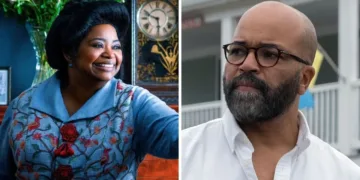
Jeffrey Wright and Octavia Spencer will star in a new feature adaptation of Arthur Miller’s Death of a Salesman, with Chinonye Chukwu directing and co-writing the screenplay alongside Tony Kushner. The project is set up at Focus Features with participation from Amblin, according to the announcement shared across studio and trade channels on August 19. Wright will play Willy Loman and Spencer will portray Linda Loman.
Producing plans include Cindy Tolan and Kristie Macosko Krieger, with Spencer involved through her Orit Entertainment banner; Kushner is also attached as a producer. The package brings together an Oscar-winning star, a recent Oscar nominee and a creative team known for prestige dramas, signaling a serious bid to translate Miller’s landmark play for contemporary moviegoers.
The film joins a long lineage of screen takes on the 1949 Pulitzer- and Tony-winning work, which charts the unraveling of traveling salesman Willy Loman and the fractures within his family. Earlier versions include a 1951 feature that earned multiple Academy Award nominations and a Golden Globe-winning festival run, but no single adaptation has settled as definitive, a gap this creative team will be measured against.
Wright arrives off an Academy Award nomination for American Fiction and a run of high-profile roles across film and television; Spencer is a past Academy Award winner with a producing track record through her company. Chukwu’s recent films have emphasized performance-centered storytelling, while Kushner’s screen work has included large-scale historical dramas and literary adaptations, a résumé that suggests a faithful but sharply interpreted approach. The backers have not announced a start date or release timing.
The new adaptation lands amid renewed stage interest and a steady stream of revivals that keep the play in the cultural conversation. Miller’s text, which mixes memory, dream and present-tense action, remains a frequent touchstone in discussions of economic insecurity and family expectation. Casting Wright and Spencer positions the film to foreground the marriage at the story’s center while exploring generational fault lines that continue to resonate.