













To approach Radu Jude’s Dracula expecting a horror film would be a profound miscalculation. This is not a story of a caped count in a haunted castle. It is a cinematic autopsy, a chaotic and frequently hilarious deconstruction of a myth that has become detached from its origins. Jude, a filmmaker whose career is built on confrontational satire, dismantles the Dracula legend piece by piece.
His project is to examine how the historical figure of Vlad the Impaler and the literary creation of Bram Stoker have been filtered, exploited, and repurposed by Romanian culture and global commerce. The film is an intellectually aggressive experience, one that signals its irreverent intentions from the start and demands a different kind of attention from its audience. It forgoes narrative convention for a direct, often abrasive, investigation into the stories we tell.
A Frankensteinian Assembly of Styles
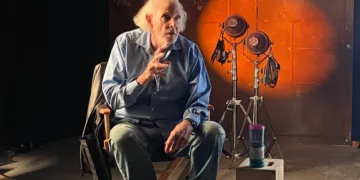
The film abandons linear storytelling in favor of a structure that resembles a scrapbook or a digital collage, a portmanteau of disparate ideas stitched together. Its narrative coherence is intentionally sacrificed. This chaotic assembly is loosely guided by a meta-narrative featuring a frantic director, played by Adonis Tanta.
This character, a stand-in for the modern creator pressured to deliver a hit, uses an AI program to brainstorm a “super-commercial” Dracula movie packed with sex and violence. This framing device is less a plot and more an engine for the film’s relentless digressions, providing a cynical commentary on the state of content creation itself.
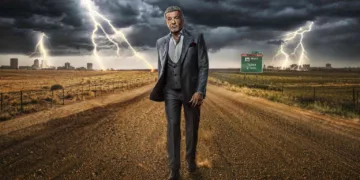
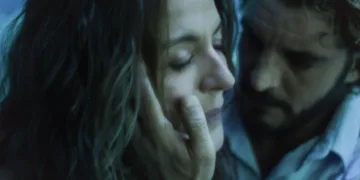
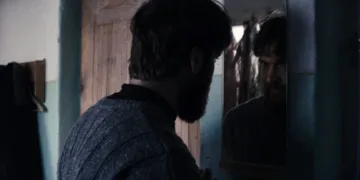
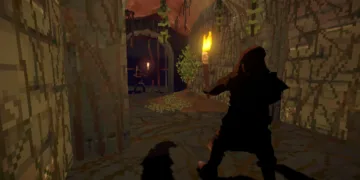
The visual aesthetic is a deliberate study in formal contrasts. Much of the action is captured with the grungy, immediate quality of a smartphone camera, lending an air of gritty, unpolished reality to the proceedings. This low-fidelity style is set against the bizarre and often grotesque products of artificial intelligence.
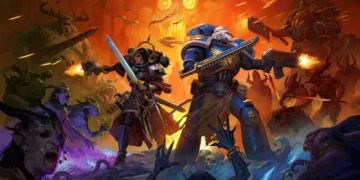
The AI-generated images are comically flawed, populated by figures with extra fingers and fused limbs, turning a sophisticated technology into a source of crude humor. This messy, Frankensteinian construction is the film’s central artistic choice. The intentional cheapness is not a budget limitation; it is an argument about the disposable nature of modern digital content and a stark commentary on the very act of image-making in an era of algorithmic taste.
A Catalogue of Provocations
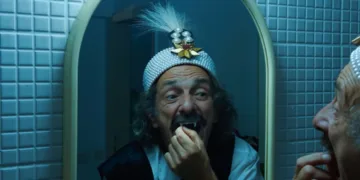
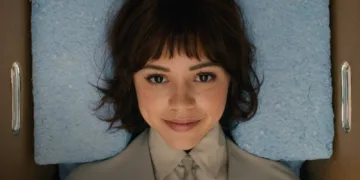
Within this fragmented framework, the film presents a series of wild and varied narrative episodes, each a provocation in its own right. A recurring storyline follows the misadventures of two cabaret actors. The man, a weary, washed-up performer playing Dracula in a tacky subterranean dinner theater, embodies the degradation of the myth into cheap entertainment.

His co-star, a world-weary goth and OnlyFans model, represents a newer form of commercialized self-performance. Their frantic escape from the theater and pursuit by angry, role-playing tourists is a darkly funny chase through the cobbled streets of Sighisoara, turning a story of vampiric dread into a farce about the perils of the service industry.
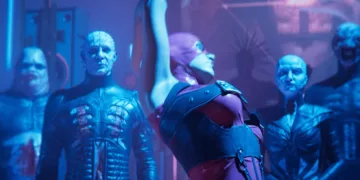
Other segments are more overtly political. In one extended allegory, Vlad the Impaler is reimagined as the tyrannical boss of a sweatshop for videogame programmers. Their labor, measured in scores, is a modern life force sold to the wealthy, a direct translation of Marxist theory into a workplace horror story. When the workers revolt, they are bloodily suppressed by an army of AI zombies.
Elsewhere, Jude reaches into Romanian history for a raunchy and surreal folk tale about a woman who discovers magical phalluses growing in her cornfield. These disparate segments show how Jude uses different genres—from social satire to anti-clerical comedy—to explore his central theme of vampirism in all its forms: literal, economic, and sexual.
The Satirical Heart of the Monster
The film’s unrelenting chaos serves a specific and multifaceted purpose. Jude uses the figure of Dracula as a scalpel for a multi-pronged critique of contemporary society. His most immediate target is the commodification of history and culture, exemplified by the kitschy Dracula tourism that has overrun parts of Transylvania, reducing a complex past to fake fangs and cheap souvenirs.

This critique expands into a sustained examination of capitalism as a parasitic system. The film argues that the true modern vampire is not a cloaked aristocrat but the economic structure that drains the life from its workers for profit.
The movie is also deeply self-aware, positioning itself as a piece of “anti-art” that actively rejects polished aesthetics and narrative gratification. It confronts the audience with its own construction, questioning the purpose of filmmaking in an age of endless, shallow content. The director’s refusal to make clear choices, serving up every idea and impulse at once, becomes a statement against the slick, focus-grouped products of mainstream cinema.
The overloaded and abrasive nature of Dracula is its core argument. Jude throws every possible interpretation at the legend to demonstrate that it has become an empty vessel for our anxieties about commerce, labor, and politics. The messy form is a direct reflection of the messy, contradictory legacy of a global icon that can no longer be contained in a single, coherent story.
Dracula, a 2025 comedy-drama film written and directed by Radu Jude, premiered at the 78th Locarno Film Festival on August 10, 2025, where it was nominated for the Golden Leopard. The film’s title draws inspiration from Bram Stoker’s gothic horror novel Dracula. Set in contemporary Transylvania, Romania, it offers a new perspective on the Dracula legend through Romanian culture and explores themes of myth and history, according to an interview with Jude. The film is also slated for a New York premiere at the 2025 New York Film Festival in October.
Full Credits
Director: Radu Jude
Writers: Radu Jude
Director of Photography (Cinematographer): Marius Panduru.
Editors: Cătălin Cristuțiu.
The Review
Dracula
Radu Jude's Dracula is less a film and more a chaotic, confrontational thesis on a cultural myth. Its fragmented structure and deliberately unpolished aesthetic will alienate viewers seeking conventional narrative. For those willing to engage with its aggressive satire, it offers a relentless and frequently brilliant critique of capitalism, art, and history. It is a difficult, abrasive, and singular piece of filmmaking that succeeds precisely because of its refusal to be a coherent story.
PROS
- An intellectually ambitious deconstruction of a cultural icon.
- Sharp and effective satire of modern capitalism and commercialism.
- Innovative use of mixed media to comment on filmmaking.
- Possesses a bold and singular artistic vision.
CONS
- Deliberately fragmented structure lacks narrative cohesion.
- Abrasive tone may be alienating for many viewers.
- Its relentless provocations can feel exhausting.
- Rejects conventional entertainment and narrative pleasure.