













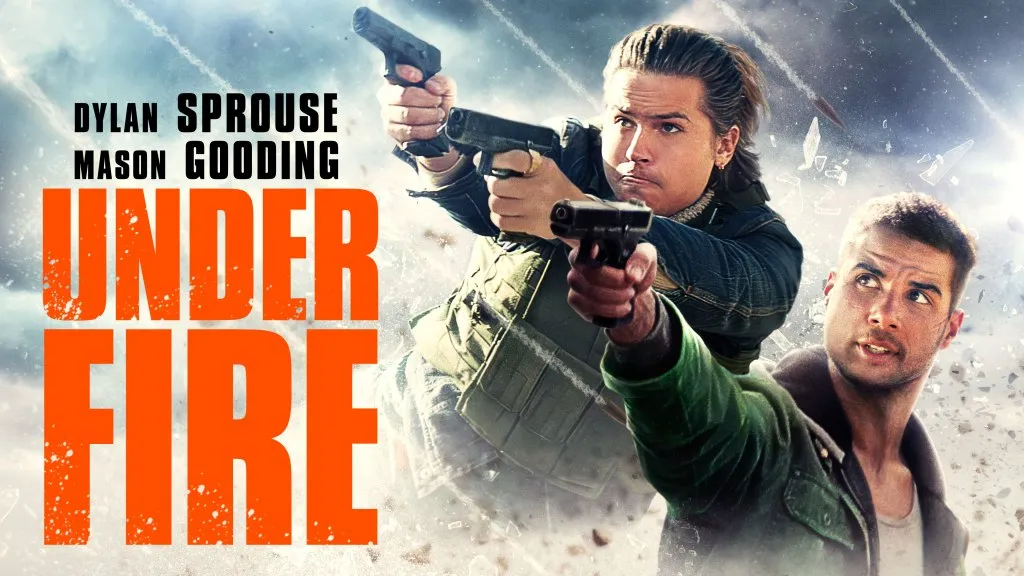

The buddy-cop film is a curious cultural artifact, a relic from an era when institutional friction could be amusingly resolved with witty banter and a shared shootout. Under Fire attempts to resurrect this form, presenting a scenario so clean it feels allegorical.
We have two arms of the American state, the FBI and the DEA, working at cross-purposes, each blind to the other’s presence within the same criminal enterprise. It is a portrait of a fractured system. Agent Griff (FBI) and Agent Abbott (DEA) are two sides of the same coin, convinced they are flipping a different currency. Their desert meeting point becomes a crucible.
The sudden appearance of a sniper is the external crisis required to force these two solipsistic entities into a reluctant, and necessary, alliance. They are pinned down, a perfect metaphor for bureaucratic gridlock, forced to cooperate or perish.
A Dialectical Bromance
The film’s entire architecture rests on the performances of its leads; without them, the structure would be a hollow shell of spent cartridges. Dylan Sprouse’s Griff is a creature of pure id, a chaos agent whose primary weapon is a relentless stream of commentary.
He functions as a modern trickster, a mythological archetype placed within a federal context to disrupt order and expose absurdity. His humor is not merely relief. It is a philosophical stance against the self-seriousness of his profession.
Opposite him, Mason Gooding’s Abbott is the stoic ego, a man whose entire identity seems woven from the threads of protocol and procedure. For him, the situation is not just a threat to his life but an assault on his worldview. He is a man who believes in the rules of a game that has just been violently upended.
Their on-screen relationship is a form of symbiotic antagonism. The constant bickering is the film’s lifeblood, a rhythmic exchange that reveals character more effectively than any forced exposition could ever hope to.
This dynamic is the engine that propels the narrative through its less plausible moments, generating a friction that creates genuine heat. They are a study in contrasts, forced into a claustrophobic intimacy that accelerates the typical arc of a partnership. What might take months of working a beat is compressed into a few desperate hours. Their chemistry transforms what could have been a simple action exercise into a surprisingly engaging personality study.
The Paradox of Static Motion
Director Steven C. Miller’s visual approach is one of frenetic energy. The camera rarely rests, the editing in the opening act is impressively sharp, and the action is punctuated by loving, slow-motion shots of digital bullets tearing through scenery and flesh. It is a style built for momentum, a cinematic language fluent in velocity.
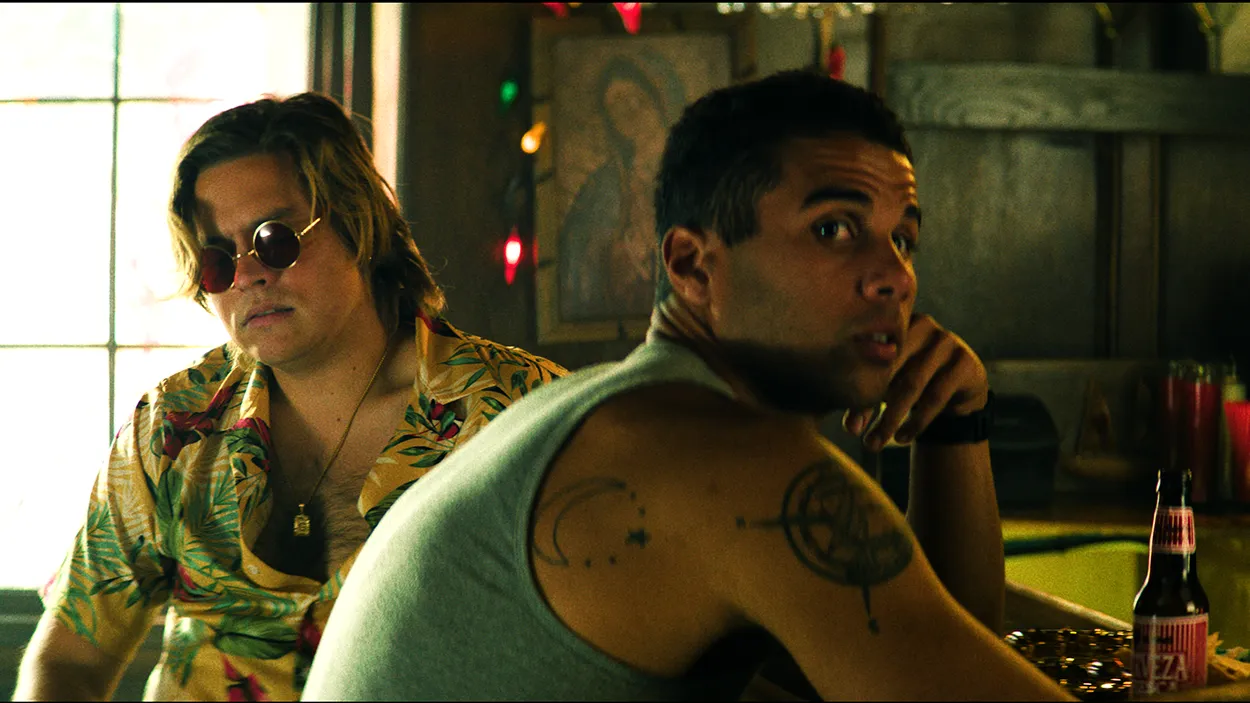
Yet, the film’s second act places this kinetic sensibility inside a static box. Our heroes are trapped behind an SUV, pinned down and unable to move. This creates the film’s central contradiction: a feeling of sprinting while standing perfectly still. The aesthetic promises constant movement, but the story demands a protracted, agonizing standstill.
This extended standoff becomes an exercise in patience for the characters and the audience. The visual dynamism gives way to something resembling a stage play, where the only action is the dialogue and the only set is a battered vehicle. The narrative momentum of the first act flatlines, intentionally stranding the viewer in the same predicament as the characters: waiting.
We are left to watch two men talk while under threat, a scenario that relies entirely on the strength of the actors to maintain interest. The sound design amplifies this feeling, alternating between the sharp crack of the sniper’s rifle and an oppressive, sun-baked silence. This middle portion is a bold, if risky, structural choice that forces the film to become a character piece disguised as an action flick.
The Comfort of Known Trajectories
A screenplay is a map, and the one for Under Fire follows a well-trodden, almost nostalgic path. The dialogue is often its strongest asset, providing ample fuel for the central performances. The plot, however, offers few surprises. In an age obsessed with subverting expectations, there is a strange comfort in a story that telegraphs its every move with such confidence.
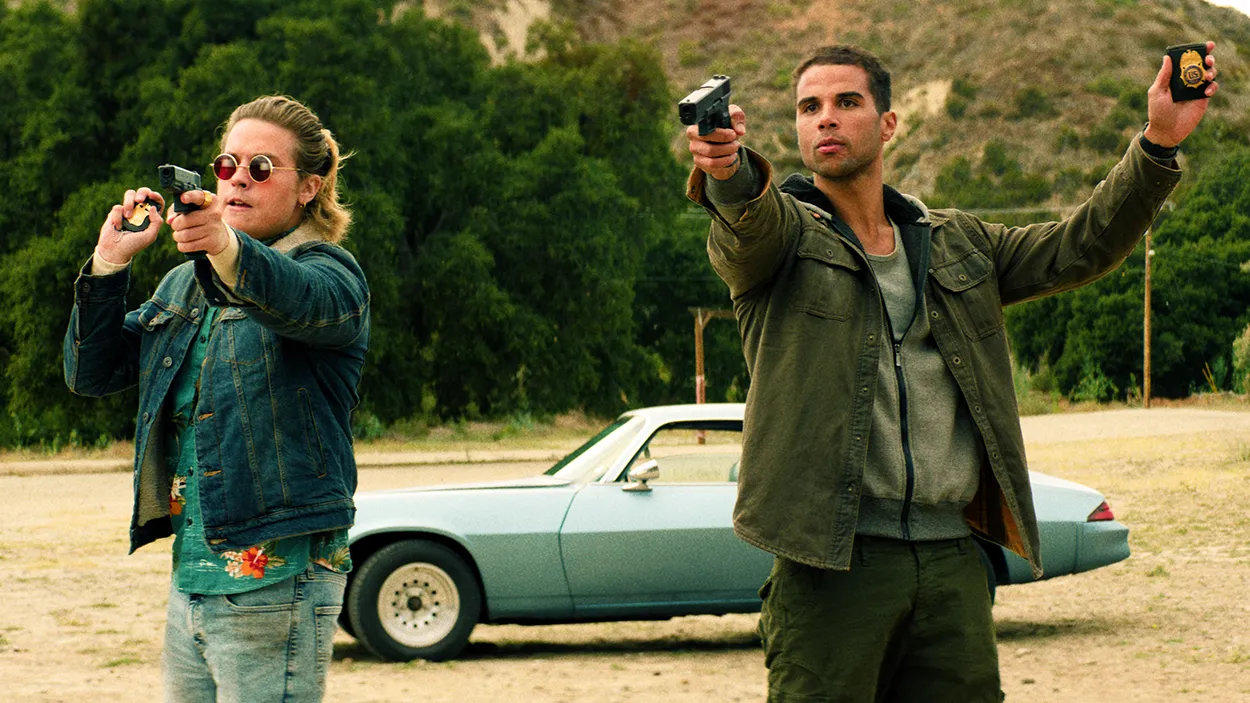
The limited cast makes the eventual villain reveal less of a twist and more of an inevitability, adhering strictly to the old laws of narrative economy. This predictability can be seen as a feature, not a bug, offering the familiar satisfaction of a formula executed with spirit.
This acceptance of convention extends to its internal logic. The film asks for a generous suspension of disbelief, operating with a kind of “narrative immunity” where characters are protected from realistic consequences. The unseen sniper is a master marksman one moment and inexplicably inept the next, his skill fluctuating according to the immediate needs of the scene.
The agents’ vehicle endures punishment that would reduce a real SUV to scrap yet remains functional. These are not flaws so much as signals that we have left reality behind. We are in a heightened world governed by the rule of cool. The script’s only true fumbles occur when it strains for emotional depth, inserting bits of backstory that feel more like checklist items than organic revelations. Ultimately, Under Fire is a machine built for a single purpose: to serve as a platform for its charismatic leads.
The 2025 film Under Fire was released in the United States on August 15, 2025, in both limited theatrical release and through video-on-demand platforms. It is currently available to rent or purchase on platforms such as Apple TV and Fandango At Home, and is streaming on services like fuboTV, MGM+ Amazon Channel, MGM Plus Roku Premium Channel, MGM Plus, and Philo.
Full Credits
Director: Steven C. Miller
Writers: Cory Todd Hughes, Adrian Speckert
Producers: Lucas Jarach, Darcy Donelan, Cindy Truong, Christian Ackerman, Nicolas Chartier, Jonathan Deckter
Cast: Dylan Sprouse, Mason Gooding, Odette Annable, Emilio Rivera, Bayardo De Murguia, Declan Michael Laird
Director of Photography (Cinematographer): Jonathan Hall
Editors: Steven C. Miller, Vanessa Miller
Composer: Kevin Riepl
The Review
Under Fire
Under Fire is a cinematic vehicle running on the high-octane fuel of its lead actors' chemistry. While the script sputters on predictability and the pacing stalls in the middle, the charismatic friction between Dylan Sprouse and Mason Gooding makes the journey worthwhile. It is a self-aware throwback that chooses charm over complexity, offering a fun, if forgettable, diversion that succeeds almost entirely on the strength of its central duo.
PROS
- Exceptional on-screen chemistry between the two leads.
- Charismatic and energetic performances from Dylan Sprouse and Mason Gooding.
- Sharp, witty dialogue that drives the character interactions.
- A fun, nostalgic homage to 80s and 90s buddy-cop films.
- Lively direction and editing, particularly in the opening act.
CONS
- The plot is highly predictable, with an easily guessed twist.
- A static and repetitive middle section harms the overall pacing.
- The script contains numerous logical inconsistencies.
- Forced attempts at emotional backstory feel contrived.
- The story lacks originality and relies heavily on genre tropes.