

























![Kingdom Hearts Collection [I-III] Review](https://gazettely.com/wp-content/uploads/2026/10/Kingdom-Hearts-Collection-I-III-1-360x180.webp "Kingdom Hearts Collection [I-III] Review: KHII Holds Steady as Newer Entries Fluctuate 37")




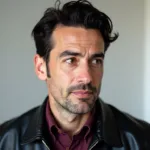
American Warrior introduces Jai (Vishy Ayyar), an Indian-American man in his forties whose world has shrunk to the quiet routine of a janitor at a mixed martial arts gym. Recently released from prison, he is a man adrift, estranged from his family and attempting to rebuild a life from its foundations. His anonymous existence is shattered by a single, decisive act.
When Jai instinctively subdues a robber at a local convenience store, his skilled intervention is captured on a smartphone and quickly goes viral. This sudden, unwanted fame brings an opportunity from his boss, Marcella (Verónica Falcón): a chance to compete in an MMA tournament and step back into a life he long abandoned. The film immediately poses its central question: can this unexpected public spotlight provide the path to the private, personal redemption that Jai so desperately seeks?
Two Folds of Conflict: In the Ring and Within the Self
The film’s narrative operates on two distinct, and often dissonant, tracks. One is the familiar sports story, a globally recognized template of the underdog’s return that echoes decades of American cinema. Jai seeks out his old coach, Dennis (Danny Trejo), and the plot moves through the expected beats of training montages and skeptical mentorship.

This trajectory feels imported, a cinematic structure designed for universal legibility. It is also burdened by convenience, most notably when Jai’s first tournament opponent is revealed to be the same man from the convenience store. This contrivance forces a dramatic symmetry that feels inorganic, a shortcut that undermines the story’s grounding in realism.
The other, more textured narrative is Jai’s personal drama. His attempts to reconnect with his family are rooted in specific cultural dynamics of honor and shame that diverge sharply from the individualistic ethos of the sports plot. His mother’s cold disapproval carries the weight of familial expectation, a conflict that cannot be resolved with a knockout punch.
His tentative relationship with a coworker, Melissa (Taylor Treadwell), offers a glimpse of a future untethered from his past. The film’s emotional weight is found in this internal, culturally specific struggle for forgiveness, which feels far more authentic than the predictable arc of the athletic competition.
The Anchor and the Epicenter: A Study in Performance
The film is built around Vishy Ayyar’s performance as Jai, a portrayal defined by a deep and persistent quietness. As the film’s co-writer and producer, drawing inspiration from his own life, Ayyar’s personal investment is undeniable. His understated approach effectively communicates the character’s internal burden of shame, a stoicism that resists the demonstrative emotion common in Hollywood protagonists.

Yet at times, this restraint can read as impassive, keeping the audience at arm’s length. In contrast, the supporting cast provides a crucial anchor of familiarity. The screen presence of Danny Trejo as Dennis brings an immediate sense of history and genre credibility. His persona, forged in gritty American independent film, functions as a cultural signifier, lending the story a recognizable framework.
Verónica Falcón gives a solid, grounded performance as Marcella, the gym owner whose faith in Jai is practical and unwavering. Her character, along with Taylor Treadwell’s sincere Melissa, represents a modern perspective on supportive female roles that counters the genre’s traditionally male-centric focus.
These veteran actors offer a steadying, emotionally accessible counterpoint to the lead’s more introspective style, creating a necessary balance between the culturally specific and the universally understood.
A Collision of Metaphor and Mechanics
American Warrior uses the visceral world of MMA as a metaphor for Jai’s fight against his past mistakes, a powerful concept that ties physical struggle to emotional healing. The central themes of redemption and the search for self-respect are potent and universal.

The film’s execution, however, falters where these two narrative forms collide in the third act. The story defaults entirely to the sports-movie formula, using the final tournament match as a tidy resolution for Jai’s deep-seated familial and personal conflicts.
This narrative choice represents a significant shortcut, substituting a public, physical victory for a more difficult and uncertain emotional reconciliation. An American sports film almost demands a winner in the ring to validate the journey, but Jai’s deeper conflict requires dialogue and acceptance, things that happen outside the cage.
This resolution feels unearned, a concession to genre convention over character reality. The climax is further weakened by fight choreography that appears staged, draining the final confrontation of its intended realism and impact. The film ultimately presents a worthwhile story about a man’s fight for his future, but its dependence on a conventional structure simplifies the more compelling and culturally nuanced human drama it sets out to explore.
American Warrior, a 93-minute action drama, was released in select US theaters and on digital/on-demand platforms on August 29, 2025. The film, produced by Peach Partners in association with Mulberry Films and MxW Ventures, is Gustavo Martin’s feature directorial debut. It was filmed in Chicago and Beverly Hills. The film is available to rent or purchase on streaming services like Prime Video, Apple TV, VUDU, and Fandango at Home.
Full Credits
Director: Gustavo Martin
Writers: Gustavo Martin, Matt Anthony, Vishy Ayyar
Producers and Executive Producers: Naveen A. Chathapuram, Cristy Coors Beasley, Rashaana Shah, Gustavo Martin, Joseph Lanius, Chaitra Vedullapalli, Neal Vedullapalli, Swetha Pakala
Cast: Danny Trejo, Veronica Falcón, Vishy Ayyar, Andrew Gray, Suleka Mathew, Taylor Treadwell, Omi Vaidya, Ranjita Chakravarty
Director of Photography (Cinematographer): Derek Fisher
Editors: Christopher Cibelli
Composer: Darren Morze
The Review
American Warrior
American Warrior presents a heartfelt story of redemption with a compelling personal drama at its center. Its potential is hampered by a reliance on predictable sports-movie tropes and a final act that favors a simplistic physical victory over a more complex emotional resolution. Strong supporting performances anchor the film, but they cannot fully overcome the narrative's structural flaws.
PROS
- An emotionally resonant personal drama focused on family and forgiveness.
- Strong, grounding performances from the supporting cast, particularly Danny Trejo.
- Effectively explores themes of second chances and cultural identity.
CONS
- Depends heavily on a formulaic and predictable sports-movie structure.
- The climactic fight scenes lack impact and appear staged.
- The lead performance is understated to the point of feeling distant at times.
- A key plot point involving the opponent is a major coincidence.







