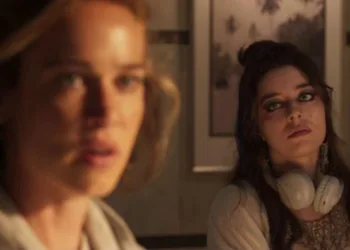















A home can be a sanctuary or a prison. In the Spanish thriller Ángela, the line between the two is demarcated by glass walls and reinforced by fear. The series opens not with a direct act of violence, but with a pervasive sense of unease within a space that should signify safety.
Its central subject, Ángela, is an architect herself, a woman who once designed spaces but now finds herself confined by one. Her life is a blueprint of modern success: a prestigious husband, a home that is a marvel of contemporary design, and a picturesque existence on the Spanish coast. This construction is a lie. The series masterfully uses the visual language of architecture to explore the psychological dimensions of domestic entrapment.
Her home is less a shelter and more a meticulously designed cage, its open-plan living areas offering no place to hide. Into this suffocating environment steps Edu, a stranger whose arrival is like a stone thrown through a plate-glass window, threatening to shatter the entire fragile structure. His presence introduces a chaotic, unpredictable variable into a life defined by rigid, violent control.
A Corrupted Escape
The narrative of Ángela is engineered with the precision of a trap. It draws the viewer into its central dilemma through a carefully paced escalation of suspense, which begins with the seemingly innocuous arrival of Edu. His initial approach, claiming a shared past from high school, is tinged with an unsettling forwardness.
He obtains Ángela’s number without her consent and begins a campaign of texts that straddle the line between charming and obsessive. This ambiguity is the engine of the early episodes. For Ángela, who is starved of genuine affection, his attention is a lifeline; for the viewer, it is an immediate red flag. The series expertly plays with this dual perspective, making us question if we are witnessing a romance or a prelude to a different kind of horror.
The story’s primary turn arrives not as a sudden shock, but as a chilling recontextualization of everything that came before. Edu reveals his true, sinister connection to Gonzalo, a truth that transforms him from a potential lover into a piece of a much larger, more terrifying puzzle. This revelation is the story’s masterstroke.
It refuses Ángela, and the audience, the comfort of a clear-cut savior. Instead, it presents a choice between two potential destroyers: the devil she knows and the one she has just begun to suspect. The narrative’s strict adherence to Ángela’s point of view is crucial here. The camera rarely leaves her, forcing us to experience her disorientation firsthand.
We learn information only as she does, and we are denied access to the private conversations of Gonzalo or Edu. This technique is more than a stylistic choice; it is a mechanical replication of her psychological state, breeding a potent paranoia that makes every creaking floorboard and unanswered phone call feel significant. The six-episode limited series format proves to be the ideal container for this kind of focused, claustrophobic storytelling, ensuring the tension is never diluted.
Portraits of Fear and Deceit
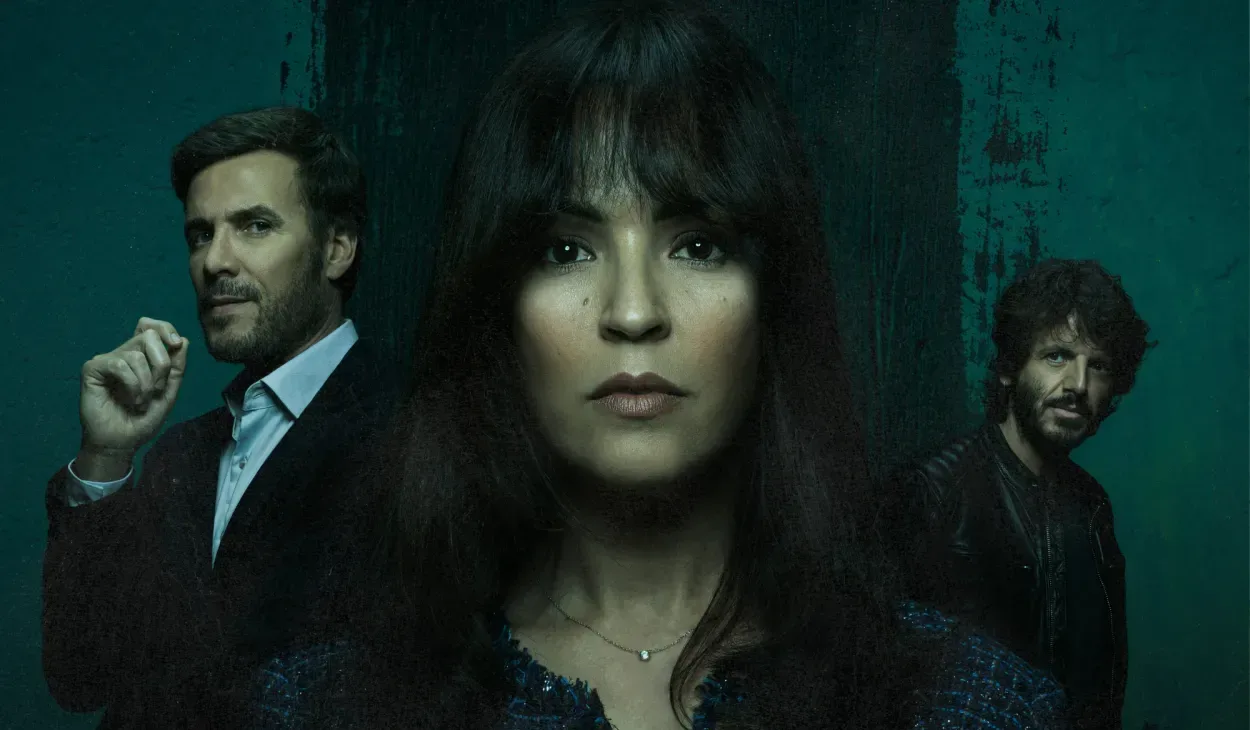
The power of Ángela emanates from its three central performances, each actor exploring a different facet of psychological manipulation and survival. As the title character, Verónica Sánchez delivers a performance of remarkable interiority. She conveys Ángela’s terror not through loud hysterics, but through a constricted physicality.
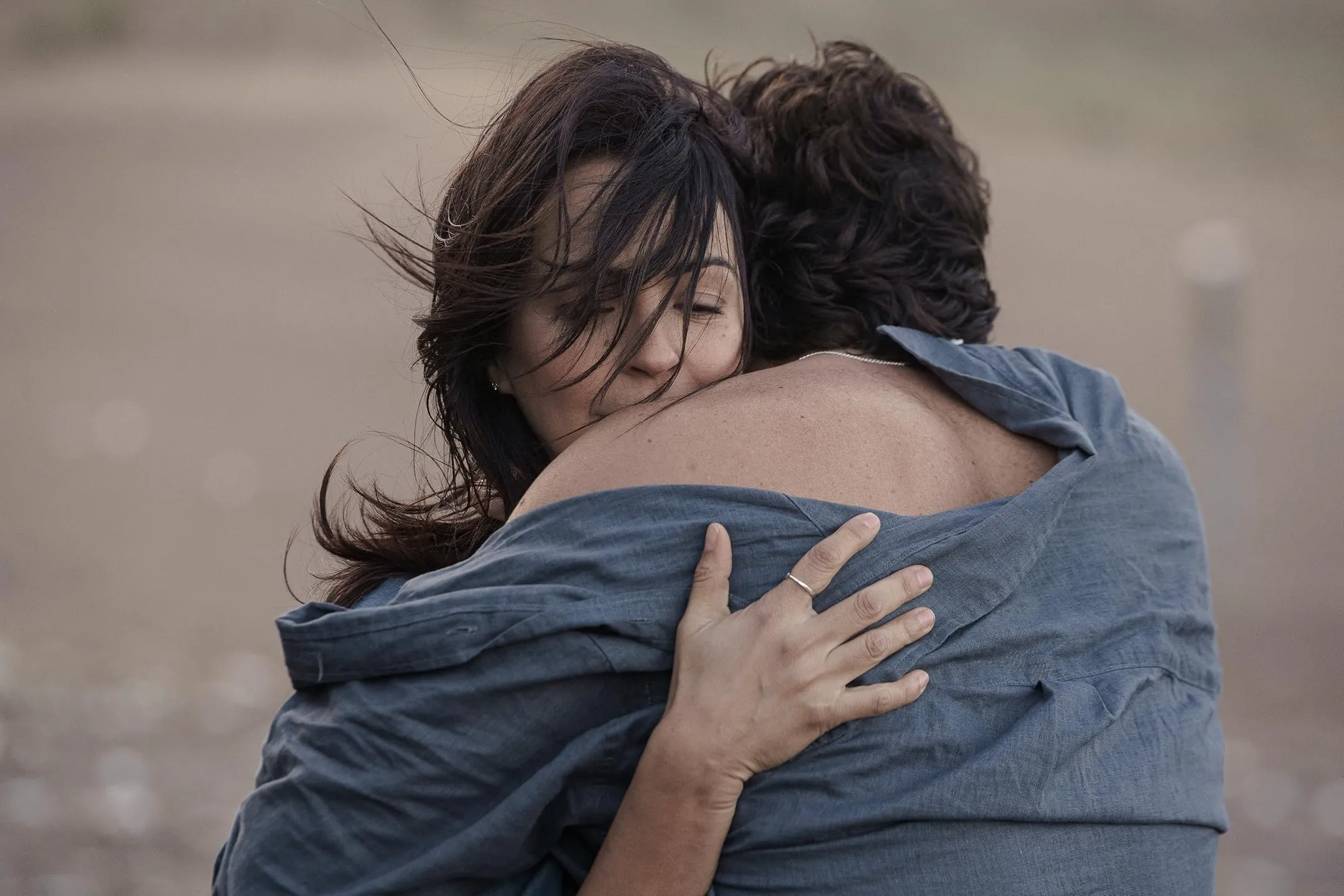
Her shoulders are perpetually tense, her movements hesitant, as if constantly anticipating a blow. Sánchez shows a woman who has learned to make herself small within her own home. The brilliance of her work lies in capturing the subtle shift from this state of learned helplessness to a dawning, sharp-edged resolve. It is a transformation visible in the hardening of her gaze and the straightening of her posture, signaling that the instinct to survive is beginning to overpower the instinct to submit.
Daniel Grao’s portrayal of Gonzalo is a terrifyingly precise study of a narcissist. He avoids the cliché of a one-dimensional monster, instead building a character whose danger lies in his plausibility. His abuse is not just physical; it is a relentless campaign of psychological warfare.
Grao excels in depicting the mechanics of gaslighting, using a soft, condescending tone to dismiss Ángela’s perceptions and rewrite reality moment by moment. He can be charming and paternal with their daughters in one scene, then turn his eyes on Ángela with a look of pure menace in the next. This rapid oscillation is what makes the character so unnerving, capturing the unpredictable reality for victims of such abuse.
Completing the trio is Jaime Zatarain as Edu, a character built entirely on ambiguity. Zatarain’s performance is a masterclass in controlled charisma. His smile can seem either genuinely warm or deeply predatory, depending on the angle of the camera. He maintains a relaxed physicality that contrasts sharply with both Ángela’s tension and Gonzalo’s coiled rage, yet this calmness is itself unsettling. Is it the confidence of a protector or the nonchalance of a killer?
Zatarain skillfully withholds a clear answer, forcing the audience into the same state of uncertainty as Ángela. Even the supporting role of Esther, played by Lucía Jiménez, serves a vital purpose beyond simple friendship. She represents the tangible, normal world that Ángela has been systematically isolated from, making her brief appearances a poignant reminder of all that has been lost.
Vizcaya’s Veiled Violence
The series is distinguished by its potent sense of place and its sophisticated visual design. Director Norberto López Amado resists the frantic editing common to the thriller genre, opting instead for a patient, observational style. The camera often holds on Ángela’s face, allowing her silent reactions to guide the emotional arc of a scene.
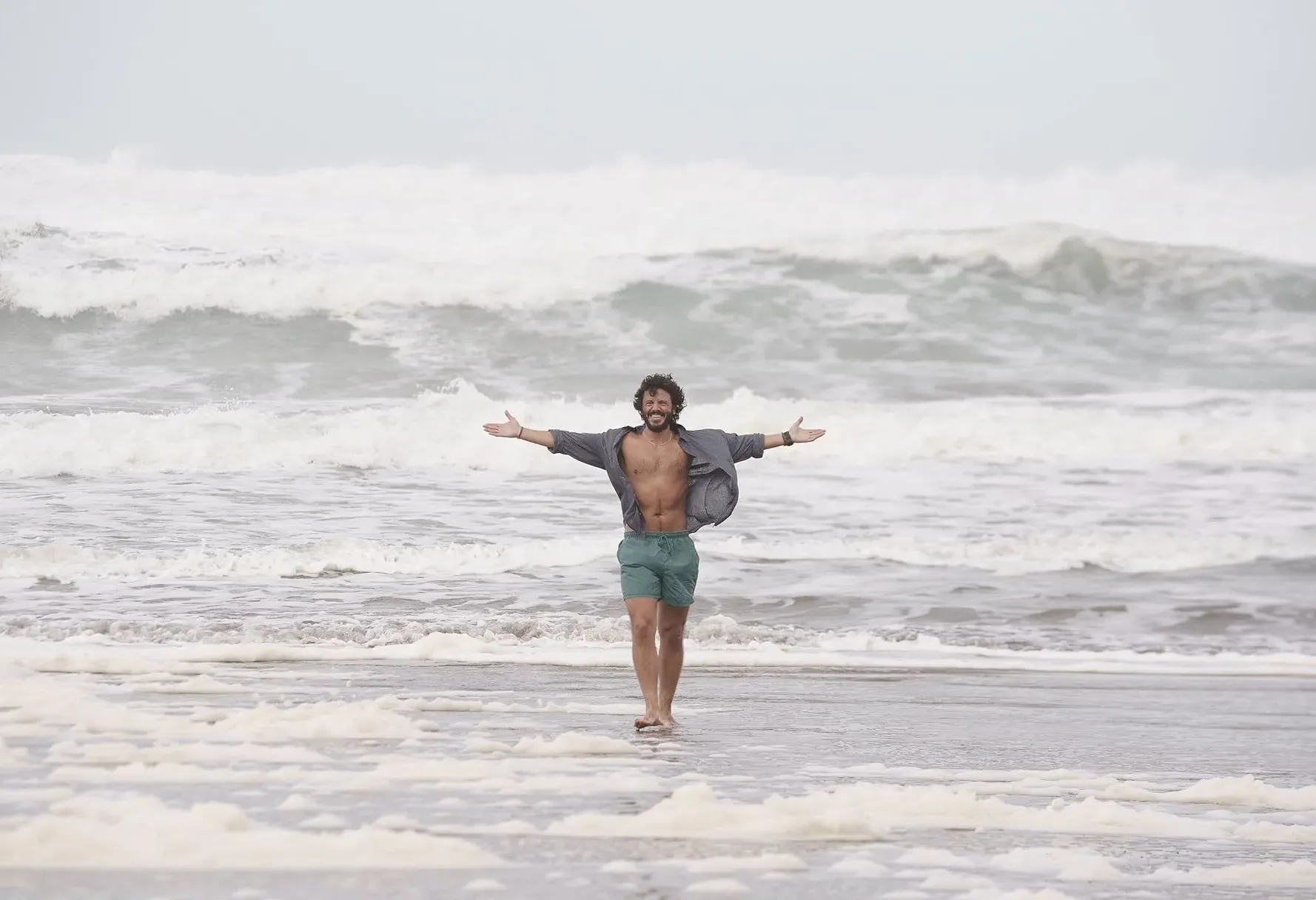
The color palette inside the family home is dominated by cool, sterile grays and blues, mirroring the emotional emptiness of the marriage. This cold interior is starkly contrasted with the wild, elemental beauty of the Vizcaya coast where Ángela meets Edu.
The rugged cliffs and turbulent sea serve as a powerful visual metaphor for the chaotic freedom he represents, a force of nature intruding upon a controlled, artificial world. The landscape is not merely a backdrop; it is an active participant in the story, its mood shifting with Ángela’s internal state.
The show’s decision to frame a story of domestic abuse within the conventions of a psychological thriller is a significant one. It sidesteps the didacticism of a social-realist drama, instead using suspense as a tool to explore the protagonist’s experience.
The narrative does not linger on the graphic details of physical violence. Its focus is on the subtler, more pervasive horror of psychological manipulation. The true terror in Ángela comes from the erosion of her certainty, her trust in her own perceptions. By aligning the viewer’s experience with this state of confusion, the series makes an effective statement about the nature of gaslighting.
Furthermore, the sound design contributes heavily to the atmosphere of dread. The cavernous silence of the house is often more menacing than any musical cue, broken only by sounds—a car pulling into the driveway, footsteps on the stairs—that signal a potential threat. It is a story that understands that true horror often lies not in what is seen, but in what is anticipated.
The television series Ángela is a Spanish thriller based on the British series Angela Black. It premiered on the streaming platform Atresplayer on July 14, 2024, before airing on the broadcast channel Antena 3 starting in March 2025. The show follows Ángela (Verónica Sánchez), a woman trapped in an abusive marriage who, after an encounter with an old acquaintance, begins a dangerous descent into a world of secrets and deception as she fights for her freedom and the safety of her children.
Full Credits
The Review
Ángela
Ángela is a masterfully crafted psychological thriller, anchored by superb performances and a palpable sense of dread. Its restrained direction and intelligent use of setting create a claustrophobic world where the horror is more psychological than physical. The series effectively explores the insidious nature of domestic abuse through a tense, character-driven narrative that privileges atmosphere over shock. A taut, suspenseful, and thoughtfully constructed story that lingers long after its conclusion.
PROS
- Tense and atmospheric direction that builds suspense effectively.
- Outstanding and nuanced performances from the central cast.
- An intelligent script that focuses on psychological horror over sensationalism.
- Strong sense of place, with the Spanish setting enhancing the story’s mood.
- A tight, self-contained narrative within its limited series format.
CONS
- Deliberate pacing might feel slow for viewers seeking constant action.
- Functions primarily as a thriller, with limited deep social commentary on its subject matter.
- The plot may feel familiar to viewers of the original British series, Angela Black.