




























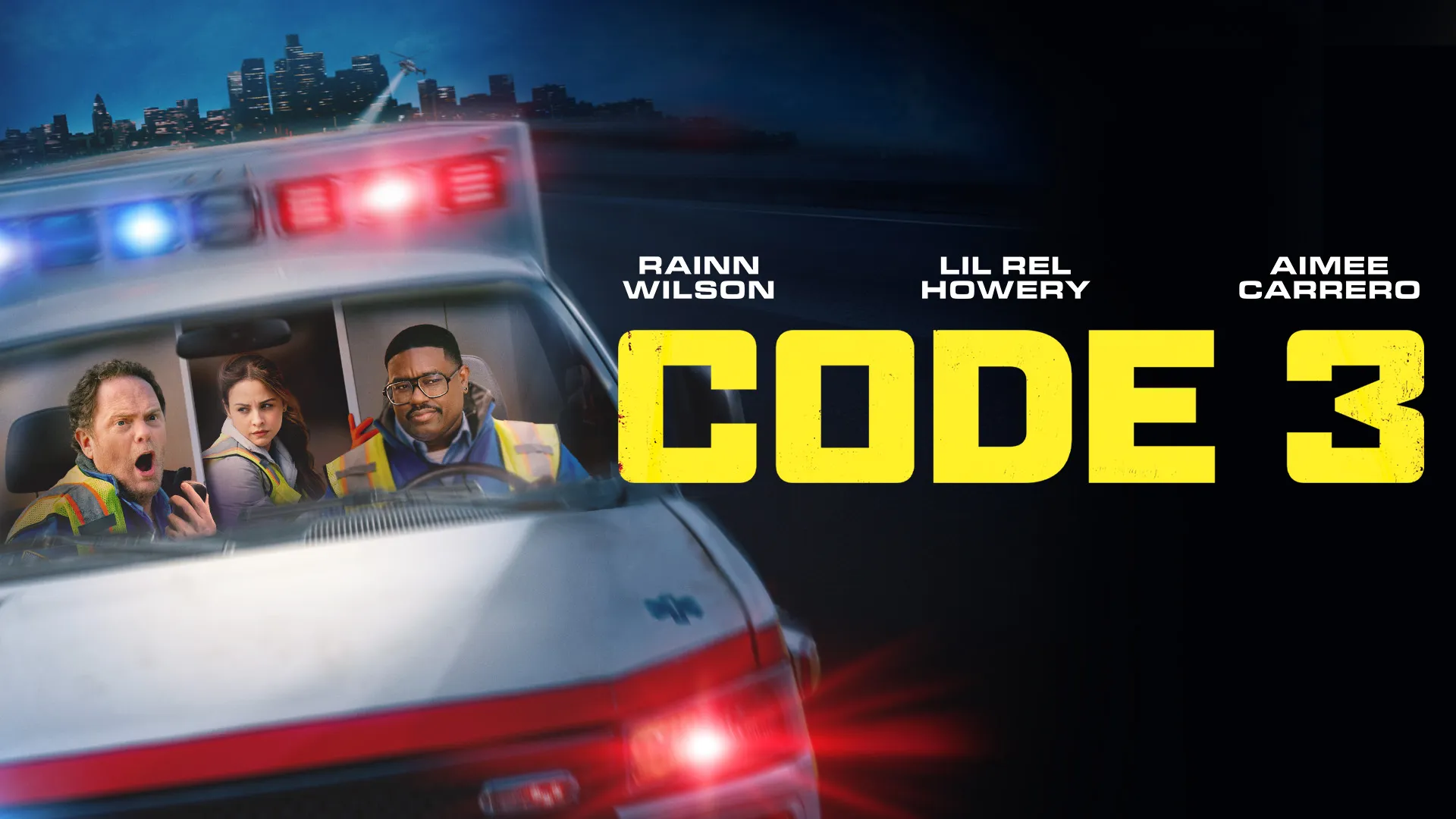

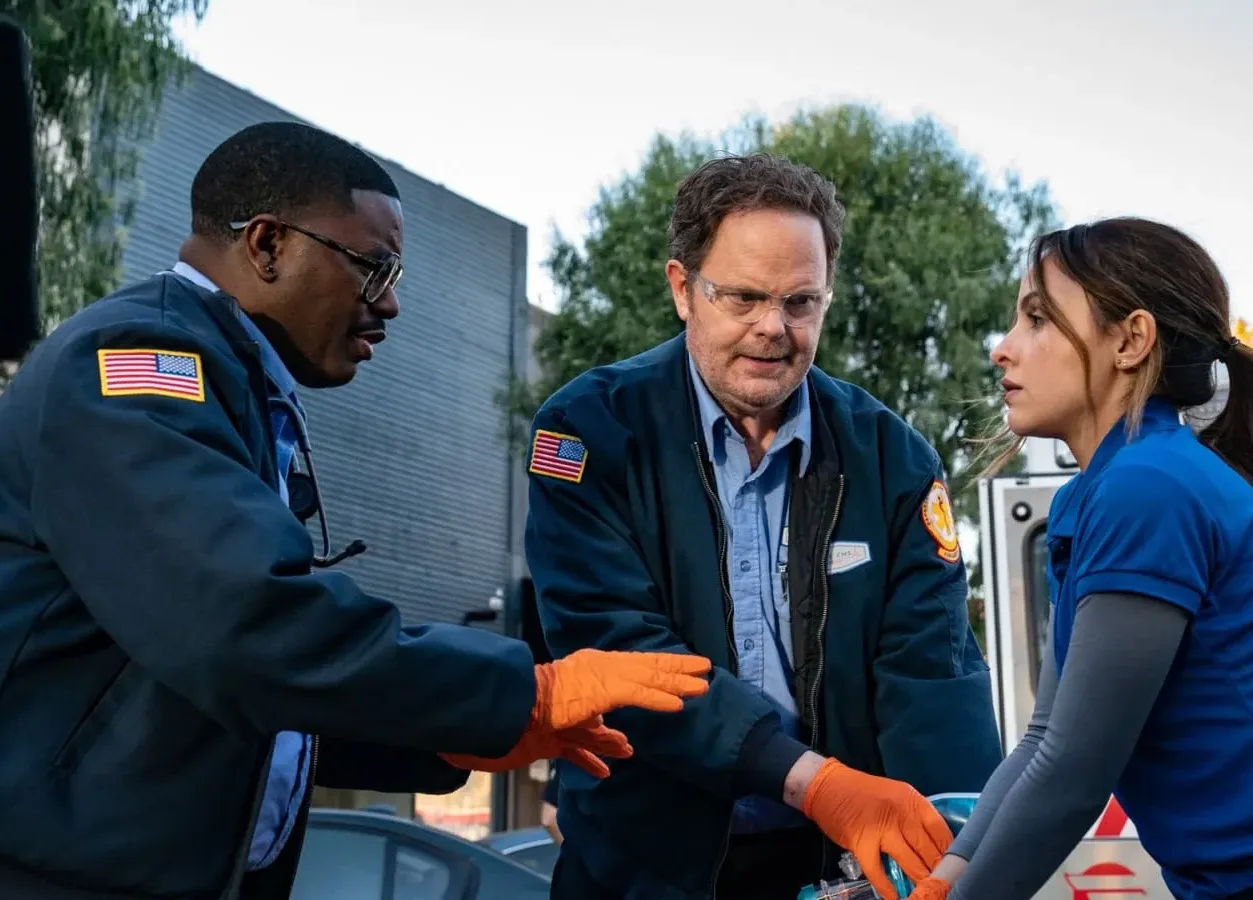
Paramedics occupy a strange space in our collective consciousness. We see their flashing lights, hear their sirens, and understand intellectually that they save lives, yet their day-to-day reality remains largely invisible to most of us. Christopher Leone’s “Code 3” attempts to bridge this gap by following Randy, a veteran EMT played by Rainn Wilson, through what he hopes will be his final 24-hour shift before transitioning to a safer insurance job.
Set against the backdrop of Los Angeles emergency services, the film introduces us to Randy’s world through his partnership with Mike (Lil Rel Howery) and their responsibility to train Jessica (Aimee Carrero), a rookie paramedic still carrying the idealism that Randy lost years ago.
Co-writer Patrick Pianezza brings authentic EMT experience to the screenplay, grounding the film in the unglamorous realities of a profession that demands everything while offering little in return. The result is a dark comedy-drama that uses its episodic structure to examine what happens when caring becomes a liability and when helping others slowly destroys the helper.
The Weight of Performance
Rainn Wilson carries “Code 3” with the kind of performance that forces you to reconsider what you think you know about an actor. His Randy is a man hollowed out by 18 years of witnessing humanity at its most vulnerable, and Wilson captures this exhaustion in every slumped shoulder and weary glance. This represents a significant departure from his comedic work, requiring him to inhabit a character whose humor has curdled into defensive cynicism.
The film’s most effective moments come when Wilson breaks the fourth wall to address the audience directly. These sequences function less as narrative gimmicks and more as pressure release valves, allowing Randy to vocalize the thoughts that would otherwise eat him alive. When he grumbles about hoping a patient is dead so he can finally eat, the comment lands with uncomfortable authenticity because Wilson sells both the gallows humor and the genuine desperation beneath it.
Lil Rel Howery provides essential balance as Mike, Randy’s long-term partner who has somehow maintained his humanity despite working the same brutal job. Their dynamic feels lived-in, built on years of shared trauma and mutual dependence. Howery’s comedic timing helps lighten moments that might otherwise become unbearable, while his dramatic work in the film’s heavier scenes demonstrates his range beyond pure comedy.
Aimee Carrero’s Jessica serves as our surrogate, experiencing the EMT world through fresh eyes that haven’t yet been dulled by repetitive exposure to human suffering. Her performance captures the slow erosion of idealism without falling into cliche, showing us a character who genuinely wants to help while gradually understanding the personal cost of that desire.
The supporting cast fills out this world effectively, with Rob Riggle’s Dr. Serano representing the systemic disdain that EMTs face from other medical professionals, and Yvette Nicole Brown’s supervisor Shanice embodying the institutional pressure that keeps broken people working in a broken system.
Structure as Storytelling
“Code 3” uses its single-shift framework to create a narrative that mirrors the unpredictable nature of emergency medical work. Like the paramedics themselves, we never know what the next call will bring, whether it will be darkly absurd or genuinely tragic. This uncertainty becomes the film’s primary source of tension, creating an experience that feels appropriately chaotic and exhausting.
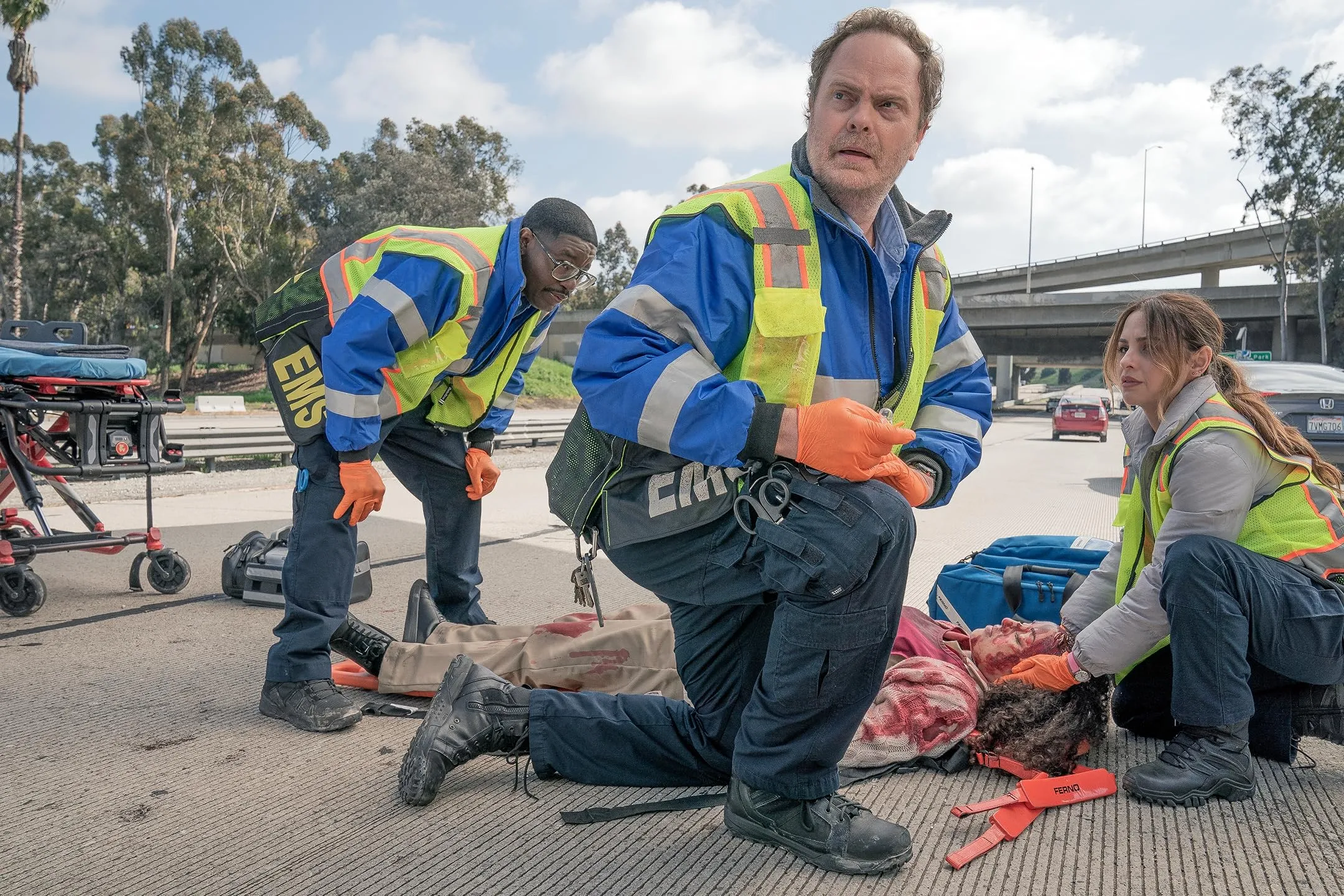
The episodic structure allows Leone to explore different aspects of EMT work without forcing artificial connections between calls. We witness everything from routine nursing home visits to violent confrontations, each incident adding another layer to our understanding of what these workers endure. The opening sequence establishes the film’s tone perfectly: a previous trainee quits after being shot at, vomited on, and watching Randy get stuck with a dirty needle that requires a week of preventive treatment.
One of the film’s most powerful sequences involves Randy and Jessica responding to a call for “the President,” a mentally ill man whose delusions make him dangerous to himself and others. The scene works because it shows how EMTs must serve as impromptu mental health counselors, de-escalation specialists, and medical professionals simultaneously. The film uses this incident to highlight both the inadequacy of our mental health system and the impossible demands placed on emergency responders.
The pacing builds Randy’s deterioration carefully, showing us a man whose body is giving out under constant stress. His chest pains become a recurring reminder that caring for others while neglecting yourself is unsustainable. The film’s episodic nature serves this character development well, allowing us to see how each call adds weight to an already overburdened person.
However, the fourth wall breaking becomes less effective as the film progresses. While these moments work well initially to establish Randy’s perspective, their frequent use threatens to turn the experience into an educational documentary rather than a dramatic narrative. The technique feels most natural when Randy is explaining technical aspects of the job, but less so when it’s used for emotional exposition.
The Cost of Caring
“Code 3” excels at examining the systemic issues that make EMT work particularly brutal. The film reveals that paramedics earn less than many hospital custodians despite requiring extensive training and carrying enormous responsibility. This economic reality adds another layer to Randy’s burnout, showing how financial stress compounds the emotional toll of the work.

The movie’s treatment of mental health operates on multiple levels. Randy’s own psychological state mirrors that of many patients he encounters, suggesting that the line between helper and helped is often thinner than we’d like to believe. His coping mechanisms include dark humor, emotional distance, and the kind of cynicism that serves as armor against caring too much. The film shows how these defense mechanisms, while necessary for survival, can gradually strip away the empathy that drew someone to the profession in the first place.
Jessica’s presence forces Randy to articulate why she should consider leaving before she becomes like him. These mentoring moments reveal Randy’s remaining humanity; he still cares enough to want to protect someone else from the damage he’s suffered. The tension between his desire to discourage her and his professional obligation to train her creates some of the film’s most compelling drama.
The healthcare system critique feels organic rather than heavy-handed, emerging naturally from the characters’ experiences. Emergency room overcrowding isn’t presented as an abstract policy issue but as a daily reality that makes everyone’s job harder. Dr. Serano’s dismissive attitude toward paramedics reflects a broader institutional hierarchy that devalues the people doing some of the most difficult work in medicine.
The film raises questions about what constitutes meaningful work and whether individual effort can create lasting change within broken systems. Randy’s potential transition to insurance work represents a choice between personal survival and continued service, a decision that carries no easy answers.
Crafting Authentic Chaos
Christopher Leone’s direction benefits enormously from Patrick Pianezza’s EMT background, resulting in a film that feels grounded in authentic experience rather than Hollywood imagination. The medical procedures, equipment, and terminology all ring true, creating a foundation of credibility that supports the film’s more dramatic elements.
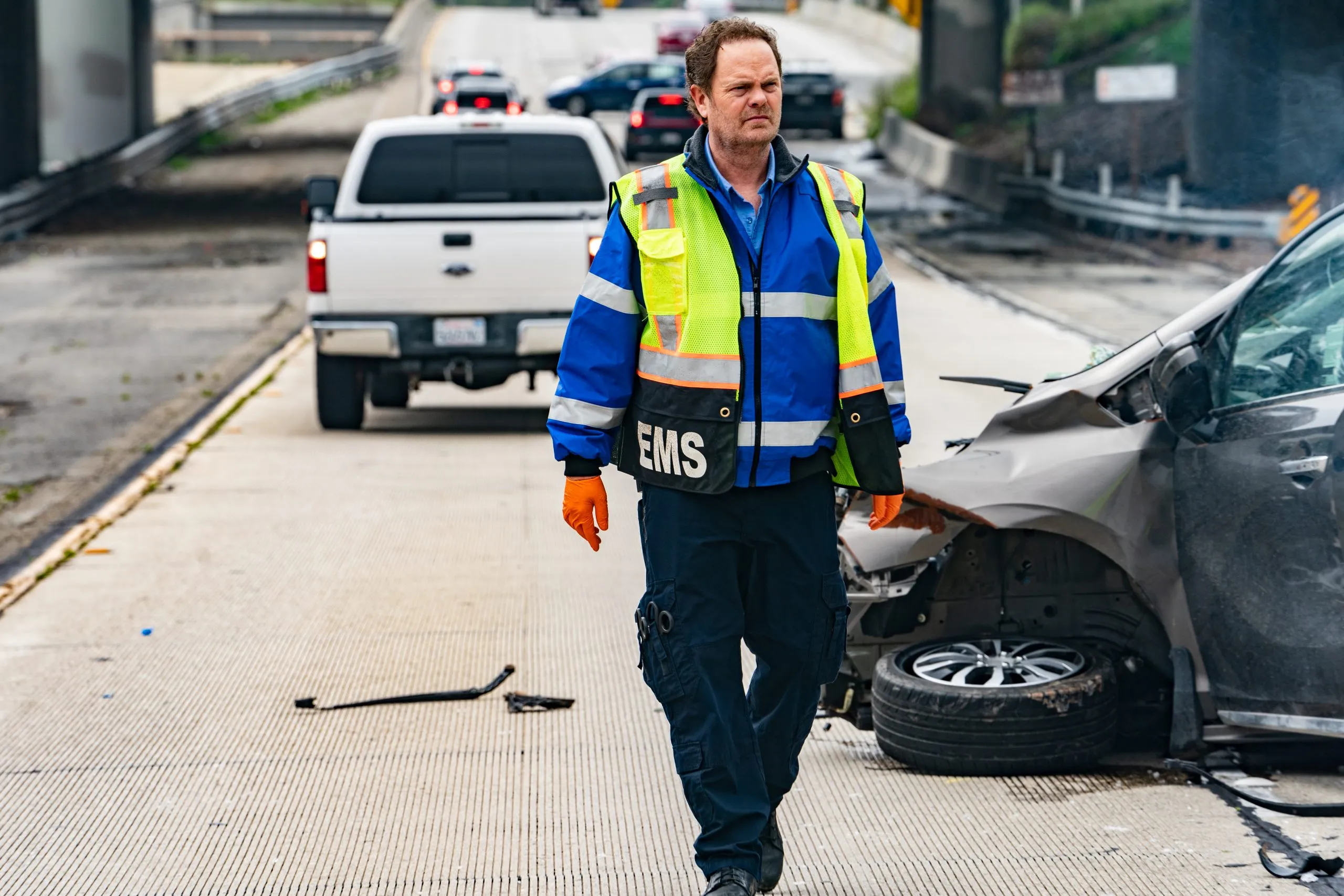
The cinematography captures both the claustrophobic intensity of ambulance interiors and the sprawling chaos of Los Angeles emergency medicine. The camera work during medical calls feels appropriately urgent without becoming gimmicky, focusing on character reactions rather than exploiting trauma for shock value.
The screenplay balances educational exposition with character development effectively, using Randy’s experience to teach both Jessica and the audience about EMT work without feeling like a training video. The dialogue captures the specific rhythms of workplace banter between people who depend on each other for survival, with humor that serves as both entertainment and psychological necessity.
Production values support the film’s realistic approach, with accurate medical equipment and procedures that help sell the authenticity of the experience. The sound design captures the constant noise of emergency medicine, from radio chatter to siren wails, creating an audio landscape that reinforces the sensory overload these workers experience.
Leone handles the film’s graphic medical content with appropriate seriousness, showing enough to convey the reality of trauma work without sensationalizing human suffering. The most disturbing scenes derive their power from emotional impact rather than visual shock, focusing on how these experiences affect the responders rather than exploiting the victims.
The Imperfect Whole
“Code 3” succeeds most clearly in its central performance and authentic portrayal of an underappreciated profession. Wilson’s work alone makes the film worth watching, demonstrating both his dramatic capabilities and his ability to find humor in dark circumstances. The supporting cast provides solid foundation for his performance, creating an ensemble that feels like a real workplace rather than a collection of actors.
The film’s educational value shouldn’t be underestimated. Most audiences will learn things about EMT work they never knew, from the economic realities to the emotional demands to the specific challenges of pre-hospital medicine. This educational aspect never feels forced or preachy, emerging naturally from character interactions and workplace situations.
However, the film struggles with tonal consistency, particularly in its final act. The balance between dark comedy and serious drama works well for most of the runtime, but becomes more difficult to maintain as the emotional stakes increase. Some sequences feel heavy-handed in their messaging, sacrificing subtlety for impact.
The fourth wall breaking, while initially effective, becomes overused as the film progresses. What begins as a clever way to provide insight into Randy’s mindset eventually feels like a crutch, particularly when used for emotional exposition that might be better served through traditional dramatic scenes.
The predictable nature of Randy’s character arc doesn’t necessarily diminish the film’s impact, but it does reduce some dramatic tension. We can see where his journey is heading relatively early, which makes the intervening steps feel somewhat mechanical despite Wilson’s committed performance.
“Code 3” stands as a solid tribute to emergency medical workers and a showcase for Rainn Wilson’s dramatic abilities. While it doesn’t achieve the tonal mastery of similar workplace dramedies, it succeeds in humanizing a profession that often remains invisible to the people it serves. The film reminds us that behind every emergency response is a person carrying the weight of other people’s worst moments, and that this weight eventually becomes unbearable without proper support systems.
For viewers interested in stories about unsung heroes or workplace dramas that examine systemic issues, “Code 3” offers enough authentic insight and strong performance work to justify the investment. The film may not break new ground cinematically, but it serves an important function in highlighting the human cost of caring professionally for others in crisis.
The film was released on September 12, 2025. It is distributed by Aura Entertainment, and will be available for streaming on Netflix. The movie is an action comedy that follows a burned-out paramedic on his final 24-hour shift, as he trains his replacement and the night spirals into chaos.
Full Credits
Director: Christopher Leone
Writers: Christopher Leone, Patrick Pianezza
Producers and Executive Producers: Justin Baldoni, Andrew Calof, Lawrence Mattis, Matt Smith, Paul ‘Pizza’ Pianezza, Steve Sarowitz, Michael D. Jones, Angela Cardon, Rainn Wilson
Cast: Rainn Wilson, Lil Rel Howery, Aimee Carrero, Yvette Nicole Brown, Page Kennedy, Rob Riggle, Cameron Fuller, Ayesha Harris
Director of Photography (Cinematographer): Mark Williams
Editors: Jay Friedkin
Composer: Maximilian Eberle
The Review
Code 3
"Code 3" delivers a raw, authentic look at emergency medical services anchored by Rainn Wilson's career-best dramatic performance. While tonal inconsistencies and overused fourth wall breaking prevent it from reaching its full potential, the film succeeds in educating audiences about an underappreciated profession while providing genuine emotional resonance. Leone crafts a respectful tribute that balances dark humor with serious social commentary.
PROS
- Wilson's transformative dramatic performance
- Authentic portrayal of EMT work and challenges
- Educational value without preachiness
- Effective dark humor as coping mechanism
- Realistic production values and medical accuracy
CONS
- Tonal inconsistency in final act
- Overuse of fourth wall breaking
- Predictable character arc
- Some stereotypical mental health portrayals
- Episodic structure lacks narrative cohesion