




























A child’s dream of becoming an archaeologist dies with a fatalistic speech about adulthood. This is one of the first things Arj (Aziz Ansari) does in Good Fortune, and the moment establishes the film’s bleakly funny landscape.
Ansari’s directorial debut is a contemporary fable, one that takes the classic Hollywood machinery of divine intervention and life-swapping bodies and retrofits it for an age of profound economic disparity. The story tangles the lives of a struggling gig worker, a disconnected tech billionaire, and a well-intentioned but inept guardian angel.
With Ansari writing, directing, and starring opposite Seth Rogen as the wealthy Jeff and Keanu Reeves as the angel Gabriel, the film grounds its high-concept fantasy in the very real anxieties of modern survival, setting the stage for a comedy with sharp thematic foundations.
Trading Places, Losing Wings
The film presents two starkly different versions of Los Angeles, rendered as separate, non-intersecting universes. Arj’s world is a frantic cycle of precarious labor and quiet desperation. He lives out of a beat-up car that serves as both transportation and shelter, a space cramped with the remnants of a life put on hold.
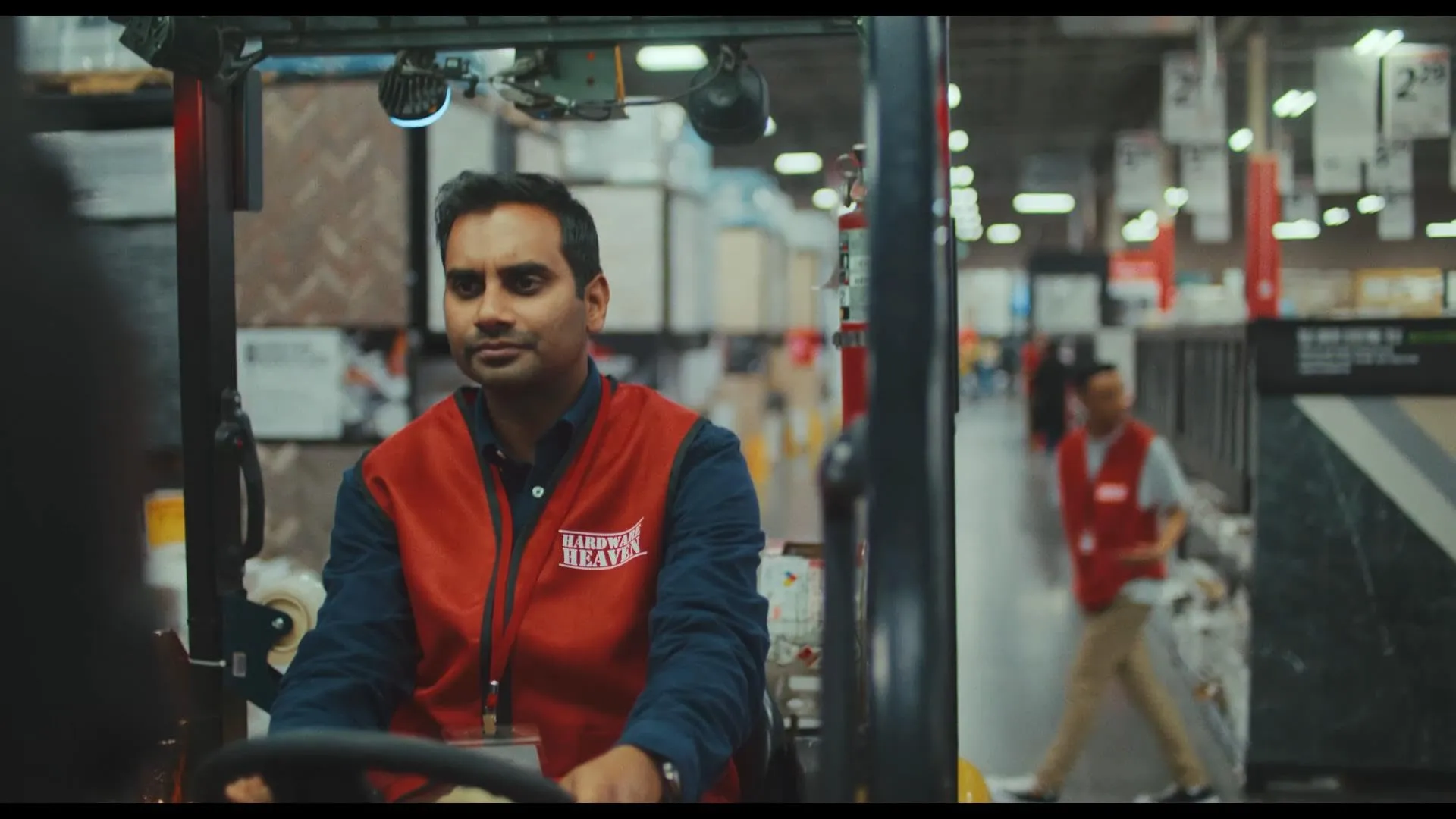
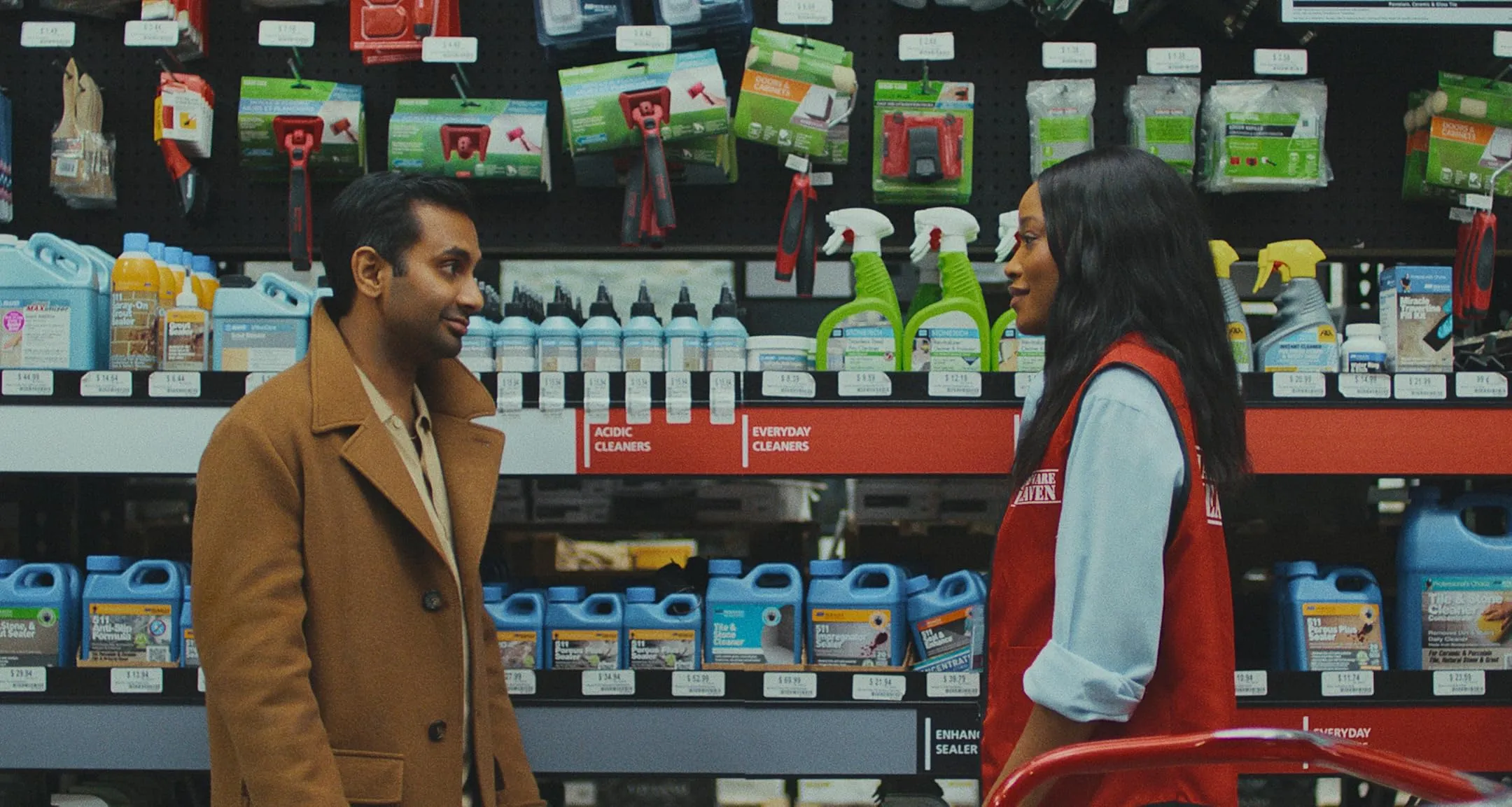
His existence is a patchwork of app-based tasks: delivering food, performing menial errands for strangers, and working shifts at a home improvement store alongside the principled community organizer, Elena (Keke Palmer). His struggle is palpable, a minute-by-minute calculation for survival in a city that offers little respite.
Jeff’s world, by contrast, is defined by an immense and luxurious stillness, a life hermetically sealed from inconvenience. His Bel Air mansion is a monument to chilly, impersonal modernism, a space of glass walls and minimalist furniture where his primary concerns involve fixing his pool heater and hiring a shaman for a guided ayahuasca session. He is a man so insulated by layers of wealth that the mechanics of everyday work, the very foundation of his fortune, have become a complete abstraction. His is a life devoid of friction.
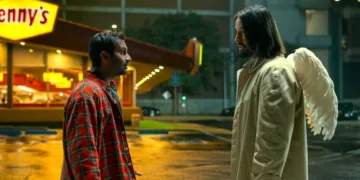
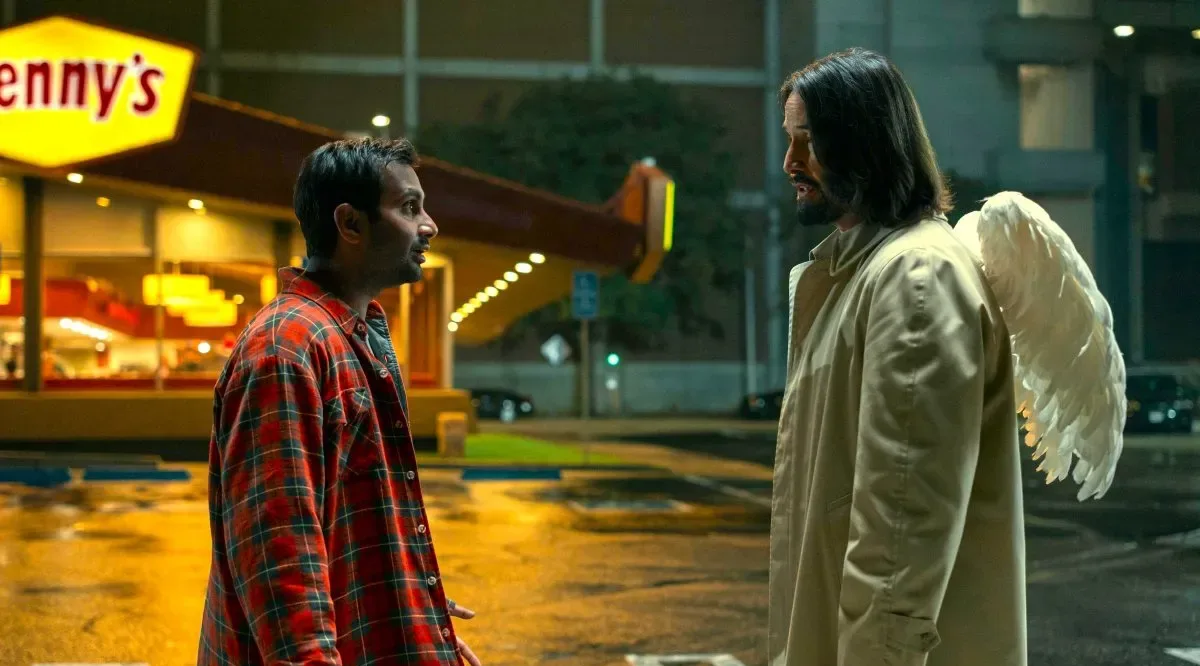
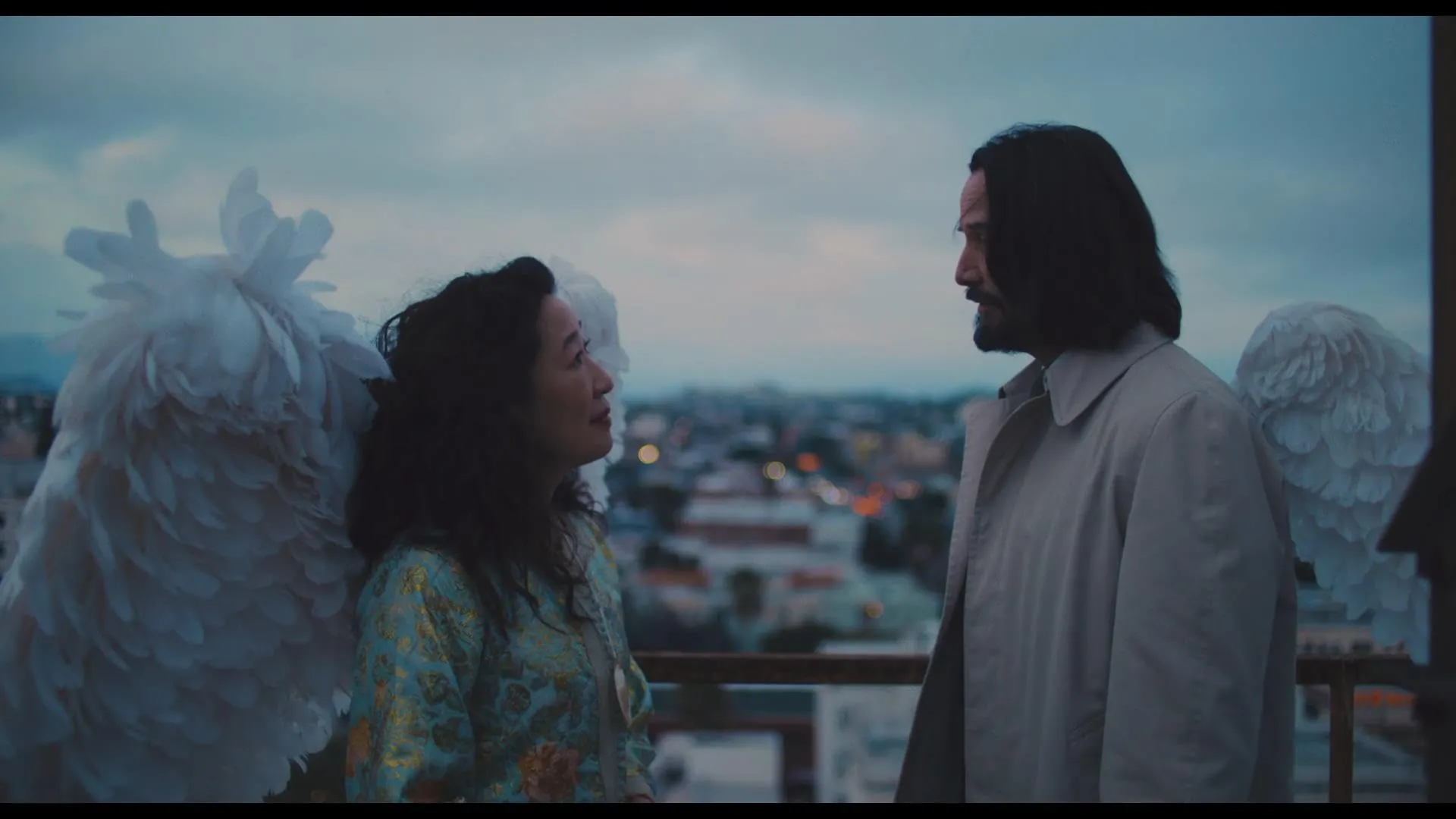
Into this chasm descends Gabriel, a celestial being who is less a majestic archangel and more a low-level cosmic bureaucrat with something to prove. His department is the humble but necessary “texting and driving prevention,” and his ambition for a promotion to earn senior wings motivates his unsanctioned intervention in Arj’s life. The plan is an old one, a test to prove a tired moral lesson: money cannot buy happiness. The method is a classic body-swap, giving Arj a temporary taste of Jeff’s life.
The lesson fails instantly and spectacularly. Arj discovers that a billionaire’s resources solve his problems with astonishing speed and efficiency. The reversal is immediate and absolute. The fallout is swift. Gabriel’s boss, a stern Sandra Oh, strips him of his wings and exiles him to a human existence, forcing him to navigate the world he so poorly understood. Jeff, in turn, is thrust into the gig economy, left to fend for himself in a system designed for his benefit but never for his participation.
A Comedy of Divine Proportions
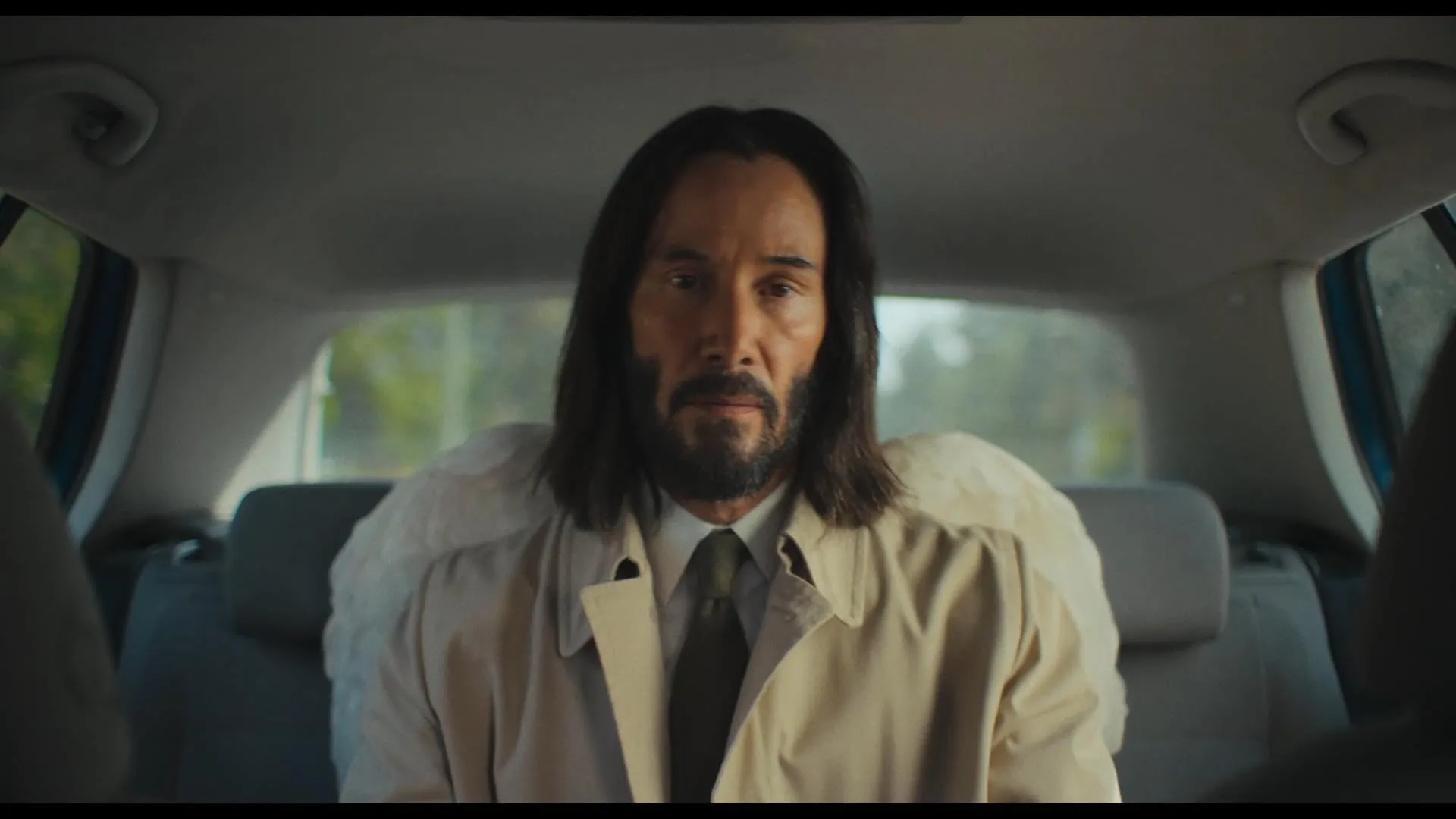
The film’s comedic energy radiates from Keanu Reeves, who delivers a truly remarkable and surprising performance as Gabriel. He leverages his established screen persona, the stoic sincerity of a John Wick or Neo, and masterfully subverts it for comedic effect.
His Gabriel is a being of immense power but limited understanding, a creature of bewitching tenderness and adorable fretfulness. Reeves’s deadpan delivery and genuine bewilderment make his character’s earthly confusion a constant source of humor. Gabriel’s adjustment to mortality is a series of small, hilarious revelations, from his first cigarette to his discovery of tacos.
Watching a celestial being declare, “I was a celestial being and now I’m a chain smoker addicted to nicotine,” is one of the film’s purest delights, a line delivered with the perfect blend of despair and wonder. This is the standout performance, an anchor of such gentle absurdity that it elevates the entire production.
Aziz Ansari and Seth Rogen offer effective, if familiar, comedic support. They are playing very much to type, a choice that provides a stable foundation for Reeves’s more eccentric work. Ansari is perfectly suited to Arj, capturing the character’s initial, frantic desperation and his later, Tom Haverford-like glee at his newfound wealth. Rogen gives Jeff the comfortable cadence of an affable, oblivious rich man shocked into awareness, a role that fits squarely within his established comedic range.
They are reliable, grounding the film’s wilder conceits in recognizable personas. The supporting cast is used with less success. Keke Palmer brings a sharp, grounding charm to Elena, but the character is written more as a moral compass and romantic interest than a fully realized person. Her role as a union organizer feels like a curtailed subplot, a missed opportunity to deepen the film’s social commentary. Sandra Oh makes a strong impression in her brief scenes, bringing a necessary gravitas to the angelic bureaucracy
Capitalism with a Halo
Good Fortune uses its fantastical premise to launch a surprisingly sharp satire of the modern labor landscape. It consciously evokes the spirit of Preston Sturges’s socially conscious comedies of the 1940s, like Sullivan’s Travels, finding humor in the absurdities of economic inequality.
The precariousness of Arj’s jobs, the quiet indignities of working for indifferent algorithms, are not just jokes but pointed observations about a system that demands constant hustle for minimal reward.
The film’s most daring move is its bold subversion of the traditional “money isn’t everything” moral. For a significant portion of its runtime, the script argues that for someone in Arj’s position, financial security is transformative and the primary source of happiness.
This perspective feels refreshingly honest in the current economic climate, challenging a Hollywood trope that often rings hollow to audiences grappling with real financial pressures. The film’s overall tone remains optimistic and big-hearted, even as it touches on systemic issues.
It walks a fine line between being a pointed critique and a feel-good comedy, blending its sharp dialogue with a generous spirit. The approach softens some of the script’s harder edges, aiming for a broad appeal that sometimes mutes its most acidic observations.
The Art of the Unequal City
Ansari’s direction shows a keen eye for visual storytelling and atmosphere. The cinematography by Adam Newport-Berra is particularly expressive, employing stylized lighting with parrot greens and canary yellows to create an “artful grittiness.”
This visual language establishes a clear and meaningful distinction between the two Los Angeleses depicted. Jeff’s world is sleek, bright, and sterile, captured with smooth, controlled camera movements.
Arj’s world is defined by dark shadows and the lived-in textures of the city, filmed with a more grounded sensibility. The production design is a key narrative tool; Jeff’s garish mansion functions as a character in its own right, a monument to wealth without taste. This visual craft is complemented by Carter Burwell’s kooky, lighthearted score, which helps maintain the film’s wacky energy and keeps the pace brisk.
An Imperfect Blessing
The film’s primary strengths are clear: a consistently funny script loaded with sharp zingers, an engaging high-concept premise, and a career-best comedic turn from Keanu Reeves. These elements combine to create a thoroughly enjoyable and often insightful experience. Its shortcomings lie in its underdeveloped periphery.
Narrative threads involving Elena’s union organizing or Arj’s relationship with his father feel curtailed, hinting at a richer story left unexplored. The film’s final act moves toward a convenient resolution that feels somewhat unearned, pulling back from the sharper, more subversive insights of its earlier scenes.
Good Fortune is a successful mainstream studio comedy, a rare and welcome offering in the current cinematic landscape. It delivers substantial laughs and a timely message, its appeal resting on the considerable charm of its cast and a generous spirit that makes it easy to embrace.
Full Credits
Director: Aziz Ansari
Writers: Aziz Ansari
Producers and Executive Producers: Aziz Ansari, Anthony Katagas, Alan Yang, Aniz Adam Ansari, Jonathan McCoy, Christopher Woodrow, Connor DiGregorio
Cast: Keanu Reeves, Aziz Ansari, Seth Rogen, Keke Palmer, Sandra Oh
Director of Photography (Cinematographer): Adam Newport-Berra
Editors: Daniel Haworth, Kade Stauduhar
Composer: Carter Burwell
The Review
Good Fortune
Good Fortune is a sharp and genuinely funny update to the classic Hollywood fable, carried by a career-best comedic performance from Keanu Reeves. While its social commentary is sometimes softened by a conventional ending and underdeveloped supporting characters, Aziz Ansari’s directorial debut succeeds as a big-hearted and timely comedy. It smartly questions old moral tropes about wealth and happiness, delivering substantial laughs and charm. It is a welcome and witty entry in the landscape of studio comedies.
PROS
- A standout comedic performance from Keanu Reeves.
- A consistently funny and sharply written script.
- Timely social satire of the gig economy and wealth disparity.
- Clever subversion of the "money can't buy happiness" trope.
- A strong directorial debut from Aziz Ansari with a distinct visual style.
CONS
- Underdeveloped supporting characters, limiting their impact.
- A conventional ending that pulls back from the film's sharper insights.
- Familiar comedic personas from its lead actors, Ansari and Rogen.
- Potentially rich subplots feel curtailed and unexplored.