
























![Kingdom Hearts Collection [I-III] Review](https://gazettely.com/wp-content/uploads/2026/10/Kingdom-Hearts-Collection-I-III-1-360x180.webp "Kingdom Hearts Collection [I-III] Review: KHII Holds Steady as Newer Entries Fluctuate 37")





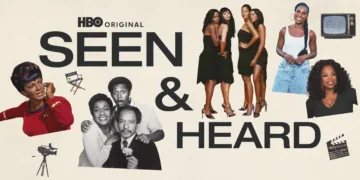
The television set has always been both a window and a mirror. For decades, Black America looked into that mirror and saw a funhouse reflection: a distorted caricature, a comforting fable, or worse, nothing at all. The new HBO docuseries Seen & Heard: The History Of Black Television arrives as a master technician’s report on that very mirror.
It is not just an archive of what was shown, but a forensic investigation into how the images were made, who was allowed to make them, and who profited. Brilliantly bisected into two feature-length parts, “Seen” and “Heard,” the series separates the struggle for on-screen visibility from the essential battle for creative control.
With testimony from a staggering lineup of industry architects—Oprah Winfrey, Tyler Perry, the late Norman Lear, Issa Rae—the program constructs a clear-eyed account of a 75-year push for authorship. It is a story about the difference between being an object in the frame and being the one who aims the camera.
Seen, But Not Believed
The first half of the documentary, “Seen,” functions as a painful, often infuriating, historical procedural. It traces the slow, frequently reversed, progress of Black faces on the small screen, starting with the grainy broadcasts of early television.
The series uses clips from shows like Amos ‘n’ Andy not just as historical artifacts, but as evidence, demonstrating how the price of admission to the airwaves was often a performance of comforting stereotypes for a white audience. The editing is sharp, juxtaposing these early portrayals with incisive modern commentary that strips away any misplaced nostalgia.
The narrative gains complexity as it enters the 1970s and confronts the towering legacy of producer Norman Lear. His sitcoms, including Good Times and The Jeffersons, were a cultural earthquake, placing Black families in the heart of American prime time. Seen & Heard skillfully presents this as a monumental breakthrough wrapped in a frustrating compromise.
Through interviews with Lear himself, who speaks with the assuredness of a well-meaning patriarch, and archival footage of the shows’ stars, the documentary exposes a fundamental disconnect. The stories were being guided by an almost exclusively white writers’ room. The series zeroes in on the schism that split the cast of Good Times.
The departure of actors John Amos and Esther Rolle is presented as an act of artistic protest. They fought for nuanced portrayals of a family navigating poverty with dignity, only to watch Jimmie Walker’s catchphrase-spouting J.J. Evans become the show’s focal point. It’s a perfect case study in how on-screen presence does not equal narrative power.
The episode’s pacing accelerates into the 1990s, capturing the explosion of Black sitcoms that defined the decade. Shows like Martin, Living Single, and Moesha are celebrated not just for their popularity but for creating vibrant, specific, and unapologetically Black worlds. For a moment, the mirror seemed to be reflecting something true. Then, the documentary illustrates the industry’s cold calculus.
It argues that emerging networks like Fox, UPN, and The WB used these shows as foundational building blocks to attract an audience, only to discard them once their brands were established and a broader, whiter demographic was in their sights. The sense of cultural whiplash is palpable, a boom followed by a sudden, echoing silence.
The View from the Corner Office
If “Seen” is a story of struggle, “Heard” is a story of strategy. The second part of the series shifts its focus from the people in front of the camera to the people who own it, and the tone changes with it. The pacing becomes more deliberate, settling into intimate portraits of creators who decided the only way to win the game was to build their own stadium. The directing style follows suit, relying on personal anecdotes and quiet moments of reflection to chart the rise of the modern Black television mogul.

The episode examines the empire-building of Oprah Winfrey, not as a fairytale of success, but as a series of shrewd business decisions. Drawing on her early experiences as a news reporter, where she was told her empathetic style was a weakness, the documentary shows how she turned that very quality into the engine of a talk show, then a production company, and finally an entire network. Her story is a lesson in converting cultural influence into institutional power.
Then there is Tyler Perry, who gives the filmmakers a tour of his Atlanta studio complex, a sprawling lot with soundstages named for Black legends like Cicely Tyson and Sidney Poitier. The sequence is a potent visual. Perry did not just create a production facility; he built a monument, a self-sufficient ecosystem outside the traditional Hollywood structure that had so often rejected him.
These titans set the stage for a new wave of creators. The documentary positions Issa Rae and Lena Waithe as the inheritors of this legacy, artists who understood from the beginning that audience and ownership were intertwined. Rae’s journey from her web series The Mis-Adventures of Awkward Black Girl to her landmark HBO show Insecure is presented as a modern roadmap.
She cultivated a devoted community online first, proving the market for her specific point of view before a major network gave her a budget. The episode also highlights the importance of mentorship, showing how figures like Debbie Allen fostered the careers of writers like Mara Brock Akil (Girlfriends). The message is clear: the goal was never just to get a show on the air. It was to build an infrastructure that would ensure many more shows could follow.
Rent-to-Own Representation
Seen & Heard refuses to present the history of Black television as a simple upward trajectory. Instead, it paints a picture of a “feast and famine” cycle, where periods of creative abundance are followed by frustrating neglect. The documentary’s structure reinforces this point with brutal effectiveness.
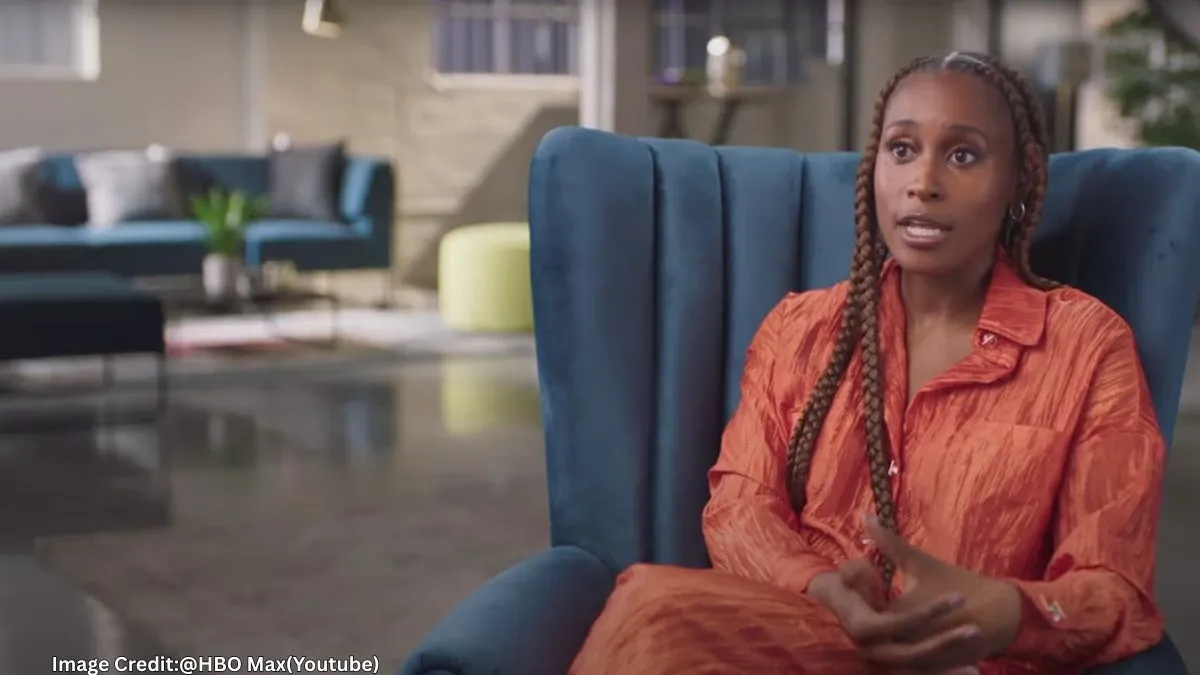
A triumphant moment from the 90s sitcom era can cut directly to a degrading clip from a 2000s reality show like Flavor of Love, forcing the viewer to experience the jarring sense of cultural regression. Issa Rae speaks candidly about this period, describing it as a void that pushed her to start creating her own work out of sheer necessity. The disappearance of scripted Black stories created a vacuum filled by cheap, often exploitative, reality programming that reduced Black women to warring archetypes.
The series is equally unflinching when dealing with complicated legacies. Its handling of The Cosby Show is a masterclass in nuance. The documentary uses voice-over headlines and brief news clips to efficiently acknowledge the damning sexual assault allegations against Bill Cosby.
This directorial choice allows the facts to be stated without letting the scandal completely erase a necessary conversation about the show’s profound cultural impact. We see the late Malcolm-Jamal Warner, in one of his final interviews, speaking about his former mentor with a palpable mix of respect and sorrow, a moment that captures the complex feelings of a generation.
The documentary’s argument about ownership finds its sharpest edge when it includes creators outside the commercial mainstream, like Terence Nance, whose surreal HBO series Random Acts of Flyness defies easy categorization. His presence suggests that true creative control is not just about building a profitable brand; it is about protecting singular, challenging visions from the demands of the market.
The series makes it clear that visibility is a rental. Ownership is the deed. Now that a generation of Black creators has finally stopped asking for a seat at the table and started building their own, can they fortify these new institutions against the same corporate pressures that dismantled the last golden age?
Seen & Heard: The History Of Black Television is a two-part HBO Original documentary miniseries that explores the history of African-American representation in Hollywood, from early stereotypical portrayals to today’s complex narratives. The series, which features interviews with major figures in television, is directed and produced by Giselle Bailey and Phil Bertelsen with Issa Rae serving as an executive producer. It originally debuted on HBO and began streaming on HBO Max (now Max) on Tuesday, September 9, with the second part airing the following night.
Full Credits
Director: Giselle Bailey, Phil Bertelsen
Producers and Executive Producers: Giselle Bailey, Phil Bertelsen, Issa Rae, Montrel McKay, John Maggio, Rachel Dretzin, John Ealer, Jonathan Berry, Dave Becky, Nancy Abraham, Lisa Heller, Sara Rodriguez, Esther Dere, Zachary Herrmann
Cast: Issa Rae, Oprah Winfrey, Tyler Perry, Shonda Rhimes, Ava DuVernay, Lena Waithe, Tracee Ellis Ross, Norman Lear, Debbie Allen, Kenya Barris, Cord Jefferson, Malcolm Jamal Warner
Director of Photography (Cinematographer): Stephen Bailey
Editors: Jean Tsien, Luther Clement-Lam, Marcus Taylor, Joe LaMattina, Chris Silverberg
Composer: Matthew Head
The Review
Seen & Heard: The History Of Black Television
Seen & Heard is an essential, brilliantly constructed piece of cultural analysis. It bypasses simple nostalgia to deliver a sharp, unflinching examination of the difference between being visible and having power. By clearly articulating that true progress is measured by ownership, not just screen time, the docuseries provides a crucial framework for understanding the past, present, and future of television. It is a masterclass in historical documentary filmmaking.
PROS
- Intelligent two-part structure ("Seen" and "Heard") effectively separates the concepts of visibility and control.
- Features an impressive collection of insightful interviews with key industry figures.
- Provides a nuanced, critical analysis rather than a simple chronological history.
- Handles complex and sensitive subjects, like the legacies of Norman Lear and Bill Cosby, with care.
- Constructs a powerful and persuasive argument about the necessity of creative and financial ownership.
CONS
- Given the vast 75-year history, its focused narrative means some influential shows and figures are inevitably omitted.







