










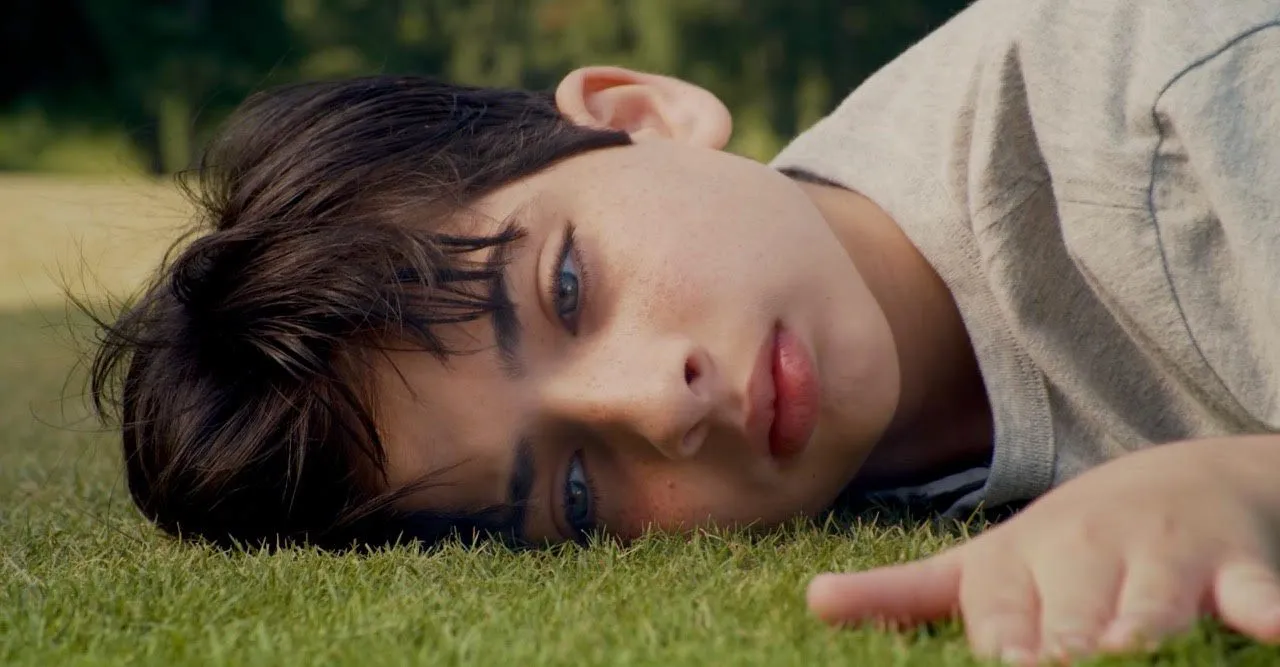

The film opens on a Texas golf course, where a young man’s future seems to hang on the arc of a small white ball. This is Jeremy Avery, a high school senior whose prodigious talent has soured into a two-year slump. His goal is the state championship, the key to a university scholarship that would relieve the financial weight pressing on his family.
His mother is recovering from cancer, the medical bills are piling up, and Jeremy is the designated caretaker for his younger brother, Ethan, who is autistic. The Short Game presents these elements as the foundation for an uplifting tale of athletic redemption and familial devotion, following a blueprint familiar to anyone who has ever seen a sports drama.
A Story Stuck in the Rough
The screenplay, a product of five credited writers, dutifully follows its chosen formula with an almost robotic precision. Every narrative beat is predictable. The underdog hero faces his cartoonishly snobbish rival, Bruce Bennett, a boy so unpleasant he appears to have no purpose beyond being an obstacle. The film moves from one manufactured conflict to the next, culminating in a final tournament that holds little tension because its outcome feels predetermined from the opening scenes.
This adherence to convention becomes actively detrimental when the script attempts a serious emotional turn. A major character’s death is introduced midway through the proceedings, a development that feels less like an organic part of the story and more like a calculated injection of pathos. Any potential for genuine feeling is swiftly squandered in a bizarre funeral scene where a pastor delivers a eulogy that contorts the tragedy into a clumsy lesson about golf.
His speech, aimed squarely at Jeremy, is a moment of profound tonal deafness that reveals the script’s primary concern: everything must serve Jeremy’s athletic progress. This singular focus reduces complex human experiences to simple motivational hurdles.
Characters on the Course
At the center of this world, Jeremy Avery remains a curiously static figure. He is presented as a young man under pressure, but his self-absorption goes largely unchallenged. The film identifies his selfishness as a flaw, yet the narrative rearranges itself to accommodate his needs instead of forcing him to achieve meaningful growth.
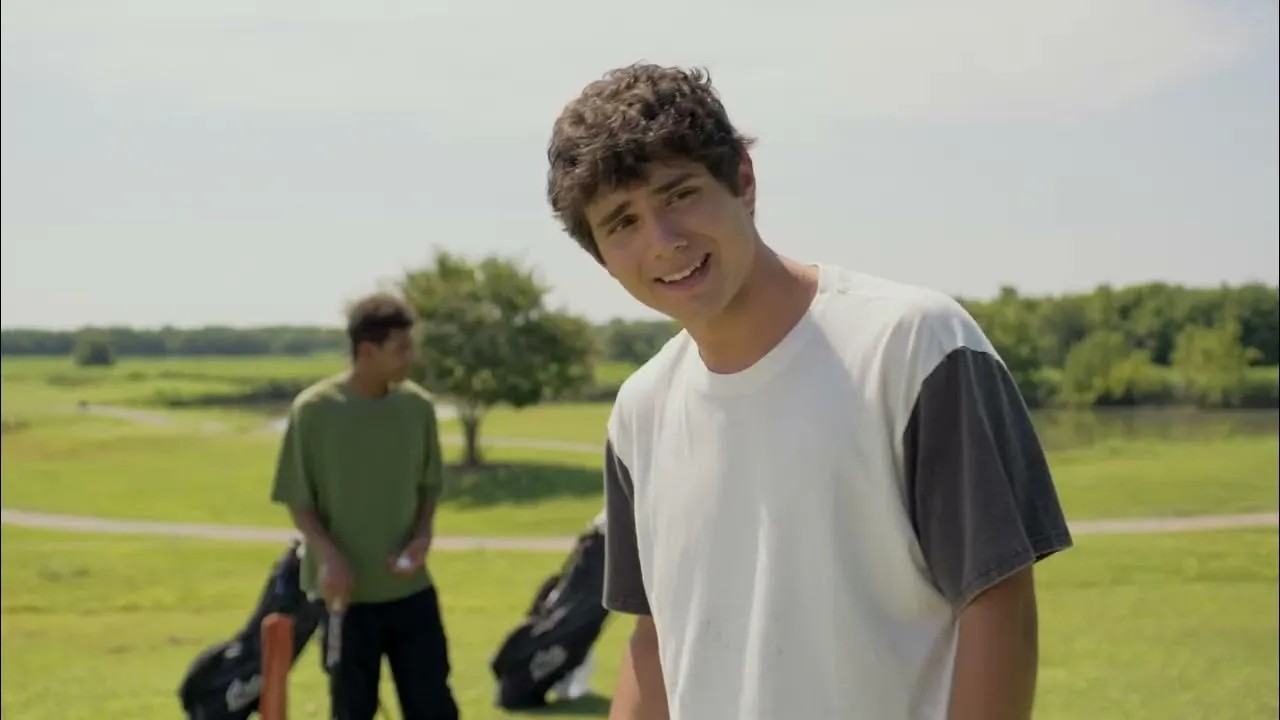
His brother, Ethan, is played with a gentle authenticity by Owen Himfar, an actor who is himself autistic. This casting choice is commendable, but the character is written into a restrictive and questionable trope. Ethan’s autism conveniently manifests as a savant-like ability to read the wind and select the perfect club. He becomes a useful tool, a caddy with supernatural skills whose neurodivergence is framed as a strategic advantage for his brother.
Their supposed bond is asserted but rarely demonstrated through specific, quiet moments that might build a believable connection. The supporting players are similarly underdeveloped, existing as archetypes rather than people.
Jeremy’s friend Tommy spouts whimsical, fortune-cookie advice, a spiritual guide whose wisdom feels unearned. The rival, Bruce, is a caricature of wealth and arrogance, complete with an overbearing father who pushes him from the sidelines. These figures are not characters; they are functions of a plot that requires them to play their designated parts without variation.
Directing the Game
First-time director Frank Sanza approaches the material with an evident sincerity, stemming from his own life experiences with golf and with raising an autistic son. This personal connection, however, does not translate into dynamic filmmaking. The direction is flat and visually unremarkable, failing to give life to the conventional script.
It captures the action without adding any distinct perspective or style, making the long sequences on the golf course feel repetitive. This visual blandness is compounded by an overbearing musical score that swells at every prescribed emotional beat. The music, heavy with sentimental piano and flute melodies, instructs the audience precisely what to feel, leaving no room for authentic emotion to develop.
The film’s faith-based elements are presented with similar clumsiness, as biblical verses are deployed like motivational slogans instead of being integrated into a complex worldview. The Short Game aims to use its title as a metaphor for the brevity of life, a fine idea that the production is ill-equipped to explore with any depth. It imitates the shape and sound of an inspirational picture but fails to generate any real warmth or insight, offering a sterile copy of emotions it cannot produce on its own.
“The Short Game” is a 2024 drama movie about a high school golfer named Jeremy who is preparing for a college scholarship tournament. His aspirations are affected by family obligations, specifically caring for his autistic brother, Ethan. He is forced to reconsider his goals when he discovers his brother’s unique gifts on the golf course. The film had a limited theatrical release starting on August 29, 2025. It is available to stream on some services and for rent or purchase on others, but it is best to check a service like Fandango to see where it can be watched in your area.
Full Credits
Director: Frank Sanza
Writers: Frank Sanza, Larry Boatright, E Joren Christensen, Florrie Laurence, David Parks
Producers: David Parks, Daniel Hegel
Cast: Ben Krieger, Owen Himfar, Mackenzie Astin, Katherine Cunningham, Glenn Morshower, Tyler Lofton, Emma Parks, Brandon Potter, Jon Donahue, Brandon Gomez, Rocky D. Massey, Steve Mokate, Brody Stowers
The Review
The Short Game
The Short Game is a film built from a familiar blueprint, but its execution is too formulaic and emotionally clumsy to succeed. While its intentions are sincere, particularly in casting Owen Himfar, the picture is undone by a clichéd script, a static protagonist, and flat direction. It aims for inspiration but delivers a sterile and predictable imitation of a sports drama, leaving almost no lasting impact.
PROS
- The casting of Owen Himfar, an autistic actor, in the role of Ethan.
- Owen Himfar delivers a standout performance.
- The director’s sincere effort to approach a personal story.
CONS
- A highly predictable and formulaic screenplay.
- Characters are one-dimensional archetypes.
- The protagonist is unsympathetic and shows little growth.
- Uses a calculated tragedy for unearned emotional weight.
- Reduces its autistic character to a convenient plot device.
- The musical score is heavy-handed and emotionally directive.