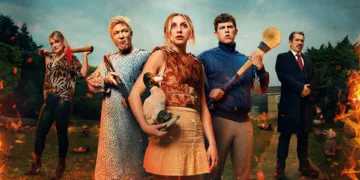







Every so often, a film comes along with a premise that feels both timeless and perfectly tuned to our current moment. The Wrong Paris introduces us to Dawn, played with a grounded charm by Miranda Cosgrove. She’s a practical young woman from small-town Texas, skilled with tools and fiercely protective of her family, with a big dream: attending art school in Paris, France.
It is a familiar starting point for anyone who has ever packed their aspirations into a savings jar. Her obstacle is just as relatable: a lack of money, especially after helping with her grandmother’s medical bills. Her sister’s solution, however, is pure 21st-century opportunism. She suggests Dawn join the reality dating show “Honey Pot” to collect a hefty appearance fee.
The plan seems simple enough. Join the cast, fly to Paris on the network’s dime, get eliminated early, and use the money for tuition. But the film’s cleverest twist happens before the first cocktail party. The production is not based in France, but in Paris, Texas. Dawn is now trapped in a spectacle she disdains, competing for a cowboy bachelor, Trey (Pierson Fodé), who she has already met by chance.
Spurs Over Roses
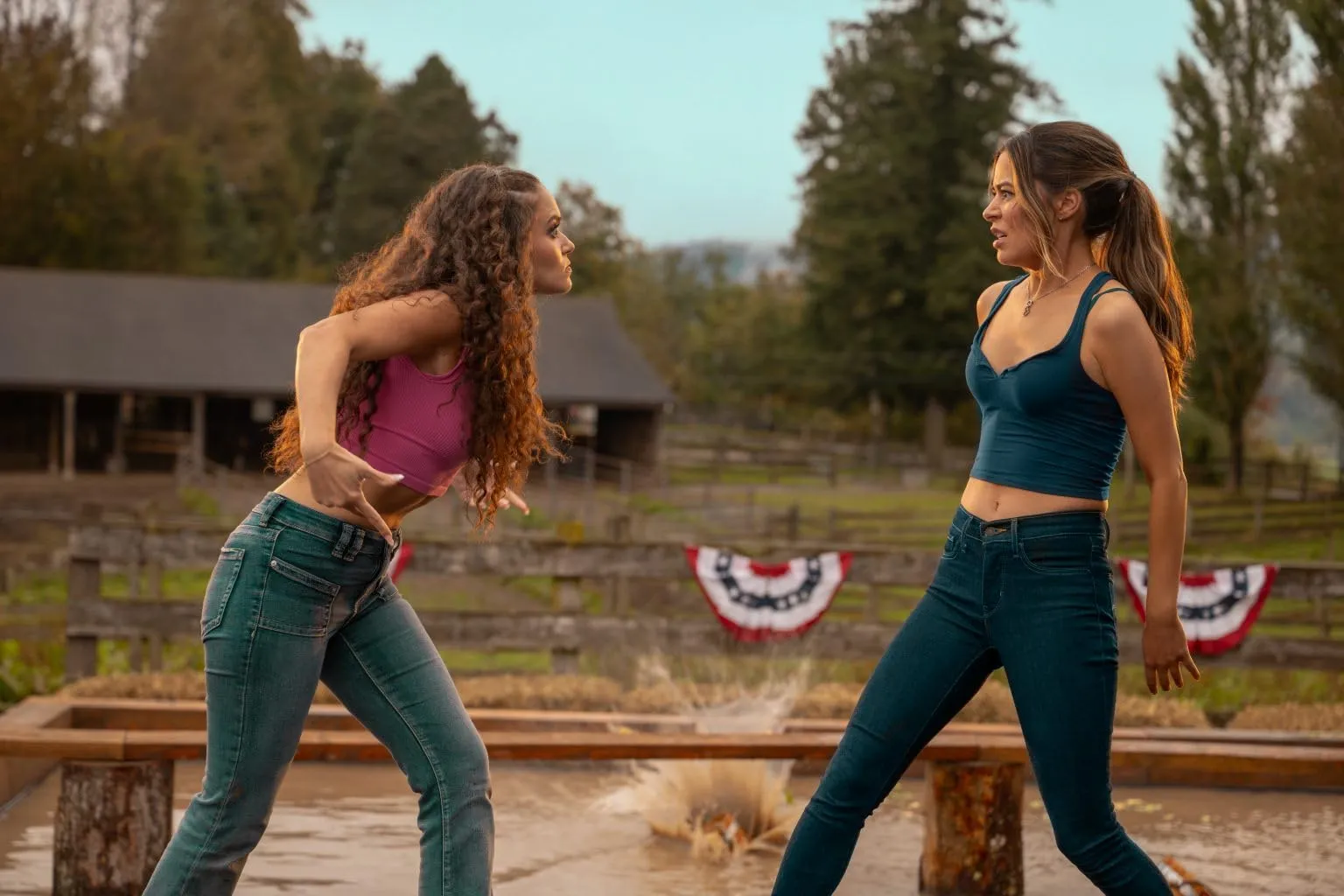
The film finds its sharpest voice when it leans into its parody of reality dating shows. The world of “Honey Pot” is a funhouse mirror reflection of programs like The Bachelor, and its satire works because it understands the source material’s bizarre sincerity. We get a full roster of familiar archetypes, from Cinderella (Madeleine Arthur), a woman seemingly scripted for a fairy-tale ending, to the competitive influencer, Lexi (Madison Pettis), whose every move feels calculated for screen time.
The production design enhances the critique, creating a world of glossy, temporary-feeling sets that look perfect for television but lack any real warmth. The film uses these characters and the show’s outlandish competitions to deconstruct the genre’s manufactured drama. An obstacle course devolves into a messy mud wrestling match, a scene that perfectly captures the ridiculousness producers orchestrate for ratings.
The narrative structure cleverly incorporates the show’s confessional interviews, using them not for exposition but as punchlines that highlight the phoniness of it all. This self-aware approach provides a running commentary on influencer culture and the modern pursuit of fame for fame’s sake. It speaks to a cultural moment where “authenticity” has become a performance, a brand to be managed. The humor is most effective when the film fully commits to the absurdity of this televised circus.
Finding a Real Spark in a Fake World
For any romantic comedy to work, the chemistry between the leads must feel genuine, a task made difficult by the story’s artificial setting. The script makes a smart decision by having Dawn and Trey meet organically before the cameras start rolling. This scene is a subtle but important subversion of the reality TV format, where every interaction is supposed to be documented for public consumption.
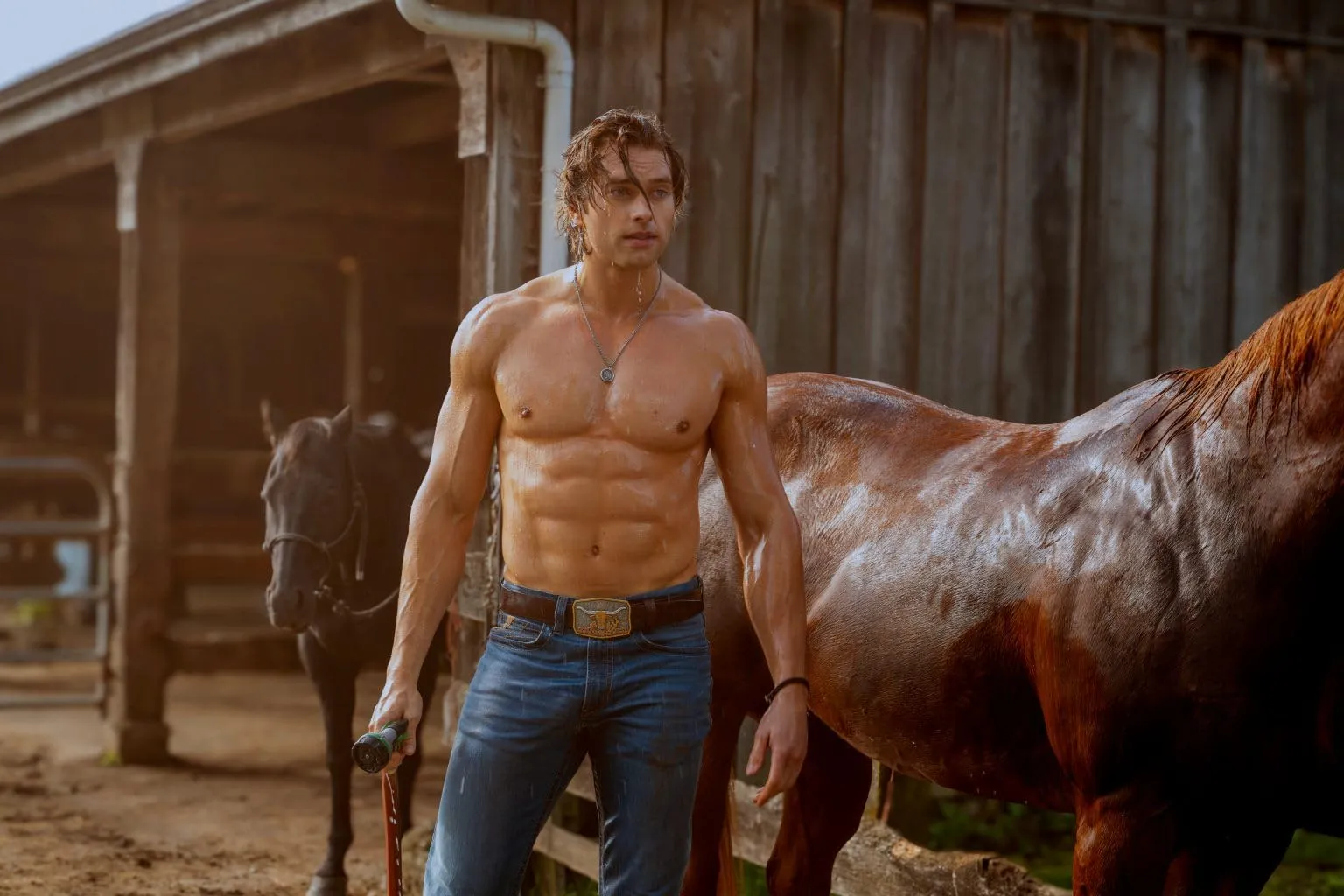
It creates a private history for the couple, a foundation for a real connection that exists outside the spectacle. Miranda Cosgrove effectively portrays Dawn’s internal struggle, showing a cynic caught between her escape plan and her developing feelings. Pierson Fodé works to give Trey a sincerity that makes him more than just a handsome cowboy prize.
Their most effective scenes are the quiet ones, stolen moments away from the producers’ watchful eyes where they can be themselves. The cinematography attempts to distinguish these moments with softer lighting and closer framing, contrasting them with the harsh, flat look of the “Honey Pot” segments.
At times, the camera work feels a bit unpolished, almost like it was shot on a phone, but this inadvertently helps separate the raw connection from the polished artifice of the show. The film asks if an authentic bond can blossom in the most inauthentic of places, a relevant question in our age of curated online personas.
A Film Divided
A movie that starts with such a clever satirical bite risks losing its way if it surrenders to convention. The Wrong Paris struggles with this very challenge in its second half, revealing a tonal imbalance that weakens its initial impact. The sharp parody that defined its opening gives way to the familiar beats of a standard rom-com.
The conflict narrows to a contrived misunderstanding, relying on Dawn’s simple failure to explain her situation to Trey. This plot device feels particularly frustrating here. After establishing Dawn as a direct and resourceful person, her sudden inability to communicate feels like a betrayal of her character, a shortcut for the plot rather than a natural development.
This choice is common in many modern streaming films that begin with a high-concept premise but default to a safer, more formulaic structure. The film’s resolution also raises questions about its cultural message. Dawn’s artistic ambitions, once the driving force of the story, seem to take a backseat to her newfound romance.
The ending feels less like a modern partnership and more like a return to an older cinematic fantasy, a bummer in a genre that has been making efforts to evolve. It is a missed opportunity to offer a new perspective, settling instead for a comforting formula that undermines its own smart premise.
The film is a romantic comedy released on Netflix on September 12, 2025. It is about a young woman named Dawn who joins a dating show believing it is in Paris, France, only to discover it is actually in Paris, Texas. She plans to get eliminated to receive the prize money, but her plans are complicated when she starts to develop feelings for the handsome rancher bachelor.
Full Credits
Director: Janeen Damian
Writers: Nicole Henrich
Producers: Brad Krevoy, Michael Damian
Executive Producers: Miranda Cosgrove, Janeen Damian, Galen Fletcher, Amanda Phillips Atkins, Jimmy Townsend, Vince Balzano
Cast: Miranda Cosgrove, Pierson Fodé, Madison Pettis, Frances Fisher, Madeleine Arthur, Yvonne Orji, Torrance Coombs, Emilija Baranac, Hannah Stocking, Christin Park, Naika Toussaint, Veronica Long, Ava Bianchi
Director of Photography: Graham Robbins
Editors: Scott Hill
Composer: Nathan Lanier
The Review
The Wrong Paris
The Wrong Paris starts with a sharp, witty premise that perfectly skewers the absurdity of reality dating shows. Miranda Cosgrove’s charming performance provides a solid anchor, but the film loses its nerve, trading its satirical edge for the safety of tired romantic-comedy tropes. What begins as a clever commentary on modern love and fame unfortunately ends as a predictable and formulaic story that undermines its own smart setup.
PROS
- A clever concept that effectively satirizes reality TV culture.
- Miranda Cosgrove delivers a charming and grounded lead performance.
- The parody elements and contestant archetypes provide genuine humor.
- The central romance is built on a smart foundation by having the leads meet before the show.
CONS
- The film abandons its satirical tone for a conventional rom-com structure.
- Its central conflict relies on a weak and contrived communication breakdown.
- The ending feels dated and minimizes the main character's ambitions.
- An inconsistent tone makes the movie feel like two different films stitched together.