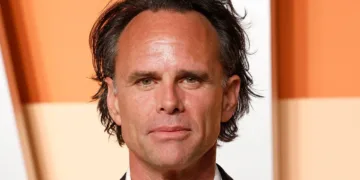































Walton Goggins has answered Pete Davidson’s prediction that the internet will “turn” on him, posting a reflective message that treats the prospect less as a warning than as perspective. Responding after Davidson used a podcast interview to argue that viral stardom often curdles into backlash, Goggins wrote that he is “acutely aware that every experience has a shelf life,” thanked audiences for “going on this journey,” and added that even being included in a doom-and-gloom headline feels like a kind of good fortune. He saluted Pedro Pascal as a “great man” and “dear friend,” nodded to obligations to promote upcoming projects out of respect for collaborators, and closed with a vow to keep saying yes to opportunities: “If this is my fate… I’m going to enjoy the [expletive] out of it.”
Davidson’s comments, made during a longform conversation about the speed of online whiplash, framed Pascal as a case study in how ubiquity can breed fatigue and nitpicking. He warned that Goggins, fresh off a high-profile run, could face the same cycle next. The clip amplified a familiar debate about whether “overexposure” is a meaningful critique or a symptom of algorithmic saturation that encourages fans to flip from enthusiasm to irritation.
Goggins’ response arrives at a moment when his profile is unusually broad. He broke out to new global audiences playing the Ghoul in Prime Video’s Fallout and then became a centerpiece of The White Lotus’ Thailand-set season, work that put him on major red carpets and award ballots while seeding a steady stream of interview snippets and viral moments. The visibility explains why Davidson cited him—and why Goggins’ statement resonated: it treats attention as transient, credits the crews behind the work, and declines to pre-emptively fight strangers on the internet.
Industry watchers have also tied the conversation to the incentives of the digital attention economy, where outrage and hot-take churn can overshadow the projects themselves. In that context, Goggins’ note functions as both gratitude and inoculation, reminding followers that cycles turn, headlines flare, and the most durable response may be to keep the focus on the work and the people who make it.