



























Paul McCartney once left a bass associated with the Beatles leaning beside amplifiers, carried it through the early Wings years, and reacted to its disappearance with something close to a shrug. He had another one. History had not yet placed museum glass around every object he touched.
Arthur Cary builds McCartney: The Hunt for the Lost Bass around that temporal distortion. The 1961 Höfner violin bass, bought in Hamburg for roughly £30 after Stuart Sutcliffe left the Beatles, now has the aura of a relic. The documentary treats its fifty-year absence like a cold case: talking heads offer fragments, archive footage fixes geography, and each new name enters like a suspect beneath an interrogation lamp. The stakes stay modest. Nobody is dead. The victim is German, hollow-bodied, and four-stringed.
That choice gives Cary’s 90-minute film an agreeable tension. McCartney appears amused by his own mythology, yet the investigation belongs to people who care far more urgently about the bass than he did. Obsession changes ownership here. The instrument may be McCartney’s, but the mystery belongs to everyone else.
Two Basses, One Missing Memory
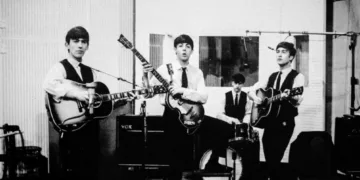
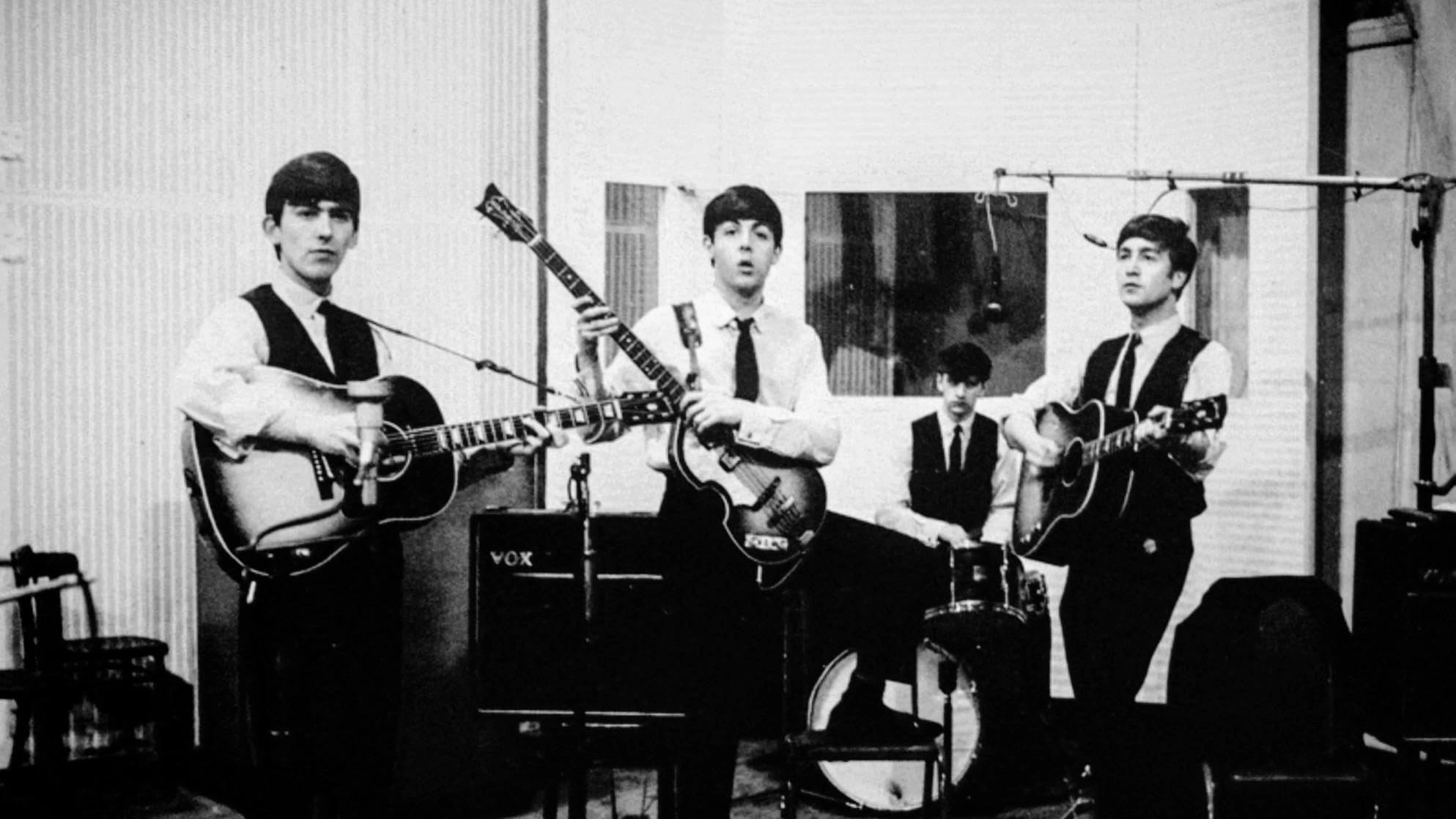
Klaus Voormann’s recollections and artwork carry the film back to Hamburg, where the Höfner entered McCartney’s life before the Beatles became themselves. McCartney speaks about picking up guitar after his mother’s death, calling the instrument a cheap psychiatrist. Cary lets the remark breathe rather than smothering it with solemn music, a sensible piece of tonal restraint. The bass first appears as a tool before history turns it into evidence.
The central confusion is wonderfully mundane. There were two Höfners. McCartney bought the original in 1961 and another in 1963, and the latter gradually displaced the former. Once the Beatles split and Wings began touring Britain by bus and roadie van, the 1961 instrument lost its practical primacy. It waited backstage. It sat near amplifiers. Then it vanished from a van parked in Ladbroke Grove in the early 1970s.
Cary’s editing finds comedy in McCartney supplying this useful detail late. Nick Wass, the former Höfner employee driving the search, has already begun chasing the instrument when McCartney’s memory finally identifies the site of the theft. Every detective loves a witness who remembers the crime scene after the investigation starts.
Also Read





Yet the lapse matters. Modern viewers see an icon stolen from rock history; McCartney saw an old bass he had replaced. The documentary’s most interesting historical trick is exposing the gap between an object’s life and its later legend. Value arrived late.
Suspects in Ladbroke Grove
Wass and his wife, Cathy Harrison, turn the legend into the Lost Bass Project and #tracethebass campaign. Journalists Scott and Naomi Jones help widen the investigation, and Cary arranges their discoveries with the patient escalation of a procedural. A location is fixed. A social world emerges. Suspects acquire shape.

Ladbroke Grove provides perfect noir geography, if a sunlit documentary is permitted such a thing. Its early-1970s mixture of squatters, dealers, anarchists, insecure housing, and counterculture lets suspicion spread according to reputation. Michael “DikMik” Davies, the Hawkwind keyboardist and drug dealer who lived nearby, is almost too picturesque a suspect. Hawkwind stealing McCartney’s bass would satisfy the narrative gods. Reality, displaying its usual lack of showmanship, has other plans.
The film’s sharpest suspense arrives through ambulance worker Steve Glenister. He hints to Beatles-obsessed colleague Andy that he knows something, then withholds enough to make each pause feel incriminating. Cary uses reaction shots and delayed disclosure rather than aggressive scoring. A glance lasts. A sentence stops. Information becomes pressure.
Steve’s father, George, was the thief. An occasional burglar, he took the Höfner from the van and discovered the fatal problem with stealing something famous: possession can become its own prison. Unable to sell it safely, he passed it to a pub landlord. The bass eventually travelled into private hands and ended up in Sussex, absurdly close to McCartney’s East Sussex home.
The grand conspiracy collapses into proximity, chance, and an ordinary crime. Noir has always known this joke. We imagine masterminds because the banal truth is harder to romanticise.
The Shadow Behind the Happy Ending
The recovered bass returns to McCartney in 2024, is restored, then reaches the stage again with Ronnie Wood for “Get Back.” Cary could hardly ask for a cleaner final image. The title becomes instruction, punchline, and emotional cue in one neat stroke.
McCartney himself complicates the moral framing. He speaks without fury about George and admits opportunistic theft was hardly unimaginable among young men from his background before the Beatles redirected his life. Luck, in his account, is the unseen key light. It falls on one person and leaves another face in shade.
Here the documentary briefly becomes a darker film than Cary seems prepared to make. George is remembered as a decent father, a capable footballer, and a sometime robber. His children inherit an act they did not commit, yet family memory makes poor distinctions between guilt and shame. The bass can be restored. A surname is less cooperative.
Cary keeps the music warm and the rhythm buoyant, pressing towards reunion rather than lingering with George’s family or the harsher Ladbroke Grove that produced the theft. The decision preserves the film’s charm, but it also flattens its most morally charged material. A documentary shaped like a detective story finally finds its culprit, then discovers culpability is the least interesting thing about him.
The British musical investigative documentary McCartney: The Hunt for the Lost Bass premiered in select UK cinemas on April 2, 2026, before making its broadcast and streaming debut on BBC Two and BBC iPlayer on April 11, 2026. Audiences in the United Kingdom can stream the film for free on BBC iPlayer, while international viewers can watch for regional broadcast rollouts and upcoming physical Blu-ray releases. Utilizing vintage archive material and forensic interviews, the production traces the amateur fan-led search and eventual recovery of Paul McCartney’s legendary stolen Höfner 500/1 violin bass guitar over fifty years after its sudden disappearance in 1972.
Full Credits
Title: McCartney: The Hunt for the Lost Bass
Distributor: BBC Two, BBC iPlayer, Passion Pictures
Release date: April 2, 2026 (United Kingdom Cinema Release), April 11, 2026 (BBC Two Television Premiere)
Rating: 12A
Running time: 90 minutes
Director: Arthur Cary
Writers: Scott Jones, Naomi Jones
Producers and Executive Producers: Scott Jones, Naomi Jones, Mark Bell, Hamish Fergusson, Andrew Ruhemann, David Collins
Cast: Paul McCartney, Mike McCartney, Klaus Voormann, Elvis Costello, Scott Jones, Naomi Jones, Nick Wass
Director of Photography (Cinematographer): Johann Perry
Editors: Hamish Fergusson
Composer: Tim Atack
The Review
McCartney: The Hunt for the Lost Bass
Arthur Cary frames a missing Höfner like evidence under a desk lamp, and the forensic playfulness works until George enters the picture. The cheerful cold-case rhythm suddenly encounters poverty, opportunistic theft, and inherited embarrassment, yet the film keeps humming towards its “Get Back” encore. McCartney’s sympathy gives those shadows room to exist, if briefly. As Beatles archaeology, this is warm, precise, and slyly entertaining. As a moral portrait of the hands through which history passes, it looks away a little too quickly.
PROS
- Clever cold-case structure
- Engaging amateur sleuths
- McCartney's candid reflections
- Rich Ladbroke Grove context
CONS
- Uneasy tonal shift
- George's story lacks depth
- Sentiment softens darker implications