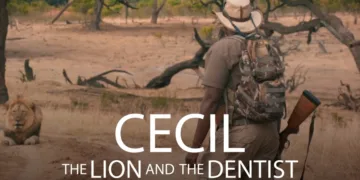


























Arthur Cary’s documentary studies the 2015 killing of Cecil, a thirteen-year-old lion in Zimbabwe’s Hwange National Park. The case involved Dr. Walter Palmer, an American dentist who paid fifty thousand dollars for the chance to kill the animal. Cecil had been part of an Oxford University research project, and his tracking collar turned the death into a matter of scientific record.
Cary uses the hunt to examine the media storm that followed, then places that reaction beside the pressure between Western tourism and local Zimbabwean needs. The film builds its geography around Hwange, with the public impact moving across continents. The protected lion and the profit-driven hunter create the film’s ethical axis, opening a study of conservation, power, and value. Cecil becomes a figure for a fragile ecosystem pulled between international fascination and regional survival.
Calculated Pursuits and the Ethics of the Kill
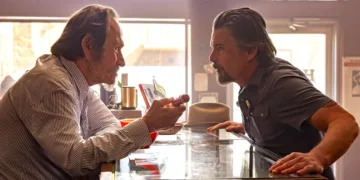
The documentary gives a precise account of the methods used by Palmer and his guide, Theo Bronkhorst. It describes how Cecil was drawn away from the park’s safety with bait. Palmer wounded the lion with a bow and arrow, creating a long period of suffering before death. Cary follows the twelve-hour timeline in which the injured animal bled out before the final shot. The effect is procedural and cold, turning the hunt into a sequence of practiced moves.

Palmer’s record as an elite hunter adds cultural texture to the film’s portrait of status, collection, and conquest. He had faced legal consequences for killing a bear outside permitted zones in the United States, a detail that suggests past friction with regulation. Graphic photographs of hunters posing with carcasses form a grim visual grammar. Animals become objects of display, prized for rarity and spectacle.
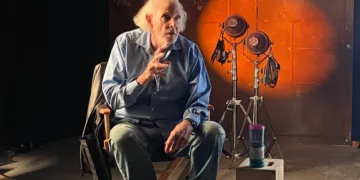
Cary’s interviews with those who arrange these high-stakes excursions expose the mentality behind the industry. The hunt appears as a staged encounter in which the predator enters the scene at a severe disadvantage. Taxidermy and the decapitation of Cecil push the film’s argument into sharper territory. African wildlife is treated as a commodity, and the lion’s body becomes proof of purchase.
Digital Sentimentality versus Regional Reality
News of Cecil’s death created a huge reaction across the Western world and helped anticipate the public rituals later associated with cancel culture. Social media became a place of intense anger directed at Palmer. Tributes appeared in visible sites such as the Empire State Building, signaling a strong emotional attachment to Cecil as a symbol.
Cary studies that response through a romantic image of African wilderness, the kind of vision shaped by distance, photography, and familiar animal stories. That image often misses the danger lions pose to villagers and livestock near the park. Western audiences mourned a majestic animal from afar. Zimbabweans lived with the practical risks of sharing land with dangerous predators.
The film’s sharpest example of digital excess comes through the man who shared Palmer’s name and received relentless harassment. The mistake reveals how online outrage can lose proportion and precision. Cary asks whether the global anger came from serious concern for wildlife or from performance. His suggestion is direct: the international public often wants nature cleaned of danger, closer to a fictional film than to the daily reality around Hwange.
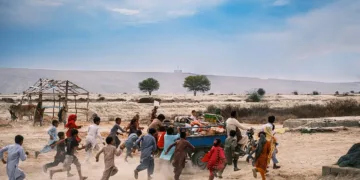
Local voices supply the necessary counterweight. Conservation here becomes a negotiation involving fear, safety, livelihood, and survival. The documentary presents a gap between famous global causes and the experiences of communities living near the animals those causes claim to protect.
The Financial Undercurrents of Preservation
Hwange National Park sits on land once inhabited by nomadic bushmen who were displaced to create the sanctuary. Cary connects that history to the present, treating displacement as part of the region’s identity and its unresolved tension with conservation. The film also addresses the claim that trophy hunting brings in revenue needed for preservation. Supporters say these fees pay for rangers who fight illegal poaching.
Cary remains skeptical about where the money goes. Wealth from hunting and photographic safaris stays largely within elite circles and rarely reaches impoverished communities near the park. The two industries draw value from the same local environment, one through the gun and the trophy, the other through the camera and the curated encounter. Both depend on wildlife as spectacle.
The absence of direct benefit creates resentment toward animals and authorities. That resentment weakens preservation efforts and complicates the moral certainty often attached to conservation campaigns abroad. Cary’s attention to money gives the film its most grounded political force. Conservation appears as a privilege shaped by distance, especially for those who enjoy its ideals without carrying its risks.
The documentary’s final movement stresses that sustainability depends on the needs of people living beside wildlife. Cecil’s death may have become a global symbol, yet Cary keeps returning to the land around Hwange, where survival, memory, and money decide what protection can actually mean.
Directed by BAFTA winner Arthur Cary, the feature length documentary Cecil: The Lion and the Dentist premiered on Channel 4 on February 19, 2026. This investigative production revisits the 2015 killing of a famous Zimbabwean lion by an American trophy hunter, exploring the global outrage and the resulting cultural fallout. The film provides a nuanced look at the intersection of international conservation, regional land rights, and the ethics of the hunting industry. It is currently available for streaming on the Channel 4 platform in the United Kingdom and through various international distributors like Apple TV and Vice News in other territories.
Full Credits
Title: Cecil: The Lion and the Dentist
Distributor: Channel 4
Release date: February 19, 2026
Rating: TV-MA
Running time: 101 minutes
Director: Arthur Cary
Writers: Arthur Cary
Producers and Executive Producers: John Smithson, Ben Coren, Sacha Mirzoeff, Ollie Madden, Kate Ward, Will Clarke, Andy Mayson, Mike Runagall, Judith Regan
Cast: Walter Palmer, Theo Bronkhorst, Brent Stapelkamp, Sharon Stead, Cary Jellison, John Vaudreuil
Director of Photography (Cinematographer): Johann Perry
Editors: Joby Gee
Composer: Jon Opstad
The Review
Cecil: The Lion and the Dentist
The film succeeds as a multifaceted examination of the ethical and economic tensions within African conservation. It moves beyond the singular tragedy of Cecil to expose the systemic failures of an industry built on colonial legacies. While the pacing occasionally falters, the inclusion of diverse regional perspectives provides a necessary antidote to Western sentimentality. It challenges viewers to reconcile their emotional attachments with the harsh realities of those living on the park boundaries. The work offers a sobering look at how global outrage often masks deeper inequalities.
PROS
- Incorporates vital regional viewpoints from Zimbabwean villagers and guides.
- Provides a necessary historical framework regarding land rights and displacement.
- Highlights the stark contrast between digital activism and physical survival.
- Avoids a simplistic portrayal of the conservation industry by revealing its financial complexities.
CONS
- The middle chapters suffer from occasional pacing issues.
- Some thematic threads feel fragmented rather than fully developed.
- Certain segments rely heavily on graphic imagery to sustain viewer engagement.